


Refine your search for walks in Villaines-la-Gonais
Villaines-la-Gonais walks


 The bellowing of the stag in Villaines-la-Gosnais
 Tourism professional
 2.53 mi
 +190 ft
 -164 ft
 1h 20
1h 20
 Easy
Easy
 Departure from Villaines-la-Gonais (Sarthe)
The village of Villaines, situated near the ancient Le Mans–Chartres road, developed in the Middle Ages around the church, on the hillside. You will appreciate its rural charm and the well-preserved architecture of the village houses and the old farmhouses scattered across the countryside. Their materials – terracotta for the tiles and bricks, limestone rubble and lime plaster coloured with local sand – blend beautifully with this scenic setting, offering fine views over the Huisne valley.
The Trognes Route in Boëssé-le-Sec
 7.82 mi
+495 ft
-492 ft
4h 00
7.82 mi
+495 ft
-492 ft
4h 00
 Moderate
Departure from Boëssé-le-Sec (Sarthe)
Moderate
Departure from Boëssé-le-Sec (Sarthe)
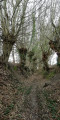
This route through valleys and bocage will allow you to explore the countryside around Boëssé le Sec. You’ll discover a beautiful avenue of pollarded trees.
Saint-Aubin-des-Coudrais and its hills
 7.66 mi
+456 ft
-427 ft
3h 55
Easy
Departure from Saint-Aubin-des-Coudrais (Sarthe)
7.66 mi
+456 ft
-427 ft
3h 55
Easy
Departure from Saint-Aubin-des-Coudrais (Sarthe)
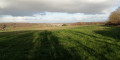
Set off to explore the hills and valleys of the Saint-Aubin countryside and its varied landscapes: woods, meadows and cultivated fields.
The Vow of Saint-Quentin
 5.43 mi
+266 ft
-269 ft
2h 45
Easy
Departure from Saint-Maixent (Sarthe)
5.43 mi
+266 ft
-269 ft
2h 45
Easy
Departure from Saint-Maixent (Sarthe)
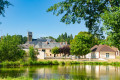
Bordering the Huisne valley to the west and the Vibraye forest to the east, Saint-Maixent is first mentioned in the13th century. Although the settlement is largely scattered (27 farms and 59 cottages in 1841), there are large hamlets such as Les Blousières, whose houses, clustered around a now-vanished pond, once housed up to 40 people, likely hemp workers. The village, crossed by the medieval road known as the “Chemin aux Bœufs” leading to Paris via Châteaudun, grew considerably in the 19th century thanks to the trade generated by this route.
Tuffé Abbey Circular Walk
 7.09 mi
+167 ft
-157 ft
3h 25
Moderate
Departure from Tuffé (Sarthe)
7.09 mi
+167 ft
-157 ft
3h 25
Moderate
Departure from Tuffé (Sarthe)
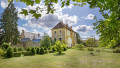
Tuffé-Val-de-la-Chéronne is a new commune formed in 2016 from the merger of the communes of Tuffé and Saint-Hilaire-le-Lierru. Inhabited since the Neolithic period, as evidenced by the Grandes Brières dolmen, Tuffé began to develop in the Early Middle Ages with the founding of an abbey around 650. From the Middle Ages to the Revolution, the monastery of Tuffé was also a large seigneurial estate bearing the title of barony; its power sparked emulation and, at times, rivalry with the neighbouring lay lords of Chéronne. At the end of the 19th century, the railway gave the village a new lease of life; it encouraged the establishment of an industrial estate on which the town’s current economic vitality still partly rests.
The Chéronne stream
8.57 mi
+531 ft
-528 ft
4h 25
Moderate
Departure from Tuffé (Sarthe)
The route through the countryside around Tuffé takes us to the Château de Chéronne and the church of Saint-Denis-des-Coudrais. The Chéronne, which feeds the Tuffé lake, crosses and recrosses the sunken paths several times.
This route is best enjoyed in good weather as the dirt tracks can be quite wet.
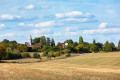
The Chéronne Valley in Saint-Denis-des-Coudrais
 3.22 mi
+115 ft
-115 ft
1h 35
Easy
Departure from Saint-Denis-des-Coudrais (Sarthe)
3.22 mi
+115 ft
-115 ft
1h 35
Easy
Departure from Saint-Denis-des-Coudrais (Sarthe)
The former parish of Saint-Denis-des-Coudrais developed under the influence of the lords of Chéronne, who held the parish seigneury, until the Revolution. Under the Ancien Régime, the village fell under the jurisdiction of the Perche (right bank of the Chéronne) and the Maine (left bank of the Chéronne). Whilst the local economy was primarily agricultural, deposits of very high-quality white clay were exploited from an early stage to supply the nearby pottery workshops, notably those in Tuffé, Bonnétable and Prévelles. This activity ceased in themid-20th century with the closure of the last workshop in Prévelles in 1962. The place names bear witness to this history: Les Caves, la Fosse (now called Les Merisiers), and les Terres Blanches.
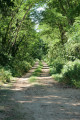
The Two Oaks of Luart Route
 4.15 mi
+69 ft
-69 ft
2h 00
Easy
Departure from Le Luart (Sarthe)
4.15 mi
+69 ft
-69 ft
2h 00
Easy
Departure from Le Luart (Sarthe)
This rural village had a population of just over 1,000 in themid-19th century before seeing its population gradually decline due to rural depopulation until 1962, when it fell to 643 inhabitants. The closure of many small farms gradually freed up the least productive agricultural land for building. Thanks to a proactive policy by the local council and the presence of a construction company in the village, Le Luart experienced considerable suburban development, leading to a spectacular rise in its population, which reached 1,445 inhabitants in 2012. Since then, the population has tended to stabilise.
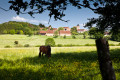
A hidden architectural gem near Saint-Jean-des-Échelles
 3.46 mi
+118 ft
-118 ft
1h 40
Easy
Departure from Saint-Jean-des-Échelles (Sarthe)
3.46 mi
+118 ft
-118 ft
1h 40
Easy
Departure from Saint-Jean-des-Échelles (Sarthe)
Situated on a small hill overlooking the surrounding area, the village, which takes its nickname from the Échelles farm, the former seat of the parish seigneury, offers a well-preserved architectural and landscape setting, dominated by the Church of Saint John the Baptist. Built inthe 12th century, this church underwent embellishment work in the16th century: what remains is the painted panelled vault, resting—an extremely rare feature—on posts placed against the walls, and above all the remains of an extraordinary altarpiece in carved and painted limestone, dated 1558. The décor was redesigned in the18th century with the installation of three new altarpieces.
The village of Dehault and its hillsides
 5.33 mi
+210 ft
-223 ft
2h 40
Easy
Departure from Dehault (Sarthe)
5.33 mi
+210 ft
-223 ft
2h 40
Easy
Departure from Dehault (Sarthe)
A lovely walk around the village of Dehault, through which the Montreteau flows. A hilly route with some beautiful sunken lanes.
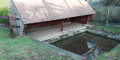
The heights of Dehault
 3.06 mi
+157 ft
-148 ft
1h 35
Easy
Departure from Dehault (Sarthe)
3.06 mi
+157 ft
-148 ft
1h 35
Easy
Departure from Dehault (Sarthe)
Over hill and dale, following the sunken paths and the Montretaux stream, discover the charming village of Dehault and its landscapes.
Around Cherreau
 3.81 mi
+272 ft
-272 ft
2h 00
Easy
Departure from Cherreau (Sarthe)
3.81 mi
+272 ft
-272 ft
2h 00
Easy
Departure from Cherreau (Sarthe)
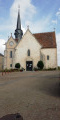
This walk offers beautiful views of La Ferté-Bernard and Cherreau.
Around Saint-Symphorien in Cherré-Au
 4.06 mi
+315 ft
-315 ft
2h 10
Easy
Departure from Cherreau (Sarthe)
4.06 mi
+315 ft
-315 ft
2h 10
Easy
Departure from Cherreau (Sarthe)
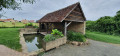
Cherré-Au is a new commune formed in 2019 by merging the communes of Cherré and Cherreau, located east of La Ferté-Bernard. The village of Cherreau has always been closely linked to the neighbouring town of La Ferté-Bernard. Indeed, in the Middle Ages, the lords of La Ferté took over the Abbey of La Pelice at the end ofthe 12th century. Then, in the14th century, the Domaine de la Plaisse was incorporated into that of La Ferté. More recently, as the town of La Ferté-Bernard expanded inthe 19th century, it encroached upon Cherreau, annexing the hamlets of Gué-Faux and La Fosse Fondue in 1889, which bordered the road to Paris.
The Beillé meadow
5.58 mi
+135 ft
-135 ft
2h 40
Easy
Departure from Beillé (Sarthe)
This walk follows the Huisne Valley and crosses the meadow where an American airfield was set up following the liberation of France in August 1944. A sign on site recounts the history of this temporary airfield.
Around Duneau
 Visorando Member2.42 mi
+138 ft
-138 ft
1h 15
Easy
Departure from Duneau (Sarthe)
Visorando Member2.42 mi
+138 ft
-138 ft
1h 15
Easy
Departure from Duneau (Sarthe)
The village of Duneau is located in a dominant position on the left bank of the Huisne, on a route that has been highly sought-after since prehistoric times. The Pierre Fiche menhir and the Pierre Couverte dolmen, dating from the Neolithic period (around 4000 BC), bear witness to this. These are the only visible archaeological remains among many others covering the periods of Antiquity and the Middle Ages.
La Tuilerie des Saules via the hills of Souvigné-sur-Même
 8.10 mi
+659 ft
-653 ft
4h 20
Moderate
Departure from Souvigné-sur-Même (Sarthe)
8.10 mi
+659 ft
-653 ft
4h 20
Moderate
Departure from Souvigné-sur-Même (Sarthe)
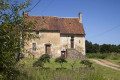
This walk starts in the village of Souvigné-sur-Même and follows sunken paths lined with pollarded trees, allowing you to explore the bocage, the grazing meadows, the woods and the surrounding countryside. The rolling hills offer views from their summits of the villages of Préval and Avezé and the Huisne and Même valleys.
Around the fortified church of Saint-Georges-du-Rosay
 Association / Club / Walk leader
 8.97 mi
+131 ft
-135 ft
4h 15
Moderate
Departure from Saint-Georges-du-Rosay (Sarthe)
8.97 mi
+131 ft
-135 ft
4h 15
Moderate
Departure from Saint-Georges-du-Rosay (Sarthe)
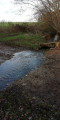
Discover the fortified church of Saint-Georges-du-Rosay and explore the countryside criss-crossed by beautiful sunken paths. The presence of numerous springs means the route remains particularly damp all year round. Sturdy footwear is recommended.
An unusual walk in Dollon
 14.36 mi
+715 ft
-689 ft
7h 15
14.36 mi
+715 ft
-689 ft
7h 15
 Difficult
Departure from Dollon (Sarthe)
Difficult
Departure from Dollon (Sarthe)
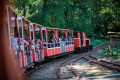
This route will allow you to discover the villages of Lavaré, Dollon and Semur-en-Vallon. These villages developed in the Middle Ages on land that was often sandy or stony, not particularly suitable for farming before modernisation. The villagers therefore found additional sources of income through textile crafts and the extraction of building materials. Situated away from major transport routes, these villages have retained their vitality despite the rural exodus that affected them following the decline of rural industries and traditional activities. Furthermore, these villages have managed to maintain a vibrant community life, fostering the development of unique events and venues such as the tourist train in Semur-en-Vallon and the Museum of Mechanical Music in Dollon.
The Avezé and Souvigné plateau, starting from L’Orgerie
3.62 mi
+30 ft
-30 ft
1h 40
Easy
Departure from Souvigné-sur-Même (Sarthe)
A pleasant walk through the woods and countryside of Avezé along sunken paths.
Panoramic views over the Prairies d'Avezé
 6.80 mi
+377 ft
-384 ft
3h 25
Moderate
Departure from Avezé (Sarthe) (Sarthe)
6.80 mi
+377 ft
-384 ft
3h 25
Moderate
Departure from Avezé (Sarthe) (Sarthe)
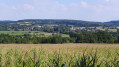
This route, which alternates between sunken lanes, forest paths and flat sections, will take you to the hill overlooking the Huisne Valley to the west. Along the way, several panoramic views allow you to admire the meadows of Avezé, a veritable hay barn that has provided for generations of farmers.
In the heart of the Perche countryside from Avezé
 8.17 mi
+367 ft
-367 ft
4h 05
Moderate
Departure from Avezé (Sarthe) (Sarthe)
8.17 mi
+367 ft
-367 ft
4h 05
Moderate
Departure from Avezé (Sarthe) (Sarthe)
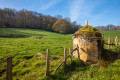
The village of Avezé developed in the Middle Ages to the north-east of the church, which was rebuilt inthe 16th century, at the same time as the priory that adjoined it, of which only extensive farm buildings remain. The main street is dominated by a large two-storey house known as the “Maison du prieur” (Prior’s House), dating from the 15th or 16th century, notable for its rear stair tower and its elegant façade that juts out over the current street.
The Abadie factory, the Saules tile works and the Jambette Valley
 17.33 mi
+1,158 ft
-1,161 ft
9h 00
Difficult
Departure from Avezé (Sarthe) (Sarthe)
17.33 mi
+1,158 ft
-1,161 ft
9h 00
Difficult
Departure from Avezé (Sarthe) (Sarthe)
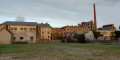
This walk takes you through the Avezé forest to the outskirts of Saint-Germain-de-la-Coudre, passing by the Saules tile works. Winding through the hills, the route passes through Le Theil, a once-thriving industrial town and home to the former Abadie factories, now listed as heritage sites. Then, following the sunken paths, you’ll explore the Jambette Valley before returning to Avezé via the Beauvais woods and the panoramic views over the Huisne Valley.
The woods of Beauvais
 7.14 mi
+548 ft
-538 ft
3h 45
Moderate
Departure from Avezé (Sarthe) (Sarthe)
7.14 mi
+548 ft
-538 ft
3h 45
Moderate
Departure from Avezé (Sarthe) (Sarthe)
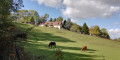
A lovely walk along sunken paths, through woodland and across the gentle hills of the Perche. Panoramic views of the Huisne and Maroisse valleys.
In the shade of the hedgerows towards Thorigny-sur-Dué
 7.30 mi
+203 ft
-213 ft
3h 30
Moderate
Departure from Thorigné-sur-Dué (Sarthe)
7.30 mi
+203 ft
-213 ft
3h 30
Moderate
Departure from Thorigné-sur-Dué (Sarthe)
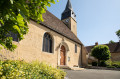
A few archaeological finds attest to human presence in Thorigné as far back as the Neolithic period. In Gallo-Roman times, a large agricultural estate (villa) is thought to have been the origin of a permanent settlement, which is better documented from the Middle Ages onwards. Despite the destruction of its medieval castle, which was replaced by a bourgeois house in the19th century, Thorigné stands out as a fairly large village offering a wide variety of civil architecture, spread out along the main axis linking the Dué valley to the church. Probably of Romanesque origin, the church was enlarged in the16th century and remodelled inthe 18th century . It houses interesting stained-glass windows and furnishings, such as the high altarpiece dating from 1669 and the18th-century side altarpieces.