


Refine your search for walks in Vieux-Ferrette
Vieux-Ferrette walks
 The Dwarves' Cave
 Visorando Member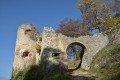
 5.37 mi
 +1,220 ft
 -1,211 ft
 3h 30
3h 30
 Moderate
 Departure from Ferrette (Haut-Rhin)
A beautiful hike to discover Ferrette, a beautiful medieval town with its castle and the Grotte des Nains (Dwarves' Cave) with its famous legend known to everyone in Alsace.
Ferrette, the Grotte des Nains, the Rossberg and the Kastelberg
 13.98 mi
+2,776 ft
-2,769 ft
8h 50
13.98 mi
+2,776 ft
-2,769 ft
8h 50
 Difficult
Departure from Ferrette (Haut-Rhin)
Difficult
Departure from Ferrette (Haut-Rhin)
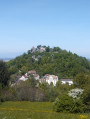
Ferrette is a medieval town situated in southern Alsace, in the Sundgau region at the gateway to the Jura. There are many places to see around the town, including the castle, the Loechlenfelsen, the Grotte des Nains, the Rossberg and the ruins on the Kastelberg. This walk forms a double circular route. You can therefore split the route into two sections. There are numerous viewpoints along this circular route, particularly in the first section, but most of the route runs through woodland.
Sundgau pedestrian route: Ferrette
 4.87 mi
+1,270 ft
-1,286 ft
3h 20
Moderate
Departure from Ferrette (Haut-Rhin)
4.87 mi
+1,270 ft
-1,286 ft
3h 20
Moderate
Departure from Ferrette (Haut-Rhin)
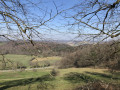
This is an opportunity to visit the ruined castle and the town of the powerful Counts of Ferrette. Narrow, romantic paths lead to stunning limestone promontories and the mysterious Grotte des Nains (Dwarves' Cave), which is the subject of a famous legend.
Route du Patrimoine de Koestlach
 4.49 mi
+600 ft
-617 ft
2h 35
Moderate
Departure from Kœstlach (Haut-Rhin)
4.49 mi
+600 ft
-617 ft
2h 35
Moderate
Departure from Kœstlach (Haut-Rhin)
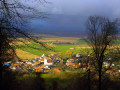
Koestlach has a rich heritage that we invite you to discover on this circular walk, which will take you up the slopes of the Burgerwald to explore the Celtic oppidum of Kasteberg. You will end your walk through the village by discovering the prestigious furnishings of Saint-Léger Church, as well as the Chapel of Our Lady of Seven Sorrows, the legends of Kugele and the village of Erzach, the presbytery of Nicolas Delfis and the remains of an ancient Gallo-Roman settlement.
Sundgau route: Durmenach - Luppach
 4.43 mi
+423 ft
-420 ft
2h 25
Moderate
Departure from Durmenach (Haut-Rhin)
4.43 mi
+423 ft
-420 ft
2h 25
Moderate
Departure from Durmenach (Haut-Rhin)
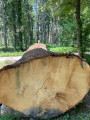
In warm weather, this is a pleasant walk from the Ill valley to the old bed of the Rhine at the foot of the Jura mountains. The well-marked path offers plenty of opportunities to rest and leads to a strange crypt, the last vestige of a convent destroyed during the Revolution, where the shadow of an exiled poet still lingers.
Sundgau route: Riespach - Feldbach
 6.08 mi
+194 ft
-184 ft
3h 00
Moderate
Departure from Haut-Rhin
6.08 mi
+194 ft
-184 ft
3h 00
Moderate
Departure from Haut-Rhin
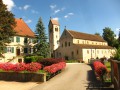
According to Marc Glotz, "The Sundgau has only two Romanesque churches, both founded by the dynasties that shared the region in the Middle Ages: the Habsburgs and the Ferrettes. While Ottmarsheim evokes Carolingian grandeur, Feldbach recalls monastic simplicity. You leave it as if returning from a pilgrimage, with a renewed sense of serenity and the impression of having encountered the fleeting shadows of the counts."
From Hippoltskirch Chapel to the Source of the Ill
 12.48 mi
+2,070 ft
-2,044 ft
7h 35
Difficult
Departure from Sondersdorf (Haut-Rhin)
12.48 mi
+2,070 ft
-2,044 ft
7h 35
Difficult
Departure from Sondersdorf (Haut-Rhin)
Many walkers head to Alsace in the Vosges mountains. However, the Sundgau has its own mountain range: the Jura. The walks there are more accessible. This particular walk starts at the Hippoltskirch chapel, then begins an ascent of around 300 to 400 metres in elevation gain before heading towards the Col du Neuneich viewpoint. Most of the walk takes place through woodland until you reach the source of the Ill, a river that flows through Alsace for 200 km. The return journey takes you through a mix of woodland, meadows and villages.
Sundgau Route: Around the Glaserberg (part 2)
 4.58 mi
+577 ft
-548 ft
2h 35
Moderate
Departure from Ligsdorf (Haut-Rhin)
4.58 mi
+577 ft
-548 ft
2h 35
Moderate
Departure from Ligsdorf (Haut-Rhin)
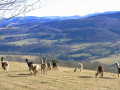
This walk can be started from the Col du Neuneich, which is accessible by car from the village of Ligsdorf (please note that this is a forest road). It is also the second part of the circular "Around the Glaserberg". It takes walkers to the heart of the Glaserberg massif, above Kiffis. You will reach a ridge offering superb panoramic views of the Swiss Jura before arriving at the Col du Blochmont and the Hornihof farm, home to hundreds of llamas grazing in the pastures.
The Signal du Glaserberg from the source of the Ill and via the Col du Neuneich
 10.00 mi
+1,450 ft
-1,444 ft
5h 50
Moderate
Departure from Winkel (Haut-Rhin)
10.00 mi
+1,450 ft
-1,444 ft
5h 50
Moderate
Departure from Winkel (Haut-Rhin)
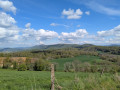
This hike allows you to discover parts of the region's history during the Second World War, in the context of the liberation of Alsace, by following part of the Sentier des Marocains (Moroccan Trail). It also allows you to discover magnificent landscapes in the Swiss Jura, the Sundgau and the foothills of the Vosges and the Black Forest, then to follow the source of the Ill on your return to the starting point.
The Big Oak Tree via the Raedersdorf Discovery Trail
 3.77 mi
+499 ft
-472 ft
2h 10
3.77 mi
+499 ft
-472 ft
2h 10
 Easy
Departure from Raedersdorf (Haut-Rhin)
Easy
Departure from Raedersdorf (Haut-Rhin)
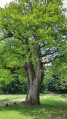
This family hike takes you to the majestic Gros Chêne de Sondersdorf. Entirely in the forest, it passes through the Raedersdorf Discovery Trail, decorated with around fifty (or more) wooden sculptures and dotted with educational panels that are sure to interest children. Best done in dry weather in any season.If you only want to do the discovery trail and see the sculptures, see Practical Information.
Sundgau circuit: Around the Glaserberg (part 1)
 3.84 mi
+466 ft
-459 ft
2h 10
Moderate
Departure from Winkel (Haut-Rhin)
3.84 mi
+466 ft
-459 ft
2h 10
Moderate
Departure from Winkel (Haut-Rhin)
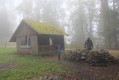
The walk leads to the heart of the Glaserberg massif, above Winkel. You will cross the Saint-Pierre State Forest to Neuneich, where you can enjoy sweeping views of the Alsatian Jura.
Morimont Castle via the source of the Largue and the Rocher de la Sorcière
 5.71 mi
+1,007 ft
-1,014 ft
3h 30
Moderate
Departure from Oberlarg (Haut-Rhin)
5.71 mi
+1,007 ft
-1,014 ft
3h 30
Moderate
Departure from Oberlarg (Haut-Rhin)
The hike has been modified and no longer passes by the Ferme de la Vacherie.
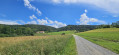
A lovely little walk, mostly on fairly wide paths, leading to beautiful viewpoints and sites of historical interest such as the Mannlefelsen caves and Morimont Castle.
There is a slight incline on the first part of the route to add a little spice to this easy hike.
Sundgau Circuit: Oberlarg - Around Morimont
 5.78 mi
+791 ft
-791 ft
3h 20
Moderate
Departure from Oberlarg (Haut-Rhin)
5.78 mi
+791 ft
-791 ft
3h 20
Moderate
Departure from Oberlarg (Haut-Rhin)
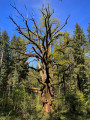
The landscapes you pass through here are among the most beautiful in the Sundgau region. The rock shelter of Mannlefelsen, a major Mesolithic site in Alsace, precedes the Ebourbettes, which tell the story of General Giraud's escape in 1942. Further on, the ruins of Morimont offer an interesting history lesson on how a medieval castle was adapted to firearms.
Circuit du Sundgau: The Etangs de Bisel walk
 7.30 mi
+98 ft
-98 ft
3h 25
Moderate
Departure from Bisel (Haut-Rhin)
7.30 mi
+98 ft
-98 ft
3h 25
Moderate
Departure from Bisel (Haut-Rhin)
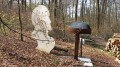
Speaking of this part of the Sundgau, André Gide wrote:"One is constantly surprised, as one crosses the forest, to find oneself in the presence of an unsuspected sheet of water, mysteriously asleep in the shelter of the beech forests; rushes adorn narrow sandy beaches at the edge of large fields of water lilies. There are also several reminders of the First World War and the front line that separated Largitzen from Bisel.
From Linsdorf to Bettlach via the Casemates Trail
 6.63 mi
+384 ft
-384 ft
3h 25
Moderate
Departure from Linsdorf (Haut-Rhin)
6.63 mi
+384 ft
-384 ft
3h 25
Moderate
Departure from Linsdorf (Haut-Rhin)
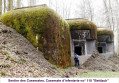
Starting from Linsdorf, between forest and fields, the route climbs to the Eichwald plateau, alternating between woods and fields, leading successively to the Abri de la Fuste, on the heights of Bettlach, and the Sentier des Casemates, connecting three imposing forts of the Maginot Line. The Casemates Trail is dotted with information panels explaining the history of the Maginot Line. The route also offers beautiful views of the Ill Valley and the Jura Mountains.
Lucelle Petit Kohlberg - Porrentruy
 13.37 mi
+968 ft
-1,768 ft
7h 00
Difficult
Departure from Lucelle (Haut-Rhin)
13.37 mi
+968 ft
-1,768 ft
7h 00
Difficult
Departure from Lucelle (Haut-Rhin)
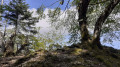
This second stage begins in France and rejoins the Jura trail at the Ébourbettes farm. You will walk along a border path and, at Roc au Corbeau, enjoy a view of Alsace. Until Vendlincourt, you will walk through alternating pastures and wooded areas. Before arriving in Porrentruy, you will enjoy an open-air exhibition of wooden animal sculptures. Don't miss a visit to the historic town of Porrentruy and its castle.
The Kilometre Zero Trail - World War I
 4.93 mi
+289 ft
-295 ft
2h 30
Easy
Departure from Pfetterhouse (Haut-Rhin)
4.93 mi
+289 ft
-295 ft
2h 30
Easy
Departure from Pfetterhouse (Haut-Rhin)
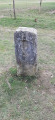
Kilometre Zero is the starting point of the front line established during theFirst World War. It is located on the current French-Swiss border, at a place called Le Largin. The Kilometre Zero trail explores three sections of the front line, the first kilometres of the French and German fronts, and the Swiss front at Le Largin, established along the border opposite the no man's land where boundary marker No. 111, considered the zero point of the Great War front line, is located.
Courtavon Circular
 3.84 mi
+623 ft
-623 ft
2h 20
Easy
Departure from Courtavon (Haut-Rhin)
3.84 mi
+623 ft
-623 ft
2h 20
Easy
Departure from Courtavon (Haut-Rhin)
A short circular walk starting from the Courtavon lake, alternating between fields and woodland at La Montagne.
A circular in the Swiss Jura near Kiffis
 12.60 mi
+2,205 ft
-2,205 ft
7h 45
Moderate
Departure from Basel-Landschaft
12.60 mi
+2,205 ft
-2,205 ft
7h 45
Moderate
Departure from Basel-Landschaft
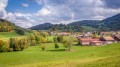
This hike takes place in the Swiss Jura mountains, both in the canton of Basel-Landschaft and especially in the canton of Jura, right on the border with France near Kiffis. Magnificent, varied landscapes of hills, pastures, forests and small villages clinging to the hillsides or nestled in the valleys. These are picture-postcard landscapes, which walkers can explore via paths and trails that wind their way up and down hills in beautiful, well-maintained natural surroundings.
The Mariastein Trail from Levoncourt
 18.36 mi
+2,582 ft
-2,503 ft
10 hrs
18.36 mi
+2,582 ft
-2,503 ft
10 hrs
 Very difficult
Departure from Levoncourt (Haut-Rhin) (Haut-Rhin)
Very difficult
Departure from Levoncourt (Haut-Rhin) (Haut-Rhin)
This path is used by pilgrims from Levoncourt and the surrounding area, who make the journey to Mariastein on the first Saturday of every October.
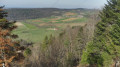
Around the source of the Largue
 8.24 mi
+1,142 ft
-1,138 ft
4h 45
Moderate
Departure from Levoncourt (Haut-Rhin) (Haut-Rhin)
8.24 mi
+1,142 ft
-1,138 ft
4h 45
Moderate
Departure from Levoncourt (Haut-Rhin) (Haut-Rhin)
Starting from the car park by Levoncourt church, a walk to begin around 9 am, arriving at the Oberlarg chalet around midday.
The Chaluet ponds
6.43 mi
+371 ft
-344 ft
3h 15
Moderate
Departure from Levoncourt (Haut-Rhin) (Haut-Rhin)
A countryside walk through meadows, woods and ponds, passing through two villages. Views of the foothills of the Jura.
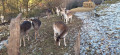
Around Levoncourt
 3.54 mi
+223 ft
-226 ft
1h 50
Easy
Departure from Levoncourt (Haut-Rhin) (Haut-Rhin)
3.54 mi
+223 ft
-226 ft
1h 50
Easy
Departure from Levoncourt (Haut-Rhin) (Haut-Rhin)
Short, easy walk, mainly on local paths.
Liebenstein Castle and the Oberlarg pastures
5.20 mi
+712 ft
-725 ft
3h 00
Easy
Departure from Levoncourt (Haut-Rhin) (Haut-Rhin)
A lovely walk mainly along forest paths, around the Montagne
Tour of Mont Perrou
 7.72 mi
+1,302 ft
-1,286 ft
4h 40
Moderate
Departure from Levoncourt (Haut-Rhin) (Haut-Rhin)
7.72 mi
+1,302 ft
-1,286 ft
4h 40
Moderate
Departure from Levoncourt (Haut-Rhin) (Haut-Rhin)
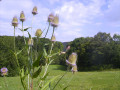
The village of Levoncourt is situated on the D411, 12 km from Ferrette. Mont Perrou is a 767-metre-high peak located in the Ajoie region of Switzerland, near the French-Swiss border.
Le Roc au Corbeau from Levoncourt
 5.56 mi
+1,050 ft
-1,020 ft
3h 30
Moderate
Departure from Levoncourt (Haut-Rhin) (Haut-Rhin)
5.56 mi
+1,050 ft
-1,020 ft
3h 30
Moderate
Departure from Levoncourt (Haut-Rhin) (Haut-Rhin)
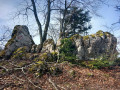
Climb up to Roc au Corbeau, which straddles the French-Swiss border.
The ridge of the Raemel massif from Wolschwiller
13.08 mi
+2,057 ft
-2,057 ft
8h 25
Difficult
Departure from Wolschwiller (Haut-Rhin)
The Raemel massif forms the northernmost foothills of the Jura. The highest point is the eponymous summit, also known as Raemelspitz, which rises to 831 metres. From the viewing platform, there is a breathtaking view of the surrounding area. Almost the entire route runs through woodland. Only the last 5 kilometres pass through orchards. Apart from the panoramic views, there are several points of interest along the route, including the Biederthal Gorges and the Lutter Spring.
Sundgau Circuit: Wolschwiller - Burg - Le Raemelsberg
 6.96 mi
+1,332 ft
-1,332 ft
4h 20
Moderate
Departure from Wolschwiller (Haut-Rhin)
6.96 mi
+1,332 ft
-1,332 ft
4h 20
Moderate
Departure from Wolschwiller (Haut-Rhin)
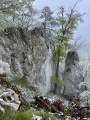
The Raemel mountain range, two kilometres long, blocks the horizon and rises to an altitude of 832 metres. It is the highest point in the Alsatian Jura, accessible via a picturesque limestone ridge, the Sentier des douaniers or smugglers' path, which follows the French-Swiss border. This is a fairly challenging walk, but it offers magnificent views of the Swiss Jura.
Lucelle, the Rocher de la Fille de Mai, the Pleigne plateau
 5.19 mi
+728 ft
-725 ft
3h 00
Easy
Departure from Lucelle (Haut-Rhin)
5.19 mi
+728 ft
-725 ft
3h 00
Easy
Departure from Lucelle (Haut-Rhin)
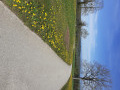
Hike through forests, meadows and pastures in a region of the Swiss Jura near the French border.
Les Hauts de Lucelle
 7.10 mi
+856 ft
-850 ft
4h 00
Moderate
Departure from Lucelle (Haut-Rhin)
7.10 mi
+856 ft
-850 ft
4h 00
Moderate
Departure from Lucelle (Haut-Rhin)
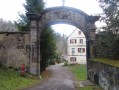
This is a pleasant hike where you will come across old farms and large boundary markers marking the Swiss border through a beautiful pine forest and, above all, the Abbaye de Lucelle, better known today as the "Centre Européen de Rencontres" (European Meeting Centre).
Sundgau route: Lucelle
 5.69 mi
+801 ft
-787 ft
3h 20
Moderate
Departure from Lucelle (Haut-Rhin)
5.69 mi
+801 ft
-787 ft
3h 20
Moderate
Departure from Lucelle (Haut-Rhin)
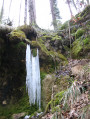
The walk begins at the site of Lucelle Abbey, isolated from the hustle and bustle of the world. The monastery was once a shining beacon and its history can still be seen in the few remaining buildings. From here, a Swiss getaway allows you to discover a curious rock shelter suspended above the river's source. You then climb back up to the plateau overlooking a valley enclosed between two wooded ridges and crossed by the winding waters of the Lucelle.
Roman Road and the Ill Valley starting from Willer
8.06 mi
+531 ft
-558 ft
4h 10
Moderate
Departure from Haut-Rhin
A lovely walk in the Sundgau starting from Willer.
Kleinlützel circular in the canton of Solothurn
 8.26 mi
+1,335 ft
-1,329 ft
5h 00
Moderate
Departure from Basel-Landschaft
8.26 mi
+1,335 ft
-1,329 ft
5h 00
Moderate
Departure from Basel-Landschaft
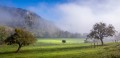
This hike takes place in the Swiss Jura mountains, in the canton of Solothurn, right on the border with France near Kiffis. Varied landscapes in beautiful, well-maintained natural surroundings. The path first runs along La Lucelle, then winds its way up and down hills, passing isolated farms at high altitude, pastures that tumble down to the valley floor and passes that offer breathtaking views of this part of the Jura. A very beautiful route, not to be missed.
From the Pleigne plateau to Lake Lucelle
 9.34 mi
+1,007 ft
-1,010 ft
5h 10
Moderate
Departure from Pleigne (Canton of Jura)
9.34 mi
+1,007 ft
-1,010 ft
5h 10
Moderate
Departure from Pleigne (Canton of Jura)
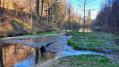
The peaceful village of Pleigne is located on a Jura plateau at an altitude of around 800 metres. It is the centre of a commune that stretches north to the French-Swiss border marked by the Lucelle, the river that gave its name to the lake and the small town famous for its Cistercian abbey.The route begins with the Pleigne panoramic trail and observation tower, then leaves the plateau, its pastures and farms, to descend around Lake Lucelle. Return along the river, passing close to the caves, to climb back up to the plateau through the Côte de May forest and its legendary Rocher de la Fille de Mai (Rock of the May Girl).
Sundgau route: the Hirsingue-Wittersdorf circular route via the Roman road
 12.56 mi
+843 ft
-843 ft
6h 30
Difficult
Departure from Hirsingue (Haut-Rhin)
12.56 mi
+843 ft
-843 ft
6h 30
Difficult
Departure from Hirsingue (Haut-Rhin)
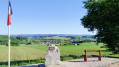
A long hike with superb views of the Vosges, the Black Forest and the Jura.
There are numerous points of interest with information boards, benches and water points along the route.
Sundgau route: between woods and ponds
 9.89 mi
+600 ft
-597 ft
5h 05
Moderate
Departure from Hirtzbach (Haut-Rhin)
9.89 mi
+600 ft
-597 ft
5h 05
Moderate
Departure from Hirtzbach (Haut-Rhin)
A hike through the beautiful Sundgau forests dotted with ponds, with no major difficulties except for the walking time.
There are many places to stop for a snack along the route.
Sundgau route: the forgotten bunkers
 8.59 mi
+443 ft
-449 ft
4h 20
Easy
Departure from Hirtzbach (Haut-Rhin)
8.59 mi
+443 ft
-449 ft
4h 20
Easy
Departure from Hirtzbach (Haut-Rhin)
A hike starting from Hirtzbach that passes through Largitzen and Heimersdorf.
There are many remnants of theFirst World War along the route.
Sundgau circuit in Hirtzbach
 5.34 mi
+413 ft
-404 ft
2h 50
Moderate
Departure from Hirtzbach (Haut-Rhin)
5.34 mi
+413 ft
-404 ft
2h 50
Moderate
Departure from Hirtzbach (Haut-Rhin)
Hirtzbach is well worth a visit. The castle, English park and opulent residences of Unterdorf are neatly lined up on either side of the stream, whose banks are beautifully flowered in summer. Along the way, a rural and wooded detour leads to the site of the vanished village of Sankt-Glückern and the Landfürstenweyer, the Princes' Pond, with its still waters.