


Refine your search for walks in Vielsalm
Vielsalm walks


 Route through the woods to Rencheux
 Visorando Member
 8.42 mi
 +1,033 ft
 -1,037 ft
 4h 45
4h 45
 Moderate
 Departure from Vielsalm (Province de Luxembourg)
A lovely walk around Rencheux, suitable for families, not accessible to people with reduced mobility. Can be done in all seasons. Wear good walking shoes. Pets are allowed but must be kept on a lead. Mainly forest paths.
Vielsalm - Gouvy
 10.65 mi
+1,572 ft
-1,237 ft
6h 15
Moderate
Departure from Vielsalm (Province de Luxembourg)
10.65 mi
+1,572 ft
-1,237 ft
6h 15
Moderate
Departure from Vielsalm (Province de Luxembourg)
La Salm Valley, known as Le Glain
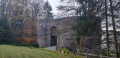
This stage ofthe GRP®571starts in Vielsalm in the Pays des Macralles, crosses the river at Salmchâteau and enters the Deux Ourthes Nature Park, heading towards the Ardennes plateau and Gouvy.
From Vielsalm station to Trois-Ponts station
11.33 mi
+1,440 ft
-1,765 ft
6h 30
 Difficult
Departure from Vielsalm (Province de Luxembourg)
Difficult
Departure from Vielsalm (Province de Luxembourg)
This Ardennes walk stretches across the heights of the left bank of the Salm. Set mainly in woodland, it offers magnificent views of the region. Relatively far from road traffic, it is a walk that rejuvenates body and mind through its tranquillity and the fresh air that is ever-present. The charming village of Goronne, the tranquillity of the Domaine de Farnières and the hamlet of Bergeval are much-loved stops along the way.
Towards Farnières Castle
 7.76 mi
+948 ft
-951 ft
4h 25
Moderate
Departure from Vielsalm (Province de Luxembourg)
7.76 mi
+948 ft
-951 ft
4h 25
Moderate
Departure from Vielsalm (Province de Luxembourg)
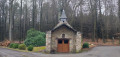
Wide forest paths and country roads take you to Farnières Castle and its chapel. Return via wide forest paths and finish along Vielsalm Lake.
Grand-Bois to Vielsalm: the treasures of the Salm region
 Tourism professional
 5.99 mi
+604 ft
-597 ft
3h 15
Difficult
Departure from Vielsalm (Province de Luxembourg)
5.99 mi
+604 ft
-597 ft
3h 15
Difficult
Departure from Vielsalm (Province de Luxembourg)
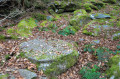
This walk takes you on a journey of discovery through the arkose and schist quarries of the Pays de Salm, the gold prospectors of La Rougerie, the Celts and their fortified settlement at the Celtic Camp, and the Quatre-Vents nature reserves.
From Bêche to Bêche
6.07 mi
+915 ft
-761 ft
3h 35
 Easy
Departure from Vielsalm (Province de Luxembourg)
Easy
Departure from Vielsalm (Province de Luxembourg)
Discover the landscapes and history of the people who shaped the Salm region. A lovely walk with very little road, mainly forest paths. Beautiful views at Bec du Corbeau, where history and nature come together on this walk.
Le Grand-Bois in Vielsalm via the arboretums
 5.30 mi
+367 ft
-338 ft
2h 25
Moderate
Departure from Vielsalm (Province de Luxembourg)
5.30 mi
+367 ft
-338 ft
2h 25
Moderate
Departure from Vielsalm (Province de Luxembourg)
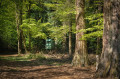
In the Grand-Bois forest in Vielsalm, starting from the Bêchefa clearing, the walk takes you through the Jardin sauvage and three arboretums. The two most recent are around thirty years old; the third, over a century old, is home to trees of impressive size.
This walk largely follows a route marked in red by the forestry services. However, the marked route does not pass through the "Jardin sauvage".
Circular route at Grand-Bois towards Vielsalm via Commanster
 7.36 mi
+620 ft
-610 ft
3h 55
Moderate
Departure from Vielsalm (Province de Luxembourg)
7.36 mi
+620 ft
-610 ft
3h 55
Moderate
Departure from Vielsalm (Province de Luxembourg)
A 12 km journey that can be done by mountain bike as well as on foot. The route passes through Commanster, a village nestled in the heart of the forest. This walk offers an opportunity to discover what ‘abissage’ is.
Ardennes walk around Odrimont
 9.90 mi
+1,037 ft
-1,040 ft
5h 25
Moderate
Departure from Lierneux (Province de Liège)
9.90 mi
+1,037 ft
-1,040 ft
5h 25
Moderate
Departure from Lierneux (Province de Liège)
Offering stunning panoramic views in a rolling landscape alternating between open countryside and woodland, mostly on hilltops, this walk takes you to explore the Prés de la Lienne Nature Reserve, Belgium’s first forest wind farm, the village of Arbrefontaine, its chapel and 18th-century wayside cross, as well as the site of the former Odrimont mill.
The Grand-Bois de Vielsalm Circular Loop
13.72 mi
+1,175 ft
-1,188 ft
7h 20
Difficult
Departure from Vielsalm (Province de Luxembourg)
Explore the villages on the edge of the Grand-Bois de Vielsalm, a state-owned forest.
A long route with some elevation gain, mostly through woodland – the perfect way to experience this beautiful region of the Ardennes! Along the way, you’ll pass through several magnificent villages in the municipality of Vielsalm.
Le Grand-Bois in Vielsalm from Tinseubois
 4.75 mi
+325 ft
-331 ft
2h 30
Easy
Departure from Vielsalm (Province de Luxembourg)
4.75 mi
+325 ft
-331 ft
2h 30
Easy
Departure from Vielsalm (Province de Luxembourg)
Start and finish at the chapel in Tinseubois, where there is a small car park. It is easy to get there via the hamlet of Poteau or via Blanchefontaine. At the Ferme des Mauvaises, take the path to the right of the stone marker, then follow the meadow; you are on the former Belgian-Prussian border, which today separates the province of Liège from the province of Luxembourg. After 1.1 km, a path on the right will take you to Dewulf Road, which you’ll need to cross to reach the Schmitz Cross 1.75 km further on.If, by chance, you spot a beaver, please make sure you remain quiet.
The boundary markers at Logbiermé
 5.16 mi
+512 ft
-495 ft
2h 50
Easy
Departure from Trois-Ponts (Province de Liège)
5.16 mi
+512 ft
-495 ft
2h 50
Easy
Departure from Trois-Ponts (Province de Liège)
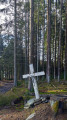
Lost in the woods, the old boundary markers demarcating the border between Belgium and Prussia still stand proudly there.
A walk in the forest amongst the heather
 5.84 mi
+522 ft
-495 ft
3h 10
Easy
Departure from Trois-Ponts (Province de Liège)
5.84 mi
+522 ft
-495 ft
3h 10
Easy
Departure from Trois-Ponts (Province de Liège)
A forest trail where you can discover the flora and old boundary markers marking the border between Belgium and Prussia. Although heather is mentioned, this walk can be enjoyed at any time of year.
Trois-Ponts, south side
 11.90 mi
+1,404 ft
-1,424 ft
6h 40
Difficult
Departure from Trois-Ponts (Province de Liège)
11.90 mi
+1,404 ft
-1,424 ft
6h 40
Difficult
Departure from Trois-Ponts (Province de Liège)
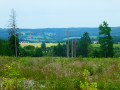
This lovely circular route to the south of Trois-Ponts offers a pleasant way to explore the region, with just the right amount of hills for the scenery without being too taxing on the calves. It’s a curious region where a hamlet called Fosse is definitely situated high up!The section after the Hêtre du Berger is particularly attractive and interesting in spring (broom, orchids, etc.).Then, before Bergeval, the route once again offers a beautiful panoramic stretch over the region before heading towards the Croix des Hottlîs and descending towards the Sanctuaire de la Vierge des Pauvres.One last short climb and it’s the descent towards Trois-Ponts, where the route follows the pretty Bâleur stream and its pond before returning to the starting point.
Trois-Ponts - Vielsalm
 12.67 mi
+1,788 ft
-1,444 ft
7h 25
Difficult
Departure from Trois-Ponts (Province de Liège)
12.67 mi
+1,788 ft
-1,444 ft
7h 25
Difficult
Departure from Trois-Ponts (Province de Liège)
La Salm Valley, whose real name is Le Glain
This stage ofthe GRP®571leaves the Amblève Valley and heads up the slopes of the La Salm Valley, known as Le Glain. The route changes banks several times until it reaches Vielsalm in the Pays des Macralles.
Over hill and dale around Trois-Ponts
10.97 mi
+1,683 ft
-1,703 ft
6h 30
Difficult
Departure from Trois-Ponts (Province de Liège)
The surroundings of Trois-Ponts and Coo are mainly forested, with paths and trails running through coniferous and deciduous trees. The rugged terrain highlights the panoramic views of the Ardennes and promises a sometimes very challenging route. In the heart of nature, the route connects with the site of Coo and its lower lake before returning to Trois-Ponts, again mainly through the woods.
Around the Fraiture hut
3.54 mi
+449 ft
-440 ft
2h 00
Easy
Departure from Vielsalm (Province de Luxembourg)
This family walk is easy, wooded and pleasant, offering a guaranteed change of scenery.
Follow the yellow and white markers.
In the heart of one of our Ardennes forests around Montleban
6.40 mi
+564 ft
-564 ft
3h 25
Moderate
Departure from Gouvy (Province de Luxembourg)
As a resident of the pretty little village of Montleban, I’d like to suggest a route to my fellow walkers and/or joggers that consists of 90% wooded paths and 10% quiet, unpaved roads.
Throughout the walk, you may be lucky enough to encounter a family of wild boars or deer.
Sterpigny – Rodt Sankt-Vith
 14.25 mi
+840 ft
-587 ft
7h 15
Difficult
Departure from Gouvy (Province de Luxembourg)
14.25 mi
+840 ft
-587 ft
7h 15
Difficult
Departure from Gouvy (Province de Luxembourg)
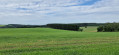
Here we are in the Eastern Cantons. This region isn’t part of Wallonia, but I’ve included it in my ‘Parkin’son tour of Wallonia’ all the same. Through a succession of climbs, some of which are quite steep, as are the descents, we gradually make our way towards the highest altitudes in Belgium. Mainly via paths, tracks and back roads, we link up the various villages and small towns situated between Sterpigny and Rodt, namely Gouvy, Aldringen, Maldingen and Crombach.
Nature getaway in Sterpigny
 14.68 mi
+1,214 ft
-1,227 ft
7h 50
Difficult
Departure from Gouvy (Province de Luxembourg)
14.68 mi
+1,214 ft
-1,227 ft
7h 50
Difficult
Departure from Gouvy (Province de Luxembourg)
Crossed by the Ourthe Orientale, Gouvy boasts magnificent landscapes to discover as you follow the river, with countryside and forests alternating between deciduous and coniferous trees. In autumn, it is of course the deciduous trees that leave the greatest impression!
From Gouvy station to Vielsalm station
12.32 mi
+1,112 ft
-1,457 ft
6h 40
Moderate
Departure from Gouvy (Province de Luxembourg)
From Gouvy to Vielsalm, skirting Courtil and Provèdroux, the route is quintessentially Ardennes and serene. It alternates between peaceful forest stretches and open countryside, with gently rolling hills. The terrain becomes more undulating as you approach Vielsalm. The walk through the hamlet of La Comté, followed by the climb over the next ridge with its magnificent views, is a real treat. This is followed by the typical descent towards Vielsalm, where you’ll find it all: schist, the Bonalfa forest, blueberry bushes… and the ‘macralles’ (witches)!
A few markers on the Ourthe side
 10.93 mi
+620 ft
-597 ft
5h 35
Moderate
Departure from Gouvy (Province de Luxembourg)
10.93 mi
+620 ft
-597 ft
5h 35
Moderate
Departure from Gouvy (Province de Luxembourg)
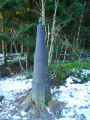
You’ll cover almost 18 kilometres and will also come across two other very different types of boundary markers: two stone ones marking the former Belgian-Prussian border and two metal ones, still very much in use, between Belgium and the Grand Duchy of Luxembourg.The Eastern Ourthe, meanwhile, is not very prominent, but towards the end of the route you’ll walk alongside a beautiful nature reserve on the banks of its tributary, known as the Fooschtbaach in the Grand Duchy and the Pihon in Belgium.
More walks in Vielsalm
Select a point of interest below: