


Refine your search for walks in Naisey-les-Granges
Naisey-les-Granges walks


 Tour du Mont de Naisey
 Visorando Member
 8.20 mi
 +1,076 ft
 -1,076 ft
 4h 40
4h 40
 Moderate
 Departure from Naisey-les-Granges (Doubs)
Balade entièrement forestière et empruntant des chemins blancs et forestiers.
A walk amongst the tall trees in the Verrière du Grosbois forest
5.98 mi
+269 ft
-269 ft
3h 00
 Easy
Departure from Étalans (Doubs)
Easy
Departure from Étalans (Doubs)
You feel very small on this walk... perfect for tree lovers.
The Source du Gour
 5.51 mi
+289 ft
-289 ft
2h 45
Moderate
Departure from Bouclans (Doubs)
5.51 mi
+289 ft
-289 ft
2h 45
Moderate
Departure from Bouclans (Doubs)
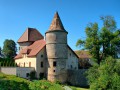
A peaceful walk in our Comtois countryside to discover the riches of two villages on the first step of the plateau: the remains of an ancient castle that allow us to dream of the lost beauty of our once fortified villages and the often overlooked treasures of their churches.
Nancray Mill Route
 6.06 mi
+538 ft
-554 ft
3h 15
Moderate
Departure from Nancray (Doubs)
6.06 mi
+538 ft
-554 ft
3h 15
Moderate
Departure from Nancray (Doubs)
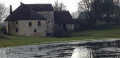
Explore Nancray, its water springs, its old mill, the Bois de la Côte, and finally return via the Forêt des Landes. And of course, take the opportunity to visit the Nancray Open-Air Ecomuseum of Comtois Houses, featuring around thirty typical rural houses from Franche-Comté.
The Gonsans nature trail
 5.48 mi
+479 ft
-463 ft
2h 55
Easy
Departure from Gonsans (Doubs)
5.48 mi
+479 ft
-463 ft
2h 55
Easy
Departure from Gonsans (Doubs)
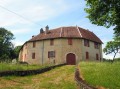
A rural walk through pine forests dotted with clearings where deer leap about, leading you to discover a statue of Our Lady of Lourdes that has found its way into the Comté region, a cave with two-hundred-year-old graffiti, a fortified house and the beautiful church of Gonsans, clad in wooden shingles and featuring fine statuary.
The Brême Gorges
 4.48 mi
+486 ft
-492 ft
2h 30
Easy
Departure from Charbonnières-les-Sapins (Doubs)
4.48 mi
+486 ft
-492 ft
2h 30
Easy
Departure from Charbonnières-les-Sapins (Doubs)
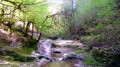
A countryside and woodland walk to explore the small, wild gorges of the Brême stream, complementing a visit to the Dino-Zoo.
The Tourbillon Rock
 5.48 mi
+568 ft
-551 ft
3h 00
Easy
Departure from Trépot (Doubs)
5.48 mi
+568 ft
-551 ft
3h 00
Easy
Departure from Trépot (Doubs)
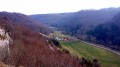
You will walk along an old railway line that has been converted into a footpath to reach the Rocher du Tourbillon viewpoint overlooking the charming little valley of La Brême. Return via the plateau with views of the Comté hills and the Hautepierre rock.
The Gratteris circular route via the Saint-Maximin Chapel, Les Roches and Mamirolle
6.79 mi
+738 ft
-745 ft
3h 45
Moderate
Departure from Le Gratteris (Doubs)
A walk with no particular difficulties, passing through beautiful forests where forestry work has, in places, left the paths a little rough. You’ll pass through the lovely site of the Saint-Maximin Chapel, then the Roches viewpoint will offer you a view over much of the plateau. You’ll then walk along a lovely forest track that will take you to the outskirts of Mamirolle. The return journey takes you through meadows and along the edges of the woods. Perhaps you’ll be lucky enough to spot some chamois in the pastures behind Le Gratteris or near the rocks? You can also visit the arboretum before enjoying the chapel grounds and their wooden tables, which are perfect for a rest.
The GPX track may prove useful.
The Belvédère du Gratteris and the Saint-Maximin Chapel
 5.29 mi
+548 ft
-548 ft
2h 55
Easy
Departure from Le Gratteris (Doubs)
5.29 mi
+548 ft
-548 ft
2h 55
Easy
Departure from Le Gratteris (Doubs)
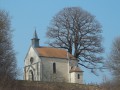
A short walk through the forest takes you from the very Catholic hermitage of Saint-Maximin to the prehistoric pagan dolmens. You will end up at the viewpoint overlooking Le Gratteris, whose name comes from the Celtic word kratt, meaning a stony field where you had to scratch hard to earn your livelihood.
Le Gratteris
 6.33 mi
+692 ft
-679 ft
3h 30
Easy
Departure from Le Gratteris (Doubs)
6.33 mi
+692 ft
-679 ft
3h 30
Easy
Departure from Le Gratteris (Doubs)
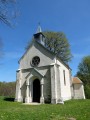
A short walk through the forest takes you from the very Catholic hermitage of Saint-Maximin to the prehistoric pagan dolmens. Then there is the viewpoint over Le Gratteris, whose name comes from the Celtic word kratt, meaning a stony field where you had to scratch hard to earn your livelihood. Return via the top of Mamirolle through the pastures.
Sentiers des Crêtes
 5.07 mi
+748 ft
-738 ft
3h 00
Moderate
Departure from Champlive (Doubs)
5.07 mi
+748 ft
-738 ft
3h 00
Moderate
Departure from Champlive (Doubs)
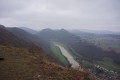
This easy route alternates between a ridge trail offering views of the Doubs valley and more wooded sections.
The Saut de la Brême
 5.14 mi
+725 ft
-748 ft
3h 00
Easy
Departure from Saules (Doubs)
5.14 mi
+725 ft
-748 ft
3h 00
Easy
Departure from Saules (Doubs)
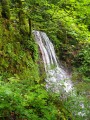
Off the beaten track, discover the little-known Saut de la Brême waterfall and the deep Ravin de Saules by following the stream and hopping from stone to stone. You may get your feet wet, but you will discover a wild world of moss, rocks and freshness. Return via the ruins of the Moulin du Défois mill.
The Gouffre du Seu and the Belvédère du Rechandet
 9.16 mi
+1,056 ft
-1,053 ft
5h 10
Moderate
Departure from Dammartin-les-Templiers (Doubs)
9.16 mi
+1,056 ft
-1,053 ft
5h 10
Moderate
Departure from Dammartin-les-Templiers (Doubs)
From Dammartin, a Templar commandery until 1373, you will cross a beautiful pine forest, giving our Comtois countryside a slightly Landes-like appearance, to spot a few herons in the hollow of the pond. Then, from the Gouffre du Seu, you will reach Bretigney with its beautiful fountains and return via the superb ridge line and its rocks, with views over the Doubs valley and the Vosges mountains.
The Landes Circular Walk in Gennes
 5.20 mi
+525 ft
-502 ft
2h 50
Easy
Departure from Gennes (Doubs)
5.20 mi
+525 ft
-502 ft
2h 50
Easy
Departure from Gennes (Doubs)
A hillside walk through the forest between Gennes and Nancray. Explore the old village of Gennes, then take in the scents of the fir forest, and finally the field of wild blackberries, which are a delight to pick from September to October.
Circular walk starting from Saône
 6.62 mi
+269 ft
-246 ft
3h 15
Moderate
Departure from Saône (Doubs)
6.62 mi
+269 ft
-246 ft
3h 15
Moderate
Departure from Saône (Doubs)
Walk starting from Saône towards Gennes and back via the Bois de la Petite Chevillotte.
The Abbey of Grace of God
 4.66 mi
+407 ft
-387 ft
2h 30
Easy
Departure from Chaux-lès-Passavant (Doubs)
4.66 mi
+407 ft
-387 ft
2h 30
Easy
Departure from Chaux-lès-Passavant (Doubs)
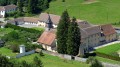
A short, varied and shaded route to discover the ancient Hiboux valley, the old Cistercian abbey and the magnificent Audeux waterfall.
The Batterie des Rattes and the Fort d’Épesses
 4.82 mi
+656 ft
-640 ft
2h 45
Easy
Departure from Gennes (Doubs)
4.82 mi
+656 ft
-640 ft
2h 45
Easy
Departure from Gennes (Doubs)
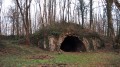
A short walk through the woods to discover these two batteries, which complemented the Fort de Montfaucon completed in 1878. They form part of the first phase of construction of the Besançon fortified camp and are named after the wooded localities in the midst of which they are situated.
The Rocks of Château Loriot, the Chapel of Aigremont
 8.20 mi
+1,955 ft
-1,955 ft
5h 30
Moderate
Departure from Deluz (Doubs)
8.20 mi
+1,955 ft
-1,955 ft
5h 30
Moderate
Departure from Deluz (Doubs)
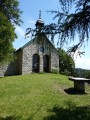
This is a challenging hike offering three viewpoints over the Doubs valley and its meanders, the Val de Roulans, the Jura mountains and, on a clear day, Mont Blanc. You will visit the two villages in the valley, Laissey and Deluz, which are peaceful today but still echo with the industrious sounds of the old mines and paper mills, and enjoy their genuine and simple riches: here a naive war memorial, there an ancient forgotten cul-de-four oven or an old wash house.
The Sous Roche Cave
 4.63 mi
+1,181 ft
-1,165 ft
3h 10
Moderate
Departure from Deluz (Doubs)
4.63 mi
+1,181 ft
-1,165 ft
3h 10
Moderate
Departure from Deluz (Doubs)
Forest walk to the viewpoint of the Chapelle de Montoille sur Deluz and the Doubs valley, peaceful today but still echoing with the industrious sounds of the old mines and paper mills of yesteryear, to the Rochers du Château Loriot viewpoint, and finally down to the Grotte de sous Roche and the village.
The Arcier Springs via the Grand Bois, starting from Gennes
 5.16 mi
+1,283 ft
-1,270 ft
3h 30
Moderate
Departure from Gennes (Doubs)
5.16 mi
+1,283 ft
-1,270 ft
3h 30
Moderate
Departure from Gennes (Doubs)
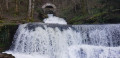
Follow the water’s path as it disappears into the underground channels (see ‘During’ section below) at Saône, Gennes and Nancray, only to reappear near Arcier. The footpath and small roads through the woodland will take you from one hillside to the other, offering alternating views of the plateau and the Doubs valley, before you reach the water again at the Arcier springs.
Circular route from Gennes to Nancray via the woods of Faule and La Côte
7.75 mi
+466 ft
-479 ft
4h 00
Moderate
Departure from Gennes (Doubs)
A walk through the forest along dirt tracks and local roads. Passing by the Moulin Neuf and the Source du Fontenis.
The Calvary of Rochandeux
 6.38 mi
+574 ft
-574 ft
3h 25
Moderate
Departure from Aïssey (Doubs)
6.38 mi
+574 ft
-574 ft
3h 25
Moderate
Departure from Aïssey (Doubs)
From Aïssey, a village in the Comté region destroyed during the fighting in June 1940, you will climb in the footsteps of the carts of yesteryear to the strange Calvaire de Rochandeux and its viewpoint over the Val de Saint-Juan. You will return, following in the footsteps of other soldiers, this time more ancient, by walking along the old Roman road.
Mont Souvance
 4.91 mi
+1,480 ft
-1,486 ft
3h 35
Moderate
Departure from Laissey (Doubs)
4.91 mi
+1,480 ft
-1,486 ft
3h 35
Moderate
Departure from Laissey (Doubs)
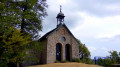
A challenging climb to Pic d'Aigremont and Mont Souvance, overlooking the Doubs Valley and visible from Besançon and Baume-les-Dames, observation points already used by the Romans. The discovery of various small objects from the Bronze Age at the summit of Mont Souvance, where the cross stands, indicates occupation since the Bronze Age.
The Château de Vaite viewpoint
 4.58 mi
+1,033 ft
-1,033 ft
3h 00
Easy
Departure from Champlive (Doubs)
4.58 mi
+1,033 ft
-1,033 ft
3h 00
Easy
Departure from Champlive (Doubs)
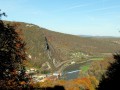
A rocky outcrop, a Bronze Age residence in Franche-Comté; a feudal castle destroyed during the Revolution for fear that it would become a hideout for bandits; views of the Doubs valley; a pretty waterfall created by human hands in a bright and airy woodland setting.
The dolmens of the Bois de l’Ange Gardien
 4.11 mi
+433 ft
-449 ft
2h 15
Easy
Departure from Foucherans (Doubs)
4.11 mi
+433 ft
-449 ft
2h 15
Easy
Departure from Foucherans (Doubs)
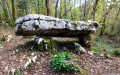
A short walk through the Bois du Mont to discover the wild charms of our Comtois karst forests and their sharp limestone pavements, which some might mistake for dolmens. Along the way, you’ll find beautiful wash-house fountains, a viewpoint over the Saône plain, an arboretum and the Saint-Maximin Chapel, where medieval pilgrims led a joyful life.
The sinkholes of the Bois du Mont
 4.82 mi
+423 ft
-440 ft
2h 35
Easy
Departure from Foucherans (Doubs)
4.82 mi
+423 ft
-440 ft
2h 35
Easy
Departure from Foucherans (Doubs)
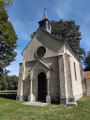
A short walk through the Bois du Mont to discover the untamed charms of our Comtois karst forests, amongst sinkholes, sharp limestone pavements and rocks with sometimes astonishing shapes that some might mistake for dolmens. Along the way, you’ll find beautiful wash-house fountains, a ‘caborde’ (a type of covered shelter), an arboretum, a viewpoint overlooking the Saône plain, and the Chapel of Saint-Maximin, where, it is said, medieval pilgrims led a joyful life. A walk through the countryside and woodland, combining heritage with natural curiosities.
La Roche Blanche
 9.37 mi
+1,138 ft
-1,142 ft
5h 20
Moderate
Departure from Vaire-Arcier (Doubs)
9.37 mi
+1,138 ft
-1,142 ft
5h 20
Moderate
Departure from Vaire-Arcier (Doubs)
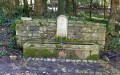
From the sumptuous Château de Vaire-le-Grand, the whim and ruin of Jean-Antoine Boisot, son of a close friend of King Louis XIV, you will climb towards La Roche Blanche. This is an unsecured viewpoint (caution!) over the Doubs valley. You will be taken by surprise by the rustic fountain of Les Tilleuls and descend via the beautiful sunken path lined with wild garlic at La Vacherie. You will then return along the riverbank, in the shade of the Rochers du Château Loriot, to discover the old paper mill.
The Rocher du Tourbillon and the Brême Valley
 1.98 mi
+312 ft
-315 ft
1h 10
Easy
Departure from Bonnevaux-le-Prieuré (Doubs)
1.98 mi
+312 ft
-315 ft
1h 10
Easy
Departure from Bonnevaux-le-Prieuré (Doubs)
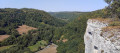
From Bonnevaux-du-Haut, you’ll descend along lovely paths to the Rocher du Tourbillon viewpoint overlooking the charming little Brême valley, then walk through a beautiful, sun-drenched forest slope and return to the village via sun-drenched pastures with views of the Jura mountains.
The Plaisir Fontaine Cave
 3.29 mi
+571 ft
-574 ft
2h 00
Easy
Departure from Bonnevaux-le-Prieuré (Doubs)
3.29 mi
+571 ft
-574 ft
2h 00
Easy
Departure from Bonnevaux-le-Prieuré (Doubs)
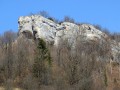
It is difficult to walk through our Loue valley without mentioning Gustave Courbet, who made this stream famous with his painting The Deer Slaughter at the Plaisir Fontaine Stream. He is also said to have painted his Self-Portrait with Black Dog here. Once again, you will follow in his footsteps to climb the Rocher du Tourbillon for superb views of the steep-sided Brême valley and finally return via the Ancien Prieuré de Bonnevaux, of which only the 12th-century bell tower remains.
Circular La Roche Bottine from Saules
 5.93 mi
+545 ft
-522 ft
3h 10
Moderate
Departure from Saules (Doubs)
5.93 mi
+545 ft
-522 ft
3h 10
Moderate
Departure from Saules (Doubs)
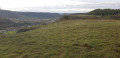
A lovely walk in the forest with beautiful views of the Loue valley from Ornans to Montgesoye from Roche Lahier and Roche Bottine.
Aigremont Mountain
 7.06 mi
+1,867 ft
-1,867 ft
4h 50
Moderate
Departure from Deluz (Doubs)
7.06 mi
+1,867 ft
-1,867 ft
4h 50
Moderate
Departure from Deluz (Doubs)
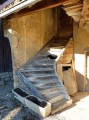
Aigremont overlooks the Doubs valley. Once crowned by a small fortified castle, legend has it that on these ruins, a shepherd intrigued by the behaviour of his flock—which was drawn to a patch of evergreen grass—discovered a statue of the Virgin Mary. Carried down to the village, it mysteriously returned to its rock, where a chapel was built. You will reach it by following magnificent jagged ledges, discovering from these heights the Jura mountains and, on a clear day, Mont Blanc.
The Brême Valley: The priory, the Roche du Grand and the castle
 8.31 mi
+1,348 ft
-1,348 ft
5h 00
Moderate
Departure from Bonnevaux-le-Prieuré (Doubs)
8.31 mi
+1,348 ft
-1,348 ft
5h 00
Moderate
Departure from Bonnevaux-le-Prieuré (Doubs)
Starting from the bell tower of the old medieval priory, you will cross the cool Brême valley so often painted by Courbet. Then you will climb through a beautiful fir forest sheltered by stunning rocks, passing large boulders detached from the cliffs, towards the Grand viewpoint overlooking the upper Loue valley, Ornans and the Val de Scey. Continuing towards the Fontaine aux Vipères and then the castle overlooking the town, you will descend into the valley via a picturesque mule track.
The Brême Valley and the Plaisir Fontaine Caves
 7.58 mi
+1,093 ft
-1,102 ft
4h 25
Moderate
Departure from Bonnevaux-le-Prieuré (Doubs)
7.58 mi
+1,093 ft
-1,102 ft
4h 25
Moderate
Departure from Bonnevaux-le-Prieuré (Doubs)
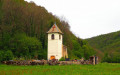
From the old priory, you will climb to the Rocher du Tourbillon viewpoint overlooking the charming little valley of La Brême, then walk along an old railway line converted into a footpath, before climbing back up to the wild cornices via sunken paths reminiscent of enchanted forests, and finally descending to the foot of the rocks towards the Plaisir Fontaine caves.
Le Saut du Chevalier
 4.31 mi
+755 ft
-725 ft
2h 40
Easy
Departure from Bonnevaux-le-Prieuré (Doubs)
4.31 mi
+755 ft
-725 ft
2h 40
Easy
Departure from Bonnevaux-le-Prieuré (Doubs)
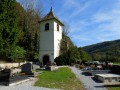
Starting from the bell tower of the former medieval priory, you will cross the cool Brème valley, so often painted by Courbet. Then, climbing back up to the Saut du Chevalier viewpoint, you will descend into the valley via a picturesque mule track.
From Brême to Loue
 7.64 mi
+1,040 ft
-1,010 ft
4h 25
Moderate
Departure from Bonnevaux-le-Prieuré (Doubs)
7.64 mi
+1,040 ft
-1,010 ft
4h 25
Moderate
Departure from Bonnevaux-le-Prieuré (Doubs)
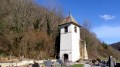
Starting from the bell tower of the old medieval priory, you will cross the cool Brême valley, so often painted by Courbet. You will climb up to the Saut du Chevalier viewpoint to reach the Vierge de la Roche du Mont, continuing along the cornices towards the Roche des Pins and its views over the Loue valley. You will climb up to the Septfontaine plateau and its views of the Jura mountains, before finally descending towards the Brême via a picturesque mule track.
The Chapel of Montoille and the Rocks of Château-Loriot
 7.20 mi
+1,512 ft
-1,486 ft
4h 40
Moderate
Departure from Vaire-le-Petit (Doubs)
7.20 mi
+1,512 ft
-1,486 ft
4h 40
Moderate
Departure from Vaire-le-Petit (Doubs)
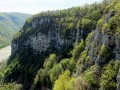
A gentle forest walk to the Montoille viewpoint overlooking Deluz and its old paper mill. You'll no doubt find yourself whistling as you climb the beautifully named Impasse de Chantemerle, but you'll soon need to catch your breath for the strenuous climb to the Grotte de sous Roche and the Château-Loriot viewpoint over the Doubs valley and the Vosges mountains, which will reward you for your efforts. A peaceful, wooded return journey, framed by the mossy rocks of a superb sinkhole.
Arcier Springs Circular Trail
 1.49 mi
+558 ft
-535 ft
1h 10
Easy
Departure from Vaire-Arcier (Doubs)
1.49 mi
+558 ft
-535 ft
1h 10
Easy
Departure from Vaire-Arcier (Doubs)
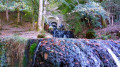
A short but challenging walk to discover the Arcier springs that have supplied the city of Besançon since the distant Gallo-Roman era. A gentle warm-up, accompanied by the music of gushing water. Then a lovely climb up the slopes of the Grand Bois, still accompanied by the murmur of the water.
The Arcier Springs
 5.41 mi
+1,234 ft
-1,240 ft
3h 35
Moderate
Departure from Vaire-Arcier (Doubs)
5.41 mi
+1,234 ft
-1,240 ft
3h 35
Moderate
Departure from Vaire-Arcier (Doubs)
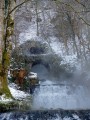
At the gates of Besançon, the waters of the Arcier springs, naturally filtered by the Saône marshes, have supplied the city since the distant Gallo-Roman era. From their green and rocky settings, the babbling waters, gushing from all sides, will restore your bucolic spirit. You will then climb, at a more military pace, to the ruins of the Épesses battery, built in 1878.
Notre Dame d'Aigremont
 4.51 mi
+1,391 ft
-1,378 ft
3h 15
Moderate
Departure from Roulans (Doubs)
4.51 mi
+1,391 ft
-1,378 ft
3h 15
Moderate
Departure from Roulans (Doubs)
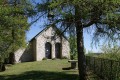
Walk to the Chapel of Aigremont in Roulans and the viewpoint overlooking the Doubs on the Laissey side.
La Roche de Rechevet
 5.52 mi
+922 ft
-919 ft
3h 20
Easy
Departure from Bretigney-Notre-Dame (Doubs)
5.52 mi
+922 ft
-919 ft
3h 20
Easy
Departure from Bretigney-Notre-Dame (Doubs)
From Bretigney with its many fountains, you will climb towards La Roche de Rechevet, a viewpoint over the Doubs valley and the Vosges mountains, then follow a magnificent ridge line with wild crevices and breathtaking views over the valley. After passing under the ruins of the old feudal castle, you will return to the village through sunny meadows.
The Ornans corniches from the Château to Notre-Dame du Mont
 4.86 mi
+325 ft
-322 ft
2h 30
Easy
Departure from Ornans (Doubs)
4.86 mi
+325 ft
-322 ft
2h 30
Easy
Departure from Ornans (Doubs)
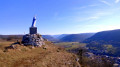
Starting from Ornans Castle overlooking the old town, after a detour to the Fontaine des Vipères, a meeting place for gossips in Courbet's time, you will walk along the superb line of cornices indented with small recesses and dotted with numerous viewpoints overlooking the upper and lower Loue valley. A round trip that will not exhaust all the attractions of this walk.
La Roche du Grand
 3.68 mi
+541 ft
-545 ft
2h 10
Easy
Departure from Ornans (Doubs)
3.68 mi
+541 ft
-545 ft
2h 10
Easy
Departure from Ornans (Doubs)
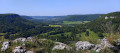
From the site of the former castle of Ornans, which overlooks the old town, the route climbs towards the pastures offering beautiful views of the upper Loue valley and Mont Poupet. The return journey takes you along cool, pleasant forest paths to La Roche du Grand, a viewpoint overlooking the lower Loue valley, then to the Fontaine aux Vipères, where you can still hear the gossip of our Franche-Comté "cancouaines" (local women).
The Brême Well
 3.98 mi
+627 ft
-650 ft
2h 20
Easy
Departure from Scey-Maisières (Doubs)
3.98 mi
+627 ft
-650 ft
2h 20
Easy
Departure from Scey-Maisières (Doubs)
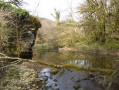
Walking along the banks of the emerald-green Brême, you will enter a dense forest until you reach the Ravin du Puits Noir, a dark, hidden, impenetrable and wild place where Gustave Courbet set up his easel more than fifty times. You will emerge at La Gouille, where goats once drank, and return peacefully via the old Tacot road and its viaduct, passing by the Puits de la Brême, the entrance to the underworld or the crystal palace of the fairies.
The Belvédère du Grand and the Château
 6.52 mi
+1,299 ft
-1,302 ft
4h 10
Moderate
Departure from Scey-Maisières (Doubs)
6.52 mi
+1,299 ft
-1,302 ft
4h 10
Moderate
Departure from Scey-Maisières (Doubs)
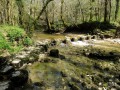
From a beautiful pine forest, sheltered by beautiful rocks and crossing large boulders detached from the cliffs, you will arrive at the Belvédère de la Roche du Grand viewpoint at the head of the valley, overlooking Ornans and the Val de Scey. Continuing towards the Fontaine aux Vipères, where Courbet's cancan dancers once performed, then to the castle overlooking the town, you will return through meadows overlooking the upper Loue valley, finally descending into the Brême valley through a beautiful, light-filled rocky forest.
The Ravin du Puits Noir and the Belvédère du Tourbillon
 8.40 mi
+1,119 ft
-1,122 ft
4h 50
Moderate
Departure from Scey-Maisières (Doubs)
8.40 mi
+1,119 ft
-1,122 ft
4h 50
Moderate
Departure from Scey-Maisières (Doubs)
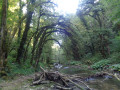
Following in the footsteps of Gustave Courbet, the Ravin du Puits Noir was one of the painter's favourite places. You will follow the course of the Brême, walk peacefully along the old Tacot road, climb the Roche du Tourbillon for superb views of the picturesque and steep-sided Brême valley, and finally end at the Prieuré de Bonnevaux, of which only a charming chapel and its 12th-century bell tower remain.