


Refine your search for walks in Larroque-Toirac
Larroque-Toirac walks


 Larroque-Toirac and Pech de Bourrou viewpoint
 Visorando Member
 3.78 mi
 +738 ft
 -715 ft
 2h 25
2h 25
 Easy
Easy
 Departure from Larroque-Toirac (Lot)
A lovely walk in the hills above Larroque-Toirac, offering a different perspective on the Lot valley. Viewpoints on the cliff edge overlooking the Lot valley and a walk on the limestone plateau. A short hike through woodland and open spaces. Suitable footwear is recommended.
Walk to Super-Cayrou
2.53 mi
+52 ft
-52 ft
1h 15
Easy
Departure from Gréalou (Lot)
A simple, very pleasant walk, winding past mulberry trees that will delight young and old alike, ending at the Super-Cayrou shelters.
From Camp de la Borie to Mas de Renayac
 4.88 mi
+240 ft
-240 ft
2h 25
Easy
Departure from Foissac (Aveyron)
4.88 mi
+240 ft
-240 ft
2h 25
Easy
Departure from Foissac (Aveyron)
An easy family walk on the Causse plateau between Foissac and the cliffs of the Lot Valley. At the recently restored Mas de Renayac, you’ll enjoy a beautiful view of the Lot Valley, with Larroque-Toirac Castle opposite.
From Foissac to Vernet-le-Bas
 4.67 mi
+564 ft
-564 ft
2h 40
4.67 mi
+564 ft
-564 ft
2h 40
 Moderate
Departure from Foissac (Aveyron)
Moderate
Departure from Foissac (Aveyron)
A very scenic route that follows an old path once used by locals to link Foissac to Vernet-le-Bas. This walk alternates between sections through woodland and open areas offering lovely views of the valley.
A route with a bit of an elevation gain but not very difficult on foot. It can also be done by mountain bike.
The Célé Valley in 7 stages
 66.17 mi
+7,936 ft
-8,537 ft
7 days
Moderate
Departure from Faycelles (Lot)
66.17 mi
+7,936 ft
-8,537 ft
7 days
Moderate
Departure from Faycelles (Lot)
The Célé Valley is one of several routes on the Way of St James. Some say it is one of the most beautiful.
From Faycelles, near Figeac, to Cahors, via Espagnac, Saint-Cirq-Lapopie and Vers, this 7-stage hike takes its time around the villages of the Célé and then the Lot. It’s the perfect way to appreciate the monuments, landscapes and people of this very welcoming region.Don’t hesitate: it’s beautiful, friendly and welcoming.Return to the starting point by SNCF bus.
Faycelles – Espagnac
 11.77 mi
+492 ft
-958 ft
5h 50
Moderate
Departure from Faycelles (Lot)
11.77 mi
+492 ft
-958 ft
5h 50
Moderate
Departure from Faycelles (Lot)
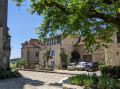
From the top of the Faycelles plateau, between the Lot and the Célé rivers, the route leads to the starting point ofthe GR®®651for thefirst descent into the Célé valley.Medieval villages such as Faycelles, Corn and Espagnac, ancient stone castles, churches, chapels and priories: you’re definitely on a route of the Way of St James. The most beautiful one, they say.The route is very shaded and benefits from the coolness of the Célé valley.
Circular around Cajarc through the hills and along the banks of the Lot
3.45 mi
+364 ft
-351 ft
1h 55
Easy
Departure from Cajarc (Lot)
A varied route with a slight climb at the start and a very flat return. The route runs along the edge of the village of Cajarc before climbing into the hills to the Lacaunhe cave. The return journey is along the banks of the Lot, offering coolness and an effortless finish.
Prajoux loop in Cajarc
7.50 mi
+1,512 ft
-1,503 ft
4h 45
Moderate
Departure from Cajarc (Lot)
This circuit in the hills above the Lot Valley offers numerous viewpoints and a chance to discover the landscapes of the Causse.
Causse de Gelle
4.80 mi
+236 ft
-249 ft
2h 25
Easy
Departure from Causse-et-Diège (Aveyron)
A short, easy walk on the Causse de Gelle plateau, very pleasant with beautiful views of the Diège valley.
Cavarrot and Monteil mills from Boussac
 5.06 mi
+653 ft
-643 ft
2h 55
Easy
Departure from Boussac (Lot) (Lot)
5.06 mi
+653 ft
-643 ft
2h 55
Easy
Departure from Boussac (Lot) (Lot)
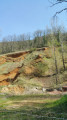
A route that will allow you to discover the landscapes of the Gorges du Célé, the small shaded paths on the Causse and the meadows along the river. It follows small roads and public paths that are often inaccessible to motor vehicles.
From Legend to Legend – Day 2
 5.01 mi
+614 ft
-66 ft
2h 50
Easy
Departure from Saint-Jean-de-Laur (Lot)
5.01 mi
+614 ft
-66 ft
2h 50
Easy
Departure from Saint-Jean-de-Laur (Lot)
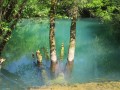
Let yourself be swept away by the local legends and those invented by the pupils of the EREA. A truly beautiful route with a variety of scenery!
Route of the Château des Anglais in Brengues
 Association / Club / Walk leader5.12 mi
+1,184 ft
-1,184 ft
3h 25
Moderate
Departure from Brengues (Lot)
Association / Club / Walk leader5.12 mi
+1,184 ft
-1,184 ft
3h 25
Moderate
Departure from Brengues (Lot)
This splendid route has many attractions: the Château des Anglais clinging to the cliff, the Priory of Espagnac-Sainte-Eulalie and several superb views of the Célé Valley.
Espagnac-Sainte-Eulalie - Sauliac-sur-Célé
 15.03 mi
+2,605 ft
-2,677 ft
9h 10
15.03 mi
+2,605 ft
-2,677 ft
9h 10
 Difficult
Departure from Espagnac-Sainte-Eulalie (Lot)
Difficult
Departure from Espagnac-Sainte-Eulalie (Lot)
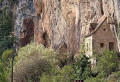
The twenty-eighth stage of the Camino de Santiago. A truly beautiful stage that winds through the Célé Valley. As you follow the river, the rocky cliffs open up to reveal their dark caves, pretty villages, cave dwellings and mills. The Célé Valley undulates along a route that is both wild and poetic, and is sure to fill you with wonder!
Gouffre de l'Oule circular loop
 6.69 mi
+889 ft
-902 ft
3h 50
Moderate
Departure from Salvagnac-Cajarc (Aveyron)
6.69 mi
+889 ft
-902 ft
3h 50
Moderate
Departure from Salvagnac-Cajarc (Aveyron)
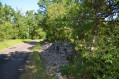
This circular walk starts from Saint-Clair de Margue, a hamlet belonging to Salvagnac-Carjac. On this walk, you will walk along roads without meeting anyone. You will take paths between low walls that mark the boundaries of plots of land. You will see magnificent landscapes on both sides. You will be in the shade most of the time, but also in the sun on other sections. You will discover the Gouffre de l'Oule.
Espagnac – Marcilhac-sur-Célé
 9.80 mi
+1,929 ft
-1,936 ft
6h 10
Moderate
Departure from Espagnac-Sainte-Eulalie (Lot)
9.80 mi
+1,929 ft
-1,936 ft
6h 10
Moderate
Departure from Espagnac-Sainte-Eulalie (Lot)
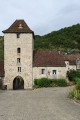
Thissecond stage on theGR®651takes you through places with ancient stone buildings: the Priory of Espagnac, the Château des Anglais in Saint-Sulpice, troglodyte houses and the caselles of Marcilhac. It also offers magnificent views of the Célé valley from the balcony-like path on the plateau.
This stage also allows you to explore the causse and its network of low stone walls, evidence of the region’s once-thriving agricultural past.
Figeac - Espagnac-Sainte-Eulalie
 15.81 mi
+1,227 ft
-1,316 ft
8 hrs
15.81 mi
+1,227 ft
-1,316 ft
8 hrs
 Very difficult
Departure from Figeac (Lot)
Very difficult
Departure from Figeac (Lot)
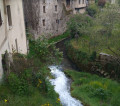
The twenty-seventh stage of the Way of St James. For this stage, you’ll leave theGR®® 65to follow a charming alternative route that will take you off the beaten track and allow you to discover unspoilt nature with breathtaking scenery. Just before the charming little village of Béduer, you’ll leave theGR®® 65 to take the Célé route on theGR®® 651. You’ll pass through the villages of Boussac and Corn, with their old houses typical of the Quercy region and their troglodyte caves. Then, nestled in the bend of the River Célé, you’ll discover Espagnac-Sainte-Eulalie – two authentic villages merged into one. It’s worth noting that the magnificent priory and its exceptional bell tower alone are well worth the detour. It’s not without reason that the area is known as Val Paradis.
On the cliffs of the Célé, starting from Espagnac-Sainte-Eulalie
11.87 mi
+2,228 ft
-2,247 ft
7h 25
Difficult
Departure from Espagnac-Sainte-Eulalie (Lot)
Between Figeac and its confluence with the Lot, the Célé river crosses a limestone plateau. It winds its way between cliffs offering stunning views of the valley. This hike follows part of the river's course. The elevation gain on this walk will delight the more athletic, but it can also be easily split into two to suit everyone.