


Refine your search for walks in Kandern
Kandern walks


 Kandern Wolfsschlucht Eitentalweg
 Visorando Member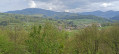
 3.66 mi
 +410 ft
 -417 ft
 2h 00
2h 00
 Moderate
 Departure from Kandern (Regierungsbezirk Freiburg)
A visit to the Wolfsschlucht is the main attraction of this route, which runs largely through woodland. There is a picnic and barbecue area in the middle of the gorge. Several other spots ideal for a break are located along the route, starting with the car park at the start. In the gorges, with their astonishing rock formations, you are transported to another world. Well worth a visit.
Kandern - Haldenhof
 12.57 mi
+3,346 ft
-1,430 ft
8h 40
12.57 mi
+3,346 ft
-1,430 ft
8h 40
 Very difficult
Departure from Kandern (Regierungsbezirk Freiburg)
Very difficult
Departure from Kandern (Regierungsbezirk Freiburg)
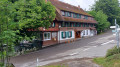
This second stage will take you from Kandern to the Haldenhof Inn. The route follows the Westweg Schwartzwald. Along the way, you will discover Sausenburg Castle. The highest point of the day is at Blauen, which offers a panoramic view of the Black Forest.
Autour de Sitzenkirch par la ruine Sausenburg et le Schloss Bürgeln
 8.11 mi
+1,814 ft
-1,814 ft
5h 20
Moderate
Departure from Schliengen (Regierungsbezirk Freiburg)
8.11 mi
+1,814 ft
-1,814 ft
5h 20
Moderate
Departure from Schliengen (Regierungsbezirk Freiburg)
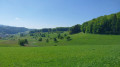
Belle randonnée autour du village de Sitzenkirch entre forêts et prairies. Un itinèraire qui permet de profiter des superbes panoramas depuis le sommet de la tour de la ruine de Sausenburg et de la terrasse du Schloss Bürgeln.
Around Obereggenen
 9.19 mi
+1,417 ft
-1,417 ft
5h 30
Moderate
Departure from Schliengen (Regierungsbezirk Freiburg)
9.19 mi
+1,417 ft
-1,417 ft
5h 30
Moderate
Departure from Schliengen (Regierungsbezirk Freiburg)
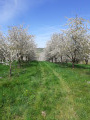
A wide circular route with varied landscapes around the village of Obereggenen along paths lined with cherry trees and vineyards, with a section through the forest to approach Schloss Bürgeln. Superb in spring when the cherry trees are in bloom.
Vineyards and mountains around Fischingen
 3.23 mi
+358 ft
-348 ft
1h 50
3.23 mi
+358 ft
-348 ft
1h 50
 Easy
Departure from Fischingen (Regierungsbezirk Freiburg)
Easy
Departure from Fischingen (Regierungsbezirk Freiburg)
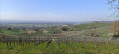
This walk crosses the vineyards between Hartberg and Hummelberg, follows the ridge line between the vineyards and the plain, runs alongside the Läufelberg and the Reckholder, skirts around Fischingen and finally leads to a meal at the Fünfschilling inn. Beautiful views along the route towards Alsace, the Jura and the Black Forest.
Above Hägelberg: Schöne Aussicht and Saatschulhütte
 2.95 mi
+341 ft
-328 ft
1h 40
Easy
Departure from Steinen (Regierungsbezirk Freiburg)
2.95 mi
+341 ft
-328 ft
1h 40
Easy
Departure from Steinen (Regierungsbezirk Freiburg)
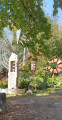
A walk mainly through woodland on the heights of Hägelberg. As the car park is situated almost at the highest point, the walk initially descends slightly towards the village across open ground, offering stunning views of the Alps in good weather. The paths are wide and signposted, except for the first section.
Rötteln Castle and Southern Black Forest Nature Park
2.90 mi
+207 ft
-203 ft
1h 30
Easy
Departure from Lörrach (Regierungsbezirk Freiburg)
A pleasant walk, mainly through the forest. Panoramic view from the castle, which is open to visitors: see § practical information. Restaurant, terrace in good weather. Rötteln Castle car park, 120 spaces.
Rümminger Moos Dünert Binzerweg
 3.41 mi
+410 ft
-427 ft
1h 55
Easy
Departure from Lörrach (Regierungsbezirk Freiburg)
3.41 mi
+410 ft
-427 ft
1h 55
Easy
Departure from Lörrach (Regierungsbezirk Freiburg)
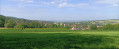
A pleasant walk entirely through the forest on wide, shaded paths. There are numerous benches along the Moosweg. Beautiful views from the Fohrenbuck car park towards Lörrach, as well as from points (2) and (4) over the Alsatian villages of the Sundgau and the Rhine plain.
Through the vineyards from Binzen to Fischingen
3.50 mi
+236 ft
-233 ft
1h 50
Easy
Departure from Binzen (Regierungsbezirk Freiburg)
The entire route is open country through vineyards with beautiful views of Basel, the Jura, Alsace, the Vosges and the Piedmont hills of the Black Forest. The outward journey is mostly along the Wiiwegli (wine trail), while the return journey is mostly along a local trail marked with yellow diamond signs.
On the heights of Rheinweiler, Maria Hügel and Bamlach
 4.07 mi
+341 ft
-367 ft
2h 10
Easy
Departure from Bad Bellingen (Regierungsbezirk Freiburg)
4.07 mi
+341 ft
-367 ft
2h 10
Easy
Departure from Bad Bellingen (Regierungsbezirk Freiburg)
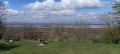
A Way of the Cross, a golf course, a chapel, viewpoints, vineyards, a village, a campsite – this is what this trail, which is signposted all the way, has to offer. We will walk along the Wiiwegli (Red Diamond with a yellow bunch of grapes) and the Way of St James (yellow shell on a blue background), following a Way of the Cross (Stationenweg) on the way there. At the Maria Hügel pilgrimage chapel, we will stop to admire the view over the Rhine plain and the Vosges. There are plenty of benches, and a flight of steps leads to a shelter and picnic tables. The return journey will follow a marked local path. The walk passes through the charming village of Bamlach and its campsite.
Rechberg via Dornhalde and Haberackerweg
 3.05 mi
+545 ft
-545 ft
1h 55
Easy
Departure from Lörrach (Regierungsbezirk Freiburg)
3.05 mi
+545 ft
-545 ft
1h 55
Easy
Departure from Lörrach (Regierungsbezirk Freiburg)
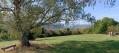
The route runs partly through woodland and partly through open countryside, and involves a steep climb up the Dornhalde slope. There are stunning views from this same slope towards Basel, Chrischona, the Wiese Valley and even the Alps, weather permitting. You can stop for a break halfway along the route at Café Hygge on the Rechberg.
Hauingen Soormattbach Rechberg
4.16 mi
+633 ft
-640 ft
2h 30
Easy
Departure from Lörrach (Regierungsbezirk Freiburg)
Set amongst deep forests, clearings, sun-drenched pastures, streams and ponds, this route offers varied and contrasting landscapes. The paths are wide and signposted, except for the picturesque trail along the Soormattbach stream, between the start and the point (1). This walk is best undertaken in dry weather, as the Soormattbach stream, which we will follow, sometimes to the right, sometimes to the left, can burst its banks during rainy or stormy periods. To cross the village and reach the Schützenhaus restaurant as well as the Hauingen shooting club’s premises in the middle of the forest, we will walk along tarmac roads.
 Outing in Sallneck
28.43 mi
+2,717 ft
-2,697 ft
5 hrs
 Difficult
Departure from Lörrach (Regierungsbezirk Freiburg)
Difficult
Departure from Lörrach (Regierungsbezirk Freiburg)
Departure from Haagen near Lörrach. A beautiful route through the Kleines Wiesental valley to Sallneck, with a detour via Raich. However, I would like to point out that there are gradients of 8% in some places.
Old Rhine, Isteiner Klotz and vineyards
 6.42 mi
+545 ft
-522 ft
3h 25
Easy
Departure from Efringen-Kirchen (Regierungsbezirk Freiburg)
6.42 mi
+545 ft
-522 ft
3h 25
Easy
Departure from Efringen-Kirchen (Regierungsbezirk Freiburg)
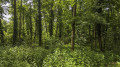
A lovely and varied circular walk starting in Efringen-Kirchen, first through the village, then through a small wooded area and along the Old Rhine. From there, the route takes you to the Isteiner Klotzerfelsen rock formation with the St Veit Chapel, which is situated in a rock niche. The rest of the walk takes you through vineyards, offering frequent beautiful, sweeping views of the surrounding mountains.
Between the vineyards and orchards of Huttingen and Blansingen
3.70 mi
+233 ft
-220 ft
1h 55
Easy
Departure from Efringen-Kirchen (Regierungsbezirk Freiburg)
A very beautiful short hike through vineyards and orchards with breathtaking views of the Alps, the Jura, the city of Basel, the Alsatian villages of Sundgau, the Rhine Valley and Kembs just opposite on the way there, and the Black Forest and Blauen on the way back. In the first half of the route, follow the Wiiwegli (wine trail) markings, red diamond with a yellow bunch of grapes, towards Blansingen. The markings are present at each fork. However, you will need to be vigilant at the start of the route and look out for the markings so as not to give in to the temptation to continue straight ahead on a more visible path. Our path branches off twice to the right between the orchards and then twice with a left-right turn on grassy paths.
On the slopes of Mauchen
 6.07 mi
+906 ft
-902 ft
3h 35
Moderate
Departure from Auggen (Regierungsbezirk Freiburg)
6.07 mi
+906 ft
-902 ft
3h 35
Moderate
Departure from Auggen (Regierungsbezirk Freiburg)
A lovely, easy walk along the hillsides overlooking the village of Mauchen, passing through vineyards and orchards full of cherry trees.
Hochblauen from Marzell
 5.36 mi
+1,562 ft
-1,558 ft
3h 50
Moderate
Departure from Malsburg-Marzell (Regierungsbezirk Freiburg)
5.36 mi
+1,562 ft
-1,558 ft
3h 50
Moderate
Departure from Malsburg-Marzell (Regierungsbezirk Freiburg)
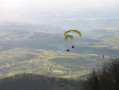
PLEASE NOTE (May 2025): the hotel is currently undergoing renovation and work is not due to be completed any time soon. The upper car park is congested and it is impossible to eat or watch the paragliders; to reach the tower, you must walk around the summit
You will discover the southernmost peak of the Black Forest, which rises to 1,165 m.From up there, you can see the start of the Rhine Plain to the west, the Vosges Mountains to the south and the Jura Mountains to the south. In fine weather, the Swiss Alps and, to the north, the peaks of the Black Forest complete the panorama.
Isteiner Klotz, Huttingen and Römerstrasse through the vineyards
 3.77 mi
+486 ft
-492 ft
2h 10
Easy
Departure from Efringen-Kirchen (Regierungsbezirk Freiburg)
3.77 mi
+486 ft
-492 ft
2h 10
Easy
Departure from Efringen-Kirchen (Regierungsbezirk Freiburg)
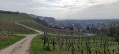
The route is mainly open, winding through the vineyards. There are stunning views throughout the route of the villages in the Rhine Valley, the Jura, the Vosges and Istein. There are numerous benches and picnic tables along the route. Information boards (in German) on wine, history and geology are dotted along the route. From the car park, information boards and the Saint-Vit Chapel opposite, set in the rock, herald the richness of the route, which is “to be savoured”.
Märkt, Rhine and Kander
3.16 mi
+69 ft
-69 ft
1h 30
Easy
Departure from Weil am Rhein (Regierungsbezirk Freiburg)
The landscapes are very varied as you walk along the Rhine and then the Kander, passing through Eimeldingen. They are urban but also bucolic: the village of Märkt, the bridge over the A5 motorway, the gravel pit, the path along the Rhine, the mouth of the Kander, the path along the Kander with two small bridges, the fish pass and the forest.
From Steinen to Albbruck in the Black Forest
 101.23 mi
+17,323 ft
-17,313 ft
9 days
Difficult
Departure from Steinen (Regierungsbezirk Freiburg)
101.23 mi
+17,323 ft
-17,313 ft
9 days
Difficult
Departure from Steinen (Regierungsbezirk Freiburg)
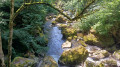
This nine-day route allows you to discover different aspects of the southern Black Forest.Starting from Steinen in the Kleines Wiesental, you will cross beautiful forests to reach the pretty village of Kandern. Then, for four days, you will follow the Schwarzwald Westweg trail, passing through the highest peaks of the Black Forest: Belchen, Feldberg and Herzogenhorn.You will also stop off at Titisee, a pleasant lakeside resort. The second part of the route is devoted to the Albsteig, a trail that follows the River Alb from its source at the foot of the Feldberg to Albbruck, where the River Alb flows into the Rhine. On the way, you will stop at Sankt Blasien, a remarkable town with a magnificent cathedral and cloister.
Steinen - Kandern
 10.34 mi
+1,450 ft
-1,365 ft
6h 00
Moderate
Departure from Steinen (Regierungsbezirk Freiburg)
10.34 mi
+1,450 ft
-1,365 ft
6h 00
Moderate
Departure from Steinen (Regierungsbezirk Freiburg)
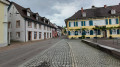
This first stage will take you from Steinen to Kandern. Starting from Steinen in the Kleines Wiesental, you will cross beautiful forests to reach the Black Forest trail: the Westweg Schwarzwald in the pretty village of Kandern.
Art in harmony with nature in the Black Forest
 6.73 mi
+915 ft
-909 ft
3h 55
Moderate
Departure from Müllheim im Markgräflerland (Regierungsbezirk Freiburg)
6.73 mi
+915 ft
-909 ft
3h 55
Moderate
Departure from Müllheim im Markgräflerland (Regierungsbezirk Freiburg)
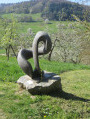
A beautiful hike through a forest of beech and oak trees along the René Schickele-Weg trail to Lipburg, where you will see polished stone sculptures, art and nature in harmony.
Historical sites and vineyard around Badenweiler
 Association / Club / Walk leader
 4.83 mi
+732 ft
-722 ft
2h 50
Moderate
Departure from Badenweiler (Regierungsbezirk Freiburg)
4.83 mi
+732 ft
-722 ft
2h 50
Moderate
Departure from Badenweiler (Regierungsbezirk Freiburg)
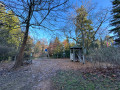
On this walk, you will discover historic sites around Badenweiler while enjoying breathtaking views over the vineyards and toward France. On the return journey, you will engage your senses and experience the landscape in a more playful way. The route leads you through woodlands, farmland, and vineyards, offering stunning scenery throughout.
Kembs lock between the Grand Canal d'Alsace and the Old Rhine
 3.26 mi
+52 ft
-52 ft
1h 35
Easy
Departure from Haut-Rhin
3.26 mi
+52 ft
-52 ft
1h 35
Easy
Departure from Haut-Rhin
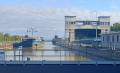
A short walk between the wild Old Rhine and the tamed canal, with its array of industrial installations: the locks, the German motorway which you cannot see but can hear, the high-voltage power lines you pass under at the start of the route, as well as its natural beauty: the winding, sand-filled Rhine, exposed at the Barre d’Istein. To make the most of the views of the Rhine, the route is best enjoyed in winter when the trees are still bare.
In the Black Forest, above Marzell
 4.55 mi
+404 ft
-387 ft
2h 25
Easy
Departure from Malsburg-Marzell (Regierungsbezirk Freiburg)
4.55 mi
+404 ft
-387 ft
2h 25
Easy
Departure from Malsburg-Marzell (Regierungsbezirk Freiburg)
If you’re feeling too hot in the lowlands, come and enjoy a stroll in the cool air, amongst the fir trees of the Black Forest and their scent. A short, unpretentious hike, suitable for the whole family and all ages.
Between Mullheim and Lipburg
 8.62 mi
+1,253 ft
-1,263 ft
5h 05
Moderate
Departure from Müllheim im Markgräflerland (Regierungsbezirk Freiburg)
8.62 mi
+1,253 ft
-1,263 ft
5h 05
Moderate
Departure from Müllheim im Markgräflerland (Regierungsbezirk Freiburg)
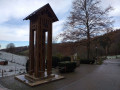
After passing through the superb Eichwald forest near Mullheim, discover the small hamlet of Rheintal, cross through and enjoy the landscapes around Lipburg with beautiful views of the Blauen, then return to Eichwald.
La Petite Camargue by Rosenau
 3.98 mi
+13 ft
-13 ft
1h 50
Easy
Departure from Haut-Rhin
3.98 mi
+13 ft
-13 ft
1h 50
Easy
Departure from Haut-Rhin
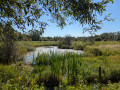
Do you live in the urban area of the three borders and want to get away from it all without travelling dozens of kilometres? Come and discover the Petite Camargue to get some fresh air and observe many species of birds and plants in a well-preserved area. Leaving from the pretty village of Rosenau, you'll find it hard to believe that you're only 4 kilometres away from the airport as the crow flies.
Walk in the old bed of the Rhine: around the Petit Rhin
 6.80 mi
+157 ft
-154 ft
3h 15
Easy
Departure from Weil am Rhein (Regierungsbezirk Freiburg)
6.80 mi
+157 ft
-154 ft
3h 15
Easy
Departure from Weil am Rhein (Regierungsbezirk Freiburg)
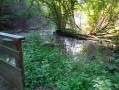
The extensive renaturation project on the Île du Rhin, which began in 2013, is drawing to a close. A new river, the Petit Rhin, has emerged between the Grand Canal and the Vieux Rhin. The surrounding land and aquatic environment has been completely transformed and will enable the return or continued presence of numerous plant and animal species.This walk therefore takes place against the backdrop of a natural environment undergoing profound change, where everything is set to change for the great benefit of biodiversity.
The Blauen from the Egerten car park
3.86 mi
+778 ft
-778 ft
2h 25
Easy
Departure from Malsburg-Marzell (Regierungsbezirk Freiburg)
A pleasant walk through the forest. It’s still a bit of a climb to reach the summit of the Blauen. Follow the Westweg Red Diamond route to the Blauen on the way up; the return is via an unmarked path and then the Yellow Diamond route. The view is magnificent. Sometimes the weather is fine up there whilst it is overcast in the valley, with the Blauen emerging from a sea of clouds. At other times, the view stretches far across the Rhine plain, the Jura, the Alps and the Vosges.
Walk in the old bed of the Rhine: the Petite Camargue Alsacienne
 4.36 mi
+30 ft
-30 ft
2h 00
Easy
Departure from Bartenheim (Haut-Rhin)
4.36 mi
+30 ft
-30 ft
2h 00
Easy
Departure from Bartenheim (Haut-Rhin)
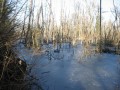
A national nature reserve, the Petite Camargue Alsacienne now covers 904 hectares, including nearly 200 hectares of water. Originally, in 1982, it covered 120 hectares around the buildings of the Imperial Fish Farm (1852). It is here, in the wild heart of the Au wetland plain, that you can walk along some of its most beautiful paths and discover the exceptional flora and fauna of this marshland landscape, thanks to the groundwater.
The Saint Louis Neuweg neighbourhood and its discovery trail
 4.04 mi
+13 ft
-13 ft
1h 50
Easy
Departure from Saint-Louis (Haut-Rhin) (Haut-Rhin)
4.04 mi
+13 ft
-13 ft
1h 50
Easy
Departure from Saint-Louis (Haut-Rhin) (Haut-Rhin)
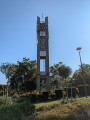
On the edge of the Petite Camargue Alsacienne is a quiet residential area that is part of the Saint-Louis conurbation: Neuweg. It is well worth a visit and, at the end of the walk, you will come to a small forest where you can learn more about water along a discovery trail.
More walks in Kandern
Select a point of interest below: