


Refine your search for walks in Combrit
Combrit walks


 The tour of the Bois de Roscouré from Combrit
 Visorando Member
 6.80 mi
 +118 ft
 -138 ft
 3h 15
3h 15
 Moderate
 Departure from Combrit (Finistère)
From the village of Combrit, whose church in 1675 was the starting point of the Revolt of the Stamped Paper, known as the “Red Caps” revolt, against the new taxes levied by King Louis XIV, follow the wide path along the western edge of the Bois de Roscouré, part of the Conservatoire du littoral. After passing under the Cornouaille bridge, continue a little further to discover the mouth of the Odet.The return journey follows the eastern edge, bordered by the river and its various inlets.
Combrit between two coves
 10.14 mi
+240 ft
-253 ft
4h 50
Moderate
Departure from Combrit (Finistère)
10.14 mi
+240 ft
-253 ft
4h 50
Moderate
Departure from Combrit (Finistère)
This varied route, which is not difficult, starts in the village of Combrit and winds its way along the banks of the Anse de Combrit (which flows into the Odet), those of the Anse du Pouldon (with a view of Île Chevalier at Pont-l’Abbé), small woods and the countryside. Here you will find peace and quiet, a variety of flora and wading birds.
Around the village of Combrit through small woods and along the riverbank
 3.21 mi
+112 ft
-131 ft
1h 35
3.21 mi
+112 ft
-131 ft
1h 35
 Easy
Departure from Combrit (Finistère)
Easy
Departure from Combrit (Finistère)
This short 5 km route (which flies by) around the village of Combrit can be completed by keen walkers in under an hour. However, thesecond half of the route encourages you to take your time, thanks to the varied landscape (wooded paths, the banks of Combrit Cove, wash houses, etc.). This route is not difficult and is suitable for both casual walkers and hikers.
Polder route via the Notre-Dame-de-la-Clarté Chapel
 6.60 mi
+108 ft
-108 ft
3h 10
Moderate
Departure from Combrit (Finistère)
6.60 mi
+108 ft
-108 ft
3h 10
Moderate
Departure from Combrit (Finistère)
Route in a protected natural area (polder) and passage by the Notre-Dame-de-la-Clarté Chapel.
Around the Combrit Polder
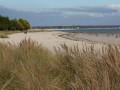 8.07 mi
+95 ft
-95 ft
3h 45
Moderate
Departure from Combrit (Finistère)
8.07 mi
+95 ft
-95 ft
3h 45
Moderate
Departure from Combrit (Finistère)
Walk along the Combrit Polder to reach Île Tudy after passing the solitary menhir at Treustel.Walk along the wide Teven beach to return via the lovely straight stretch of the bridle path.
Kermor - Île Tudy
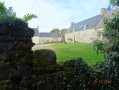 6.36 mi
+92 ft
-92 ft
3h 00
Easy
Departure from Combrit (Finistère)
6.36 mi
+92 ft
-92 ft
3h 00
Easy
Departure from Combrit (Finistère)
From the Kermor car park, Île Tudy and the Kermor polders.
From the Combrit Polder to the Port of Sainte-Marine
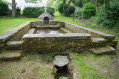 6.10 mi
+108 ft
-112 ft
2h 55
Easy
Departure from Combrit (Finistère)
6.10 mi
+108 ft
-112 ft
2h 55
Easy
Departure from Combrit (Finistère)
A circular walk that takes you to little-visited spots in the countryside and the unspoilt Combrit headland, at the mouth of the Odet.A picturesque view of Bénodet from the Port of Sainte-Marine, returning via the bridle path through the polder.
Roscouré Wood and the right bank of the Odet
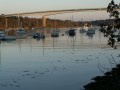 6.20 mi
+197 ft
-184 ft
3h 00
Easy
Departure from Combrit (Finistère)
6.20 mi
+197 ft
-184 ft
3h 00
Easy
Departure from Combrit (Finistère)
This route will take you through the Bois de Roscouré, a protected natural area managed by the Conservatoire du Littoral, where old fountains and wash houses have been restored to their former glory.
The return journey takes you along the right bank of the Odet as it approaches its estuary. Finish the route with a return trip to the Pont de Cornouaille, where you can enjoy breathtaking views of the river and the port of Bénodet.
Beg ar Vir nature reserve, Penfoul Cove and Bénodet Tower
 5.23 mi
+108 ft
-98 ft
2h 30
Easy
Departure from Clohars-Fouesnant (Finistère)
5.23 mi
+108 ft
-98 ft
2h 30
Easy
Departure from Clohars-Fouesnant (Finistère)
Starting from the Beg ar Vir nature reserve with its old ferryman’s house, the route runs along both sides of Anse de Penfoul.It crosses Bénodet with its seafront, beach and two harbours.Beautiful views beneath the Cornouaille Bridge.
Discover the Roman baths at Pérennou
 6.46 mi
+325 ft
-308 ft
3h 15
Moderate
Departure from Plomelin (Finistère)
6.46 mi
+325 ft
-308 ft
3h 15
Moderate
Departure from Plomelin (Finistère)
After walking through the countryside and along the Odet, visit the Roman baths at Le Perennou, which were restored in 2011, then return via the Lestremeur site and along Anse de Combrit.
Étang du Corroac'h circuit
 6.86 mi
+279 ft
-285 ft
3h 25
Moderate
Departure from Plomelin (Finistère)
6.86 mi
+279 ft
-285 ft
3h 25
Moderate
Departure from Plomelin (Finistère)
After passing the Lestremeur site, with its manor house and dovecote, continue through wooded areas to reach the Étang du Corroac'h. The return journey is via the greenway and then country lanes.
Combrit Cove and the Lestremeur site
 5.19 mi
+213 ft
-184 ft
2h 35
Easy
Departure from Plomelin (Finistère)
5.19 mi
+213 ft
-184 ft
2h 35
Easy
Departure from Plomelin (Finistère)
A route through the woods along the Anse de Combrit and the banks of the Odet, passing through the Lestremeur site: manor house, dovecote, fountain and bread oven.
Return via small roads lined with majestic beech trees.
From Sainte-Marine to Saint-Vennec via the polder and the wash houses
 7.14 mi
+98 ft
-79 ft
3h 20
Moderate
Departure from Combrit (Finistère)
7.14 mi
+98 ft
-79 ft
3h 20
Moderate
Departure from Combrit (Finistère)
This route passes through numerous wetlands. The ten or so fountains and wash houses visited are, with one exception, maintained by the Mein ha Dour association with the support of the local council. Woodland and undergrowth alternate with a few tarmac sections. Some sections are not signposted. The Chapel of La Clarté (Saint-Vennec) and the farms at Roscanvel and Le Creac’h are of particular interest.
Bénodet Tower
 5.32 mi
+69 ft
-66 ft
2h 30
Easy
Departure from Bénodet (Finistère)
5.32 mi
+69 ft
-66 ft
2h 30
Easy
Departure from Bénodet (Finistère)
Bénodet, Odet estuary and seaside resort. Follow the estuary and then the beach to reach the tip "Pointe de Bénodet", from where you can see the entire south coast. After passing through the town and its camping areas, return to the marina along "Anse de Penfoul".
Tour of Île-Tudy
 7.37 mi
+30 ft
-30 ft
3h 25
Moderate
Departure from Combrit (Finistère)
7.37 mi
+30 ft
-30 ft
3h 25
Moderate
Departure from Combrit (Finistère)
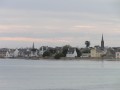
Île-Tudy remained a separate island until around 1850.
With the creation of the Kermor sea wall in 1853, blocking the sea on the Pont-l'Abbé side, it is now a peninsula of the same name, located on the left bank of the river's mouth, opposite Loctudy on the right bank.
It extends inland through a vast area of polders classified as a protected natural area.
This circuit allows you to go around it via the polder.
_
Tour of Île-Tudy via Anse de Pouldon
 6.16 mi
+23 ft
-23 ft
2h 50
Easy
Departure from Île-Tudy (Finistère)
6.16 mi
+23 ft
-23 ft
2h 50
Easy
Departure from Île-Tudy (Finistère)
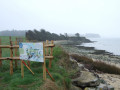
After exploring the streets and alleys of Île-Tudy – which became a peninsula following the construction of the Kermor sea wall in 1853, blocking the sea on the Pont-l’Abbé River side – this route continues along a new path by the Anse de Pouldon, managed by the Conservatoire du Littoral. The return journey takes you through the polder area.
NB: between points (6) and (7), the coastal route must not be used during the nesting season, i.e. from April to July (in this case, follow the GR® and turn left towards point (7).
Towards the Odet via the old Gouesnach botanical trail
 5.19 mi
+138 ft
-138 ft
2h 30
Easy
Departure from Gouesnach (Finistère)
5.19 mi
+138 ft
-138 ft
2h 30
Easy
Departure from Gouesnach (Finistère)
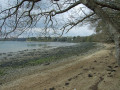
A route to two coves on the Odet, passing via a former botanical trail which, unfortunately, is no longer maintained. On the return journey, a lovely walk through a wooded area as you approach the village, which has remained untouched by urban development.
Along the banks of the Odet on the Gouesnach side
 6.60 mi
+144 ft
-141 ft
3h 10
Moderate
Departure from Gouesnach (Finistère)
6.60 mi
+144 ft
-141 ft
3h 10
Moderate
Departure from Gouesnach (Finistère)
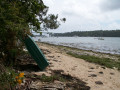
On the Gouesnac'h side, access to the banks of the Odet is relatively limited. After a stretch through the countryside, this route allows you to follow this coastal river for about 3 km.
Be aware of the tide times: at high tide, the site is only accessible when the tidal coefficient is below 60. For greater safety, it is best to go at low tide.
In the countryside around Gouesnach
 6.54 mi
+75 ft
-66 ft
3h 05
Easy
Departure from Gouesnach (Finistère)
6.54 mi
+75 ft
-66 ft
3h 05
Easy
Departure from Gouesnach (Finistère)
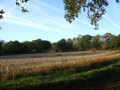
This route, which mainly follows small tree-lined roads, takes you through the countryside around Gouesnach, which is, in places, heavily built-up.
Along the route, you’ll pass the Chapel of Notre-Dame de Vray Secours (1729) and its wooded grounds, as well as the area near the botanical garden at Boutiguéry Castle (there is an admission charge to visit the garden).
 Île Tudy - Sainte-Marine - Combrit
 12.07 mi
+266 ft
-276 ft
2.5 hrs
Moderate
Departure from Île-Tudy (Finistère)
12.07 mi
+266 ft
-276 ft
2.5 hrs
Moderate
Departure from Île-Tudy (Finistère)
A short bike ride between the beach, the woods and the Bigouden countryside.
In the Tréméoc countryside
 6.75 mi
+135 ft
-144 ft
3h 15
Moderate
Departure from Combrit (Finistère)
6.75 mi
+135 ft
-144 ft
3h 15
Moderate
Departure from Combrit (Finistère)
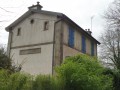
From the old Tréméoc railway station, once served by the Transbigouden line, we head to the Moulin Neuf reservoir, which supplies water to around ten towns in the Pont-l’Abbé area.
This is a chance to spot some birds on this 65ha reservoir. This countryside route alternates between small roads and sunken lanes.
The return journey follows the Voie Verte, which, in places, overlooks a wild and silent marshy area.
Route via the Saint-Sébastien Chapel in Tréméoc
 5.77 mi
+98 ft
-82 ft
2h 45
Easy
Departure from Tréméoc (Finistère)
5.77 mi
+98 ft
-82 ft
2h 45
Easy
Departure from Tréméoc (Finistère)
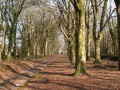
This countryside route alternates between sections on the old Quimper-Pont l'Abbé railway line, now converted for pedestrians and cyclists, small country roads and a long stretch through the woods.Along the way, discover the ruins of the Saint-Vital Chapel, lost in the middle of nature, as well as the better-known Saint-Sébastien Chapel.
Along the Pont-L'Abbé river
 6.32 mi
+30 ft
-30 ft
2h 55
Easy
Departure from Pont-l'Abbé (Finistère)
6.32 mi
+30 ft
-30 ft
2h 55
Easy
Departure from Pont-l'Abbé (Finistère)
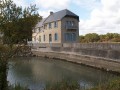
Wooded route following the right bank of the Pont-L'Abbé river towards its estuary between Île-Tudy and the port of Loctudy. The river is dotted with small private islands connected to the bank by a bridge.After passing by the Chapelle du Croaziou chapel, the return journey takes you through the countryside along a long farm track.The landscape in the first part of the route is completely different depending on the tide level.
South-east of Plomelin via Anse de Combrit
 7.83 mi
+302 ft
-302 ft
3h 50
Moderate
Departure from Plomelin (Finistère)
7.83 mi
+302 ft
-302 ft
3h 50
Moderate
Departure from Plomelin (Finistère)
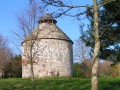
After some lovely stretches through the woods, we follow the Anse de Combrit, one of the Odet’s many coves.
We reach the site of Lestremeur with its pond, fountain, wash house, bread oven and majestic dovecote. We pass the old manor house and follow a small road lined with imposing beech trees.
We’ll walk through the pastures where the horses and ponies from the riding centre graze, before returning to the banks of the Odet.
There is an option to take a detour leading to the Roman baths at Perennou, with a view of the castle.
Towards the banks of the Odet in Plomelin
 5.05 mi
+266 ft
-266 ft
2h 35
Easy
Departure from Plomelin (Finistère)
5.05 mi
+266 ft
-266 ft
2h 35
Easy
Departure from Plomelin (Finistère)
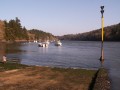
A pleasant route, mostly wooded, overlooking the banks of the Odet. Pass by the old Rossulien Mill, which has been restored and is located in a beautiful green setting. View of Kerambleiz Castle overlooking the river.
The grand tour of Plomelin
 12.46 mi
+420 ft
-436 ft
6h 05
Moderate
Departure from Plomelin (Finistère)
12.46 mi
+420 ft
-436 ft
6h 05
Moderate
Departure from Plomelin (Finistère)
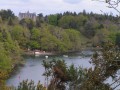
Plomelin offers many possible routes starting from the village. Several have already been suggested on Visorando
This longer route aims to give a more comprehensive view of this wooded commune, bordered by the River Odet and rich in heritage.
Around Plomelin
 6.21 mi
+335 ft
-341 ft
3h 10
Easy
Departure from Plomelin (Finistère)
6.21 mi
+335 ft
-341 ft
3h 10
Easy
Departure from Plomelin (Finistère)
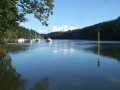
Route along the banks of the Odet, then around Plomelin: passing the newly renovated Rossulien Mill, with a fine view of Kerambleiz Castle, one of the many castles overlooking this small coastal river.
Surroundings of the village of Plomelin
 4.16 mi
+108 ft
-115 ft
2h 00
Easy
Departure from Plomelin (Finistère)
4.16 mi
+108 ft
-115 ft
2h 00
Easy
Departure from Plomelin (Finistère)
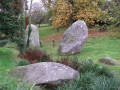
A walk along the western and then north-eastern edges of the village of Plomelin, through a mix of built-up areas and countryside. Several tree-lined paths enhance this route, which is particularly recommended in autumn. Three heritage sites: menhirs, the chapel and the fountain.
Banks of the Odet and countryside in Plomelin
 7.38 mi
+384 ft
-381 ft
3h 45
Moderate
Departure from Plomelin (Finistère)
7.38 mi
+384 ft
-381 ft
3h 45
Moderate
Departure from Plomelin (Finistère)
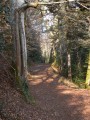
The route alternates between countryside, the Odet river and wooded areas around Plomelin on the outskirts of Quimper.
Family walk at the Vire-Court site
 2.56 mi
+377 ft
-397 ft
1h 30
Easy
Departure from Plomelin (Finistère)
2.56 mi
+377 ft
-397 ft
1h 30
Easy
Departure from Plomelin (Finistère)
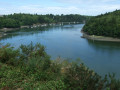
This circular loop, mainly through the forest, offers beautiful views of the meandering Odet river and a stunning vista of Kerambleïz Castle perched on the hilltop.
Also worth discovering is the Rossulien Mill, which was restored in 2020 and is now operational (free to visit).
À l'Ouest de Plomelin par le Golf et l'Étang de Kerbernez
 6.21 mi
+279 ft
-279 ft
3h 05
Moderate
Departure from Plomelin (Finistère)
6.21 mi
+279 ft
-279 ft
3h 05
Moderate
Departure from Plomelin (Finistère)
Passing by the Rossulien site and its mill, then below Kerambleïz Castle which overlooks the Odet, this route continues along a quiet path that runs alongside Kernernez Golf Course to rejoin the banks of the Odet.After going round the Étang de Kerbernez, the return journey takes you through the Plomelin countryside.
Via the ports of Loctudy
 5.26 mi
+20 ft
-20 ft
2h 25
Easy
Departure from Loctudy (Finistère)
5.26 mi
+20 ft
-20 ft
2h 25
Easy
Departure from Loctudy (Finistère)
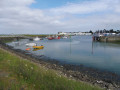
Three main points of interest on this route through Loctudy:- at the start, the marina with a ferry to Île-Tudy,- shortly afterwards, Saint-Tudy Church, which hides a very well-preserved Romanesque interior behind an 18th-century façade,- at the end of the route, the fishing port and its famous “Demoiselles de Loctudy” (langoustines).
Between these points, the route winds its way through narrow streets, connecting paths and along the seafront by the beach.