


Refine your search for walks in Chevroux
Chevroux walks


 Birdsong in Chevroux
 Local authority
 5.08 mi
 +36 ft
 -36 ft
 2h 20
2h 20
 Easy
Easy
 Departure from Chevroux (Ain)
This route allows you to explore the southern part of the commune with its market gardens, poultry farms and traditional Bresse architecture (La Fougère).
From mill to mill in Saint-Étienne-sur-Reyssouze
 Visorando Member8.53 mi
+299 ft
-299 ft
4h 10
Visorando Member8.53 mi
+299 ft
-299 ft
4h 10
 Moderate
Departure from Saint-Étienne-sur-Reyssouze (Ain)
Moderate
Departure from Saint-Étienne-sur-Reyssouze (Ain)
A pleasant walk taking you along a variety of paths – tarmac, stony and grassy – with sections crossing small streams and passing through small hamlets.
Les Platières de Saint-Étienne-sur-Reyssouze
5.54 mi
+131 ft
-138 ft
2h 40
Easy
Departure from Saint-Étienne-sur-Reyssouze (Ain)
A short, pleasant route with no particular difficulties, offering some lovely views and a variety of paths.
Take the time to admire the views across the Platières (fields or pastures).
The Pérouse route in Bâgé-Dommartin
4.13 mi
+66 ft
-72 ft
1h 55
Easy
Departure from Dommartin (Ain)
The Pérouse route will allow you to discover an authentic manor house (de la Pérouse) and an old mill alongside which flows the Pérouse leat.
Built in half-timbered style, the manor house dates from the16th century.
The church at Dommartin is notable for having its chancel facing west. The niche above the doorway houses a 15th-century statue of the Virgin and Child.
Walk along the canals of Pont-de-Vaux
5.19 mi
+13 ft
-13 ft
2h 25
Easy
Departure from Pont-de-Vaux (Ain)
A lovely walk along the canals of Pont-de-Vaux, partly to reach the lock near the campsite, from where you can return to the village via tarmac and stony paths.
The Three Mills Route, starting from the church at Chavannes-sur-Reyssouze
8.82 mi
+190 ft
-190 ft
4h 15
Moderate
Departure from Chavannes-sur-Reyssouze (Ain)
A route with little elevation gain, offering the chance to explore part of the Reyssouze Valley near Chavannes.
A lush cattle-rearing region in the heart of the Bresse.
Route de l'Arboretum in Bâgé-Dommartin
9.27 mi
+141 ft
-141 ft
4h 25
Moderate
Departure from Bâgé-la-Ville (Ain)
Starting from Bâgé-la-Ville town hall. This route allows you to explore the arboretum, passing through market gardeners’ fields and various farms.
Meeting with Michel Poisat in Saint-Bénigne
4.62 mi
+30 ft
-30 ft
2h 10
Easy
Departure from Saint-Bénigne (Ain)
This route will allow you to explore the village of Saint-Bénigne, characterised by scattered settlements grouped into numerous hamlets and divided in two by the D2 departmental road, the Route de Saint Trivier.
The walk starts at the town hall in Saint-Bénigne. The Church of Saint-Bénigne was built thanks to Michel Poisat (1802–1869) and his wife, whose tombs are located within this Neo-Romanesque church. Opposite the church, the half-timbered ‘house haute et basse’ is well worth a visit.
Île de la Motte in Saint-Bénigne
9.23 mi
+112 ft
-112 ft
4h 20
Moderate
Departure from Saint-Bénigne (Ain)
On this route, you’ll discover the vast floodplain of the Saône, stretching as far as the eye can see. Once you reach the banks of the Saône, you can see Île de la Motte, which has been designated a Sensitive Natural Area.
Île de la Motte is home to colonies of herons: the little bittern, the little egret and the cattle egret, which can sometimes be sensitive to disturbance during the breeding season. The island’s presence on the river also helps to maintain fish diversity. Sediments carried by the Saône have been deposited and accumulated at La Motte, gradually creating small islets and secondary channels. Together, these form a mosaic of natural habitats that is home to an exceptional diversity of species.Beavers are present on the site and, indeed, contribute to its management by cutting branches from willows and poplars to eat their bark.
Route des chapelles et des châteaux à Saint-André-de-Bâgé
 6.08 mi
+105 ft
-135 ft
2h 55
Easy
Departure from Saint-André-de-Bâgé (Ain)
6.08 mi
+105 ft
-135 ft
2h 55
Easy
Departure from Saint-André-de-Bâgé (Ain)
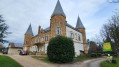
As you wander along the quiet, shaded paths, you’ll encounter a succession of magnificent views and gems of the local heritage, such as the Romanesque church of Saint-André-de-Bâgé, the châteaux of Montépin and La Griffonnière, the remains of the ramparts of Bâgé-le-Châtel, the chapel of Aigrefeuille and beautiful country houses nestled in the valleys.
The three castles of Sancé
2.88 mi
+66 ft
-66 ft
1h 25
Easy
Departure from Sancé (Saône-et-Loire)
Hike through the heart of the village of Sancé and its surrounding countryside to discover the three castles in the commune: Château du Parc (private), Château de Châtenay (private) and Château Lapalus (communal property).
The mill and ponds as seen from Vescours
 8.75 mi
+43 ft
-43 ft
4h 05
Moderate
Departure from Vescours (Ain)
8.75 mi
+43 ft
-43 ft
4h 05
Moderate
Departure from Vescours (Ain)
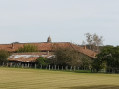
A lovely walk that allows you to discover the farm with its Saracen chimney in the hamlet of Montalibord, with its pond, by taking a short detour of 1 km there and back.
Along the route, there are other ponds and a sign mentioning an old mill on Étang Morel.
The village of Crottet and its surroundings
3.14 mi
+66 ft
-69 ft
1h 30
Easy
Departure from Crottet (Ain)
A short walk to enjoy with the family on a sunny day. Views over the town of Pont-de-Veyle and the Mâconnais hills.
Around Saint-Maurice-de-Sathonay
 5.37 mi
+295 ft
-295 ft
2h 45
Easy
Departure from Saint-Maurice-de-Satonnay (Saône-et-Loire)
5.37 mi
+295 ft
-295 ft
2h 45
Easy
Departure from Saint-Maurice-de-Satonnay (Saône-et-Loire)
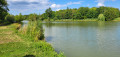
This walk, with its slight incline, is ideal for stretching your legs if you've got a couple of hours to spare.
La Truchère-Ratenelle Nature Reserve and Site des Charmes
 7.26 mi
+69 ft
-66 ft
3h 25
Moderate
Departure from Sermoyer (Ain)
7.26 mi
+69 ft
-66 ft
3h 25
Moderate
Departure from Sermoyer (Ain)
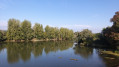
It is undoubtedly the sand dunes that represent the most striking feature of the Nature Reserve. Shaped 5,000 years ago by the wind, these shifting sands are partially covered in mosses and lichens. Only species adapted to arid environments manage to colonise them. Just a few metres from this desert-like environment lies a waterlogged area stretching over 5 to 6 hectares: a wooded peat bog, the presence of which at an altitude of just 200 metres is surprising. A third, very different environment can be seen not far from there: Étang Fouget, whose surrounding marsh takes the form of a vegetative labyrinth and attracts numerous birds.