

Refine your search for walks in Chambord (Loir-et-Cher)
Chambord (Loir-et-Cher) walks


 From Chambord to La Chaussée-le-Comte
 Visorando Member

 9.74 mi
 +79 ft
 -79 ft
 4h 35
 Moderate
 Departure from Chambord (Loir-et-Cher) (Loir-et-Cher)
This beautiful hike begins with an approach to the Château de Chambord along the left bank of the Cosson, then leaves the Chambord park to join the Chaussée le Compte before returning to it. The route offers beautiful views of one of the most beautiful châteaux in the Loire Valley, while winding its way through cultivated fields, woods and the vegetation associated with the Cosson, known as "ripisylve".
Chambord Castle and its lost paths
 5.68 mi
+79 ft
-79 ft
2h 40
 Easy
Departure from Chambord (Loir-et-Cher) (Loir-et-Cher)
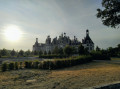
This walk in the grounds of Chambord begins by approaching the château along the left bank of the Cosson, continues along a small path winding through the forest and finally returns to the starting point via the right bank of the Cosson and the Pont Saint-Michel, offering a final, unforgettable view of the château.
 A royal day out in Chambord
17.79 mi
+141 ft
-141 ft
3 hrs
Easy
Departure from Chambord (Loir-et-Cher) (Loir-et-Cher)
A lovely walk through the Chambord and Boulogne forests in the heart of Sologne.
From Huisseau-sur-Cosson to Saumery
 4.94 mi
+98 ft
-69 ft
2h 20
Easy
Departure from Huisseau-sur-Cosson (Loir-et-Cher)
This circular route offers varied landscapes, sometimes crossing the "Cheverny" vineyard, sometimes following the banks of the Cosson. It provides a feeling of well-being along the high walls covered with vegetation that surround the grounds of the Château de Saumery.
Saint-Dyé-sur-Loire or the memory of a port
 6.55 mi
+39 ft
-43 ft
3h 05
Easy
Departure from Saint-Dyé-sur-Loire (Loir-et-Cher)
The route is varied, sometimes overlooking the Loire or running along its banks, sometimes taking forest paths or paths through fields. A superb opportunity to get some fresh air and relax while reliving a page of history.
From Huisseau-sur-Cosson to La Chaussée-le-Comte
 5.71 mi
+98 ft
-79 ft
2h 45
Easy
Departure from Huisseau-sur-Cosson (Loir-et-Cher)
From vineyards to cultivated fields and through the woods, this walk offers beautiful views of the River Cosson, not to mention the region’s rich heritage. Suitable for all seasons.
From Huisseau-sur-Cosson to Nanteuil
 6.55 mi
+98 ft
-102 ft
3h 05
Easy
Departure from Huisseau-sur-Cosson (Loir-et-Cher)
This walk through vineyards and cultivated fields offers beautiful views of the Cosson river and the Château des Grotteaux, which is in a stunning location. Suitable for all seasons.
In the Forest of Boulogne
 7.62 mi
+131 ft
-138 ft
3h 35
Easy
Departure from Bracieux (Loir-et-Cher)
The walk leads into the heart of the Boulogne Forest. Separated from the Chambord estate in 1523 by order of François I, its main purpose is the production of high-quality oak. It is the perfect habitat for does, stags and wild boars, which can be spotted from the long, straight avenues. Best enjoyed in summer to make the most of the forest’s coolness.
Bois de Boulogne and heritage
 8.56 mi
+131 ft
-131 ft
4h 05
Moderate
Departure from Bracieux (Loir-et-Cher)
Setting off from Bracieux, a pretty village torn between its typical Solognot heritage and its royal history directly linked to the Château de Chambord, nature offers some lovely surprises in the Forêt de Boulogne, where the flora and fauna are particularly rich.
From the vineyards to the Bois de Boulogne from Mont-Près-Chambord
 5.97 mi
+98 ft
-98 ft
2h 50
Easy
Departure from Mont-près-Chambord (Loir-et-Cher)
A varied route that begins near the natural swimming area, where the water is purified without the use of chemicals, then winds its way through the vineyards before crossing the Forêt Domaniale de Boulogne with its majestic trees and long, straight avenues, ideal for spotting large wild animals.
Amidst the vineyards and the River Beuvron around Mont-près-Chambord
 6.28 mi
+102 ft
-102 ft
3h 00
Easy
Departure from Mont-près-Chambord (Loir-et-Cher)
Situated at the crossroads between the châteaux of Chambord, Villesavin and Cheverny, the village of Mont-près-Chambord is renowned for its Cheverny and Cour Cheverny vineyards, which shape the local landscape.
A tour of the wash houses in Suèvres and the surrounding area
 5.31 mi
+36 ft
-36 ft
2h 30
Easy
Departure from Suèvres (Loir-et-Cher)
A short, very pleasant walk through the village of Suèvres, a former fortified town, and its surroundings. Numerous springs and rivers facilitated the construction of watermills as early as the Middle Ages.
The wash houses and mills of Suèvres
 5.64 mi
+33 ft
-33 ft
2h 35
Easy
Departure from Suèvres (Loir-et-Cher)
Suèvres, a former fortified town, is home to numerous springs and rivers which fostered the development of water mills from the Middle Ages onwards, powered by wheat from the Beauce region. Wash houses, mills and castles abound in this rich region of the Loire Valley.
The banks of the Loire from Saint-Claude-de-Diray
 7.10 mi
+43 ft
-43 ft
3h 20
Moderate
Departure from Saint-Claude-de-Diray (Loir-et-Cher)
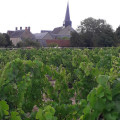
As soon as you leave the village of Saint-Claude-de-Diray, the walk takes you past vineyards belonging to the Cheverny AOC production area. It then follows the banks of the Loire, with the Château de Ménars, situated on the opposite bank, where the Marquise de Pompadour spent her final years. On the way back, the old viaduct with its many arches can be admired from every angle before the village bell tower comes into view on the horizon, signalling your arrival.
The Sologne region of forests and ponds around Crouy-sur-Cosson
 6.12 mi
+72 ft
-72 ft
2h 55
Easy
Departure from Crouy-sur-Cosson (Loir-et-Cher)
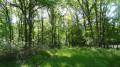
Like many villages in the Sologne region, Crouy-sur-Cosson combines forest landscapes, ponds and architectural heritage. The first part of the walk takes place on wide paths on the edge or in the heart of the forest; the second part is more varied, dotted with ponds, the Cosson river, grassy paths and hamlets.
Circular route in the Forest of Boulogne starting from Neuvy
 7.34 mi
+112 ft
-112 ft
3h 30
Moderate
Departure from Neuvy (Loir-et-Cher) (Loir-et-Cher)
Starting from the village of Neuvy, the route heads deep into the magnificent Boulogne Forest, home to a wealth of wildlife.
The Montperché Pond from Neuvy
 6.39 mi
+151 ft
-151 ft
3h 05
Easy
Departure from Neuvy (Loir-et-Cher) (Loir-et-Cher)
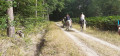
Neuvy, on the edge of the Chambord Estate, lies at the heart of the Bois de Boulogne.A family walk to spot the forest’s large animals and the many birds on the Étang de Montperché.
Villesavin Route
 6.94 mi
+52 ft
-52 ft
3h 15
Moderate
Departure from Tour-en-Sologne (Loir-et-Cher)
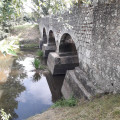
This route, starting from Tour-en-Sologne, is steeped in history, crossing the Ponts d’Arian, whose construction dates back to the Middle Ages but whose origins are Roman. You will also appreciate the dense vegetation of the Boulogne State Forest on the edge of the Chambord National Estate.
Along the banks of the Loire, starting from Ménars
11.32 mi
+207 ft
-207 ft
5h 25
Moderate
Departure from Menars (Loir-et-Cher)
Here is a very varied route along the banks of the Loire. It will allow you to discover castles, churches, pretty little villages, wash houses and, of course, the banks of the Loire. Along these banks, you’ll sometimes walk along the flood defences and sometimes along the narrow paths that run right up to the river.
Heading back up towards the source of the Tronne
 5.82 mi
+98 ft
-98 ft
2h 45
Moderate
Departure from Mer (Loir-et-Cher)
A small stream originates in a place called Bausdisson.
It flows through the town from north to south and joins the Loire after a journey of around twelve kilometres.
This small river, called the Tronne, gives the town of Mer a certain charm.
In fact, Mera means "marsh" or "place covered with water" in Latin, which is the origin of the name Mer.
Wandering through the narrow streets of Mer
 4.86 mi
+62 ft
-62 ft
2h 15
Easy
Departure from Mer (Loir-et-Cher)
Mer lies on, or almost on, the banks of the Loire. In the past, the bridge over the Loire linking Mer to Muides was called the Pont de Mer. Mer was once a fortified town, a large, enclosed market town smaller in size than it is today; the suburbs were not part of it. Inside the town walls, the layout was the same as it is today.
Most of the narrow streets have been preserved, and the former Hôtel-Dieu has taken the place of the Marché au Beurre.
 A circular tour of Chambord Castle starting from Mer
 25.18 mi
+223 ft
-249 ft
2.5 hrs
Moderate
Departure from Mer (Loir-et-Cher)
Chambord Castle is one of the most famous castles in the Loire Valley. This route takes you to the castle by bike; a hybrid bike is ideal. You’ll mainly be cycling on dedicated cycle paths, alternating between tarmac sections and well-maintained tracks. There are plenty of shaded sections through the forest, and the route runs briefly alongside the River Loire. A few beautiful churches line this route.
 A circular route to Talcy Castle starting from Mer
 14.11 mi
+105 ft
-105 ft
1.5 hrs
Easy
Departure from Mer (Loir-et-Cher)
This relatively short road bike route offers the chance to visit the superb Château de Talcy and its vast, colourful garden. The route follows quiet roads that are relatively easy to cycle on.
Along the Loire between Mer and Beaugency, left bank, right bank
 26.94 mi
+135 ft
-151 ft
3 hrs
Moderate
Departure from Mer (Loir-et-Cher)
A circular cycle route, preferably on a hybrid bike, which largely follows the ‘La Loire en Vélo’ cycle paths, on the left bank from Mer to Beaugency and then on the right bank from Beaugency back to Mer. You’ll enjoy beautiful views of the Loire as well as the chance to spot birds. The section through the medieval town of Beaugency adds a superb touch of heritage.
Along the Loire between Mer and Blois, left bank, right bank
 29.77 mi
+141 ft
-167 ft
3 hrs
Moderate
Departure from Mer (Loir-et-Cher)
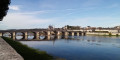
A circular cycle route – preferably on a hybrid bike – which mainly follows the ‘La Loire en Vélo’ cycle paths, on the left bank from Mer to Blois and then on the right bank from Blois to Mer. You cycle alongside the Loire for many kilometres, offering beautiful scenery as well as the chance to spot birds. The town of Blois, with its rich heritage, offers the chance for a stop to explore the sights and enjoy some local cuisine.