


Refine your search for walks in Saint-Saturnin (Lozère)
Saint-Saturnin (Lozère) walks


 The village and the Saint-Saturnin cirque
 Visorando Member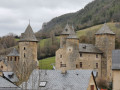
 5.27 mi
 +997 ft
 -997 ft
 3h 15
3h 15
 Moderate
 Departure from Saint-Saturnin (Lozère) (Lozère)
A walk along the edge of the Causse de Sauveterre around the village of Saint-Saturnin and its feudal castle.
Le Violon
 Tourist office
 7.18 mi
+935 ft
-942 ft
4h 05
Moderate
Departure from La Canourgue (Lozère)
7.18 mi
+935 ft
-942 ft
4h 05
Moderate
Departure from La Canourgue (Lozère)
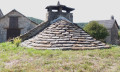
A trail linking Caussenard heritage, an old drovers' road and breathtaking views: from the heights of the Causses foothills, you can see the Lot Valley stretching into the distance, as well as the Aubrac plateau.
Around the Ravin du Valat de la Curée
 4.66 mi
+876 ft
-869 ft
2h 55
Moderate
Departure from La Canourgue (Lozère)
4.66 mi
+876 ft
-869 ft
2h 55
Moderate
Departure from La Canourgue (Lozère)
This fairly demanding route, despite being only 8 km long, takes you along the edge of the Ravin du Valat de la Curée before returning via the hamlet of Les Balmes. A steep descent then follows to reach the site of the Chapelle Saint-Frézal, a picnic area to the south of the village of La Canourgue.
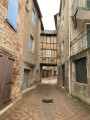
To extend the walk, a visit to this picturesque village – known as ‘the little Venice of Lozère’ – allows you to discover, as you wander through the old cobbled streets, a Renaissance house, the Place au Blé, with its medieval half-timbered house, the Place du Portal and the Clock Tower – a remnant of the old citadel – as well as many other sights, by following a route suggested by the tourist office.
Causse de Sauveterre circular in Soulages
 6.66 mi
+725 ft
-748 ft
3h 40
6.66 mi
+725 ft
-748 ft
3h 40
 Easy
Departure from Saint-Georges-de-Lévéjac (Lozère)
Easy
Departure from Saint-Georges-de-Lévéjac (Lozère)
This walk takes you on a journey through the Causse de Sauveterre, the Causse de Séverac, the Causse Méjean, the Aubrac mountains and all the way to the Aigoual.
A small car park is available in the centre of the village of Soulages.
La Devèze from Massegros
 3.74 mi
+443 ft
-436 ft
2h 05
Easy
Departure from Le Massegros (Lozère)
3.74 mi
+443 ft
-436 ft
2h 05
Easy
Departure from Le Massegros (Lozère)
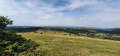
A short walk above Massegros among boxwood, juniper and Scots pine trees, with a beautiful panorama of the western part of the Causse de Sauveterre, the Monts du Lévézou and the foothills of the Aubrac.
Roc de la Truque
 National Park
 6.28 mi
+673 ft
-679 ft
3h 30
Easy
Departure from La Malène (Lozère)
6.28 mi
+673 ft
-679 ft
3h 30
Easy
Departure from La Malène (Lozère)
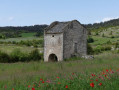
Set off to discover a rural world where tradition meets modernity, where old buildings stand alongside modern structures. A journey from the past to the present along this trail, which runs entirely across the plateau.
The Lot balcony in Chanac
 5.54 mi
+643 ft
-643 ft
3h 05
Moderate
Departure from Chanac (Lozère)
5.54 mi
+643 ft
-643 ft
3h 05
Moderate
Departure from Chanac (Lozère)
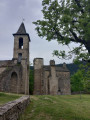
On the rocky spur overlooking the Lot, downstream from Chanac, there are two settlements: Le Villard Vieux, the first hilltop village, and Le Villard Jeune, the second village. In the Middle Ages, Le Villard was part of the domain of the Château de Chanac, an episcopal possession of which only the famous keep remains today.The route differs from the marked route by remaining below the Causse du Villard before reaching the "fortified" village. The return to Chanac, along the Lot, allows you to see the Château de Ressouches (private) along the way and offers the opportunity to visit the village at the end of the walk.
Le Villard, setting off from Chanac
 7.28 mi
+1,112 ft
-1,086 ft
4h 20
Moderate
Departure from Chanac (Lozère)
7.28 mi
+1,112 ft
-1,086 ft
4h 20
Moderate
Departure from Chanac (Lozère)
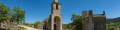
From the banks of the Lot and its lush grassy meadows, the historic private château of Ressouches presents itself magnificently to the passer-by, and the hamlet of Le Villard, just before the climb up to the plateau, is sure to make an impression.
Circular du Loup from Les Salces
 6.21 mi
+1,079 ft
-1,053 ft
3h 50
Moderate
Departure from Les Salces (Lozère)
6.21 mi
+1,079 ft
-1,053 ft
3h 50
Moderate
Departure from Les Salces (Lozère)
The soul of Aubrac speaks to us on this trail, among dense forests, radals, century-old crosses and singing boraldes.
Les Vignes - Mas-Saint-Chély
 12.03 mi
+2,690 ft
-883 ft
7h 50
12.03 mi
+2,690 ft
-883 ft
7h 50
 Difficult
Departure from Les Vignes (Lozère)
Difficult
Departure from Les Vignes (Lozère)
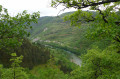
Thisfourth stage of the Tour du Causse Méjean leaves the Gorges du Tarn to climb back up onto the Causse Méjean and cover nearly half of its northern section. After a steep climb to the hamlet of La Caxe, the walker first passes through wooded areas and fields before reaching more open terrain beyond Montignac. A detour via the Roc des Hourtous, with its breathtaking views of the Gorges du Tarn and the vultures, is one of the highlights of the stage.
From Les Vignes to Le Rozier, along the Tarn
 7.15 mi
+791 ft
-837 ft
4h 00
Moderate
Departure from Les Vignes (Lozère)
7.15 mi
+791 ft
-837 ft
4h 00
Moderate
Departure from Les Vignes (Lozère)
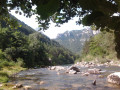
The final stage of this walk, and undoubtedly the easiest. The path follows the course of the Tarn and offers beautiful views of the river at various points.
Palassy Pass
 4.43 mi
+449 ft
-443 ft
2h 25
Moderate
Departure from Lapanouse (Aveyron)
4.43 mi
+449 ft
-443 ft
2h 25
Moderate
Departure from Lapanouse (Aveyron)
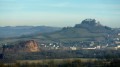
Walk on the Courry plateau, overlooking Séverac le Chateau. Panoramic view of the upper Aveyron valley, the Olip valley and the foothills of Lévezou.
Roc des Hourtous – Les Détroits – Pas de Soucy
 10.12 mi
+2,083 ft
-2,057 ft
6h 30
Difficult
Departure from La Malène (Lozère)
10.12 mi
+2,083 ft
-2,057 ft
6h 30
Difficult
Departure from La Malène (Lozère)
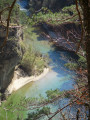
This walk takes you through part of the lower reaches of the Gorges du Tarn via three of its iconic sites: the Roc des Hourtous, the Détroits and the Pas de Soucy, which marks the end of the section accessible by canoe when coming from La Malène. The route, which mostly runs through a lovely pine forest, nevertheless offers impressive views towards the end along the River Tarn, before climbing back up onto the Causse via a very gruelling ascent for which you’ll need to save your energy. The final stretch, which is more leisurely, takes you through the meadows and sparser pine woods of the Causse Méjean, ending at the Roc des Hourtous with its exceptional panoramic view – and perhaps a stop at the local restaurant, open in spring and summer.
La Rocherousse
 5.15 mi
+915 ft
-892 ft
3h 10
Moderate
Departure from Esclanèdes (Lozère)
5.15 mi
+915 ft
-892 ft
3h 10
Moderate
Departure from Esclanèdes (Lozère)
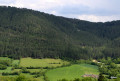
The 13th-century Church of Sainte-Hippolyte, destroyed by the Huguenots in 1562, was rebuilt in 1630. It is partly built of limestone tuff. Several quarries were located in the area near the streams.
The Gorges du Tarn from La Malène to Les Vignes
 Association / Club / Walk leader
 7.99 mi
+1,434 ft
-1,558 ft
4h 55
Moderate
Departure from La Malène (Lozère)
7.99 mi
+1,434 ft
-1,558 ft
4h 55
Moderate
Departure from La Malène (Lozère)
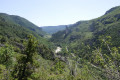
Rather than taking a canoe or a rowing boat, set off on foot along this shaded route through the gorges, where you’ll enjoy fresh perspectives on the legendary sites along this stretch of the Tarn: the ruins of Planiol, Les Détroits, the hamlet of La Croze, Les Baumes Basses and the ‘107’ footbridge! The walk ends after the Pas de Soucy in the lovely village of Les Vignes.A short section of the route towards the end is shared with the GRP® “Tour du Méjan”.
Gorges du Tarn: Hauterives - La Malène - Rieisse - Montignac
 10.98 mi
+2,054 ft
-2,057 ft
6h 50
Moderate
Departure from La Malène (Lozère)
10.98 mi
+2,054 ft
-2,057 ft
6h 50
Moderate
Departure from La Malène (Lozère)
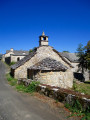
This beautiful and varied hike combines a walk along the banks of the Gorges du Tarn with the discovery of magnificent hamlets and villages in the Causse region, followed by a return trip across the Causse Méjean plateau in a remarkable wooded environment. The absolute calm of the causse contrasts with the hustle and bustle of La Malène and the constant stream of canoes descending the gorges. But the prospect of a welcome swim in the summer months will quickly help you forget this inconvenience. The harmonious blend of majestic landscapes and picturesque, well-preserved traditional buildings makes this circuit particularly appealing.
From Naves to Cazalet via the PR®5
 14.73 mi
+2,080 ft
-2,110 ft
8h 35
Difficult
Departure from Aurelle-Verlac (Aveyron)
14.73 mi
+2,080 ft
-2,110 ft
8h 35
Difficult
Departure from Aurelle-Verlac (Aveyron)
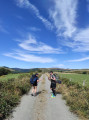
Imagine you’ve been invited on a transhumance; the journey begins in the beautiful village of Naves d’Aubrac. We follow the drovers' roads that will lead us towards the mountains—the name given to these vast grassy expanses. Up there, the air is crisp and the views are magnificent. Cazalet dominates the ascent, then we reach the highest point, the Celtic cross of La Rhode. We begin the descent, gazing out at the vast and infinitely deep horizons.
The great outdoors
 AONB
AONB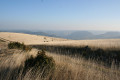 4.50 mi
+571 ft
-577 ft
2h 35
Easy
Departure from Sévérac-le-Château (Aveyron)
4.50 mi
+571 ft
-577 ft
2h 35
Easy
Departure from Sévérac-le-Château (Aveyron)
Accompanied by the sound of water flowing from the Novis fountain, this gentle climb to La Devèze offers a 360° panorama of the Grands Causses, the blue line of the Cévennes and the Languedoc mountains
The drinking troughs of Novis, a village of character, and the vaulted fountain of Argeliès, where water flows as it did in the days of the washerwomen, are the two focal points of this family outing on the Causse de Sauveterre. On the crest of the Devèze de Novis, an orientation table guides you through the breathtaking parade of landscapes stretching as far as the eye can see
Circular Hermaux near the roof of the Aubrac
 9.35 mi
+1,132 ft
-1,112 ft
5h 15
Moderate
Departure from Les Hermaux (Lozère)
9.35 mi
+1,132 ft
-1,112 ft
5h 15
Moderate
Departure from Les Hermaux (Lozère)
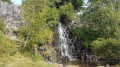
Starting from the Col de Bonnecombe, the route follows a circular route consisting of a short stretch of road and many paths, passing through the charming village of Les Hermaux.
The Grandes Solitudes circular starting from Les Mazes.
 10.96 mi
+1,847 ft
-1,857 ft
6h 40
Difficult
Departure from Aurelle-Verlac (Aveyron)
10.96 mi
+1,847 ft
-1,857 ft
6h 40
Difficult
Departure from Aurelle-Verlac (Aveyron)
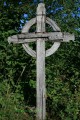
Grandes Solitudes is in fact a continuation of the PR®6 "Solitudes" route in the Chamina guidebook, but with an extension. The lower part of Solitude in the Chamina guidebook is impassable. The route starts from Les Mazes heading north, then gradually follows the drovers' road and soon, with your head increasingly in the sky, you will gain 300 metres in altitude and enjoy sumptuous panoramic views. The return journey follows the Mardonenque boralde (small river).
The Chazelles Trail
 5.01 mi
+636 ft
-620 ft
2h 50
Easy
Departure from Montrodat (Lozère)
5.01 mi
+636 ft
-620 ft
2h 50
Easy
Departure from Montrodat (Lozère)
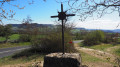
A picturesque walk in the hills above Montrodat
The Chazelles trail (Chazelles meaning ‘old shepherds’ huts’ in Occitan) offers interesting views over the Marvejols area, the Aubrac and the surrounding Trucs hills. It crosses the Poujoulet plateau, criss-crossed by low stone walls.