


Refine your search for walks in Saint-Flour
Saint-Flour walks


 Upper town of Saint-Flour via the Montée des Chèvres
 Visorando Member
 2.23 mi
 +354 ft
 -354 ft
 1h 20
1h 20
 Easy
Easy
 Departure from Saint-Flour (Cantal)
Passing through Auvergne? Take the opportunity to enjoy a pleasant break in Saint-Flour. From the banks of the Anver, climb up to discover the upper town via the Chemin des Chèvres and don't forget to stock up on cheese!
Short tour of the Planèze de Saint-Flour in three days
37.92 mi
+4,419 ft
-4,446 ft
3 days
 Difficult
Departure from Saint-Flour (Cantal)
Difficult
Departure from Saint-Flour (Cantal)
Starting from Saint-Flour, this tour of the northern part of the Planèze de Saint-Flour allows you to appreciate the diversity of the landscapes of this high basalt plateau in just three days of walking.
The stages in Paulhac and Valuéjols offer accommodation in stopover lodges.
The route follows part of a variant of the GR® de Pays de Saint-Flour and part of the GR®4.
Saint-Flour - Paulhac
15.30 mi
+1,460 ft
-745 ft
8h 20
Difficult
Departure from Saint-Flour (Cantal)
This is the first of three stages of the Saint-Flour Planèze tour. It is the longest stage, passing through several small villages typical of the Planèze with their bread ovens, which provide welcome shelter for a short break in rainy weather. The very quiet paths and small roads run alongside meadows grazed by numerous herds of cattle in season.
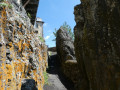
The Ramparts Trail and the old town of Saint-Flour
 2.05 mi
+197 ft
-213 ft
1h 05
Easy
Departure from Saint-Flour (Cantal)
2.05 mi
+197 ft
-213 ft
1h 05
Easy
Departure from Saint-Flour (Cantal)
A walk that allows you to explore the old town of Saint-Flour, perched on its volcanic rocky outcrop, which forms a natural rampart.
Valuéjols - Saint-Flour
13.01 mi
+974 ft
-1,608 ft
6h 50
Difficult
Departure from Valuéjols (Cantal)
Third and final stage of the Planèze tour. Entirely on the GR®4. This stage crosses varied environments and allows you to discover some very interesting, albeit little-known, sites. In particular, the route runs alongside the Narse de Nouvialle (a remarkable wetland) and passes close to the Château du Sailhant and the Babory waterfall.
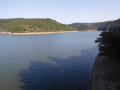
The Grandval Dam via La Mourache
 5.76 mi
+1,168 ft
-1,184 ft
3h 40
5.76 mi
+1,168 ft
-1,184 ft
3h 40
 Moderate
Departure from Fridefont (Cantal)
Moderate
Departure from Fridefont (Cantal)
Over the centuries, the Truyère has carved out deep gorges which, with the rising water levels caused by the construction of the Grandval and Lanau dams, have given way to a natural landscape of surprising and contrasting beauty: islands and peninsulas, cirques with distant shores, mysterious meanders, narrow gorges opening onto vast expanses of water, a wooded valley… Following the PR la Mourache route, the walk offers magnificent views from the embankment supporting the Alleuze road.
Walking the route in the opposite direction offers more shade, but do keep an eye out for the signposting – which, to be honest, is rather sparse.
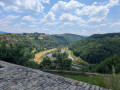
The Valadour Footbridge in Chaliers
 6.19 mi
+1,007 ft
-981 ft
3h 45
Moderate
Departure from Loubaresse (Cantal) (Cantal)
6.19 mi
+1,007 ft
-981 ft
3h 45
Moderate
Departure from Loubaresse (Cantal) (Cantal)
Starting from Loubaresse, near an exit from the A75 motorway, this route follows the GR® de Pays circular Boucle de la Truyère and a variant that "turns" around the Truyère river to the village of Chaliers, which is well worth taking the time to explore. The route takes small local roads on both the left and right banks of this river with its wild gorges, crossing it twice via footbridges at Valadour and Terran.
The actual duration of the route is 4 hours and 40 minutes (GPS watch data), including a short stop in Chaliers.
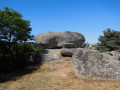
The Recoux Calvary and the Wobbly Rock at La Roche
 8.14 mi
+712 ft
-728 ft
4h 20
Moderate
Departure from Faverolles (Cantal) (Cantal)
8.14 mi
+712 ft
-728 ft
4h 20
Moderate
Departure from Faverolles (Cantal) (Cantal)
From Montchanson, with a rucksack on your back – in place of the schoolbag that children of yesteryear used to carry on their backs to get to school in one of the villages of the Arcomie Valley – let’s follow in their footsteps to discover the hamlets and local heritage. On the way, don’t forget to climb up to the Trois Croix du Bloc du Recoux for an exceptional view, before trying your hand at making the Pierre Branlante de la Roche wobble, north of Saint-Marc.
Route du Bois des Fraux
 6.59 mi
+486 ft
-489 ft
3h 25
Moderate
Departure from Valuéjols (Cantal)
6.59 mi
+486 ft
-489 ft
3h 25
Moderate
Departure from Valuéjols (Cantal)
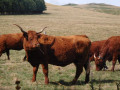
This is a route that captures the mountain atmosphere of the Haute Planèze – the land of burons and summer pastures – starting from Saint-Maurice, a hamlet of Valuéjols, and leading to one of the few wooded areas in the Planèze. The route follows signposted sections (local PR® and GRP® trails) along tracks suitable for vehicles, which link the hamlets and farms scattered across the area. The Bois des Fraux, meanwhile, is maintained by foresters who have cleared tracks there for walking or cross-country skiing, provided there is still snow in winter.
Les Fonds de la Salesse
 3.87 mi
+262 ft
-240 ft
2h 00
Easy
Departure from Paulhac (Cantal)
3.87 mi
+262 ft
-240 ft
2h 00
Easy
Departure from Paulhac (Cantal)
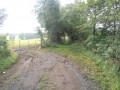
Discovery hike around Paulhac, very easy and ideal for those new to mountain biking, especially children. It is also accessible to pedestrians, horses and even people with all-terrain pushchairs (3 wheels).
Paulhac - Valuéjols
9.60 mi
+2,005 ft
-1,916 ft
6h 10
Moderate
Departure from Paulhac (Cantal)
Second stage of the Saint-Flour Planèze tour. This is the shortest and highest stage. It takes place in the foothills of the Plomb du Cantal and crosses the wildest parts of the circuit.
The Narse de Lascols
 7.52 mi
+417 ft
-417 ft
3h 50
Moderate
Departure from Paulhac (Cantal)
7.52 mi
+417 ft
-417 ft
3h 50
Moderate
Departure from Paulhac (Cantal)
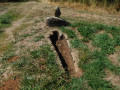
The ‘Grande Randonnée’ trail in the Pays de Saint-Flour allows you to walk several circular routes around the capital of the Planèze and Margeride regions and passes through the village of Paulhac. The circular route crosses the Narse de Lascols from south to north, starting from Cussac, passing the Puy de Mercou, and heading back up towards the Bois des Fraux via the mountain pastures. The route described below is inspired by this, offering a wonderful exploration of the Planèze de Saint-Flour by combining the GR® de Pays and PR® trails around Paulhac.
The Mercou Woods
 6.79 mi
+558 ft
-574 ft
3h 35
Moderate
Departure from Paulhac (Cantal)
6.79 mi
+558 ft
-574 ft
3h 35
Moderate
Departure from Paulhac (Cantal)
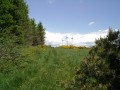
Circuit no. 1 in the guidebook of walking, horse riding and mountain biking routes in the commune of Paulhac.
Walk in the Margeride Forest
2.70 mi
+489 ft
-505 ft
1h 40
Easy
Departure from Cantal
A short, gentle walk with views of the surrounding mountains and the Monts du Cantal. This walk follows a forest track through the woods. It is accessible on foot, by mountain bike and on snowshoes.
Lavergne and Belinay Woods
 8.21 mi
+1,086 ft
-1,086 ft
4h 45
Moderate
Departure from Paulhac (Cantal)
8.21 mi
+1,086 ft
-1,086 ft
4h 45
Moderate
Departure from Paulhac (Cantal)
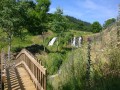
An encounter with nature in the heart of the Monts du Cantal, with a complete change of scenery guaranteed.
Route between La Truyère and Neuvéglise
8.53 mi
+1,591 ft
-1,591 ft
5h 20
Moderate
Departure from Neuvéglise (Cantal)
Route through rolling countryside with views of the Lanau dam. Magnificent houses in Orcières.
The historical heritage of Neussargues en Pinatelle
9.06 mi
+1,056 ft
-1,033 ft
5h 05
Moderate
Departure from Chalinargues (Cantal)
Discover the history of this part of the Cézalier through the archaeological and historical remains that dot this route. Prehistoric rock shelters, tumuli, Merovingian sarcophagi, medieval forest trails, 12th-century churches, a monumental 15th-century cross, a communal oven, a wash house and beautiful old houses.
Calvaire de Recoux and Roc del Burre, starting from Saint-Just
 6.73 mi
+1,115 ft
-1,115 ft
4h 05
Moderate
Departure from Saint-Just (Cantal) (Cantal)
6.73 mi
+1,115 ft
-1,115 ft
4h 05
Moderate
Departure from Saint-Just (Cantal) (Cantal)
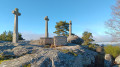
Setting off from the charming village of Saint-Just, numerous granite boulders are scattered here and there across the landscape. The most unusual is undoubtedly the Recoux Calvary, an imposing mass of granite topped by three majestic crosses, a testament to the skill of local stonemasons and to an era when men erected calvaries to the glory of God. On the way back, you cannot miss the Roc del Burre, better known as the Pierre Branlante. It’s up to you to find the right spot to make this 400-tonne boulder move with just one hand.
The short walk around Lavergne
1.87 mi
+171 ft
-171 ft
1h 00
Easy
Departure from Oradour (Cantal)
A short, idyllic walk along farm tracks, through a lovely wood of pine and beech trees, before returning gently downhill towards the village of Lavergne and its old farmhouses, typical of 19th-century Auvergne rural architecture. You can take a break on the sturdy stone bench, which is also your starting point. It is only 40 years old and has nothing in common with a menhir apart from the raw material from which both monuments are made! A lovely walk, ideal for families or to start your day!
Chapelle Saint-Antoine via Rocher de Bonnevie, starting from Murat
 5.16 mi
+1,148 ft
-1,138 ft
3h 20
Easy
Departure from Murat (Cantal) (Cantal)
5.16 mi
+1,148 ft
-1,138 ft
3h 20
Easy
Departure from Murat (Cantal) (Cantal)
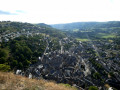
The route passes through the old town of Murat and then two religious buildings on their respective promontories. These offer views of the town of Murat and the Cantal mountains.
The Church of Bredons
4.75 mi
+938 ft
-935 ft
3h 00
Easy
Departure from Murat (Cantal) (Cantal)
Walk in the hills above Murat. Beautiful views over the Alagnon and Benet valleys. Beautiful old houses in the village of Bredons and the remarkable site of Bredons Church, an 11th-century Cluniac site.
Murat – Prat de Bouc
 10.24 mi
+2,474 ft
-899 ft
6h 50
Difficult
Departure from Murat (Cantal) (Cantal)
10.24 mi
+2,474 ft
-899 ft
6h 50
Difficult
Departure from Murat (Cantal) (Cantal)
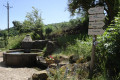
First stage ofthe GR® 400 walking clockwise (the official guidebook follows the opposite direction).
The landscape gradually takes on its typical Cantalian character, particularly in the Cirque de Chamalière and, of course, beneath the Plomb du Cantal at Prat de Bouc.
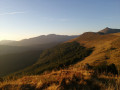
Circuit of the Cantalien volcano via the GR®400, clockwise
 88.49 mi
+21,634 ft
-21,604 ft
8 days
Difficult
Departure from Murat (Cantal) (Cantal)
88.49 mi
+21,634 ft
-21,604 ft
8 days
Difficult
Departure from Murat (Cantal) (Cantal)
This 8-day route covers the entireGR®®400, in a clockwise direction (the FFRP guidebook describes it in the opposite direction).
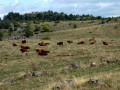
The peat bogs of Chastel-sur-Murat
 5.04 mi
+600 ft
-587 ft
2h 50
Easy
Departure from Chastel-sur-Murat (Cantal)
5.04 mi
+600 ft
-587 ft
2h 50
Easy
Departure from Chastel-sur-Murat (Cantal)
Although it takes a while to get there, this walk takes you along a wild trail through pastureland, where you can see several peat bogs at different stages of development and enjoy magnificent views of the Cantal mountains and the Planèze plateau on the Saint-Flour side.
Las Combes
 AONB
AONB 2.56 mi
+479 ft
-459 ft
1h 35
Easy
Departure from Anterrieux (Cantal)
2.56 mi
+479 ft
-459 ft
1h 35
Easy
Departure from Anterrieux (Cantal)
A short route to explore the Gorges du Bès
From Valiette, this route descends past the dam before entering the gorges, offering superb views of the valley.
Château d'Aurouze and Palhàs de Molompize
3.68 mi
+883 ft
-853 ft
2h 30
Easy
Departure from Molompize (Cantal)
This walk takes in two iconic sites in the Alagnon Valley: the ruined Château d'Aurouze and its beautiful view over the valley, followed by the vineyard terraces (known in our valley as "Palhàs") of Molompize.
The geoscope and arboretum at the Lozère rest area
0.53 mi
+23 ft
-23 ft
0h 15
Easy
Departure from Les Monts-Verts (Lozère)
Take a break from the A75 for a pleasant and informative stop!
Around Suc du Mirial
4.37 mi
+394 ft
-400 ft
2h 20
Easy
Departure from La Chapelle-Laurent (Cantal)
This walk, on small roads and paths between Cantal and Haute Loire, takes you through five villages and farms and offers superb views of the Livradois to the east and, above all, the Monts d'Auvergne (Cantal, Cézallier, Sancy and even Puy de Dôme) to the west from La Fage.
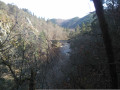
The balconies of the Truyère
 10.36 mi
+2,198 ft
-2,172 ft
6h 40
Difficult
Departure from Blavignac (Lozère)
10.36 mi
+2,198 ft
-2,172 ft
6h 40
Difficult
Departure from Blavignac (Lozère)
A superb hike, mostly through woods, to discover the wild and little-known Truyère gorges. Suitable for experienced walkers only due to the distance and elevation gain.
The Loup trail starting from Fortuniès
 9.12 mi
+751 ft
-748 ft
4h 50
Moderate
Departure from Dienne (Cantal)
9.12 mi
+751 ft
-748 ft
4h 50
Moderate
Departure from Dienne (Cantal)
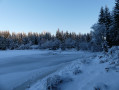
This route takes you to Lac du Pêcher, La Roche du Pic, the Frau de Collanges peat bog and Lac de Sauvages. I encountered a wolf in this area in the winter of 2017. Then I forgot about it until early 2025. It then reappeared, attacking livestock multiple times between winter and summer. I tracked it down and know its favourite spots. This does not guarantee that you will see it, but it may increase your chances of an encounter.
The wayside crosses around Malzieu
 7.42 mi
+866 ft
-856 ft
4h 10
Moderate
Departure from Le Malzieu-Ville (Lozère)
7.42 mi
+866 ft
-856 ft
4h 10
Moderate
Departure from Le Malzieu-Ville (Lozère)
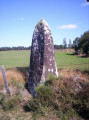
A walk dotted with wayside crosses, which once served to guide travellers but also served as a reminder to the local population of their duty of devotion to God. By the way, how many did you count?
Discovering the Barons of Apcher
 9.23 mi
+833 ft
-833 ft
5h 00
Moderate
Departure from Le Malzieu-Ville (Lozère)
9.23 mi
+833 ft
-833 ft
5h 00
Moderate
Departure from Le Malzieu-Ville (Lozère)
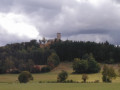
A walk through woods and meadows to explore the medieval site of Apcher.
Around Le Péchadu
 10.01 mi
+919 ft
-902 ft
5h 25
Moderate
Departure from Le Malzieu-Ville (Lozère)
10.01 mi
+919 ft
-902 ft
5h 25
Moderate
Departure from Le Malzieu-Ville (Lozère)
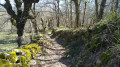
A walk alternating between forest sections and stretches across meadows. Best enjoyed on foot or by mountain bike, following the small, unspoilt paths.
Circular route around Le Malzieu via Le Nozier
 5.46 mi
+568 ft
-564 ft
3h 00
Easy
Departure from Le Malzieu-Ville (Lozère)
5.46 mi
+568 ft
-564 ft
3h 00
Easy
Departure from Le Malzieu-Ville (Lozère)
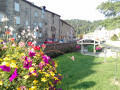
An easy nature walk at the foot of the Margeride.
The Porte des Fées at the start of the Malzieu
 4.68 mi
+525 ft
-522 ft
2h 35
Easy
Departure from Le Malzieu-Ville (Lozère)
4.68 mi
+525 ft
-522 ft
2h 35
Easy
Departure from Le Malzieu-Ville (Lozère)
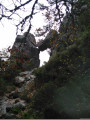
A short walk leads to a majestic natural site and a perfect view of the Truyère Gorges. Be careful in rainy weather, however, as the area around the Porte des Fées can be slippery.
Mauriono Circular Route
 4.74 mi
+492 ft
-492 ft
2h 35
Easy
Departure from Le Malzieu-Ville (Lozère)
4.74 mi
+492 ft
-492 ft
2h 35
Easy
Departure from Le Malzieu-Ville (Lozère)
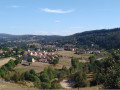
A walk through the fields on the hills above the village, offering lovely views of the Malzieu and the Truyère Valley.
Tour of the lake in Malzieu-Ville
 3.23 mi
+43 ft
-43 ft
1h 30
Easy
Departure from Le Malzieu-Ville (Lozère)
3.23 mi
+43 ft
-43 ft
1h 30
Easy
Departure from Le Malzieu-Ville (Lozère)
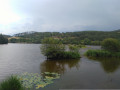
This is an easy family trail that allows you to discover the rich local flora and fauna. Only a stony section at the start and end of the lake may make this short hike difficult for those who are less mobile.