


Refine your search for walks in Saint-Ange-et-Torçay
Saint-Ange-et-Torçay walks


 Circular loop from the Church of Saint-Ange
 Visorando Member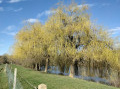
 3.83 mi
 +92 ft
 -92 ft
 1h 50
1h 50
 Easy
Easy
 Departure from Saint-Ange-et-Torçay (Eure-et-Loir)
Starting from the public garden created by the local council around the Torçay pond on Rue de la Blaise, this short circular route takes you through the beautiful Blaise Valley, passing the recently restored Church of Saint-Ange. It then follows the pond created from a former gravel pit dug in the 1960s, near the Torçay mill. Although highly controversial at the time due to the risk of groundwater pollution, these bodies of water now add to the charm of the valleys in the Drouais region. The numerous mills that line the valley, bearing witness to a very early industrialisation, have now become beautiful private residences, such as the Torçay Mill. The scenic value of the area justified retaining the detour required by the new GRP® route, which has replaced the former GR®351, before heading towards the Châteauneuf forest.
Circular route from Saint-Jean-de-Rebervilliers to Châteauneuf-en-Thymerais
 6.98 mi
+125 ft
-125 ft
3h 20
6.98 mi
+125 ft
-125 ft
3h 20
 Moderate
Departure from Saint-Jean-de-Rebervilliers (Eure-et-Loir)
Moderate
Departure from Saint-Jean-de-Rebervilliers (Eure-et-Loir)
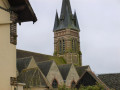
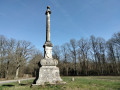
A circular route starting from Saint-Jean-de-Rebervilliers. Largely through woodland, it leads to Châteauneuf-en-Thymerais. After setting off through the forest, the route crosses the Rond de France, where a beautiful stone column stands, locally known as the ‘pyramid’. After passing through the town centre, the return route takes you back through the forest, past the Château du Jaglu and then the Église Saint-Jean, ending near the pretty pond with its pleasantly landscaped surroundings.
The Pompadour Estate
 Tourism professional3.98 mi
+217 ft
-217 ft
2h 00
Easy
Departure from Crécy-Couvé (Eure-et-Loir)
Tourism professional3.98 mi
+217 ft
-217 ft
2h 00
Easy
Departure from Crécy-Couvé (Eure-et-Loir)
This family-friendly route takes in the sites associated with Madame de Pompadour, mistress of King Louis XV, who lived in Crécy-Couvé in the 18th century.
Saint-Sauveur-Marville circular
 6.00 mi
+125 ft
-138 ft
2h 50
Easy
Departure from Saint-Sauveur-Marville (Eure-et-Loir)
6.00 mi
+125 ft
-138 ft
2h 50
Easy
Departure from Saint-Sauveur-Marville (Eure-et-Loir)
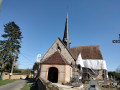
A circular route starting from Saint-Sauveur-Marville, heading towards Châteauneuf-en-Thymerais through the fields, then returning via the forest past the Château du Jaglu. This route, situated on the border of the Thimerais and the great Beauce plain, will be particularly appreciated by lovers of wide open spaces and sweeping horizons.
Route de Châteauneuf-en-Thymerais
5.00 mi
+49 ft
-49 ft
2h 20
Easy
Departure from Châteauneuf-en-Thymerais (Eure-et-Loir)
Route in the Châteauneuf-en-Thymerais National Forest
A getaway to Chappe
 4.71 mi
+62 ft
-62 ft
2h 15
Easy
Departure from Saint-Maixme-Hauterive (Eure-et-Loir)
4.71 mi
+62 ft
-62 ft
2h 15
Easy
Departure from Saint-Maixme-Hauterive (Eure-et-Loir)
This circular walk starting from Chappe takes you on a journey of discovery through the Châteauneuf Forest. This hamlet has a pond that has just been restored and a magnificent oak tree. The route follows a section of the GRP® Vallées de la Blaise et de l'Avre from the Châteauneuf water tower to the Rond du Roi, then part of the bridle path that circles this vast national forest.
 From Tréon to Ecluzelles via roads, fields and footpaths
19.99 mi
+266 ft
-269 ft
1.5 hrs
Moderate
Departure from Tréon (Eure-et-Loir)
A lovely circular walk, mostly along departmental roads, but also featuring trackways through the fields and, finally, paths through the woods. The walk around the Étang d’Écluzelle is magnificent, offering the chance to spot a variety of birdlife.
The hare and the tortoise at Escorpain
 8.97 mi
+138 ft
-151 ft
4h 15
Moderate
Departure from Escorpain (Eure-et-Loir)
8.97 mi
+138 ft
-151 ft
4h 15
Moderate
Departure from Escorpain (Eure-et-Loir)
This circular route offers an opportunity to discover some of the structures that line the Avre Aqueduct, particularly the Tue-Cheval structure, but also to admire the castle of Escorpain. Two pretty ponds are also on the itinerary. It is an easy route with a few sections in the forest, which are welcome when it is very hot!
Jaudrais circular via the Grande Vallée
 7.32 mi
+203 ft
-220 ft
3h 35
Moderate
Departure from Jaudrais (Eure-et-Loir)
7.32 mi
+203 ft
-220 ft
3h 35
Moderate
Departure from Jaudrais (Eure-et-Loir)
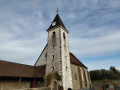
A walk half in the fields and half in the Châteauneuf-en-Thymerais State Forest, starting from the village of Jaudrais and passing through its hamlets. The circular route follows the Grande Vallée stream from a distance on both sides.
Mesnil-Thomas circular: the lovers' path
 6.92 mi
+69 ft
-69 ft
3h 15
Moderate
Departure from Le Mesnil-Thomas (Eure-et-Loir)
6.92 mi
+69 ft
-69 ft
3h 15
Moderate
Departure from Le Mesnil-Thomas (Eure-et-Loir)
A circular loop between the village and the Senonches National Forest, passing through fields and copses. It goes through small hamlets with pretty farmhouses decorated with flowers in summer. After La Motte and La Petite Motte, places reminiscent of the ancient line of defence established between France and Normandy, the route becomes more romantic, crossing the Bois du Rouvray via a path which, it is said, was a meeting place for young lovers from the village. There weren't many other places nearby where they could meet discreetly!
The Blaise flows through Louvilliers, if you don't mind!
 6.20 mi
+98 ft
-125 ft
2h 55
Easy
Departure from Louvilliers-lès-Perche (Eure-et-Loir)
6.20 mi
+98 ft
-125 ft
2h 55
Easy
Departure from Louvilliers-lès-Perche (Eure-et-Loir)
Let's go in search of the Blaise, a mischievous little river that hides so well from its source that geographers are perplexed. According to the elders, it originates near the Rond des Louvetiers, between Tardais and the Étang de la Bénette. Recent maps show it near the Grand Rond. In fact, these are "gouttiers", episodic streams that flow towards and cross the Tardais pond. It emerges under the dyke where a mill once operated, but suddenly disappears, sinking into a "chasm". It sometimes reappears.
At the edge of the forest, the Ruisseau de Saint-Cyr joins it. Together, the two waterways pass at the foot of Louvilliers-lès-Perche, flowing sometimes on the surface, sometimes underground. The Blaise reappears definitively in the Étang de Dampierre. In the past, it enabled the establishment of a very important steel complex. It then flows towards Dreux, which it crosses, before joining the Eure at Fermaincourt.
Circular Digny via the Château de la Hallière
 7.89 mi
+154 ft
-151 ft
3h 45
Moderate
Departure from Digny (Eure-et-Loir)
7.89 mi
+154 ft
-151 ft
3h 45
Moderate
Departure from Digny (Eure-et-Loir)
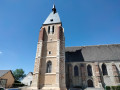
Digny is located on the border between Perche and Thimerais. This route through the fields starts at the foot of the bell tower of Saint-Germain Church, built in 1525 and recently beautifully restored. In 2025, a local association organised various events to celebrate the500th anniversary of its construction. The route takes you to the 16th-century Ferme du Romphaye farm and the Château de la Hallière castle, built in 1770. The return journey takes you through the hamlets of La Richardière and Bellandas, allowing you to return quickly to Digny or extend your walk to Mille Champs along paths offering beautiful views of the village.
Circular Saint-Lubin-de-Cravant in the footsteps of a "Fauve"
 5.26 mi
+243 ft
-240 ft
2h 40
Easy
Departure from Saint-Lubin-de-Cravant (Eure-et-Loir)
5.26 mi
+243 ft
-240 ft
2h 40
Easy
Departure from Saint-Lubin-de-Cravant (Eure-et-Loir)
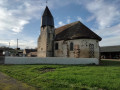
These circulars will not take you into the bush in search of large predators, but along good paths through woods and fields on the outskirts of the Perche, in this transitional region known as the Thimerais. You will pass through the landscapes that inspired the painter Maurice de Vlaminck, who founded Fauvism at the beginning of the 20th century with his friends Derain and Matisse.Having settled in La Tourillère, near Rueil-la-Gadelière, 100 years ago, the artist fell in love with this region, which he tirelessly explored until his death in 1958 in search of places of inspiration.These circular loops take you through the landscapes "where the wind bends the trees and chases the clouds across a dark sky" that captivated the painter.This route starts in Saint-Lubin de Cravant, where the church inspired the painter. It follows the Meuvette valley, which was once canalised. The Avre Aqueduct crosses the valley on imposing arches. It supplies Paris with drinking water.
The Louvilliers arm
 3.30 mi
+105 ft
-105 ft
1h 35
Easy
Departure from Senonches (Eure-et-Loir)
3.30 mi
+105 ft
-105 ft
1h 35
Easy
Departure from Senonches (Eure-et-Loir)
A circular path at the far end of the Bras de Louvilliers in the Senonches State Forest, taking in the valley of the Ruisseau de Saint-Cyr and the site of the Poste de Louvilliers forest lodge with its pond and magnificent oak tree. The path then winds its way above the Blaise valley before skirting the Bois du Paradis. Quite a journey!
The old quarters of Dreux
4.50 mi
+164 ft
-164 ft
2h 15
Easy
Departure from Dreux (Eure-et-Loir)
Dreux, the old town with its medieval castle fortifications, narrow streets, belfry, Royal Chapel of Saint Louis, half-timbered houses, ramparts, not to mention its vineyards, etc. Everything you need for a wonderful day out with the family.
Circular Digny starting from the hamlet of Saint-Fraise
 6.78 mi
+144 ft
-131 ft
3h 15
Moderate
Departure from Digny (Eure-et-Loir)
6.78 mi
+144 ft
-131 ft
3h 15
Moderate
Departure from Digny (Eure-et-Loir)
Starting from Saint-Fraise, a hamlet in the commune of Digny with an enigmatic name, this circular route first takes us across fields in the plain that stretches between the Senonches and Châteauneuf-en-Thymerais state forests. After crossing La Fizilière, it enters the forest, continues to Rond Fortin along a wide avenue and then crosses the somewhat wild Bois des Hauts Cornets forest before returning to the fields via Buisson-Elouis, La Frette and Les Mésangères.
Circular route from La Ville-aux-Nonains to Senonches
 9.62 mi
+85 ft
-85 ft
4h 30
Moderate
Departure from Senonches (Eure-et-Loir)
9.62 mi
+85 ft
-85 ft
4h 30
Moderate
Departure from Senonches (Eure-et-Loir)
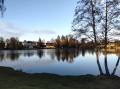
Don't be fooled by the name of this route: the "town" in question is just a small village attached to Senonches. The nuns and monks left it long ago! This circular route, starting from Ville-aux-Nonains, follows quiet paths and roads and leads to Senonches, a "Petite Cité de Caractère" (Small Town of Character) that is well worth a detailed visit. On the way back, it follows the edge of the national forest. This route also serves as a reminder, through its place names, of the activities that once took place in this other part of the Senonches area, better known for its forest, and evokes activities that have now disappeared: marl pits, tile works, lime kilns, forges and mechanical workshops, which played a major role in the economic development of the commune. These have now been replaced by intensive farming in vast fields reorganised after the consolidation of the old bocage. The hedges have disappeared, with only a few small woods remaining as refuges for game.
Along the Avre and in the Bois des Brouillets
 5.68 mi
+210 ft
-226 ft
2h 50
Moderate
Departure from Acon (Eure)
5.68 mi
+210 ft
-226 ft
2h 50
Moderate
Departure from Acon (Eure)
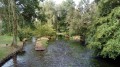
Starting from the charming church of Acon, on the border between Normandy and Île-de-France, the route first takes you through the Avre valley and follows the river for a good distance. Then, higher up, it passes through a forest of oak and birch trees with fern undergrowth. This is a relatively short hike, but it can be extended by following another route that starts and ends at the same point.
Along the Avre between Dampierre and Acon
 5.58 mi
+125 ft
-118 ft
2h 40
Easy
Departure from Acon (Eure)
5.58 mi
+125 ft
-118 ft
2h 40
Easy
Departure from Acon (Eure)
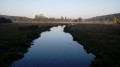
Starting from a charming church, this is a short hike focused on water in the Avre Valley, on the border between Normandy and Île-de-France.
Muzy and the banks of the Avre
 6.11 mi
+220 ft
-223 ft
3h 00
Easy
Departure from Muzy (Eure)
6.11 mi
+220 ft
-223 ft
3h 00
Easy
Departure from Muzy (Eure)
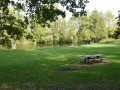
This is an easy route, the second part of which is very pleasant in hot weather as it follows the banks of the Avre on theGR®®22. There are various places to stop and picnic by the water.
From the Senonches forest to the Boizard locks
 13.66 mi
+594 ft
-594 ft
6h 50
13.66 mi
+594 ft
-594 ft
6h 50
 Difficult
Departure from Senonches (Eure-et-Loir)
Difficult
Departure from Senonches (Eure-et-Loir)
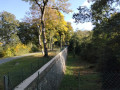
A beautiful hike, mostly in the woods around the Eure valley, starting from the Senonches State Forest and ending at the Boizard locks. Built in 1785 by Louis XIV's engineers, this structure was supposed to be the starting point of an unfinished aqueduct that would have carried water from the Eure to the fountains in the park of the Palace of Versailles. On the way back, discover the Château des Vaux and its gardens.
Views of the Eure Valley through the Senonches State Forest
 5.26 mi
+299 ft
-295 ft
2h 40
Easy
Departure from Senonches (Eure-et-Loir)
5.26 mi
+299 ft
-295 ft
2h 40
Easy
Departure from Senonches (Eure-et-Loir)
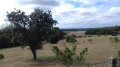
This beautiful woodland route includes a circular stretch halfway along the route, offering views of the Belhomert countryside. The village owes its name to Saint Laumer, who settled on the banks of the River Eure around 630. The hermit’s priory was attached to the important Abbey of Fontevrault around 1080.
In the Dreux Forest
 5.02 mi
+233 ft
-230 ft
2h 30
Easy
Departure from Montreuil (Eure-et-Loir)
5.02 mi
+233 ft
-230 ft
2h 30
Easy
Departure from Montreuil (Eure-et-Loir)
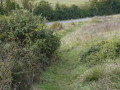
This walk, in the Dreux Forest, offers a beautiful view of the village of Montreuil, the Eure Valley and the arches of the Eure siphon, the Avre aqueduct that supplies drinking water to the city of Paris. Come and discover a walking route in the Dreux National Forest; after a bit of exercise, you’ll climb the hillside along a very pleasant path, having crossed the bridge over the Eure.
Grand tour of the Château des Vaux
 9.24 mi
+312 ft
-325 ft
4h 30
Moderate
Departure from Saint-Maurice-Saint-Germain (Eure-et-Loir)
9.24 mi
+312 ft
-325 ft
4h 30
Moderate
Departure from Saint-Maurice-Saint-Germain (Eure-et-Loir)
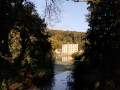
A route taking in the Boizard Locks and the Château des Vaux, passing through woods and fields around the Eure valley. The path first climbs to offer views of the Eure valley flowing between the forests of Senonches and Montécot towards Chartres. At the end of the17th century, Louis XIV and his engineers had hoped to channel the river’s waters as far as Versailles to supplement the insufficient water supply for the park’s fountains. The works could not be completed. A few remnants of this monumental project remain: the colossal embankment blocking the course of the Eure, a few traces of the canal, the gigantic embankment of the ‘terraces’ and the first storey of the aqueduct at the far end of the grounds of the Château de Maintenon. Charmed by this beautiful valley, the d’Alligre family, who had initially settled at the Château de la Rivière, expanded their estate by commissioning the splendid Château des Vaux, which today serves as a major vocational college run by the Fondation des Apprentis d’Auteuil.
Fontaine-Aubert lake in Belhomert
 3.90 mi
+233 ft
-203 ft
2h 00
Easy
Departure from Belhomert-Guéhouville (Eure-et-Loir)
3.90 mi
+233 ft
-203 ft
2h 00
Easy
Departure from Belhomert-Guéhouville (Eure-et-Loir)
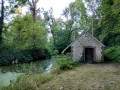
This short route starts in the village of Belhomert and takes you to the small lake at Fontaine-Aubert, a pleasant spot for fishing and picnics. The route through the fields offers beautiful views of the Eure valley.
In the footsteps of Saint-Laumer around Belhomert-Guéhouville
 5.02 mi
+1,280 ft
-1,391 ft
3h 25
Moderate
Departure from Belhomert-Guéhouville (Eure-et-Loir)
5.02 mi
+1,280 ft
-1,391 ft
3h 25
Moderate
Departure from Belhomert-Guéhouville (Eure-et-Loir)
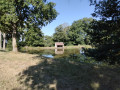
In the 6th century, Saint Laumer, or Lhomer, was a shepherd before becoming a canon and then bursar of Chartres Cathedral; he retired to the forests of the Perche where he founded two hermitages: he first settled in 558 in these places, later named Beatus Launomarus, then, 12 years later, moved to the banks of the Corbionne near Moutiers-au-Perche.This circular walk takes you around the Belhomert area in the footsteps of the holy man. Passing first by the entrance to the abbey that succeeded the original priory, the route follows the banks of the Eure. It reaches the edge of the Forest of Senonches, where trees were until recently the subject of strange rituals.After overlooking the valley at the edge of the forest, the route passes by the charming Étang de Fontaine-Aubert, a place name which, like Fontaine-Simon or Les Ressuintes, reminds us that many pagan places of worship were established near springs before being Christianised by devout hermits.