


Refine your search for walks in Eure-et-Loir
Eure-et-Loir walks


 Between the Canal Louis XIV and the Eure Valley
 Visorando Member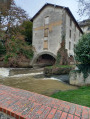
 10.16 mi
 +148 ft
 -167 ft
 4h 50
4h 50
 Moderate
 Departure from Maintenon (Eure-et-Loir)
Starting from Maintenon station, a green loop allows you to admire the colossal Maintenon aqueduct and follow the Louis XIV canal for several kilometres before passing through the Eure valley and returning along the river.
We recommend a picnic on the banks of the Eure or at Saint-Piat station if it rains.
Maintenon - Eure Loop
 13.96 mi
+256 ft
-259 ft
6h 40
13.96 mi
+256 ft
-259 ft
6h 40
 Difficult
Departure from Maintenon (Eure-et-Loir)
Difficult
Departure from Maintenon (Eure-et-Loir)
Depart from Maintenon, passing by the château and then the plateau overlooking the Eure valley to Nogent-le-Roi, where you can admire the church and half-timbered houses. The return journey takes you through the valley along the path on the platform of the old railway line and then along the banks of the river on a charming shaded path.
Along the Eure, from Lormaye to Mormoulins
6.36 mi
+23 ft
-23 ft
2h 55
 Easy
Departure from Lormaye (Eure-et-Loir)
Easy
Departure from Lormaye (Eure-et-Loir)
This easy, bucolic walk allows you to discover a little of the Eure, a peaceful river.The starting point is a curiosity in itself: a town hall unlike any other.The finish invites you into the pretty little town of Nogent-le-Roi, with its old half-timbered houses.
Around the Bois des Tertres
 4.14 mi
+69 ft
-69 ft
2h 00
Easy
Departure from Fontenay-sur-Eure (Eure-et-Loir)
4.14 mi
+69 ft
-69 ft
2h 00
Easy
Departure from Fontenay-sur-Eure (Eure-et-Loir)
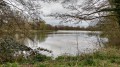
Circular loop around the Bois des Tertres and the ponds of Fontenay-sur-Eure.
The Grand Tour of Le Gorget (Lèves and Saint-Prest)
5.18 mi
+164 ft
-154 ft
2h 30
Easy
Departure from Lèves (Eure-et-Loir)
Lots of paths, a few small roads, varied landscapes with the banks of the Eure, ponds and a small piece of Beauce lost on the left bank of the Eure. A pleasant little hike if it hasn't rained too much in the previous days (or if you like mud).
Vallée des Cailles via the Chemin des Fontaines
 6.22 mi
+341 ft
-341 ft
3h 10
Moderate
Departure from Anet (Eure-et-Loir)
6.22 mi
+341 ft
-341 ft
3h 10
Moderate
Departure from Anet (Eure-et-Loir)
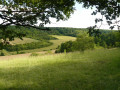
This is a moderately difficult and varied hike, following part ofthe GR®22 trailthrough the Vallée des Cailles.
Circular of Néron
 6.20 mi
+259 ft
-236 ft
3h 05
Easy
Departure from Néron (Eure-et-Loir)
6.20 mi
+259 ft
-236 ft
3h 05
Easy
Departure from Néron (Eure-et-Loir)
A lovely little walk, mostly through woodland, marked withPR®® signposts (apart from a point of interest at the end of the route).
The woods of Nogent-le-Roi
 Tourism professional7.43 mi
+240 ft
-243 ft
3h 35
Moderate
Departure from Nogent-le-Roi (Eure-et-Loir)
Tourism professional7.43 mi
+240 ft
-243 ft
3h 35
Moderate
Departure from Nogent-le-Roi (Eure-et-Loir)
Starting from Nogent-le-Roi, explore the surrounding countryside between woods and valleys before visiting the castle park. The Eure valley and its water mills can be explored at a leisurely pace. Half-timbered houses characterise the distinctive architecture of Nogent-le-Roi. Between the castle grounds and the Bois de Ruffin, walkers will pass from an urban landscape to a very varied rural landscape.
The Louis XIV Canal in Berchères la Maingot
 9.13 mi
+177 ft
-164 ft
4h 20
Moderate
Departure from Berchères-Saint-Germain (Eure-et-Loir)
9.13 mi
+177 ft
-164 ft
4h 20
Moderate
Departure from Berchères-Saint-Germain (Eure-et-Loir)
Circular starting from Berchères la Maingot.
Discover the remains of Louis XIV's unfinished canal, which was intended to supply the Palace of Versailles with water from the Eure. Dogs are allowed but must be kept on a leash.
The woods of Moléans
 7.15 mi
+98 ft
-98 ft
3h 20
Moderate
Departure from Moléans (Eure-et-Loir)
7.15 mi
+98 ft
-98 ft
3h 20
Moderate
Departure from Moléans (Eure-et-Loir)
This is undoubtedly one of the most enjoyable hikes in this wood. At the start, there is a beautiful view of Moléans Castle, followed by a lovely walk through the forest. Then there is a very pleasant crossing of the fords and a walk along the banks of the Loir. The return through the forest allows you to finish in peace and quiet.
Circular Lèves in the Eure valley
 7.91 mi
+292 ft
-276 ft
3h 55
Moderate
Departure from Lèves (Eure-et-Loir)
7.91 mi
+292 ft
-276 ft
3h 55
Moderate
Departure from Lèves (Eure-et-Loir)
A walk in the Eure valley, without any major difficulties but with a few slopes through fields, woods, stony and grassy paths, and then a little tarmac and a few houses too.
This walk can also be done by mountain bike or hybrid bike.
Rouvres circular via the Vallée des Cailles and the Bois de la Ronce
 6.31 mi
+217 ft
-213 ft
3h 05
Moderate
Departure from Rouvres (Eure-et-Loir) (Eure-et-Loir)
6.31 mi
+217 ft
-213 ft
3h 05
Moderate
Departure from Rouvres (Eure-et-Loir) (Eure-et-Loir)
During this easy hike, you will discover a charming village and its heritage and enjoy walking along beautiful country lanes and through woods, as well as the views.
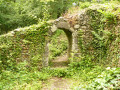
Sorel Castle
 5.79 mi
+148 ft
-131 ft
2h 50
Moderate
Departure from Sorel-Moussel (Eure-et-Loir)
5.79 mi
+148 ft
-131 ft
2h 50
Moderate
Departure from Sorel-Moussel (Eure-et-Loir)
This is a pleasant hike in the forest, offering a change of scenery and the charm of being in the heart of the wilderness.
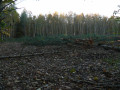
Circular between Mévoisins and Bailleau-Armenonville
 12.04 mi
+272 ft
-246 ft
5h 45
Moderate
Departure from Mévoisins (Eure-et-Loir)
12.04 mi
+272 ft
-246 ft
5h 45
Moderate
Departure from Mévoisins (Eure-et-Loir)
This is a pleasant and easy circular route, alternating between wooded areas, forest edges and fields. Most of the route offers unobstructed views, even overlooking the Eure and Voise valleys. It is a landscape with very little traffic, allowing you to enjoy watching herons and harriers take flight, small game such as deer and hares scampering across the fields and paths, and, in season, gliders soaring through the sky.
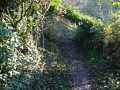
Circular route around the Drouette river starting from Saint-Martin-de-Nigelles
 5.83 mi
+141 ft
-167 ft
2h 50
Easy
Departure from Saint-Martin-de-Nigelles (Eure-et-Loir)
5.83 mi
+141 ft
-167 ft
2h 50
Easy
Departure from Saint-Martin-de-Nigelles (Eure-et-Loir)
A short walk along the Drouette river, passing most of the points of interest on the Discovery Trail
This link allows you to discover the game and the information panels placed along the route.
Around Notre-Dame Cathedral in Chartres
2.38 mi
+112 ft
-112 ft
1h 10
Easy
Departure from Chartres (Eure-et-Loir)
Saint-André Collegiate Church, the churches of Saint-Pierre and Saint-Aignan, the banks of the Eure, fountains and half-timbered houses are just some of the sights to admire as you wander through the narrow streets of Chartres... with the cathedral as the focal point! This walk within the city walls takes you through the narrow streets of Chartres’ lower town, following the banks of the Eure to discover the beautifully restored architectural heritage. In the upper town, the cathedral dominates, showcasing the richness of its style.
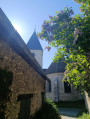
Berchères-sur-Vesgre circular loop
 5.83 mi
+161 ft
-161 ft
2h 50
Easy
Departure from Berchères-sur-Vesgre (Eure-et-Loir)
5.83 mi
+161 ft
-161 ft
2h 50
Easy
Departure from Berchères-sur-Vesgre (Eure-et-Loir)
This walk takes you through the countryside along the Vesgre, on small roads, and offers a chance to discover the local heritage.
The Diane estate
 5.99 mi
+417 ft
-417 ft
3h 05
Easy
Departure from Anet (Eure-et-Loir)
5.99 mi
+417 ft
-417 ft
3h 05
Easy
Departure from Anet (Eure-et-Loir)
From culture to nature, discover the natural spaces of the Dreux national forest.
The Drouette Valley between Épernon and Nigelles
 9.33 mi
+272 ft
-272 ft
4h 30
Moderate
Departure from Épernon (Eure-et-Loir)
9.33 mi
+272 ft
-272 ft
4h 30
Moderate
Departure from Épernon (Eure-et-Loir)
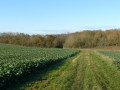
On the outskirts of the Paris region, let yourself be surprised by the bucolic and relaxing landscape of the Drouette Valley. After strolling through the grazing meadows, don't leave without visiting the Millstones and Cobblestones Museum, a testament to Épernon's economic appeal.
The Bois des Gâts forest in Châteaudun
 Tourist office
 5.57 mi
+174 ft
-190 ft
2h 45
Easy
Departure from Châteaudun (Eure-et-Loir)
5.57 mi
+174 ft
-190 ft
2h 45
Easy
Departure from Châteaudun (Eure-et-Loir)
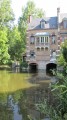
Located on the natural border between Beauce and Perche formed by the Loir River, Châteaudun is built on a rocky spur. The route circles the remarkable natural site of the Bois des Gâts or Gas. Open to the public, this 23-hectare site is protected by the Natura 2000 programme.
The Eure Sorélienne circular loop
 5.60 mi
+220 ft
-220 ft
2h 45
Easy
Departure from Sorel-Moussel (Eure-et-Loir)
5.60 mi
+220 ft
-220 ft
2h 45
Easy
Departure from Sorel-Moussel (Eure-et-Loir)
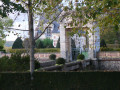
Halfway between the national forest and the hillsides of the Eure, this walk will take you to some remarkable places in the shade of oak trees and the coolness of the riverbanks. You will walk past the castle and through the old village of Sorel, then follow the old railway line (greenway) to Marcilly-sur-Eure.
The hare and the tortoise at Escorpain
 8.97 mi
+138 ft
-151 ft
4h 15
Moderate
Departure from Escorpain (Eure-et-Loir)
8.97 mi
+138 ft
-151 ft
4h 15
Moderate
Departure from Escorpain (Eure-et-Loir)
This circular route offers an opportunity to discover some of the structures that line the Avre Aqueduct, particularly the Tue-Cheval structure, but also to admire the castle of Escorpain. Two pretty ponds are also on the itinerary. It is an easy route with a few sections in the forest, which are welcome when it is very hot!
Route de Châteauneuf-en-Thymerais
5.00 mi
+49 ft
-49 ft
2h 20
Easy
Departure from Châteauneuf-en-Thymerais (Eure-et-Loir)
Route in the Châteauneuf-en-Thymerais National Forest
Between Beauce and Perche from Cloyes-sur-le-Loir
 Association / Club / Walk leader
 12.10 mi
+381 ft
-377 ft
5h 55
Difficult
Departure from Cloyes-sur-le-Loir (Eure-et-Loir)
12.10 mi
+381 ft
-377 ft
5h 55
Difficult
Departure from Cloyes-sur-le-Loir (Eure-et-Loir)
Located between Beauce and Perche, at the crossroads of the Loir Valley and the Route du Blé, Cloyes-sur-le-Loir is a sleeping beauty on the banks of the Loir. This pretty town combines modernity and heritage. The hike takes you through the countryside with its valleys, forests and rolling hills, which are sure to charm you.
The listed site of Dheury
7.21 mi
+167 ft
-164 ft
3h 30
Moderate
Departure from Marboué (Eure-et-Loir)
This site has retained a very picturesque appearance and offers the chance to see some beautiful houses with thatched roofs and to explore the Conie Valley.
From the Beauce plateau to the Conie valley
9.78 mi
+164 ft
-167 ft
4h 40
Moderate
Departure from Conie-Molitard (Eure-et-Loir)
A walk taking you from the Beauce plateau, reputed to be the breadbasket of France, to the Conie valley, which winds its way through a marsh where it has carved out its bed, significantly influencing the vegetation. Suitable for all seasons.
Between the Eure and Beauce
 9.15 mi
+72 ft
-69 ft
4h 15
Moderate
Departure from Nogent-sur-Eure (Eure-et-Loir)
9.15 mi
+72 ft
-69 ft
4h 15
Moderate
Departure from Nogent-sur-Eure (Eure-et-Loir)
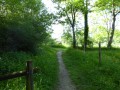
This walk combines the Beauce plain and its crops, a stretch through the forest and the ponds along the banks of the Eure, allowing you to enjoy a variety of landscapes. It is not difficult, and the elevation gain is minimal.
Chemin Péguy: Pont-sous-Gallardon - Chartres
 14.10 mi
+266 ft
-177 ft
6h 45
Difficult
Departure from Bailleau-Armenonville (Eure-et-Loir)
14.10 mi
+266 ft
-177 ft
6h 45
Difficult
Departure from Bailleau-Armenonville (Eure-et-Loir)
The last section, from Pont sous Gallardon to Chartres, is the highlight of the route. The Beauce plain appears flat, but its many undulations reveal and conceal the spires and nave of the cathedral in turn.
The Chemin Charles Péguy was created by the Amitié Charles Péguy with the cooperation of all the municipalities crossed and the support of the Eure-et-Loir Departmental Council.
The Thironne at Montigny-le-Chartif
4.46 mi
+66 ft
-66 ft
2h 05
Easy
Departure from Montigny-le-Chartif (Eure-et-Loir)
Set amongst woods and rivers, this route takes walkers through the lush countryside so dear to Marcel Proust, the illustrious guest of Illiers-Combray.
The Berthe Valley starting from Rougemont
4.66 mi
+512 ft
-518 ft
2h 35
Easy
Departure from Vichères (Eure-et-Loir)
From the Church of Notre-Dame (listed building), you can admire the traditional architecture of Vichères, built from red sandstone and white stone. This rural route, with its ups and downs, links Rougemont Hill (the highest point in Eure-et-Loir at 285 m) to the picturesque Berthe Valley via sunken paths.
In the Senonch region
 3.16 mi
+66 ft
-66 ft
1h 30
Easy
Departure from Senonches (Eure-et-Loir)
3.16 mi
+66 ft
-66 ft
1h 30
Easy
Departure from Senonches (Eure-et-Loir)
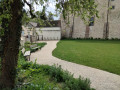
A town of water and greenery, Senonches invites you to explore its winding paths along the forest edge, beside springs, and through narrow streets lined with beautiful ‘grison’ buildings.
Loir Valley from Bonneval
 3.75 mi
+75 ft
-75 ft
1h 45
Easy
Departure from Bonneval (Eure-et-Loir)
3.75 mi
+75 ft
-75 ft
1h 45
Easy
Departure from Bonneval (Eure-et-Loir)
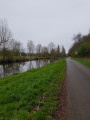
A lovely circular walk starting from Bonneval, the ‘Little Venice of Beauce’.
Walk around the Chuisnes ponds
 3.34 mi
+89 ft
-89 ft
1h 35
Easy
Departure from Chuisnes (Eure-et-Loir)
3.34 mi
+89 ft
-89 ft
1h 35
Easy
Departure from Chuisnes (Eure-et-Loir)
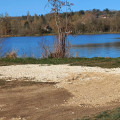
An easy walk with pleasant sections, even with children. The start is at the church car park, where there is a public park
The Roguenette Valley
 4.37 mi
+135 ft
-144 ft
2h 10
Easy
Departure from Gasville-Oisème (Eure-et-Loir)
4.37 mi
+135 ft
-144 ft
2h 10
Easy
Departure from Gasville-Oisème (Eure-et-Loir)
This trail, starting from Oisème, a village nestled along the Roguenette, invites you to discover the painters and writers of the 18th century: the Goncourt brothers, Ingres, Courbet, and Corot, who created a fresco in Gasville Church and in Saint-Julien Chapel in Chartres.
In the Dreux Forest
 5.02 mi
+233 ft
-230 ft
2h 30
Easy
Departure from Montreuil (Eure-et-Loir)
5.02 mi
+233 ft
-230 ft
2h 30
Easy
Departure from Montreuil (Eure-et-Loir)
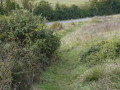
This walk, in the Dreux Forest, offers a beautiful view of the village of Montreuil, the Eure Valley and the arches of the Eure siphon, the Avre aqueduct that supplies drinking water to the city of Paris. Come and discover a walking route in the Dreux National Forest; after a bit of exercise, you’ll climb the hillside along a very pleasant path, having crossed the bridge over the Eure.
Around Jouy
4.24 mi
+138 ft
-125 ft
2h 05
Easy
Departure from Jouy (Eure-et-Loir)
A varied walk: woods, fields, village (road), river, watermills, church, etc. This gentle circular walk features just one short climb.
You can reach the start by car at the entrance to the village.
You can also join the walk from Jouy station (700 m): see Practical Information.
The hills above Chartres
3.89 mi
+131 ft
-125 ft
1h 55
Easy
Departure from Lèves (Eure-et-Loir)
Along the banks of the Couanon stream, the gardens enhance this walk, offering beautiful views of the cathedral.
In the footsteps of the Maquis fighters in Plainville
 7.41 mi
+630 ft
-600 ft
3h 55
Easy
Departure from Marolles-les-Buis (Eure-et-Loir)
7.41 mi
+630 ft
-600 ft
3h 55
Easy
Departure from Marolles-les-Buis (Eure-et-Loir)
As you walk along the paths once used by the Maquis fighters, discover a key site of the Resistance in Eure-et-Loir: the Plainville Maquis.
 A walk in the Dreux Forest
 11.58 mi
+351 ft
-374 ft
3 hrs
Moderate
Departure from Abondant (Eure-et-Loir)
11.58 mi
+351 ft
-374 ft
3 hrs
Moderate
Departure from Abondant (Eure-et-Loir)
This circular route, suitable for all, circles part of the Dreux Forest, sometimes along well-marked forest tracks, sometimes along the edge of the hillside above the Eure Valley, whilst avoiding any significant changes in elevation, and passes through some of the forest’s most characteristic spots.
In the footsteps of Vlaminck
8.62 mi
+197 ft
-197 ft
4h 10
Moderate
Departure from Rueil-la-Gadelière (Eure-et-Loir)
This walking route follows paths that pass close to sites associated with Vlaminck, a painter from the early 20th century. Slightly undulating, the route crosses back and forth over the Avre aqueduct, which carries drinking water to Paris. Passing through the valleys of the Buternay, Lamblore and Nouvet, this walk is characterised by water that is either visible or sometimes just hinted at.
Feucherolles Valley and Woods
 10.99 mi
+331 ft
-331 ft
5h 20
Moderate
Departure from Néron (Eure-et-Loir)
10.99 mi
+331 ft
-331 ft
5h 20
Moderate
Departure from Néron (Eure-et-Loir)
Between the magnificent medieval farms of Néron and Bois-Richeux, which bear witness to the plateau’s ancient agricultural heritage (allow time for an unmissable visit), wander through the steep woods of Feucherolles and Néron to discover a wide variety of wild flora.
The woods of Saint-Martin
 11.34 mi
+367 ft
-364 ft
5h 30
Moderate
Departure from Châteaudun (Eure-et-Loir)
11.34 mi
+367 ft
-364 ft
5h 30
Moderate
Departure from Châteaudun (Eure-et-Loir)
Situated on the natural boundary formed by the River Loir between the Beauce and the Perche regions, Châteaudun is built on a rocky outcrop. The route takes you to Île Chemars along the River Loir before heading towards the Bois de Saint-Martin near Saint-Denis-les-Ponts.
Frazé Castle and manor houses
7.32 mi
+131 ft
-131 ft
3h 30
Moderate
Departure from Frazé (Eure-et-Loir)
Frazé’s architectural heritage is exceptional. Frazé Castle and Carcahu Manor are prime examples of this. The castle comprises various structures (15th, 17th and 19th centuries), whilst Carcahu Manor (16th–17th centuries) is unlike any other…
The Mézières-Ecluzelles lake
 10.01 mi
+272 ft
-269 ft
4h 50
Moderate
Departure from Mézières-en-Drouais (Eure-et-Loir)
10.01 mi
+272 ft
-269 ft
4h 50
Moderate
Departure from Mézières-en-Drouais (Eure-et-Loir)
Set off to explore the limestone hillsides overlooking the Mézières-Ecluzelles lake, the Pierre de Pucre dolmen, and the unspoilt flora and fauna of this departmental nature reserve.
Near Thiron-Gardais Abbey
7.06 mi
+233 ft
-210 ft
3h 25
Moderate
Departure from Thiron-Gardais (Eure-et-Loir)
At the start, visit Thiron-Gardais Abbey, its themed gardens and the Grange aux Dîmes, then the route continues through the Perche countryside to Saint-Denis-d’Authou.
The old quarters of Châteaudun
 1.58 mi
+121 ft
-138 ft
0h 50
Easy
Departure from Châteaudun (Eure-et-Loir)
1.58 mi
+121 ft
-138 ft
0h 50
Easy
Departure from Châteaudun (Eure-et-Loir)
From the upper town to the lower town, this walking route allows you to explore the historic centre of Châteaudun and its finest monuments, as well as a section of the banks of the Loir, offering beautiful panoramic views of the town.
The route of the hamlets of Saint-Laurent-la-Gâtine
 4.54 mi
+23 ft
-20 ft
2h 05
Easy
Departure from Saint-Laurent-la-Gâtine (Eure-et-Loir)
4.54 mi
+23 ft
-20 ft
2h 05
Easy
Departure from Saint-Laurent-la-Gâtine (Eure-et-Loir)
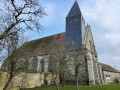
Our village has a population of 452. Situated in the Eure-et-Loir department, it is close to Dreux, Chartres and Rambouillet, and it is easy to reach the Paris region by train or via the N12 road.
Our village comprises three hamlets: L’Aumône, Boissy and Saint-Laurent. The route allows visitors to discover the tranquillity of the countryside and the surrounding forests, as well as the remarkable heritage that is worthy of interest and preservation, thereby ensuring it is passed down from one generation to the next.
The Abbeys of the Loir
 6.58 mi
+98 ft
-98 ft
3h 05
Moderate
Departure from Champrond-en-Gâtine (Eure-et-Loir)
6.58 mi
+98 ft
-98 ft
3h 05
Moderate
Departure from Champrond-en-Gâtine (Eure-et-Loir)
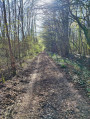
On the edge of the Perche region, the Chemin de César winds its way through the forest to the Abbayes du Loir.
Circular Croisilles route towards the Eure valley
6.91 mi
+197 ft
-217 ft
3h 20
Moderate
Departure from Croisilles (Eure-et-Loir) (Eure-et-Loir)
Our little village, Croisilles, is situated in the department of Eure-et-Loir and the Centre-Val de Loire region. It is close to Dreux, Chartres and Rambouillet. Around Croisilles, we are fortunate to have plains and woodland. This discovery walk allows you to explore the local flora and fauna as well as the village’s heritage. The route connects to theGR® de Pays Vallée de l’Eure in the Bois de Ruffin.
The Luisant Meadow Trail
 1.28 mi
+7 ft
-7 ft
0h 35
Easy
Departure from Luisant (Eure-et-Loir)
1.28 mi
+7 ft
-7 ft
0h 35
Easy
Departure from Luisant (Eure-et-Loir)
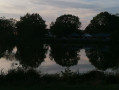
This discovery trail has been created to explain the management of natural habitats, and in particular the use of horses for grazing in these meadows at the bottom of the Eure valley. The site forms part of the Eure Valley Sensitive Natural Area.
More walks in Eure-et-Loir
Select an area below:
- Abondant
- Alluyes
- Anet
- Authon-du-Perche
- Bailleau-Armenonville
- Barjouville
- Beauche
- Beaumont-les-Autels
- Belhomert-Guéhouville
- Berchères-Saint-Germain
- Berchères-sur-Vesgre
- Boissy-lès-Perche
- Bonneval
- Brou
- Champrond-en-Gâtine
- Chartres
- Châteaudun
- Châteauneuf-en-Thymerais
- Chuisnes
- Cloyes-sur-le-Loir
- Conie-Molitard
- Corancez
- Coudreceau
- Crécy-Couvé
- Croisilles (Eure-et-Loir)
- Digny
- Douy
- Dreux
- Épernon
- Escorpain
- Fontaine-Simon
- Fontenay-sur-Eure
- Frazé
- Gallardon
- Gasville-Oisème
- Jaudrais
- Jouy
- La Bazoche-Gouet
- La Chapelle-Fortin
- La Ferté-Vidame
- La Framboisière
- La Loupe
- La Puisaye
- La Saucelle
- Lamblore
- Lanneray
- Le Favril (Eure-et-Loir)
- Le Mesnil-Thomas
- Le Thieulin
- Les Ressuintes
- Lèves
- Lormaye
- Louvilliers-lès-Perche
- Luisant
- Maintenon
- Manou
- Marboué
- Marolles-les-Buis
- Mévoisins
- Mézières-en-Drouais
- Moléans
- Montigny-le-Chartif
- Montigny-le-Gannelon
- Montlandon
- Montreuil
- Morvilliers (Eure-et-Loir)
- Néron
- Nogent-le-Roi
- Nogent-le-Rotrou
- Nogent-sur-Eure
- Ouerre
- Rohaire
- Rouvres (Eure-et-Loir)
- Rueil-la-Gadelière
- Saint-Ange-et-Torçay
- Saint-Éliph
- Saint-Hilaire-sur-Yerre
- Saint-Jean-de-Rebervilliers
- Saint-Laurent-la-Gâtine
- Saint-Lubin-de-Cravant
- Saint-Maixme-Hauterive
- Saint-Martin-de-Nigelles
- Saint-Maur-sur-le-Loir
- Saint-Maurice-Saint-Germain
- Saint-Sauveur-Marville
- Saint-Victor-de-Buthon
- Senonches
- Sorel-Moussel
- Thiron-Gardais
- Tréon
- Vichères
- Villiers-le-Morhier