


Refine your search for walks in Rugles
Rugles walks


 In the Risle region
 Visorando Member
 4.56 mi
 +135 ft
 -138 ft
 2h 15
2h 15
 Easy
Easy
 Departure from Rugles (Eure)
This route takes you along the Risle river before it flows into the Seine estuary at Berville-sur-Mer and through part of the Pays d'Ouche countryside.
The Saint-Sulpice-sur-Risle area
8.79 mi
+236 ft
-240 ft
4h 15
 Moderate
Departure from Saint-Sulpice-sur-Risle (Orne)
Moderate
Departure from Saint-Sulpice-sur-Risle (Orne)
A pleasant walk through meadows and woods, mostly on very good paths.
A circular walk in the Pays d’Ouche
 15.49 mi
+197 ft
-200 ft
7h 20
Moderate
Departure from Mesnil-Rousset (Eure)
15.49 mi
+197 ft
-200 ft
7h 20
Moderate
Departure from Mesnil-Rousset (Eure)
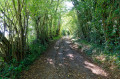
A lovely walk in a setting typical of the Normandy countryside, taking place mainly on wide forest or farm tracks or on very narrow tarmac roads with no other traffic. Best avoided, however, if you’re allergic to tarmac. The first part of the route follows theGRP® Risle-Charentonne.
There are no particular difficulties apart from the almost complete lack of signposting; a GPS track is undoubtedly essential to follow the route properly, and the distance.
The Breteuil circular, following in the footsteps of one of the martyrs of Vingré
 6.24 mi
+66 ft
-66 ft
2h 55
Moderate
Departure from Breteuil (Eure)
6.24 mi
+66 ft
-66 ft
2h 55
Moderate
Departure from Breteuil (Eure)
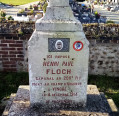
A route that alternates between quiet country lanes, field paths and a few stretches through woodland. You’ll find yourself hopping over the River Iton. For those so inclined, the grave of a soldier who was shot as an example in 1914 – and whose reputation has since been cleared – adds a touch of remembrance.
In the footsteps of the Comtesse de Ségur
 Association / Club / Walk leader6.82 mi
+200 ft
-197 ft
3h 20
Easy
Departure from Aube (Orne) (Orne)
Association / Club / Walk leader6.82 mi
+200 ft
-197 ft
3h 20
Easy
Departure from Aube (Orne) (Orne)
This route takes you through the Aube countryside, along paths and through woods to discover Les Nouettes and the Château de la Comtesse de Ségur.
Route de la Comtesse in Beaubray
 8.69 mi
+167 ft
-161 ft
4h 10
Moderate
Departure from Beaubray (Eure)
8.69 mi
+167 ft
-161 ft
4h 10
Moderate
Departure from Beaubray (Eure)
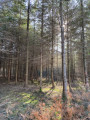
In the heart of Normandy’s largest forest, set off to discover the local flora and fauna. Along the way, you’ll encounter a variety of deciduous trees and pines, and you might even be lucky enough to spot a young deer as you round a bend in the path.
Le Rouge Moulin
 7.94 mi
+354 ft
-377 ft
4h 00
Moderate
Departure from Ajou (Eure)
7.94 mi
+354 ft
-377 ft
4h 00
Moderate
Departure from Ajou (Eure)
Shortened version of the marked route starting from Ajou, retaining the interesting views of this high valley of the Risle, its mills, including the very pretty Rouge Moulin, the charming village of Champignolles and forest passages that are enjoyable in summer. On the other hand, the 4 km to Ajou are of little interest, hence the suggestion to start from the church of Saint Aubin.
Yellow markings
Ajou Circular Route via Champignolles
 5.57 mi
+236 ft
-217 ft
2h 45
Easy
Departure from Ajou (Eure)
5.57 mi
+236 ft
-217 ft
2h 45
Easy
Departure from Ajou (Eure)
A lovely walk that starts at the Ajou tennis courts, follows the GR®224 to Champignolles, then returns via the Chemin du Gouffre, which runs alongside the River Risle. The first part takes you through fields, whilst the second part is through the woods.
In the land of Vlaminck
 36.06 mi
+633 ft
-522 ft
3 days
36.06 mi
+633 ft
-522 ft
3 days
 Difficult
Departure from Verneuil-sur-Avre (Eure)
Difficult
Departure from Verneuil-sur-Avre (Eure)
In the centenary year of Maurice de Vlaminck's move to La Tourillière near Verneuil-sur-Avre, here is a journey through his heartland between Verneuil-sur-Avre and La Loupe. These towns are both served by railway stations that can be reached from Paris Montparnasse. Woods, fields and forests were the inspiration for many of the painter's works. With cloudy skies guaranteed, take a stroll through the landscapes that so strongly inspired this colourful, versatile artist, where he welcomed the greatest celebrities of his time.
Verneuil-sur-Avre - La Ferté-Vidame
15.72 mi
+423 ft
-194 ft
7h 35
Difficult
Departure from Verneuil-sur-Avre (Eure)
To mark the centenary of Maurice de Vlaminck's move to La Tourillière near Rueil-la-Gadelière, a few kilometres from Verneuil-sur-Avre, recently renamed Verneuil d'Avre et d'Iton, this tour offers a three-stage discovery of the region that inspired the painter.A hunter, fisherman, walker, cyclist, motorist and motorcyclist, he came to settle here to find peace and inspiration. From 1925 until his death in 1958, under an often changeable sky dotted with clouds, the painter tirelessly explored these landscapes of fields, copses and the vast forest of Senonches, in search of subjects for his many paintings.We will first go from Verneuil to La Ferté-Vidame, passing by his grave in the cemetery of Rueil, his bust sculpted by his friend Paul Belmondo in front of the town hall, and above all his home in La Tourillière, preserved in the state in which he lived.
Route de Ferrière-sur-Risle
12.68 mi
+207 ft
-187 ft
6h 00
Difficult
Departure from La Ferrière-sur-Risle (Eure)
Spend a day crossing fields, forests and greenways and discover the cultural and heritage treasures (churches, market halls, etc.) of the Pays de Conches community of municipalities.
The Aviators’ Trail in Épinay
 13.30 mi
+256 ft
-262 ft
6h 20
Moderate
Departure from Épinay (Eure)
13.30 mi
+256 ft
-262 ft
6h 20
Moderate
Departure from Épinay (Eure)
This route pays tribute to eight airmen (three French, one Canadian and four American) who died in aerial combat between 1940 and 1944. Information panels are placed along the route. This route also offers views across the Vallons d’Épinay.
The route can be covered as a single circular route of around twenty kilometres or as two circular routes of around ten kilometres each.
Around La Haisette in Sébécourt
 5.25 mi
+56 ft
-56 ft
2h 30
Easy
Departure from Sébécourt (Eure)
5.25 mi
+56 ft
-56 ft
2h 30
Easy
Departure from Sébécourt (Eure)
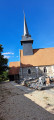
A lovely walk that will take you through the fields and woods of the centre of Sébécourt, with its 15th-century church, to the calvary at the Chapel of Saint Blaise in the heart of the forest.
The Sébécourt Forest
 2.66 mi
+33 ft
-33 ft
1h 15
Easy
Departure from Sébécourt (Eure)
2.66 mi
+33 ft
-33 ft
1h 15
Easy
Departure from Sébécourt (Eure)
A family route marked out in the Sébécourt Forest.
Circular Rohaire in the footsteps of a "Fauve"
 3.96 mi
+69 ft
-66 ft
1h 55
Easy
Departure from Rohaire (Eure-et-Loir)
3.96 mi
+69 ft
-66 ft
1h 55
Easy
Departure from Rohaire (Eure-et-Loir)
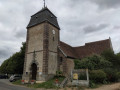
The painter Maurice de Vlaminck lived here, near Rueil-la-Gadelière, from 1925 until his death in 1958. This year marks the centenary of his arrival in the area. A three-day itinerary already allows you to cross his country from Verneuil-sur-Avre station to La Loupe station. Walkers who are unable to undertake this crossing can take one or more of the short circulars "In the footsteps of a Fauve". These allow you to discover the landscapes that inspired the painter."I love the countryside, not by accident, but continuously, and I spend my life there" This route, around the village of Rohaire, mainly crosses farmland. It partly follows the Buternay stream, coming from the ponds near the Chapelle de Réveillon and heading towards Rueil-la-Gadelière. After a stretch that is sometimes underground, it reappears at the Sources de la Vigne, where the streams from the vicinity of La Ferté-Vidame converge. Their waters are collected there and piped to Paris.
Circular Boissy-lès-Perche in the footsteps of a "Fauve"
 5.21 mi
+66 ft
-69 ft
2h 25
Easy
Departure from Boissy-lès-Perche (Eure-et-Loir)
5.21 mi
+66 ft
-69 ft
2h 25
Easy
Departure from Boissy-lès-Perche (Eure-et-Loir)
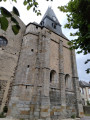
The painter Maurice de Vlaminck lived here, near Rueil-la-Gadelière, from 1925 until his death in 1958. This year marks the centenary of his arrival. A three-day itinerary already allows you to cross his country from the Verneuil-sur-Avre station to the La Loupe station. Walkers who are unable to undertake this crossing can take one or more of the short circulars "In the footsteps of a Fauve". These allow you to discover, in detail, the landscapes that inspired the painter. This one, starting from Boissy-lès-Perche, follows the valley of the Ruisseau de Buternay. After crossing the ponds near the Chapelle de Réveillon, it flows towards the Avre, joined by other streams. Their courses, partly underground, reappear at the source of the Vigne, where their waters are collected and carried to Paris via a 100 km aqueduct.Landscapes of cereal fields cut by the stream, wide horizons from which you can soon see the bell tower of the church of Verneuil.
Along the banks of the Risle
 7.34 mi
+226 ft
-226 ft
3h 35
Moderate
Departure from La Houssaye (Eure)
7.34 mi
+226 ft
-226 ft
3h 35
Moderate
Departure from La Houssaye (Eure)
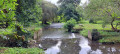
A picturesque route that takes you from La Houssaye to Val Gallerand via Moulin Chapelle, playing hide-and-seek with the River Risle. The return journey takes you via Haut-Buisson and then through the Bois de la Noë.
The secret of Les Genettes
 3.46 mi
+174 ft
-174 ft
1h 45
Easy
Departure from Les Genettes (Orne)
3.46 mi
+174 ft
-174 ft
1h 45
Easy
Departure from Les Genettes (Orne)
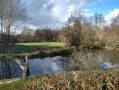
This hike, known mostly only to locals, is a little gem for a relaxing walk with friends or as a couple. There are lots of animals along the way, including wild animals, but also donkeys, Percheron horses, sheep and goats.
 The Forgotten Path of the Genettes
6.93 mi
+180 ft
-174 ft
1 hr
Easy
Departure from Les Genettes (Orne)
Paths lined with hedgerows, open spaces, wooded sections, a few roads, a picnic area, a car park; and, above all, sections unknown to the general public.
The Genettes countryside circular loop
 5.86 mi
+92 ft
-92 ft
2h 45
Easy
Departure from Les Genettes (Orne)
5.86 mi
+92 ft
-92 ft
2h 45
Easy
Departure from Les Genettes (Orne)
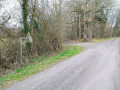
Circular walk that mainly follows paths or country lanes, with relatively few tall trees, perfect for enjoying the sunshine. Streams, stony paths, fields and little-known tracks.
The Gueil Valley from Montreuil-l’Argillé
 6.80 mi
+1,654 ft
-1,801 ft
4h 35
Moderate
Departure from Montreuil-l'Argillé (Eure)
6.80 mi
+1,654 ft
-1,801 ft
4h 35
Moderate
Departure from Montreuil-l'Argillé (Eure)
Let yourself be guided by this peaceful walk through the Euroise countryside, following the River Gueil at the start and then through the woodland afterwards; there are lovely shaded paths for most of the route. Stop off at the wash house halfway to recharge your batteries or have a picnic, and make the most of the surrounding countryside.
Route de Pierre Ronde in Beaumesnil
 6.66 mi
+213 ft
-233 ft
3h 15
Easy
Departure from Beaumesnil (Eure) (Eure)
6.66 mi
+213 ft
-233 ft
3h 15
Easy
Departure from Beaumesnil (Eure) (Eure)
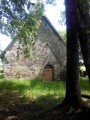
At the start of the route, discover the Château de Beaumesnil, known as "Le Mesnil Royal", a remarkable Baroque monument listed as a historic monument, which invites you to discover its furnished interior and its collection of antique bindings before strolling through its 60-hectare park and French gardens.
La Grande Trappe Abbey Circular Route
 5.22 mi
+167 ft
-171 ft
2h 35
Easy
Departure from Les Genettes (Orne)
5.22 mi
+167 ft
-171 ft
2h 35
Easy
Departure from Les Genettes (Orne)
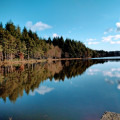
The Abbey walk is the perfect summer walk as you are sheltered from the sun by the trees for most of the route, with magnificent hundred-year-old trees along the way, absolute tranquillity and plenty of greenery.
The Bresolettes clearing
 4.32 mi
+125 ft
-125 ft
2h 05
Easy
Departure from Bresolettes (Orne)
4.32 mi
+125 ft
-125 ft
2h 05
Easy
Departure from Bresolettes (Orne)
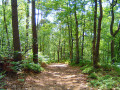
A trail in the heart of the Perche Regional Nature Park, in the Bresolettes Forest Glade Regional Nature Reserve.
New World walk in Romilly-la-Puthenaye
 3.29 mi
+138 ft
-161 ft
1h 40
Easy
Departure from Romilly-la-Puthenaye (Eure)
3.29 mi
+138 ft
-161 ft
1h 40
Easy
Departure from Romilly-la-Puthenaye (Eure)
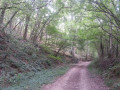
Far from the towns and the hustle and bustle of human activity, enjoy a bucolic stroll through the woods and meadows of Normandy.
Starting from Place de la Noë, 2 km from the village of Romilly-la-Puthenaye, the mainly forest paths offer a very pleasant walk leading to the old Moulin de Bougy mill in the Risle valley.
Chapelle-Fortin loop via La Ferté-Vidame
 7.15 mi
+89 ft
-89 ft
3h 20
Moderate
Departure from La Chapelle-Fortin (Eure-et-Loir)
7.15 mi
+89 ft
-89 ft
3h 20
Moderate
Departure from La Chapelle-Fortin (Eure-et-Loir)
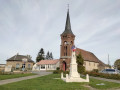
This loop, on the edge of the Perche region, leads from La Chapelle-Fortin to La Ferté-Vidame. Close to the Perche, it is divided between two types of landscape, both of which are represented by the painter Maurice de Vlaminck: vast expanses of crops under cloudy skies and woods with gnarled trees.
Living in La Tourillière near Rueil-la-Gadelière from 1925 to 1958, the artist frequently visited the neighbouring villages in search of inspiration: churches, villages buried under snow, paths lined with bare trees.
The circuit leads to La Ferté-Vidame, a town with a rich historical past: a medieval fortress where the Duke of Saint-Simon wrote his memoirs, which became the palace of the Marquis de Laborde, Louis XV's wealthy banker, a small château converted by Louis-Philippe into outbuildings and recently restored by the Eure-et-Loir Departmental Council, the new owner of the site.
La Ferté-Vidame is also home to horse races held in summer at the Pipe-Souris racecourse.
Tour of the Bois de la Noë
 4.43 mi
+98 ft
-105 ft
2h 05
Easy
Departure from Rueil-la-Gadelière (Eure-et-Loir)
4.43 mi
+98 ft
-105 ft
2h 05
Easy
Departure from Rueil-la-Gadelière (Eure-et-Loir)
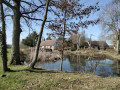
Beneath the seemingly peaceful surface of the Baine (or Benne) pond, there is a whole world of plants and animals. The route, which starts in this hamlet in the commune of Rueil-la-Gadelière, takes you around the Bois de la Noë, passing by the farms of Bois Normand and Rueil. It is located south of Verneuil d'Avre et d'Iton, at the gateway to Normandy. Return via the hamlets of Les Bruyères and Le Canada.
On the Way of St James around Conches-en-Ouche
9.05 mi
+344 ft
-344 ft
4h 30
Moderate
Departure from Conches-en-Ouche (Eure)
Conches, capital of the Pays d’Ouche, reveals the hidden treasures of its historical past and takes you on a winding journey through the secret Rouloir Valley, allowing you to discover the coolness of its banks and the beautiful gems of Norman rural architecture. It is the memory of a Normandy with a distinctly feminine charm and a gentle landscape that this region—so aptly described by Jean de la Varende—leaves with the walker.
Saint-Calais and Vieux Conches
 5.35 mi
+167 ft
-174 ft
2h 35
Easy
Departure from Conches-en-Ouche (Eure)
5.35 mi
+167 ft
-174 ft
2h 35
Easy
Departure from Conches-en-Ouche (Eure)
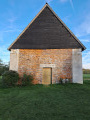
An easy route, mainly along forest paths and small country lanes.
=> Report dated 28 March 2025 from the Evreux Conches signposting manager.Please note that the GRP® (red and yellow markings) has been removed andno longer exists on the ground, but is still shown on the map.
Entre forêts et manoirs à Conches-en-Ouche
 13.45 mi
+279 ft
-266 ft
6h 25
Difficult
Departure from Conches-en-Ouche (Eure)
13.45 mi
+279 ft
-266 ft
6h 25
Difficult
Departure from Conches-en-Ouche (Eure)
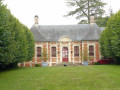
Cette randonnée vous fera arpenter des chemins boisés et champêtres, des zones naturelles protégées, permettra à toute la famille d'accéder à des parcours sportifs, et vous fera découvrir de magnifiques manoirs normands chargés d'histoire. Les petits comme les grands passeront un bon moment entre nature et architecture.
Route de l'Iton in Bonsmoulins
2.70 mi
+46 ft
-49 ft
1h 15
Easy
Departure from Bonsmoulins (Orne)
An easy walk around the village of Bonsmoulins, crossing the Iton and passing in front of the old station. Wear waterproof footwear in wet weather.
Memorial loop for those shot in Morvilliers
 5.20 mi
+72 ft
-66 ft
2h 25
Easy
Departure from Morvilliers (Eure-et-Loir) (Eure-et-Loir)
5.20 mi
+72 ft
-66 ft
2h 25
Easy
Departure from Morvilliers (Eure-et-Loir) (Eure-et-Loir)
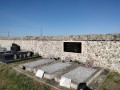
Starting from Morvilliers, this loop takes you to the sites where a tragic episode unfolded during the final days of the Maquis de La Ferté-Vidame in August 1944.It first leads to the farm of Mary Thibault, the instigator of the Maquis. It then crosses the Bois de Malassis, where the Maquisards hid after machine-gunning a German car, killing the driver and the secretary of the Kommandantur of La Ferté-Vidame This action triggered the fury of the SS, who, after searching the neighbouring farms in vain, arrested three young members of the Maquis in the hamlet of Les Rayers. They were taken to the nearby Château du Gland, where they were tortured. The first man was shot on 11 August in front of his comrades. The next day, the other two were also executed. They had to dig their own graves.
A commemoration takes place every year in the clearing and at the cemetery in Morvilliers, where the bodies were returned after the Liberation.
Short circular loop around Lamblore via the Chemin du Mortripié
 5.20 mi
+180 ft
-197 ft
2h 35
Easy
Departure from Lamblore (Eure-et-Loir)
5.20 mi
+180 ft
-197 ft
2h 35
Easy
Departure from Lamblore (Eure-et-Loir)
Starting from Lamblore Town Hall, this circular leads to La Ferté-Vidame, where you will find reminders of historical figures: The Dukes of Saint-Simon, the father, who after acquiring the estate had the parish church built, and the son, the famous memoirist, the Marquis de Laborde, who had a sumptuous palace built, the romantic ruins of which still remain, and laid out a huge park. King Louis-Philippe wanted to restore this building, which had been dismantled after the Revolution, to its former glory, but he was only able to build the "Petit Château" (small castle)...A detailed tour of the village and park is a must. The return journey takes you past the former Citroën test centre, a mecca for the automotive industry. This is where the most famous models of the chevron brand were developed: the Traction Avant, the 2CV, the DS, the Ami 6, the SM... After passing the Champ-Brulé equestrian centre, the route returns to the village via the beautiful Chemin du Mortripié, which has been reopened by the local council.