


Refine your search for walks in Perroy
Perroy walks


 Near the fortified castle of La Motte Josserand
 Tourist office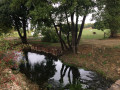
 7.52 mi
 +272 ft
 -259 ft
 3h 40
3h 40
 Moderate
 Departure from Perroy (Nièvre)
This route takes you back to the time of fortified castles and knights. Built on the marshy lands of Perroy, the Château de la Motte Josserand is one of the most beautiful military constructions of the Middle Ages in the Nièvre region, with its famous adventurer Perrinet Gressard who acquired the seigneury in the 15th century.
La grande escapade de Donzy
6.72 mi
+174 ft
-157 ft
3h 15
Moderate
Departure from Donzy (Nièvre)
From a village dotted along the River Nohain, to the boardwalk through the wetland, a stroll along a shaded fitness trail, the chance to admire the magnificent tympanum of Donzy-le-Pré Priory, the breathtaking view of the Bois de l’Éminence and a well-deserved break at the Cabets water point. The Donzy Grand Tour has everything to charm you!
 Route des Forges
 14.03 mi
+509 ft
-502 ft
2 hrs
14.03 mi
+509 ft
-502 ft
2 hrs
 Easy
Departure from Donzy (Nièvre)
Easy
Departure from Donzy (Nièvre)
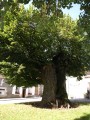
This route takes you back to the days when the iron and steel industry was flourishing in the Donziais region. Champdoux, a hamlet in the commune of Sainte-Colombe-des-Bois, was then a major centre of the Nièvre iron and steel industry. It was home to one of the department’s largest factories.
Walk in Donzy
 Visorando Member4.06 mi
+36 ft
-43 ft
1h 55
Easy
Departure from Donzy (Nièvre)
Visorando Member4.06 mi
+36 ft
-43 ft
1h 55
Easy
Departure from Donzy (Nièvre)
A leisurely walk to discover this pretty village in the Nièvre region, crossed by the River Nohain, which preserves traces of its history, in particular the ruins ofthe Church of Notre-Dame du Pré, as well as old mills, half-timbered houses and wash houses.
Towards the bats of Cessy
 4.23 mi
+1,165 ft
-1,145 ft
3h 00
Moderate
Departure from Cessy-les-Bois (Nièvre)
4.23 mi
+1,165 ft
-1,145 ft
3h 00
Moderate
Departure from Cessy-les-Bois (Nièvre)
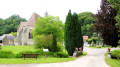
Nestled at the bottom of the Talvanne valley, Cessy-les-Bois is classified as a Natura 2000 site due to the presence of two large bat colonies on its territory: the Greater Horseshoe Bat and the Geoffroy's Bat.
Along the first two kilometres of the hike, you will find information panels explaining this local feature. In addition, a booklet is available for purchase at the Cosne-Cours-sur-Loire reception point of the Bourgogne Cœur de Loire Tourist Office.
Panoramic route starting from Bouhy
 7.83 mi
+787 ft
-794 ft
4h 15
Moderate
Departure from Bouhy (Nièvre)
7.83 mi
+787 ft
-794 ft
4h 15
Moderate
Departure from Bouhy (Nièvre)
Marked trail No. 33.
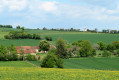
Geologically, the commune of Bouhy belongs to the Forterre, a region neighbouring the Puisaye. Its village is at an altitude of 355 metres. For walkers in search of vast horizons, this dominant position gives this route its panoramic interest, to which is added the architectural interest of the many chapels encountered along the way.
Route of the Chapel of La Tête Ronde
 6.72 mi
+538 ft
-522 ft
3h 35
Easy
Departure from Menou (Nièvre)
6.72 mi
+538 ft
-522 ft
3h 35
Easy
Departure from Menou (Nièvre)
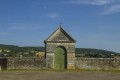
Discover Menou and its Chapelle de la Tête Ronde chapel, overlooking the village.
Entrains - Ouanne via the Roman road
15.69 mi
+1,234 ft
-1,033 ft
2 hrs
Moderate
Departure from Entrains-sur-Nohain (Nièvre)
Route along part of the Roman road linking Bourges to Auxerre, starting from Entrains-sur-Nohain (formerly Intaranum in Gallo-Roman times) in the Nièvre department to Ouanne (Odoana) in the Yonne department.From the vast expanses of woods and forests and the large plains of cultivated land, passing through two of the highest points in this region (367m and 368m), discover new spaces, views, fauna and flora on these limestone plateaus and hills.
The Path Along the Water
 8.52 mi
+528 ft
-535 ft
4h 25
Moderate
Departure from Dampierre-sous-Bouhy (Nièvre)
8.52 mi
+528 ft
-535 ft
4h 25
Moderate
Departure from Dampierre-sous-Bouhy (Nièvre)
Marked route No. 45.
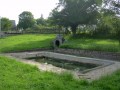
The Year 5 and 6 class from Dampierre-sous-Bouhy has created a walking route for you. This route will allow you to discover the landscapes of Puisaye and its many water sources.
We wish you a lovely walk and hope you enjoy exploring this route as much as they enjoyed creating it.
It can be completed in its entirety or with two alternative routes (see ‘Practical Information’ section).
The Chemin des Deux Visages
 8.56 mi
+659 ft
-646 ft
4h 30
Moderate
Departure from Dampierre-sous-Bouhy (Nièvre)
8.56 mi
+659 ft
-646 ft
4h 30
Moderate
Departure from Dampierre-sous-Bouhy (Nièvre)
Marked route No. 101.
The area of Dampierre-sous-Bouhy spans two natural regions: the Forterre and the Puisaye. Numerous flint tools found near the Moulin Bléneau bear witness to the presence of humans during the Neolithic period. In the hamlet of Les Pasquiers, the discovery of the remains of a Gallo-Roman villa also attests to human occupation during this period.
La Villéon discovery trail in Puisaye
 Association / Club / Walk leader
 5.35 mi
+299 ft
-308 ft
2h 45
Easy
Departure from Bitry (Nièvre)
5.35 mi
+299 ft
-308 ft
2h 45
Easy
Departure from Bitry (Nièvre)
Marked trail No. 61.Emmanuel de La Villéon (1848-1944) was a painter of Breton origin (Fougères, where he has his museum) who lived from 1900 to 1936 in a mansion in the hamlet of Salvard. An admirer of Monet, he adopted most of the characteristics of Impressionism.This route, now enhanced with panels featuring reproductions and commentary, allows visitors to rediscover some of the places painted by the artist, including certain characteristics of the Poyaudin bocage.
Medieval Walk in Saint-Vérain
 0.67 mi
+75 ft
-75 ft
0h 25
Easy
Departure from Saint-Vérain (Nièvre)
0.67 mi
+75 ft
-75 ft
0h 25
Easy
Departure from Saint-Vérain (Nièvre)
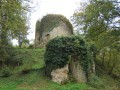
Follow the castle path to discover the keep and the remains of the13th-century feudal town.
The Vérinoise Circular
 2.99 mi
+213 ft
-184 ft
1h 35
Easy
Departure from Saint-Vérain (Nièvre)
2.99 mi
+213 ft
-184 ft
1h 35
Easy
Departure from Saint-Vérain (Nièvre)
Marked route No. 34.
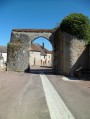
The village of Saint-Vérain, built on a hillside, was surrounded by fortified walls in the Middle Ages, making it one of the most powerful feudal cities in the region. Numerous remains bear witness to the city's importance, including ramparts, towers, gates, wells, a keep, etc.
Circuit de La Chapelle aux Rois
 8.91 mi
+771 ft
-771 ft
4h 45
Moderate
Departure from Bitry (Nièvre)
8.91 mi
+771 ft
-771 ft
4h 45
Moderate
Departure from Bitry (Nièvre)
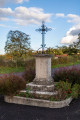
Marked trail No. 35.The commune of Bitry covers 1,746 hectares. The Ramois boundary marker is at an altitude of 326 metres, while the La Maloise river flows at the lowest point, 189 metres above sea level.Between the village and the hamlet of Les Beauchats, you can visit a chapel dedicated to Saint Marc and Saint Roc, which was restored in the 20th century.
Let's go for a walk in the woods
 4.97 mi
+285 ft
-272 ft
2h 30
Easy
Departure from Saint-Loup (Nièvre) (Nièvre)
4.97 mi
+285 ft
-272 ft
2h 30
Easy
Departure from Saint-Loup (Nièvre) (Nièvre)
Discover the village of Saint-Loup-des-Bois, its inhabitants, the Saints-Lupéens, and the forests that surround it. You will pass by the Museum of Agricultural Machinery and Rural Life, which traces the history of agricultural machinery. In addition to these major collections in Europe, there is an astonishing and impressive collection of irons and a collection dedicated to woodworking trades (clog makers, coopers, wheelwrights, etc.).
In the distant forest of Châteauneuf-Val-de-Bargis
8.57 mi
+623 ft
-633 ft
4h 30
Moderate
Departure from Châteauneuf-Val-de-Bargis (Nièvre)
This walk takes you deep into the Bellary State Forest.
Les Quatre Arpents
 4.03 mi
+295 ft
-121 ft
2h 05
Easy
Departure from Sainpuits (Yonne)
4.03 mi
+295 ft
-121 ft
2h 05
Easy
Departure from Sainpuits (Yonne)
A pleasant route in all weathers, with plenty of springs at the end of the route. This route partly follows the path once taken by the ox-herders to drive the oxen from the Morvan to Paris.
Walk in Sainpuits in the Forterre valleys towards the Roman road
 11.38 mi
+479 ft
-476 ft
5h 40
Moderate
Departure from Sainpuits (Yonne)
11.38 mi
+479 ft
-476 ft
5h 40
Moderate
Departure from Sainpuits (Yonne)
Marked trail No. 5.
At the crossroads of Puisaye, Forterre and the banks of the Nohain, this village invites you to discover its heritage and landscapes.
La Marlée wash house, orientation board and source of the Loing
5.93 mi
+364 ft
-341 ft
3h 05
Easy
Departure from Treigny (Yonne)
From the hilltop village of Perreuse (in the commune of Treigny), this walk will have you dreaming of the Atlantic or the English Channel. The waters of the two springs on this route, though so close to one another, will only mix once they reach the ocean!
Panoramas and orientation table at Perreuse
4.76 mi
+282 ft
-289 ft
2h 25
Easy
Departure from Treigny (Yonne)
Marked walk No. 25.
A sweeping view of the landscape stretching from Forterre to Puisaye, overlooking the ridges of the Morvan, the Sancerrois and the Loire Valley. This walk, with a slight elevation gain, offers not only this panoramic view but also a chance to delve into the history of this village with its picturesque houses and the Sully lime tree.
Heritage walk in Perreuse
1.68 mi
+171 ft
-171 ft
0h 55
Easy
Departure from Treigny (Yonne)
A short walk to discover a village in the Puisaye region, Perreuse, which boasts a remarkable architectural heritage, including a church with a mural, a few pretty medieval houses, a wash house with a basin, a lovely fountain, and a lime tree known as the ‘Sully lime tree’.
Fortified House
5.54 mi
+223 ft
-210 ft
2h 45
Easy
Departure from Saint-Amand-en-Puisaye (Nièvre)
Marked walk No. 39From the16th-century castle at the very start of the route to the ruins of Maison Fort Castle, the route takes you past the ponds—the largest of which is the Étang de la Forge—and the Chemin du Tacot.
The Chemin Carriès
5.15 mi
+167 ft
-144 ft
2h 30
Easy
Departure from Saint-Amand-en-Puisaye (Nièvre)
Marked trail No. 40
Taking this path is to step into the life and work of Jean-Joseph Carriès. This trail begins with the history of pottery and ends with a sunken path lined with works by ceramicists and the potters’ quarters in the village of Saint-Amand-en-Puisaye.
Les Méandres de la Vrille
4.35 mi
+308 ft
-282 ft
2h 15
Easy
Departure from Saint-Amand-en-Puisaye (Nièvre)
Waymarked walk N° 38
In the land of the potters, there is first and foremost the clay that serves as the raw material for the craftsmen, then the water that gushes out of the clay-silica or clay-limestone soils, depending on the geology of the subsoil in this area. But there's also the beauty of nature, with its landscapes, paths framed and even marked by these hedges and their sometimes mysterious, sometimes mischievous tadpoles. They are the source of some of the legends that live in the area.