


Refine your search for walks in Paroy
Paroy walks


 The Ronchaux Waterfall
 Visorando Member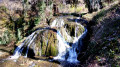
 5.25 mi
 +741 ft
 -738 ft
 3h 05
3h 05
 Easy
Easy
 Departure from Paroy (Doubs)
From the beautiful church in Paroy, passing in front of the wealthy residences of this small village, then crossing sunny meadows, you will climb to the viewpoint overlooking the lower Loue valley. Along a pretty sunken path, you will descend towards Ronchaux, another picturesque little village with its old farms, waterfall and former tuff quarry.
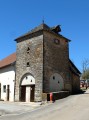
The Ronchaux Belvedere
 7.19 mi
+784 ft
-778 ft
4h 00
7.19 mi
+784 ft
-778 ft
4h 00
 Average
Departure from By (Doubs)
Average
Departure from By (Doubs)
This woodland walk offers three viewpoints over the lower Loue valley, the Jura mountains and Bartherans, nestled in wooded valleys overlooking the Lison valley.
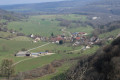
The Belvédère des Grands Ruins
 8.59 mi
+1,053 ft
-1,030 ft
4h 50
Average
Departure from Échay (Doubs)
8.59 mi
+1,053 ft
-1,030 ft
4h 50
Average
Departure from Échay (Doubs)
A peaceful walk in the Lison valley with its sandstone cliffs and three viewpoints. You will discover two typical Comtois villages, Echay and Cussey sur Lison, and its remote hamlet.
From La Chapelle-sur-Furieuse to the ruins of Vaulgrenant Castle (circular trail)
 9.93 mi
+1,345 ft
-1,348 ft
5h 45
Average
Departure from La Chapelle-sur-Furieuse (Jura)
9.93 mi
+1,345 ft
-1,348 ft
5h 45
Average
Departure from La Chapelle-sur-Furieuse (Jura)
From Chapelle-sur-Furieuse, through forests, vineyards and meadows, you will reach the ruins of Vaulgrenant Castle and then return to your starting point along the Furieuse river via a long descent. You will pass through the small village of Onay, then the suburbs of Salins-les-Bains, via the Voie Verte, before reaching Marnoz and heading towards Château de Vaulgrenant.
Enjoy beautiful views of Le Poupet and the forts of Salins-les-Bains.
The Cussey-sur-Lison valley
 8.00 mi
+958 ft
-935 ft
4h 30
Average
Departure from Cussey-sur-Lison (Doubs)
8.00 mi
+958 ft
-935 ft
4h 30
Average
Departure from Cussey-sur-Lison (Doubs)
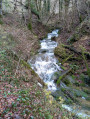
Natural site with four viewpoints over the Jura Mountains and the Cussey valley, a corniche and dry grasslands. Places of interest: the Cussey fountain and wash house, Echay, a typical village in the Lison valley.
From Myon to the Gour de Conche, going up via the Monniot
9.28 mi
+988 ft
-988 ft
5h 10
Average
Departure from Myon (Doubs)
A forest walk combining tracks, forest paths and dirt tracks, taking in the Gour de Conches, its waterfall and its spring.
The Reculée de la Goulue
 3.44 mi
+459 ft
-453 ft
2h 00
Easy
Departure from Cussey-sur-Lison (Doubs)
3.44 mi
+459 ft
-453 ft
2h 00
Easy
Departure from Cussey-sur-Lison (Doubs)
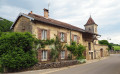
From a small village typical of the Lison Valley, whose slate-roofed houses have retained their old-world charm, you’ll explore the little valley of Cussey-sur-Lison via two viewing points perched on the heights of its limestone cliffs, before returning through the valley floor, accompanied by the cascades of its tuffier stream: the Goulue.
Along the Goulue
 3.81 mi
+554 ft
-558 ft
2h 15
Easy
Departure from Cussey-sur-Lison (Doubs)
3.81 mi
+554 ft
-558 ft
2h 15
Easy
Departure from Cussey-sur-Lison (Doubs)
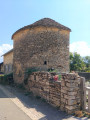
Starting from Cussey-sur-Lison, this lovely circular walk combines heritage, woodland and Jura landscapes. After exploring the village and its Saint-Christophe church, the path leads to the Croix and Chaux viewpoints, offering beautiful views of the valley, the cliffs and Mont Poupet. The walk then descends into the heart of the Goulue gorge, following the stream and its small waterfalls. A varied and peaceful walk, taking in limestone cliffs, woodland and rural heritage.
Notre-Dame-de-Lorette
 7.03 mi
+948 ft
-938 ft
4h 05
Average
Departure from Port-Lesney (Jura)
7.03 mi
+948 ft
-938 ft
4h 05
Average
Departure from Port-Lesney (Jura)
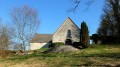
From the remains of the Old Bridge of Port-Lesney, you will climb up beautiful forest paths winding through box trees to the viewpoint overlooking the village topped by Mont Poupet. From this cool, mossy forest, you will emerge into the sunny vineyards, greeting the Saline d'Arc-et-Senans from afar, before returning, devoutly, to the Hermitage of Notre-Dame-de-Lorette perched on the cliff above the valley.
A quick stroll between the Loue and the Bois de Quingey
2.79 mi
+226 ft
-226 ft
1h 30
Easy
Departure from Quingey (Doubs)
If you only have 1 to 1½ hours to let off steam, here is an idea for a short walk in Quingey/Cessey.
The Bois de Moini
6.61 mi
+1,053 ft
-1,047 ft
3h 55
Average
Departure from Quingey (Doubs)
Hike exclusively in the forest, on paths and trails with some beautiful ascents and descents. Views of the Doubs and Loue valleys.
Circular Quingey route via Cessey and the Ferme des Routes
 3.36 mi
+253 ft
-276 ft
1h 45
Easy
Departure from Cessey (Doubs)
3.36 mi
+253 ft
-276 ft
1h 45
Easy
Departure from Cessey (Doubs)
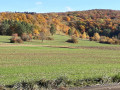
A lovely little walk along the River Loue, then through meadows and forests with a variety of tree species. A family walk with a section emerging from the forest offering a unique view of the village of Quingey.
Between Loue and Mont de Cessey
 6.51 mi
+909 ft
-909 ft
3h 45
Average
Departure from Cessey (Doubs)
6.51 mi
+909 ft
-909 ft
3h 45
Average
Departure from Cessey (Doubs)
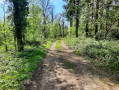
Route through the forest and wide paths, connecting the two parts of the commune of Cessey via the Mont de Cessey ridge and the Loue river.
The remains of Alésia and the Lison Gorges
 5.24 mi
+840 ft
-843 ft
3h 10
Easy
Departure from Éternoz (Doubs)
5.24 mi
+840 ft
-843 ft
3h 10
Easy
Departure from Éternoz (Doubs)
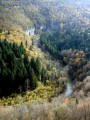
On 10 November 1855, during a meeting of the Société d'Émulation du Doubs, Alphonse Delacroix exclaimed: "There is a place which, until the 19th century, retained its name of Alésia and still reigns amid the remains of the largest battlefield known to man. It is there, in Alaise, that we place the memorable siege that ended the struggle of Vercingetorix." Far from this scholarly debate, discover these ruins and, above all, the magnificent view of the Lison Gorges.
From Arc-et-Senans to Salins-les-Bains
 13.63 mi
+968 ft
-686 ft
7h 05
13.63 mi
+968 ft
-686 ft
7h 05
 Difficult
Departure from Arc-et-Senans (Doubs)
Difficult
Departure from Arc-et-Senans (Doubs)
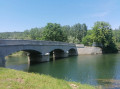
Third stage of the Échappée Jurassienne. From the Royal Saltworks in Arc-et-Senans to the Grande Saline in Salins-les-Bains, you will discover a unique sporting and cultural trail between the Doubs and Jura mountains, following in the footsteps of the great salt trade, with a stop in the village of Port-Lesney.
The Botte d’Alaise
8.81 mi
+961 ft
-932 ft
4h 55
Average
Departure from Éternoz (Doubs)
A walk along tarmac roads and forest tracks to explore the viewpoints over the River Lison and the Gallic ruins.
Forest path no longer in use (9); see the notice dated 2 September 2023 for an alternative route
Around Fourg via forest tracks and paths
6.42 mi
+640 ft
-650 ft
3h 30
Average
Departure from Fourg (Doubs)
A lovely walk around Fourg, alternating between dirt tracks and forest paths. You’ll reach the site of the reconstructed old village in the forest, with huts erected for the traditional crafts festival.
After crossing some meadows, you’ll reach the highest point of this route via a short, steep climb through the forest. The return journey takes you along lovely paths through a small valley on the outskirts of the village.
The Lison Gorges
 8.64 mi
+932 ft
-938 ft
4h 45
Average
Departure from Éternoz (Doubs)
8.64 mi
+932 ft
-938 ft
4h 45
Average
Departure from Éternoz (Doubs)
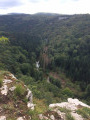
A fairly varied route (geological curiosity, spring, stream and river with numerous small waterfalls), well shaded and wooded enough to encounter various species of trees.
Les Chandeliers and the Lison
 3.64 mi
+482 ft
-482 ft
2h 05
Easy
Departure from Éternoz (Doubs)
3.64 mi
+482 ft
-482 ft
2h 05
Easy
Departure from Éternoz (Doubs)
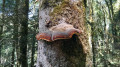
A short, unspoilt circular walk in the heart of the Lison Valley, amongst fir forests, moss-covered sharp limestone pavement and limestone cliffs. The route leads to the impressive ‘Chandeliers’ – large rock columns shaped by erosion – and then offers a lovely view over the Lison Gorges. The walk continues past the Brue fountain and along the riverbank.
Abbans Castle
 4.73 mi
+417 ft
-404 ft
2h 30
Easy
Departure from Abbans-Dessus (Doubs)
4.73 mi
+417 ft
-404 ft
2h 30
Easy
Departure from Abbans-Dessus (Doubs)
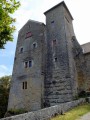
On its rocky spur overlooking the Doubs valley, Abbans Castle was probably built on the site of a Roman castrum. The oldest parts date from the 12th century. It was at the top of the keep that Claude Dorothée de Jouffroy d'Abbans set up his study and forge, where he built his steamboat. Enjoy a short country walk in this historic setting along a pleasant ridge path, then through the Grande Fin valley, discovering the castle from different angles.
The Grand Finale
 5.94 mi
+614 ft
-614 ft
3h 15
Easy
Departure from Abbans-Dessus (Doubs)
5.94 mi
+614 ft
-614 ft
3h 15
Easy
Departure from Abbans-Dessus (Doubs)
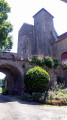
Perched on its rocky outcrop, overlooking the Doubs valley, Abbans Castle likely replaced a Roman castrum. The oldest parts date from the 12th century. It was at the top of the keep that Claude Dorothée de Jouffroy d’Abbans set up his study and forge, where he built his steamboat. A short stroll through the countryside in this place steeped in history, taking in the cool Sentier du Ruisseau, the peaceful Grande Fin valley and the monument commemorating the long-forgotten rag-and-bone men of the 1870s.
The Villevoz Fountain, the Puits aux Ânes and the Châtelet
 5.64 mi
+525 ft
-538 ft
3h 05
Easy
Departure from Lizine (Doubs)
5.64 mi
+525 ft
-538 ft
3h 05
Easy
Departure from Lizine (Doubs)
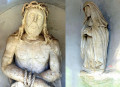
In Lizine, with its slate-roofed houses, you’ll discover the splendour of its church, the Oratory of the God of Mercy, and the rural heritage of this typical little village, resting for a few moments by the cool Vuillevoz fountain before setting off again through beautiful fir forests, where the sun casts a play of light and shadow, towards the Croix du Châtelet and its fine viewpoint over the Loue Gorges, the neighbouring mountains and the fortified house of Châtillon.
Lizine and its three viewpoints
 6.19 mi
+604 ft
-610 ft
3h 20
Easy
Departure from Lizine (Doubs)
6.19 mi
+604 ft
-610 ft
3h 20
Easy
Departure from Lizine (Doubs)
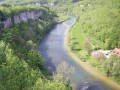
At the confluence of the Loue and Lison rivers, this walk offers a series of views from the Lizine plateau.
The Lison and the Moulin Sapin and Piquette viewpoints
 5.52 mi
+745 ft
-722 ft
3h 10
Easy
Departure from Rurey (Doubs)
5.52 mi
+745 ft
-722 ft
3h 10
Easy
Departure from Rurey (Doubs)
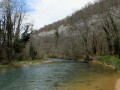
From the heart of the valley, you will climb in the shadow of the Château de Châtillon towards the Lizine plateau and its slate roofs, from where you will discover the Loue and Lison valleys from superb balconies, the riches of the church in this typical little village, the Oratory of the God of Mercy, and you can rest for a few moments at the cool fountain in Villevoz before setting off again towards splendid viewpoints over the two rivers.
The Bois des Serpents
 7.32 mi
+912 ft
-909 ft
4h 10
Average
Departure from Rurey (Doubs)
7.32 mi
+912 ft
-909 ft
4h 10
Average
Departure from Rurey (Doubs)
Don't worry, you won't see a single snake. However, throughout this walk between Loue and Lison, you will discover no fewer than three viewpoints, particularly the Gouille Noire, which overlooks the wild charm of the valley. From the Croix du Châtelet, you will discover the small village of Lizine and its rich church. After resting at the cool fountain in Villevoz, you can set off again towards the splendid sharp limestone pavement formations that resemble menhirs.
The limestone pavement of Lizine
5.29 mi
+656 ft
-623 ft
3h 00
Easy
Departure from Lizine (Doubs)
Another circular walk around Lizine taking you to beautiful viewpoints and past the limestone pavement.
The Lizine circular walk through woodland, sharp limestone pavement and viewing points
6.11 mi
+499 ft
-531 ft
3h 15
Easy
Departure from Lizine (Doubs)
An easy family walk, almost entirely through woodland, offering several views of the Lison and Loue valleys and the Gouille Noire canyon. The path also passes through some astonishing karst formations typical of the region: the sharp limestone pavement. A surprising spot where you might spot chamois or roe deer leaping from rock to rock.
The Edgar Faure and Notre-Dame de Lorette viewpoint
 5.69 mi
+922 ft
-912 ft
3h 25
Easy
Departure from Mouchard (Jura)
5.69 mi
+922 ft
-912 ft
3h 25
Easy
Departure from Mouchard (Jura)
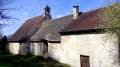
Forest trail to discover the Edgar Faure viewpoint over the Loue valley and its vine-covered hillsides, then return, devoutly, to the Hermitage of Notre-Dame-de-Lorette perched on the cliff face above the valley, ending with a short break at the Espace Vöhl with its views of Mont Poupet and the Jura mountains.
Heritage and panoramic views between Pagnoz and Marnoz
 5.35 mi
+725 ft
-725 ft
3h 05
Easy
Departure from Pagnoz (Jura)
5.35 mi
+725 ft
-725 ft
3h 05
Easy
Departure from Pagnoz (Jura)
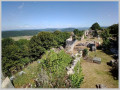
A 30-minute climb will take you to the feudal castle of Vaulgrenant, where you can enjoy a 360° panorama. Then you will walk between valleys and woods, with ever-changing views of Mont Poupet. After Marnoz, you will discover a very pleasant path leading back to Pagnoz. It allows you to walk along the railway line without realising it (except at the beginning). A hike away from the beaten track and through varied landscapes.
The medieval ruins of Vaulgrenant
 2.95 mi
+597 ft
-584 ft
1h 50
Easy
Departure from Pagnoz (Jura)
2.95 mi
+597 ft
-584 ft
1h 50
Easy
Departure from Pagnoz (Jura)
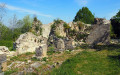
A lovely little forest walk to the ruins of this medieval castle built in the 13th century, wiped off the map by the awful Louis XIV who, to punish us for our "Comtois, Rends-toi! Nenni, Ma foi!" ("Comtois, surrender! No way!"), dismantled all our medieval castles. At the top, there is a 360° view of the Chaux forest, the Val d'Amour, Mont de Pretin, the forts of Saint-André and Belin, and Mont Poupet. Return through beautifully rolling countryside, topped by Fort Saint-André in the distance.
The Marquis' Castle
 8.24 mi
+1,056 ft
-1,056 ft
4h 40
Average
Departure from Abbans-Dessous (Doubs)
8.24 mi
+1,056 ft
-1,056 ft
4h 40
Average
Departure from Abbans-Dessous (Doubs)
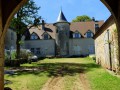
This hike, following in the footsteps of Marquis Claude François Dorothée de Jouffroy d'Abbans, naval architect and designer of the steamboat, will take you between the Loue and Doubs rivers, from oratories to churches, in the heart of our devout Comtois countryside, leaving you time to meditate on the twilight paths of our wooded mountains.
Circular walk around Villars-Saint-Georges via the Combe d’Arange
 4.68 mi
+203 ft
-207 ft
2h 20
Easy
Departure from Villars-Saint-Georges (Doubs)
4.68 mi
+203 ft
-207 ft
2h 20
Easy
Departure from Villars-Saint-Georges (Doubs)
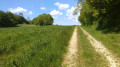
A lovely little walk around Villars-Saint-Georges that will take you through meadows and woods, across a pretty valley, to the banks of the Doubs before heading back up into the large forest. A family walk where you might (with a bit of luck) spot deer, foxes and a variety of birds.
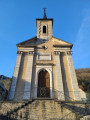
Salins-les-Bains – Arbois
 12.48 mi
+2,365 ft
-2,457 ft
7h 50
Difficult
Departure from Salins-les-Bains (Jura)
12.48 mi
+2,365 ft
-2,457 ft
7h 50
Difficult
Departure from Salins-les-Bains (Jura)
Fourth stage of the Échappée Jurassienne. Right from the start of this stage, things get serious with a demanding route punctuated by steep ascents and descents in the limestone massif of Revermont. Then, through undergrowth, pastures and picturesque viewpoints, the second part of the route reveals itself to be full of charm and tranquillity, offering a perfect transition before reaching Montigny-les-Arsures, a superb wine-growing village where the vineyards come into view. A few more kilometres will take you to Arbois, the capital of Jura wines. Louis Pasteur had his family home here, which is still open to visitors. This colourful town is full of Jura wine tasting cellars and great places to eat for food lovers.
Mont Poupet from Salins-les-Bains
 9.15 mi
+1,991 ft
-1,985 ft
5h 55
Average
Departure from Salins-les-Bains (Jura)
9.15 mi
+1,991 ft
-1,985 ft
5h 55
Average
Departure from Salins-les-Bains (Jura)
Climb to the highest point of the extreme Jura at 851 m, with 360° views of the plains and mountains of the Jura and, on a clear day, even Mont Blanc.
Set off from Salins-les-Bains on the banks of the Furieuse, long known for its salt mining.
A scenic and slightly challenging hike without any major difficulties.
The Lachaussée, Platières and Saint-Christophe viewpoints
 5.97 mi
+1,220 ft
-1,204 ft
3h 50
Average
Departure from Geraise (Jura)
5.97 mi
+1,220 ft
-1,204 ft
3h 50
Average
Departure from Geraise (Jura)
You will walk along a beautiful ridge line to discover, from several viewpoints, Nans-sous-Sainte-Anne nestled in the natural setting of the reculée, topped by Mont Mahoux, the rocks of the Vieux-Château at the foot of which the Lison river rises. Return via the charming leat of Vaux and the16th-century statue of Saint Christopher.
Fort Belin and the village of Clucy
 5.96 mi
+1,286 ft
-1,263 ft
3h 50
Average
Departure from Salins-les-Bains (Jura)
5.96 mi
+1,286 ft
-1,263 ft
3h 50
Average
Departure from Salins-les-Bains (Jura)
This circular loop climbs up to Fort Belin, where you can enjoy a majestic view of Salins-les-Bains to the north and the green hills of the Jura to the south, before crossing the charming village of Clucy and descending via the Roman road at the foot of Mont Poupet.
The forts of Salins and the Roman Way
 7.96 mi
+2,490 ft
-2,461 ft
5h 50
Average
Departure from Salins-les-Bains (Jura)
7.96 mi
+2,490 ft
-2,461 ft
5h 50
Average
Departure from Salins-les-Bains (Jura)
This circular route allows you to see both forts and the town of Salins from two different angles. The Roman Way is an excuse to get closer to Mont Poupet and increase the elevation. However, the great advantage of this walk is that it is shaded by trees, which is very practical in summer.
Fort Saint-André and Croix de Pretin
 Association / Club / Walk leader
 10.34 mi
+1,860 ft
-1,864 ft
6h 20
Average
Departure from Aiglepierre (Jura)
10.34 mi
+1,860 ft
-1,864 ft
6h 20
Average
Departure from Aiglepierre (Jura)
A hike for experienced walkers, with the chance to discover the village of Pretin, nestled in a valley, and magnificent views of Salins-les-Bains and its surroundings (Mont Poupet and Fort Belin in particular).
Circular Geraise route via the viewpoints and Grange de Vaux
8.39 mi
+1,132 ft
-1,119 ft
4h 50
Average
Departure from Geraise (Jura)
A lovely walk starting from Geraise that will take you through the Vaux valley, from the ridges on the way out and along the valley floor on the way back. The viewpoints along the route offer beautiful views of Nans-sous-Sainte-Anne and the head of the Lison valley.
Circular with viewpoints around the Source du Lison
9.87 mi
+2,142 ft
-2,133 ft
6h 25
Average
Departure from Nans-sous-Sainte-Anne (Doubs)
Starting from Nans-sous-Sainte-Anne, pass by the Old Castle, Sainte-Anne, the Devil's Bridge and the Montmahoux viewpoint
The source of the Lison and the Belvédère du Vieux Château
 9.13 mi
+1,998 ft
-1,991 ft
5h 55
Average
Departure from Nans-sous-Sainte-Anne (Doubs)
9.13 mi
+1,998 ft
-1,991 ft
5h 55
Average
Departure from Nans-sous-Sainte-Anne (Doubs)
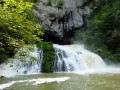
Discover the charm of Nans-sous-Sainte-Anne and its old houses, nestled in the natural setting of the remote valley, its Taillanderie. Then there is the Lison, mystical and wild at the foot of a vertiginous rocky cirque, after a tortuous underground journey, gushing forth in the blue-green plume of its never-ending waterfall, the wild cathedral of the Sarrazine cave, the Creux Billard and finally the belvedere of the Vieux Château.
Le Grand Méandre and Les Forges de Chenecey
 3.43 mi
+423 ft
-423 ft
1h 55
Easy
Departure from Chenecey-Buillon (Doubs)
3.43 mi
+423 ft
-423 ft
1h 55
Easy
Departure from Chenecey-Buillon (Doubs)
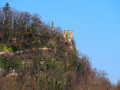
"The seigneurial tower spreads its mismatched wings at the top of a steep cliff at the foot of which flows the Loue. The tranquil river continues to lap at the rocky escarpment, striving to draw the same circular patterns on the earth as it always has," writes Carole Martinez. A walk rich in discoveries: old-fashioned farms, a fountain entwined with mossy walls, an old forge and, the highlight, the Grand Méandre de la Loue and its thousand-year-old sentinel, the keep of Charencey.
La Vouivre à la Trace, the natural environments around Chenecey
 Local authority
 3.16 mi
+427 ft
-427 ft
1h 50
Easy
Departure from Chenecey-Buillon (Doubs)
3.16 mi
+427 ft
-427 ft
1h 50
Easy
Departure from Chenecey-Buillon (Doubs)
A family hike around Chenecey, punctuated with information panels about the natural environment and clues left behind by the Vouivre.
In the exceptional landscape of the Loue Valley, set off on an exploration to discover a diverse and preserved natural heritage. It can all be explained by a karst landscape shaped over time, so ancient that it is home to a strange mythological creature.
For younger visitors, the trail comes with an explorer's notebook full of puzzles. This booklet is available for free in the booklet box at the start of the trail by the church and from local shops (the Loue bakery, Chez Gervais restaurant, the post office and the town hall). You will need a pencil.
Around the old castle of Chenecey-Buillon
 7.30 mi
+876 ft
-863 ft
4h 05
Average
Departure from Chenecey-Buillon (Doubs)
7.30 mi
+876 ft
-863 ft
4h 05
Average
Departure from Chenecey-Buillon (Doubs)
From Chenecey church, you will climb up to the solitary ruins of Charencey Castle overlooking the Grand Méandre de la Loue. From valleys to hills, you will continue through a vast, bright forest and meadows lost deep in the woods, reaching the riverbank to return to the village.
The ruins of the feudal castle of Chenecey
 4.59 mi
+820 ft
-814 ft
2h 50
Easy
Departure from Chenecey-Buillon (Doubs)
4.59 mi
+820 ft
-814 ft
2h 50
Easy
Departure from Chenecey-Buillon (Doubs)
A ruined feudal castle dating from the 9th century overlooking the village and the Loue valley, the ruins of Charencey Castle are listed as a Historic Monument. From the church, located on the banks of the Loue, you will climb up to these secret ruins, continuing through a beautiful forest, perhaps imagining that you will come across a team of oxen pulling a cart up to the castle. Finally, you will return through the sunny pastures overlooking the valley.
Walls and Whispers: discovering the heritage of Chenecey and Buillon
 5.71 mi
+407 ft
-413 ft
3h 00
Average
Departure from Chenecey-Buillon (Doubs)
5.71 mi
+407 ft
-413 ft
3h 00
Average
Departure from Chenecey-Buillon (Doubs)
They will guide you through times gone by that are nevertheless at the origin of the unique landscape of Chenecey and Buillon. The activities of yesteryear explain today's landscapes: a strong identity and a rich and diverse memory that has been built up over time and passed down from generation to generation.Through a digital app, just like those who came before you, you are invited by the monks of the former Cistercian abbey and the famous painter James Tissot to leave the hustle and bustle of the village behind and enter places that invite you to relax and contemplate. Ten stations will allow you to discover places that are inaccessible to the public, as they were in their heyday. Human relationships, self-awareness, art and connections with nature have evolved over time and in line with the challenges of each era. Through this retrospective journey, this walk invites you to reflect on the future of these places.
Les Arsures in Arbois
 9.75 mi
+1,158 ft
-1,135 ft
5h 30
Average
Departure from Les Arsures (Jura)
9.75 mi
+1,158 ft
-1,135 ft
5h 30
Average
Departure from Les Arsures (Jura)
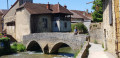
Discover the varied landscape typical of the Lower Jura: meadows, forests, villages, towns and vineyards. Take a break in Arbois, on the banks of the Cuisance, and watch the ducks dance on the water. It's a great place to catch your breath before, perhaps, a wine tasting and then the return trip to Les Arsures through the vineyards.
Les Arsures in Montigny
5.47 mi
+663 ft
-659 ft
3h 05
Easy
Departure from Les Arsures (Jura)
A short afternoon stroll through vineyards and forests, not forgetting to visit the pretty village of Montigny-lès-Arsures and perhaps taste the wines of the Jura. There are a few small climbs, however.
The Devil's Bridge, the Lison spring and waterfall and the Sarrazine Cave
 10.18 mi
+2,254 ft
-2,228 ft
6h 40
Difficult
Departure from Crouzet-Migette (Doubs)
10.18 mi
+2,254 ft
-2,228 ft
6h 40
Difficult
Departure from Crouzet-Migette (Doubs)
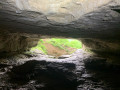
A lovely loop along beautiful paths, discovering the Pont du Diable, the Creux Billard, the Grotte Sarrazine, the Source and the Cascade du Lison. At the start of this beautiful walk, you'll cross the protected natural area of the marl pits and the Bois de Château-Renaud stream. Then head for Crouzet-Migette to reach the Source du Lison site, with a steep descent into the Combe Fagot. Before arriving at the site, you'll passthe Gros Chêne, presumed to be 300 years old, with a circumference of 5.5 m, an imposing sight. On arrival at the site: a return trip to the Creux Billard (unfortunately the Source path is off-limits), then a break at the Cascade du Lison, and a return trip to the Grotte Sarrazine (headlamp required). Then back along the Lison, a nice rest before a steep climb to Crouzet-Migette.