


Refine your search for walks in Orges
Orges walks

 The village, the deer park and the Belle Balade in Châteauvillain
 Visorando Member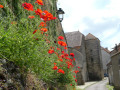
 8.17 mi
 +200 ft
 -200 ft
 3h 55
3h 55
 Moderate
 Departure from Châteauvillain (Haute-Marne)
This circuit cleverly combines the three walks around Chateauvillain: the Castle Park (which includes the Deer Park), the Belle Balade and its original sculptures carved into the forest, and a visit to the town of Chateauvillain, notably the Fortifications Trail. A rich and varied walk with no difficulties.
 Colombey-les-Deux-Églises and the Forest of Clairvaux
 29.78 mi
+2,533 ft
-2,533 ft
4 hrs
29.78 mi
+2,533 ft
-2,533 ft
4 hrs
 Difficult
Departure from Montheries (Haute-Marne)
Difficult
Departure from Montheries (Haute-Marne)
A mixed and challenging route, mainly through woodland and passing by sites of both local and national historical significance!
Loop in the Corgebin National Forest
2.58 mi
+56 ft
-56 ft
1h 15
 Easy
Departure from Chaumont (Haute-Marne) (Haute-Marne)
Easy
Departure from Chaumont (Haute-Marne) (Haute-Marne)
Set off on a loop in the heart of the vast Corgebin State Forest, a stone's throw from Chaumont. Covering an area of 1,100 hectares, this forest became state property in 1789. Located in Haute-Marne, it is the closest state forest to the town of Chaumont, the department's prefecture. It is managed by the ONF (French National Forestry Office) for the sustainable production of quality wood, environmental protection and public access, while also allowing hunting in winter. It is very popular with the public, who come here to enjoy the peace and quiet and get in touch with nature on the outskirts of the town. It is a limestone plateau forest, consisting of beech-based deciduous stands. The landscapes are varied, ranging from coppice with standards to high forest. A nature trail starting at the Muguet visitor centre allows visitors to familiarise themselves with the main species present.
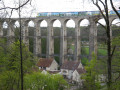
Ferme du Fays and Chaumont Viaduct
 4.56 mi
+299 ft
-312 ft
2h 20
Easy
Departure from Chaumont (Haute-Marne) (Haute-Marne)
4.56 mi
+299 ft
-312 ft
2h 20
Easy
Departure from Chaumont (Haute-Marne) (Haute-Marne)
An almost entirely shaded route between the Ferme du Fays and the Chaumont Viaduct.
Vineyards and woodland above Baroville
5.97 mi
+951 ft
-935 ft
3h 35
Moderate
Departure from Baroville (Aube)
A route exploring the vineyards and hills, as well as the Bois des Dames, Le Pimeux and La Grand-Côte above Baroville. It follows part ofthe GRP® – Gaston Bachelard (a philosopher born in Bar-sur-Aube) and theGR®145– Via Francigena (the route taken by pilgrims travelling to Rome).
Vineyards and woodland around Champignol-lez-Mondeville
 7.85 mi
+630 ft
-646 ft
4h 10
Moderate
Departure from Champignol-lez-Mondeville (Aube)
7.85 mi
+630 ft
-646 ft
4h 10
Moderate
Departure from Champignol-lez-Mondeville (Aube)
Vineyards, fields and woods around Champignol-lez-Mondeville.
Le Sarronvau
7.89 mi
+617 ft
-643 ft
4h 10
Moderate
Departure from Rizaucourt-Buchey (Haute-Marne)
A lovely, varied walk through vineyards, forests, plains, valleys and plateaus, from Buchey to Buchey via Harricourt and Biernes. There are some steep climbs that lead to beautiful viewpoints.
Fond du Pimeux via the Croix Bleue
 5.81 mi
+594 ft
-587 ft
3h 10
Easy
Departure from Bergères (Aube)
5.81 mi
+594 ft
-587 ft
3h 10
Easy
Departure from Bergères (Aube)
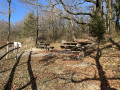
Bergères is a charming wine-growing commune in the Côte des Bar. This route offers picturesque landscapes of the Côte des Bar through valleys, hillsides, vineyards, fields, moors and forests. From April to June, magnificent orchids bloom on the calcareous soils of the Côte de l'Église and Côte Garnier. This route largely follows the Circuit de la Croix Bleue. It also follows the GR® de Pays des deux Bar and the GR® Gaston Bachelard.
The Sainte-Germaine hill
5.44 mi
+738 ft
-722 ft
3h 10
Easy
Departure from Bar-sur-Aube (Aube)
A lovely walk in the hills above Bar-sur-Aube, starting from the Sainte-Germaine Farm, where, if you’re lucky, you’ll be able to watch paragliders. Make the most of the beautiful views from this vantage point.
The Val la Pie loop in Daillancourt
 5.41 mi
+413 ft
-417 ft
2h 50
Easy
Departure from Daillancourt (Haute-Marne)
5.41 mi
+413 ft
-417 ft
2h 50
Easy
Departure from Daillancourt (Haute-Marne)
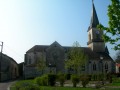
Starting from Daillancourt, a small, typical village built of the region’s white stone, this is a pleasant little walk that follows the local paths, including a short stretch through the communal forest. Towards the end of the walk, you’ll catch a glimpse of the villages further up the Blaise valley.
Vignory Castle
 6.59 mi
+735 ft
-709 ft
3h 40
Moderate
Departure from Vignory (Haute-Marne)
6.59 mi
+735 ft
-709 ft
3h 40
Moderate
Departure from Vignory (Haute-Marne)
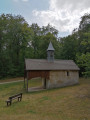
A walk that allows you to explore Vignory, one of the “small towns of character”, with its Romanesque church and the remains of its feudal castle, as well as the forests and woods surrounding the village.
The vineyards and dry grasslands of Spoy
 5.15 mi
+394 ft
-390 ft
2h 45
Easy
Departure from Spoy (Aube)
5.15 mi
+394 ft
-390 ft
2h 45
Easy
Departure from Spoy (Aube)
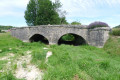
Starting from Spoy, this route takes you to the Fravaux wash house, the Pelouse de la Côte de l’Étang Nature Reserve and the Roman bridge.
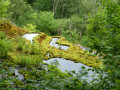
A circular walk around the Tufière de Rolampont and the Gallo-Roman mausoleum at Faverolles
 10.95 mi
+974 ft
-978 ft
5h 55
Moderate
Departure from Rolampont (Haute-Marne)
10.95 mi
+974 ft
-978 ft
5h 55
Moderate
Departure from Rolampont (Haute-Marne)
This walk, three-quarters of which is through woodland, allows you to enjoy two exceptional sites: the active tufa formation at Rolampont, and the Gallo-Roman archaeological site of the Faverolles Mausoleum.
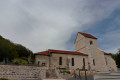
Route de Saint-Antoine à Rouécourt
 9.45 mi
+965 ft
-945 ft
5h 10
Moderate
Departure from Rouécourt (Haute-Marne)
9.45 mi
+965 ft
-945 ft
5h 10
Moderate
Departure from Rouécourt (Haute-Marne)
A route exploring the Haut-Marne countryside (route no. 51, marked in yellow and green).
Historic Blaiseron circular loop
9.83 mi
+597 ft
-594 ft
5h 00
Moderate
Departure from Flammerécourt (Haute-Marne)
A walk through a hilly, partly shaded area, passing through historic sites and ending, for the final two kilometres, by following the banks of the Blaiseron (a tributary of the Blaise). The three villages you pass through are steeped in history, and for a while you follow in the footsteps of Joan of Arc.
The Petit Serin from Villiers-aux-Chênes
5.80 mi
+197 ft
-190 ft
2h 50
Easy
Departure from Doulevant-le-Château (Haute-Marne)
Walk through the Champagne plains, accessible during the hunting season.
Doulevant-le-Château circular loop
7.19 mi
+299 ft
-302 ft
3h 35
Moderate
Departure from Doulevant-le-Château (Haute-Marne)
A walk steeped in history, as we pass through Doulevant-le-Château, where Napoleon stayed on two occasions. We also pass through Villiers-aux-Chênes, home to an ancient Merovingian cemetery, and finally through Dommartin-le-Saint-Père, where you can visit the Foundry Museum.
Côte des Bar starting from Bossancourt
 AONB
AONB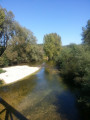 11.89 mi
+1,099 ft
-1,096 ft
6h 25
Difficult
Departure from Bossancourt (Aube)
11.89 mi
+1,099 ft
-1,096 ft
6h 25
Difficult
Departure from Bossancourt (Aube)
A wine-growing region producing champagne, the Côte des Bars has a hilly landscape. This route crosses countryside, vineyards and forests on either side of the Aube valley, linking the villages of Bossancourt, Dolancourt, Jaucourt and Arsonval.
Gurgy-le-Château and the former Carthusian monastery of Lugny
13.46 mi
+1,673 ft
-1,677 ft
7h 40
Difficult
Departure from Recey-sur-Ource (Côte-d'Or)
A circular route starting from Recey-sur-Ource that passes through woods and fields, via Gurgy-le-Château, the outskirts of Petit Saint-Broing, and also the former Chartreuse de Lugny. A hike requiring a good sense of direction as well as keen observation when you need to follow, for short stretches, a route not marked on the IGN map and when you need to cross six fords at the best possible spot, depending on the water level at the time of year.
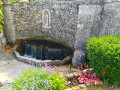
Valley, cliffs and Lake La Mouche from Perrancey-les-Vieux-Moulins
 13.88 mi
+784 ft
-778 ft
7h 05
Difficult
Departure from Saint-Ciergues (Haute-Marne)
13.88 mi
+784 ft
-778 ft
7h 05
Difficult
Departure from Saint-Ciergues (Haute-Marne)
The walk is mainly through woodland, but with a few passages through farmland or pastures to vary the landscape. It visits four pleasant villages with churches and refreshing fountains, as well as several picnic areas. It offers views of Lac de la Mouche and winds its way along the foot of cliffs, some of which are jagged, such as along the "ecological trail" (from (15) to (16)).If you find the walk a little long, you can shorten it to about 15 km by cutting from (8) to (17).
Route d'Auberive via the Chalmessin Reserve
 15.91 mi
+1,608 ft
-1,608 ft
3 hrs
Difficult
Departure from Auberive (Haute-Marne) (Haute-Marne)
15.91 mi
+1,608 ft
-1,608 ft
3 hrs
Difficult
Departure from Auberive (Haute-Marne) (Haute-Marne)
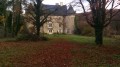
A fairly wild route, mainly through woodland, where it is not uncommon to spot roe deer from the Auberive Forest (future national park). Passes through the Chalmessin Nature Reserve via theGR®7, returning via the Bois de la Montagne and the Forêt des Charbonnières.Moderator’s note: Please note that reviews of this hike mention difficult, even impossible, sections
Auberive, its former abbey, forest and animal park on a circular route.
 6.88 mi
+489 ft
-518 ft
3h 35
Moderate
Departure from Auberive (Haute-Marne) (Haute-Marne)
6.88 mi
+489 ft
-518 ft
3h 35
Moderate
Departure from Auberive (Haute-Marne) (Haute-Marne)
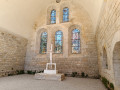
Two-part hike: a beautiful forest loop ending at the animal park enclosures (fallow deer and wild boar), followed by a visit to the charming village of Auberive, with a tour of the former Cistercian abbey and a review of its rich history from its foundation in 1135 to its current status as a museum and exhibition venue.
The Amorey tufa formations from Auberive
 6.47 mi
+689 ft
-699 ft
3h 35
Moderate
Departure from Auberive (Haute-Marne) (Haute-Marne)
6.47 mi
+689 ft
-699 ft
3h 35
Moderate
Departure from Auberive (Haute-Marne) (Haute-Marne)
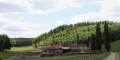
This route allows you to explore the village of Auberive and its abbey (open to visitors; check opening times and days). Most of the route is through forest and offers views of the tufa formations (information panel on site).
Through the Auberive State Forest from Perrancey-les-Vieux-Moulins
18.45 mi
+1,083 ft
-1,184 ft
9h 25
Difficult
Departure from Perrancey-les-Vieux-Moulins (Haute-Marne)
This stage offers the chance to discover some of the springs of the Langres Plateau, whose waters feed into the English Channel. After skirting the marshes, you enter the Auberive State Forest, in the heart of the Forêts National Park. The abbey founded by Saint Bernard in 1132 reveals its secrets. But why Auberive, exactly?
The Pâtis and Saint-Victor circular in Soulaines-Dhuys
5.77 mi
+223 ft
-210 ft
2h 50
Moderate
Departure from Soulaines-Dhuys (Aube)
A pleasant circular walk starting from Soulaines, passing through the Bois du Pâtis and then on to the Domaine de Saint-Victor with its fallow deer. Return via the footpath.
Marked with white and green signs.