


Refine your search for walks in Malakoff
Malakoff walks


 From Malakoff to Massy via the Coulée Verte
 Visorando Member
 7.11 mi
 +197 ft
 -174 ft
 3h 25
3h 25
 Moderate
 Departure from Malakoff (Hauts-de-Seine)
The Coulée Verte in southern Paris is a series of green spaces that have been created near or above the Atlantic TGV railway lines. The route, in the inner suburbs, follows this green corridor to its end. An urban walk in green surroundings that can be enjoyed in all seasons, on foot or by bike.
Old Bagneux
3.81 mi
+102 ft
-108 ft
1h 50
 Easy
Departure from Châtillon (Hauts-de-Seine) (Hauts-de-Seine)
Easy
Departure from Châtillon (Hauts-de-Seine) (Hauts-de-Seine)
Short circular walk starting from Châtillon-Montrouge metro station. Discover old Bagneux and Bagneux Cemetery.
The Fort d'Issy, Henri Barbusse Park and the hillsides of the Val de Seine
 3.78 mi
+233 ft
-180 ft
1h 55
Easy
Departure from Clamart (Hauts-de-Seine)
3.78 mi
+233 ft
-180 ft
1h 55
Easy
Departure from Clamart (Hauts-de-Seine)
A short hike on the slopes of the Val de Seine, through the old Fort d'Issy, which has been redeveloped, the public gardens of Issy-les-Moulineaux and the paths and stairs of Meudon. An urban route with some elevation changes, offering beautiful views and a diverse heritage.
Parc de Sceaux from Montrouge
 10.55 mi
+390 ft
-410 ft
5h 10
Moderate
Departure from Montrouge (Hauts-de-Seine)
10.55 mi
+390 ft
-410 ft
5h 10
Moderate
Departure from Montrouge (Hauts-de-Seine)
Discover a green urban walk starting from Montrouge; this route takes you through Bagneux before immersing you in the sumptuous setting of the Domaine Départemental de Sceaux and its vistas designed by Le Nôtre. For the return journey, let yourself be guided by the haven of peace that is the Coulée Verte du Sud Parisien, a ribbon of unspoilt nature that will gently lead you back to your starting point. A perfect circular journey combining city, history and nature.
The wildlife of Balard, Grenelle and Champ de Mars
 5.32 mi
+13 ft
-13 ft
2h 30
Easy
Departure from Paris
5.32 mi
+13 ft
-13 ft
2h 30
Easy
Departure from Paris
A hike through the 15th and 7th arrondissements of Paris in search of animal representations. We take a few busy streets, such as Rue du Commerce. Crossing the Champ de Mars offers a beautiful view of the Eiffel Tower.
Montsouris Park and the Petite Ceinture in the 13th arrondissement
 2.72 mi
+105 ft
-148 ft
1h 20
Easy
Departure from Paris
2.72 mi
+105 ft
-148 ft
1h 20
Easy
Departure from Paris
A short walk in the south of Paris, partly along the old Petite Ceinture railway line. Before strolling through the wooded park, the Montsouris neighbourhood reveals its quiet houses with varied architecture.
The wildlife of Alésia and Petit Montrouge
 3.64 mi
+72 ft
-89 ft
1h 45
Easy
Departure from Paris
3.64 mi
+72 ft
-89 ft
1h 45
Easy
Departure from Paris
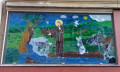
An itinerary mainly in the 14th arrondissement of Paris, ending in the 13th, to discover animal representations. Unfortunately, it is not the richest bestiary in the series... However, the Petit Montrouge district is not lacking in charm.
The Petite Ceinture in the 15th arrondissement, Georges Brassens and the Petite Ceinture in the 14th arrondissement
 2.77 mi
+115 ft
-0 ft
1h 20
Easy
Departure from Paris
2.77 mi
+115 ft
-0 ft
1h 20
Easy
Departure from Paris
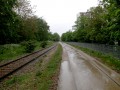
A short walk to relax and get away from it all. First, take the old Petite Ceinture railway line, which runs high above the city. Then stroll through Parc Georges Brassens, which offers a variety of paths and places to stop and rest. Finally, you pass through the 14th arrondissement and follow the Petite Ceinture line to the Porte d'Orléans.
A visit to Vaugirard Cemetery
 1.04 mi
+7 ft
-7 ft
0h 30
Easy
Departure from Paris
1.04 mi
+7 ft
-7 ft
0h 30
Easy
Departure from Paris
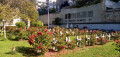
A short urban route to visit Vaugirard Cemetery, which features a moving military plot containing mainly the remains of soldiers who died in action during the First World War. Among the civilian figures buried here, three also met a violent death, including the former President of the Republic, Paul Doumer.
The southern 14th arrondissement, from Alésia to the Petite Ceinture
 2.38 mi
+72 ft
-82 ft
1h 10
Easy
Departure from Paris
2.38 mi
+72 ft
-82 ft
1h 10
Easy
Departure from Paris
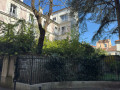
A circular walk, well off the beaten route, showcasing working-class neighbourhoods as well as numerous cul-de-sacs, villas and artists’ studios. A varied route that takes you from the stark architecture to the natural surroundings of the Petite Ceinture.
Almost like a treasure hunt in the east of Fontenay-aux-Roses
 4.39 mi
+233 ft
-246 ft
2h 15
Easy
Departure from Fontenay-aux-Roses (Hauts-de-Seine)
4.39 mi
+233 ft
-246 ft
2h 15
Easy
Departure from Fontenay-aux-Roses (Hauts-de-Seine)
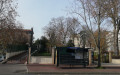
The Fontenay-aux-Roses municipal archives have installed 32 historical markers relating to people or places connected with the town. This urban walk allows you to explore different neighbourhoods of the town by seeking out all the historical markers in the eastern and lower parts of the town. Another walk describes the route taking in the markers located in the western and upper parts of the town.
Almost like a treasure hunt in the west of Fontenay-aux-Roses
 3.80 mi
+289 ft
-259 ft
2h 00
Easy
Departure from Fontenay-aux-Roses (Hauts-de-Seine)
3.80 mi
+289 ft
-259 ft
2h 00
Easy
Departure from Fontenay-aux-Roses (Hauts-de-Seine)
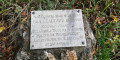
The Fontenay-aux-Roses municipal archives have currently set up 32 historical markers focusing on people or places linked to the town. This urban route invites you to seek out these markers located in the western part of the town, whilst discovering the town’s various neighbourhoods.
It will be complemented by a route through the eastern part of the town.
This route can be done by bike, though it is best done in the opposite direction due to the slopes.
 Via the Coulée Verte towards the Chevreuse Valley
26.57 mi
+991 ft
-981 ft
4 hrs
Moderate
Departure from Fontenay-aux-Roses (Hauts-de-Seine)
This route follows various types of paths: cycle paths, paths or trails suitable for cycling, streets and departmental roads.The landscapes vary between Coulée Verte, Vallée de l'Yvette (Basse-Vallée de Chevreuse), Saclay plateau and Bois de Verrières.Two hills of one to two kilometres make this approximately 40 km route "moderately difficult"; it therefore requires a minimum level of cycling experience.
A river, an aqueduct and a few parks between Arcueil and Fontenay
 3.59 mi
+226 ft
-174 ft
1h 50
Easy
Departure from Cachan (Val-de-Marne)
3.59 mi
+226 ft
-174 ft
1h 50
Easy
Departure from Cachan (Val-de-Marne)
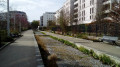
Starting from Arcueil-Cachan station, you cross two parks and a bamboo grove, and walk along the Bièvre river and then the Loing and Lunain aqueduct. The route then crosses Bagneux and Parc François Mitterrand to return to Fontenay-aux-Roses station, the start and end of this long circular route through the inner suburbs of Paris.
Between Coulée Verte, urban area and Verrières Forest.
9.72 mi
+299 ft
-295 ft
1h 27
Moderate
Departure from Fontenay-aux-Roses (Hauts-de-Seine)
This is a very pleasant cycling route as most of it is on cycle paths. In autumn, the colours are magnificent.The few climbs in the first part are manageable for average cyclists on this route, which is one of the least difficult ways to reach the Verrières Forest by bike. It is also a reasonable length for those who cycle less frequently, but the route through the forest can easily be extended.
From Fontenay to Clamart via the greenway, parks and woods
 5.79 mi
+331 ft
-318 ft
2h 55
Moderate
Departure from Fontenay-aux-Roses (Hauts-de-Seine)
5.79 mi
+331 ft
-318 ft
2h 55
Moderate
Departure from Fontenay-aux-Roses (Hauts-de-Seine)
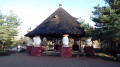
An urban route that runs partly through public parks or woods, away from traffic! Each park has its own identity, and the town centres of Châtillon and Clamart add their own heritage touch.
The wildlife of Montparnasse and Cherche-Midi
 3.91 mi
+59 ft
-59 ft
1h 50
Easy
Departure from Paris
3.91 mi
+59 ft
-59 ft
1h 50
Easy
Departure from Paris
A circular starting from Montparnasse station, straddling the 6th, 7th, 14th and 15th arrondissements of Paris, to discover animal representations. Several beautiful mansions are on the itinerary. A tour of the charming Catherine Labouré Garden provides an undeniable touch of exoticism.
The wildlife of Montparnasse, Plaisance and Denfert
 4.78 mi
+52 ft
-16 ft
2h 15
Easy
Departure from Paris
4.78 mi
+52 ft
-16 ft
2h 15
Easy
Departure from Paris
From Montparnasse Station to the Lion of Belfort, from Montparnasse Cemetery to the Catacombs of Paris, via the Jardin des Grands Explorateurs and the little house at the end of Impasse Florimont where Georges Brassens lived for 22 years, this route sets out to discover the animal representations of the 6th and 14th arrondissements.
In the footsteps of Georges Brassens: Montparnasse, Plaisance and Brancion
 4.19 mi
+66 ft
-98 ft
2h 00
Easy
Departure from Paris
4.19 mi
+66 ft
-98 ft
2h 00
Easy
Departure from Paris
This fourth and final section of our walk dedicated to Georges Brassens takes us to the main places where he lived in Paris, including the famous Impasse Florimont. We walk along a few cobbled and flower-lined passages, cross the public park that bears his name and finish with a section of the old Petite Ceinture railway line.
The bestiary of La Glacière, Faubourg Saint-Marcel and Les Gobelins
 3.57 mi
+79 ft
-95 ft
1h 45
Easy
Departure from Paris
3.57 mi
+79 ft
-95 ft
1h 45
Easy
Departure from Paris
From Place Denfert-Rochereau to Place d’Italie, exploring depictions of animals. The route takes you through Faubourg Saint-Marcel in particular, where, until 1857, Paris’s great horse market was held, immortalised by the painter Rosa Bonheur.
In the footsteps of astronomers and artists between Denfert and Montparnasse
 3.93 mi
+23 ft
-62 ft
1h 50
Easy
Departure from Paris
3.93 mi
+23 ft
-62 ft
1h 50
Easy
Departure from Paris
This urban walk takes you through a neighbourhood that was frequented by many artists in the first half of the 20th century. It is also where the Paris Observatory was first established, as evidenced by the names of the adjacent streets.
Denfert-Rochereau – Porte d’Auteuil
8.49 mi
+151 ft
-233 ft
4h 00
Moderate
Departure from Paris
First stage of the Paris ring route via theGR®75, with a few detours. This stage allows you to explore the south-western part of Paris whilst strolling through parks, squares and along the Petite Ceinture.
From Montparnasse to Porte de Vanves via the green corridor
 2.54 mi
+39 ft
-7 ft
1h 10
Easy
Departure from Paris
2.54 mi
+39 ft
-7 ft
1h 10
Easy
Departure from Paris
The South Paris Green Corridor is a series of green spaces that have been developed near or above the Atlantic TGV railway lines. This short walk, limited to central Paris, follows the green corridor at its beginning, while taking a few liberties to stroll through secret corners of the 14th arrondissement.
The Southern Paris Green Corridor
 74.51 mi
+4,485 ft
-4,508 ft
14 days
Moderate
Departure from Paris
74.51 mi
+4,485 ft
-4,508 ft
14 days
Moderate
Departure from Paris
The Southern Paris Green Corridor is a series of green spaces that have been developed alongside or above the TGV Atlantique railway lines. The first two stages of this route follow this corridor from Montparnasse station to Massy. The subsequent stages extend the corridor into the Yvette Valley and across the Saclay Plateau.
A visit to Grenelle Cemetery
 1.11 mi
+0 ft
-7 ft
0h 30
Easy
Departure from Paris
1.11 mi
+0 ft
-7 ft
0h 30
Easy
Departure from Paris
A short stroll to reach and visit one of the smallest cemeteries in Paris, set in unspoilt surroundings. A few notable figures are buried in this cemetery, which also features some unusual monuments.
The wildlife of Grenelle and Vaugirard
 6.07 mi
+125 ft
-20 ft
2h 55
Easy
Departure from Paris
6.07 mi
+125 ft
-20 ft
2h 55
Easy
Departure from Paris
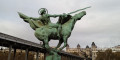
This urban route crosses the 15th arrondissement of Paris from west to east and then from north to south, discovering numerous animal representations. The sculptures in Georges Brassens Park recall the past of the Vaugirard slaughterhouses.
The wildlife of Ranelagh and La Muette
 4.05 mi
+115 ft
-23 ft
2h 00
Easy
Departure from Paris
4.05 mi
+115 ft
-23 ft
2h 00
Easy
Departure from Paris
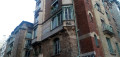
This urban route crosses the 16th arrondissement of Paris, from south to north and then from west to east, to discover animal representations and a certain architectural diversity specific to this arrondissement.
A visit to Montparnasse Cemetery
 2.21 mi
+23 ft
-7 ft
1h 00
Easy
Departure from Paris
2.21 mi
+23 ft
-7 ft
1h 00
Easy
Departure from Paris
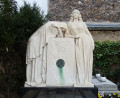
Less well-known and smaller than Père Lachaise Cemetery, Montparnasse Cemetery is the second largest cemetery within the city limits of Paris. It is the final resting place of many prominent figures, particularly from the worlds of the arts, publishing and politics. This route offers a stroll through this place of contemplation, discovering around fifty of these figures and several works of art scattered throughout the grounds.
From Port de Javel to Pont de Saint-Cloud
 6.22 mi
+20 ft
-23 ft
2h 55
Moderate
Departure from Paris
6.22 mi
+20 ft
-23 ft
2h 55
Moderate
Departure from Paris
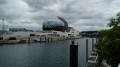
From the Port de Javel, the banks of the Seine are not particularly suitable for a stroll… So you head away from the river to cross three large parks: André Citroën, Suzanne Lenglen and Île Saint-Germain. You then rejoin the towpath with its many moored barges. The walk ends with a brief detour into Saint-Cloud Park before crossing the Seine via the bridge of the same name.
The Bestiary of Auteuil and Passy
 5.00 mi
+105 ft
-30 ft
2h 25
Easy
Departure from Paris
5.00 mi
+105 ft
-30 ft
2h 25
Easy
Departure from Paris
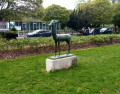
From the Porte de Saint-Cloud to the Place du Trocadéro, from one work by the sculptor Paul Landowski to another, an urban walk exploring depictions of animals in Paris’s 16th arrondissement and several beautiful Art Nouveau and Art Deco buildings.
A visit to Auteuil Cemetery
 0.47 mi
+7 ft
-7 ft
0h 15
Easy
Departure from Paris
0.47 mi
+7 ft
-7 ft
0h 15
Easy
Departure from Paris
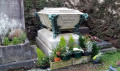
A very brief stroll through one of the oldest and smallest cemeteries in Paris, in a relatively peaceful setting. The graves of a few notable figures and some unusual monuments await.
The Meudon Observatory, Les Bruyères and La Femme sans Tête
 4.82 mi
+420 ft
-351 ft
2h 35
Easy
Departure from Meudon (Hauts-de-Seine)
4.82 mi
+420 ft
-351 ft
2h 35
Easy
Departure from Meudon (Hauts-de-Seine)
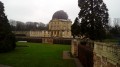
After following paths through the town, this walk from station to station offers the chance to discover the Meudon Observatory and admire the sweeping views from the terrace of its park. The rest of the route is mainly through forest.
Art Nouveau and Art Deco architecture in the 16th arrondissement
 5.12 mi
+210 ft
-148 ft
2h 30
Easy
Departure from Paris
5.12 mi
+210 ft
-148 ft
2h 30
Easy
Departure from Paris
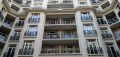
A route in the city to discover the iconic architectural inventiveness of two successive artistic movements: Art Nouveau, from the late 19th to the early 20th century, and Art Deco, between the two world wars.
In the footsteps of artists between Clamart and Meudon
 Tourism professional10.22 mi
+659 ft
-646 ft
1.5 hrs
Moderate
Departure from Meudon (Hauts-de-Seine)
Tourism professional10.22 mi
+659 ft
-646 ft
1.5 hrs
Moderate
Departure from Meudon (Hauts-de-Seine)
Artists' studios and houses in the heart of the Bois de Clamart.This moderately difficult route starts at Meudon-Val Fleury station. The first few kilometres of this walk invite you to discover artists' houses. On your way, don't hesitate to stop at Rodin's house and studio, which overlooks Paris and the Seine in a green setting. Other charming places such as the Arp Foundation will enhance your journey. The rest of the route is mainly through woods, where you will discover the Meudon lake and catch a glimpse of the Chalais lake, bordered by the imposing Hangar Y.
From the Observatory Terrace to the Seine Musicale
 4.54 mi
+371 ft
-525 ft
2h 25
Easy
Departure from Meudon (Hauts-de-Seine)
4.54 mi
+371 ft
-525 ft
2h 25
Easy
Departure from Meudon (Hauts-de-Seine)
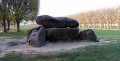
After enjoying the sweeping views from the Observatory Terrace, we wind our way through the many paths of Meudon. The Longs Réages cemetery holds a surprise in the form of a Neolithic dolmen converted into a modern burial site... This route ends along the Seine and on Île Seguin, where a concert hall complex with an apt name has now been built.
Four ponds in the south of the Meudon Forest
 7.24 mi
+581 ft
-502 ft
3h 50
Moderate
Departure from Meudon (Hauts-de-Seine)
7.24 mi
+581 ft
-502 ft
3h 50
Moderate
Departure from Meudon (Hauts-de-Seine)
A hike from station to station in the southern part of the Meudon Forest. The route alternates between wide paths and little-used trails where a good sense of direction is required. Along the way, you will pass four pleasant ponds and come across a small Neolithic menhir.
Billancourt, Ile Seguin and Ile Saint-Germain
 5.76 mi
+36 ft
-26 ft
2h 40
Easy
Departure from Boulogne-Billancourt (Hauts-de-Seine)
5.76 mi
+36 ft
-26 ft
2h 40
Easy
Departure from Boulogne-Billancourt (Hauts-de-Seine)
We start by exploring Billancourt's industrial past on the former Renault factory sites, with a detour to the Ile Seguin. We then continue on to the Ile Saint-Germain, with its residential area and large green park. We end with a tribute to French cinema. This is an urban itinerary, but numerous parks and gardens, as well as many passageways, alleys and even footpaths, allow you to avoid the inconveniences of traffic.
The towers of Beaugrenelle and the squares and gardens of the 15th arrondissement
 6.37 mi
+92 ft
-82 ft
3h 00
Moderate
Departure from Paris
6.37 mi
+92 ft
-82 ft
3h 00
Moderate
Departure from Paris
A walk through Paris's 15th arrondissement, starting at the Beaugrenelle slab, at the foot of the tall towers of the Front de Seine. Next, we cross Parc André Citroën and stroll through the streets and numerous squares of this arrondissement. We then pay tribute to Georges Brassens, in the street where he lived and then in the large park that bears his name. The walk ends along the disused Petite Ceinture railway line.
The 1930s Trail
 3.26 mi
+16 ft
-16 ft
1h 30
Easy
Departure from Boulogne-Billancourt (Hauts-de-Seine)
3.26 mi
+16 ft
-16 ft
1h 30
Easy
Departure from Boulogne-Billancourt (Hauts-de-Seine)
The 1930s Trail was designed by the City of Boulogne-Billancourt.
Discover a rich architectural heritage, thanks to the imagination of architects such as Le Corbusier, Courrèges, Mallet-Stevens and others. An original urban route that pays tribute to the creative movement of the interwar period.
From Robinson to Meudon via the Coulée Verte and the Sentier du Panorama
 5.02 mi
+315 ft
-381 ft
2h 35
Easy
Departure from Sceaux (Hauts-de-Seine) (Hauts-de-Seine)
5.02 mi
+315 ft
-381 ft
2h 35
Easy
Departure from Sceaux (Hauts-de-Seine) (Hauts-de-Seine)
A short but very varied walk, featuring a succession of urban sections, a stretch of green corridor, a path offering a few sweeping views and a brief crossing of the Meudon Forest.
New urban planning, walk along the banks and through wooded parks in Plessis-Robinson
 4.49 mi
+289 ft
-289 ft
2h 20
Easy
Departure from Sceaux (Hauts-de-Seine) (Hauts-de-Seine)
4.49 mi
+289 ft
-289 ft
2h 20
Easy
Departure from Sceaux (Hauts-de-Seine) (Hauts-de-Seine)
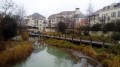
Discover "New Urbanism", where proximity and diversity are key, and the commune of Le Plessis-Robinson is a typical example. The Promenade des Berges has the feel of a "little Venice in the Hauts-de-Seine" and the four wooded parks you pass through add an undeniable touch of greenery to this urban route.
The village of Auteuil and Parc André Citroën
 2.75 mi
+16 ft
-52 ft
1h 15
Easy
Departure from Paris
2.75 mi
+16 ft
-52 ft
1h 15
Easy
Departure from Paris
An urban route in two stages. First, you stroll through the narrow streets of the Auteuil neighbourhood, which was for a long time a village outside Paris, encountering a variety of architecture. Then, after crossing the Seine on the famous Pont Mirabeau, you zigzag through Parc André Citroën, where plant, mineral and aquatic worlds intermingle.
The Petite Ceinture in Paris
 36.37 mi
+863 ft
-863 ft
10 days
Easy
Departure from Paris
36.37 mi
+863 ft
-863 ft
10 days
Easy
Departure from Paris
A tour of Paris following the route of the former Petite Ceinture railway line! A highly varied itinerary, reflecting the diversity of the arrondissements it passes through, which focuses on the converted sections of the old railway line, squares and gardens, and the narrow streets and passageways away from traffic.
The main monuments of Paris along the Seine
 5.12 mi
+26 ft
-30 ft
2h 25
Easy
Departure from Paris
5.12 mi
+26 ft
-30 ft
2h 25
Easy
Departure from Paris
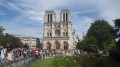
This urban but relatively open route allows you to discover the main monuments of Paris on foot. You will see the Eiffel Tower, the Louvre and Notre-Dame Cathedral, among others. The start and finish points are accessible by underground.
From Parc de Sceaux to the Bièvre Valley
 13.52 mi
+702 ft
-715 ft
6h 50
13.52 mi
+702 ft
-715 ft
6h 50
 Difficult
Departure from Bourg-la-Reine (Hauts-de-Seine)
Difficult
Departure from Bourg-la-Reine (Hauts-de-Seine)
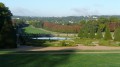
This hike crosses Parc de Sceaux and the Verrières National Forest, then continues along the Bièvre, whose valley has been developed with numerous sports and leisure facilities. The presence of so many green spaces is surprising in an otherwise highly urbanised region.
Échappée Belle and Coulée Douce in the south of the Hauts-de-Seine
15.90 mi
+518 ft
-495 ft
2.5 hrs
Moderate
Departure from Bourg-la-Reine (Hauts-de-Seine)
The heritage of southern Paris in a few turns of the wheel!This tour starts at Bourg-la-Reine station and takes you on a journey of discovery through the heritage treasures of the Hauts-de-Seine. Head to the old centres of Bagneux, Châtillon, Malakoff and Vanves to discover the soul of southern Paris.
Symbols of Franco-American relations in Paris
 7.00 mi
+108 ft
-49 ft
3h 20
Moderate
Departure from Paris
7.00 mi
+108 ft
-49 ft
3h 20
Moderate
Departure from Paris
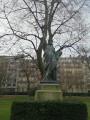
A walk through Paris taking in the iconic sites associated with Americans in Paris, whilst also passing by some of the city’s famous landmarks.
The route can be followed in either direction.
From the Porte d’Auteuil to the Porte de la Villette
 10.29 mi
+105 ft
-102 ft
4h 50
Moderate
Departure from Paris
10.29 mi
+105 ft
-102 ft
4h 50
Moderate
Departure from Paris
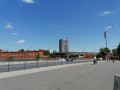
This walk, which forms part of the GR® 75, allows you to explore a large number of parks situated on the outskirts of Paris’s western and southern ring roads. It serves as the final stage. There are many remarkable spots along the GR® route as well as in the surrounding area, such as the Bois de Boulogne. As you pass through the many parks, you’ll feel as though you’re far removed from the city.
Saint-Germain-des-Prés and Montagne Sainte-Geneviève
 3.84 mi
+79 ft
-105 ft
1h 50
Easy
Departure from Paris
3.84 mi
+79 ft
-105 ft
1h 50
Easy
Departure from Paris
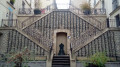
A journey into the medieval and even Gallo-Roman past of Paris, following in the footsteps of Sainte-Geneviève, whose namesake hill we climb, whose ancient sarcophagus can be seen in the church of Saint-Étienne-du-Mont, and whose statue can be seen in the Jardin du Luxembourg and on the Pont de la Tournelle. Among other sights, the itinerary follows a section of the old city wall built by Philippe Auguste and crosses the Arènes de Lutèce.
A route through the heart of Paris
 22.13 mi
+312 ft
-312 ft
5 days
Easy
Departure from Paris
22.13 mi
+312 ft
-312 ft
5 days
Easy
Departure from Paris
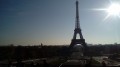
This route, comprising just five stages, all accessible by public transport, offers an exploration of the capital’s city centre and a journey back in time to the city’s Gallo-Roman foundations.
The wildlife of Saint-Germain-des-Prés and Luxembourg
 4.55 mi
+43 ft
-43 ft
2h 10
Easy
Departure from Paris
4.55 mi
+43 ft
-43 ft
2h 10
Easy
Departure from Paris
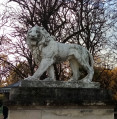
This route offers a double circular in the 6th arrondissement of Paris, allowing you to discover numerous animal representations. The Jardin du Luxembourg has a rich and diverse collection of statues.
The secrets of Parc de Sceaux
 5.43 mi
+164 ft
-171 ft
2h 40
Easy
Departure from Sceaux (Hauts-de-Seine) (Hauts-de-Seine)
5.43 mi
+164 ft
-171 ft
2h 40
Easy
Departure from Sceaux (Hauts-de-Seine) (Hauts-de-Seine)
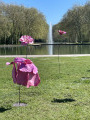
Through the Parc de Sceaux, the castle and pavilions, ponds, gardens and more secret places.
The waterfalls are reopening after renovation. (August 2021)
Moderator's warning (April 2021): between the points (1) and (2), the waterfalls are under construction and the area is closed to the public. Reach the Bassin de l'Octogone via the Plaine de l'Orangerie and the alley that extends from it, then descend a large staircase on the right and follow a gravel path.
A tour of the Bois de Boulogne
 5.71 mi
+46 ft
-46 ft
2h 40
Easy
Departure from Boulogne-Billancourt (Hauts-de-Seine)
5.71 mi
+46 ft
-46 ft
2h 40
Easy
Departure from Boulogne-Billancourt (Hauts-de-Seine)
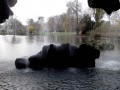
Well known to Parisians, the Bois de Boulogne offers many possibilities for walks. This one, which can be done in half a day, avoids paved paths as much as possible and offers a pleasant route along a stream, "la Serpentine", and a lake, with an easy passage under a waterfall.
Paris, stroll from the Left Bank to the Right Bank
 4.13 mi
+39 ft
-39 ft
1h 55
Easy
Departure from Paris
4.13 mi
+39 ft
-39 ft
1h 55
Easy
Departure from Paris
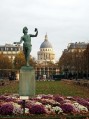
A stroll through the heart of Paris. This walk does not claim to cover all of Paris' monuments, but rather takes you from the left bank to the right bank of the Seine, avoiding some of the tourist crowds.
The Trocadéro esplanade and gardens, the Champs de Mars and the Invalides
 4.49 mi
+36 ft
-115 ft
2h 05
Easy
Departure from Paris
4.49 mi
+36 ft
-115 ft
2h 05
Easy
Departure from Paris
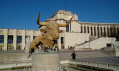
A route that takes you to some of Paris's famous monuments on both banks of the Seine. You will pass through numerous gardens, some well-known and popular, others more secluded and offering a welcome respite from the hustle and bustle.
The bestiary of the Trocadéro, the Gros Caillou and Chaillot
 4.26 mi
+121 ft
-148 ft
2h 05
Easy
Departure from Paris
4.26 mi
+121 ft
-148 ft
2h 05
Easy
Departure from Paris
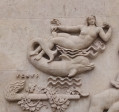
From the Trocadéro to the Étoile, on either side of the Seine, through the 16th, 7th and 8th arrondissements of Paris, discovering depictions of animals. The Arc de Triomphe at the Étoile alone features a great many of them!
The Bestiary of Passy and Dauphine
 3.60 mi
+16 ft
-66 ft
1h 40
Easy
Departure from Paris
3.60 mi
+16 ft
-66 ft
1h 40
Easy
Departure from Paris
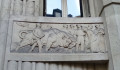
An urban walk that winds its way through the northern half of the 16th arrondissement, in search of numerous depictions of animals. It also offers an opportunity to pay tribute to Victor Hugo, with a stop at the place where he lived, on the avenue that bore his name during his lifetime.
A stroll around Passy Cemetery
 0.88 mi
+26 ft
-26 ft
0h 25
Easy
Departure from Paris
0.88 mi
+26 ft
-26 ft
0h 25
Easy
Departure from Paris
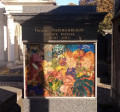
Passy Cemetery is one of the largest cemeteries within the city limits of Paris. It is the final resting place of many notable figures, including musicians and aviation pioneers. This route takes you on a stroll through this place of contemplation, where you can discover around sixty of these notable figures.
Le Quartier Latin and Sainte-Geneviève Mountain
3.78 mi
+131 ft
-164 ft
1h 50
Easy
Departure from Paris
Le Quartier Latin is a labyrinth of streets, each as important as the next, as there is a strong history behind. The Sainte-Geneviève Mountain is home to several prestigious schools, and the presence of numerous students adds to the atmosphere of this magnificent suburb.
Un tour dans Paris depuis le Trocadéro
 Association / Club / Walk leader
 8.19 mi
+98 ft
-115 ft
3h 50
Moderate
Departure from Paris
8.19 mi
+98 ft
-115 ft
3h 50
Moderate
Departure from Paris
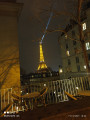
Ce parcours vous amènera du Trocadero à Notre-Dame avec un retour par le Louvre et les Champs-Élysées. Vous pouvez le faire à la journée
The Bestiary of the Latin Quarter
 5.78 mi
+210 ft
-207 ft
2h 50
Easy
Departure from Paris
5.78 mi
+210 ft
-207 ft
2h 50
Easy
Departure from Paris
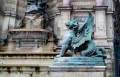
This urban route takes you on a journey of discovery through animal representations in the streets of the 5th arrondissement and through the Jardin des Plantes in Paris: sculptures and building ornamentation await you. It is also an opportunity to stroll through a lively neighbourhood, home to several renowned universities and schools.
From Parc de Sceaux to Robinson
 4.38 mi
+312 ft
-207 ft
2h 15
Easy
Departure from Hauts-de-Seine
4.38 mi
+312 ft
-207 ft
2h 15
Easy
Departure from Hauts-de-Seine
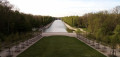
A route between two RER B stations, most of which takes place within Parc de Sceaux, exploring its gardens and views, its water features and its lesser-known corners.
From Parc de Sceaux to Meudon Forest via Parc de la Vallée aux Loups
 10.14 mi
+591 ft
-486 ft
5h 10
Moderate
Departure from Hauts-de-Seine
10.14 mi
+591 ft
-486 ft
5h 10
Moderate
Departure from Hauts-de-Seine
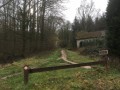
A varied hike starting from Parc de Sceaux, passing through Parc de la Vallée aux Loups, the house of Chateaubriand, the garden cities of Plessis-Robinson with its allotments and river, which runs at the foot of the buildings. The hike ends with a walk through the forest of Meudon.
Green spaces in Paris’s 5th arrondissement
 4.70 mi
+177 ft
-157 ft
2h 20
Easy
Departure from Paris
4.70 mi
+177 ft
-157 ft
2h 20
Easy
Departure from Paris
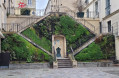
Just like Paris’s oldest arrondissement, the gardens of the fifth evoke the past: the Cluny Medieval Garden, Square Viviani, where the capital’s oldest tree, the famous black locust, has watched Paris transform for over 400 years; the Arènes de Lutèce or the Jardin des Plantes, the Royal Garden of Medicinal Plants. A tour through bustling neighbourhoods, blending bookshops, student cafés and ancient alleyways in an authentic, timeless atmosphere that embodies the intellectual soul of Paris.
The Faubourg Saint-Honoré Bestiary
 4.08 mi
+30 ft
-23 ft
1h 55
Easy
Departure from Paris
4.08 mi
+30 ft
-23 ft
1h 55
Easy
Departure from Paris
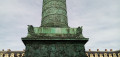
From Place de l’Alma to Place de l’Opéra, a walk through Paris’s 8th and 1st arrondissements to discover numerous depictions of animals. Place Vendôme, with its characteristic early 18th-century architecture and its richly decorated central column, is the highlight of this urban walk.
The Petite Ceinture in the 16th arrondissement and the Serres d'Auteuil
 3.28 mi
+26 ft
-69 ft
1h 30
Easy
Departure from Paris
3.28 mi
+26 ft
-69 ft
1h 30
Easy
Departure from Paris
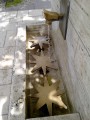
An eclectic journey through Paris's 16th arrondissement. After an initially urban start, the route takes you along the Sentier Nature trail, on the embankment of the former Petite Ceinture railway line. The walk ends with a stroll through the Square des Poètes and a visit to the Serres d'Auteuil, which will delight amateur botanists.
From the Latin Quarter to the Cité Universitaire Internationale
10.86 mi
+292 ft
-272 ft
5h 15
Moderate
Departure from Paris
From parks to gardens, grand boulevards to charming, quiet residential streets, and the lively shopping districts so typical of the capital, set off to explore the 5th, 13th and 14th arrondissements of Paris.
The Arboretum de la Vallée aux Loups
 1.77 mi
+36 ft
-36 ft
0h 50
Easy
Departure from Châtenay-Malabry (Hauts-de-Seine)
1.77 mi
+36 ft
-36 ft
0h 50
Easy
Departure from Châtenay-Malabry (Hauts-de-Seine)
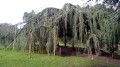
For tree and garden enthusiasts, a refreshing change of scenery just a stone’s throw from Paris! The arboretum features a vast number of species and a wide variety of landscapes. An enchanting detour via Île Verte completes the picture.
The Passages of Paris
7.51 mi
+75 ft
-16 ft
3h 30
Moderate
Departure from Paris
In Paris, the term ‘passages’ refers to covered walkways through which one goes from one street to another by passing through one or more buildings, and which are intended solely for pedestrians. The shops there are splendid, well-stocked, but somewhat expensive. In bad weather, like the Palais-Royal, they serve as promenades and meeting places. They are generally lit by gas.
From the Île de la Cité to the Porte de Versailles
 3.65 mi
+43 ft
-30 ft
1h 45
Easy
Departure from Paris
3.65 mi
+43 ft
-30 ft
1h 45
Easy
Departure from Paris
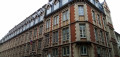
From the heart of the capital to its outskirts, this urban walk takes you through the Latin Quarter before following the entire length of Paris’s longest street, Rue de Vaugirard. Along the way, you’ll come across Notre-Dame Cathedral (currently undergoing restoration), the Palais du Luxembourg and several churches dating from various periods.
From Île de la Cité to Porte de Pantin
 6.26 mi
+79 ft
-23 ft
2h 55
Moderate
Departure from Paris
6.26 mi
+79 ft
-23 ft
2h 55
Moderate
Departure from Paris
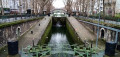
From the heart to the outskirts of the capital, this urban route first takes you through the Marais district, dotted with mansions. Then, under the sign of water, you walk along the Canal Saint-Martin and then the Bassin de la Villette. The route ends at the entrance to the Parc de La Villette.
From Île de la Cité to Porte de Montreuil
 5.38 mi
+118 ft
-39 ft
2h 35
Easy
Departure from Paris
5.38 mi
+118 ft
-39 ft
2h 35
Easy
Departure from Paris
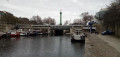
From the heart to the outskirts of the capital, this urban route starts on the banks of the Seine and then follows the Port de l'Arsenal on the Canal Saint-Martin. It then crosses the Roquette and Charonne districts and takes a few narrow streets and passages bordering the Père Lachaise Cemetery.
From Île de la Cité to Porte de Courcelles
 5.46 mi
+43 ft
-39 ft
2h 35
Easy
Departure from Paris
5.46 mi
+43 ft
-39 ft
2h 35
Easy
Departure from Paris
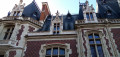
From the heart to the outskirts of the capital, an urban route that starts at the Pont Neuf (the oldest bridge in Paris), the Cour Carrée and the Louvre Pyramid, and the Tuileries Garden. We then reach the luxurious Opéra district. Finally, we cross Haussmannian Paris, with a few twists and turns in Parc Monceau along the way.
From Île de la Cité to Porte de Clignancourt
 4.98 mi
+299 ft
-246 ft
2h 35
Easy
Departure from Paris
4.98 mi
+299 ft
-246 ft
2h 35
Easy
Departure from Paris
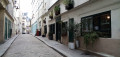
From the heart to the outskirts of the capital, an urban route that crosses the Les Halles and Beaubourg districts, climbs the Butte Montmartre and descends to Clignancourt. Shopping streets, alleys, passageways and stairways await you.
From Île de la Cité to Porte d'Auteuil
 6.73 mi
+49 ft
-33 ft
3h 10
Moderate
Departure from Paris
6.73 mi
+49 ft
-33 ft
3h 10
Moderate
Departure from Paris
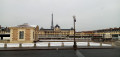
From the heart to the outskirts of the capital, an urban route that winds through the narrow streets of the 6th arrondissement before reaching the Church of Saint-Germain-des-Prés and its Romanesque bell tower. We then cross the 7th arrondissement and its wide avenues, as well as the Seine, after passing through Île des Cygnes, at the end of which stands a replica of the Statue of Liberty. The route ends in the 16th arrondissement with a few mansions and Art Nouveau buildings.
From Île de la Cité to Porte de Gentilly
 3.78 mi
+151 ft
-102 ft
1h 50
Easy
Departure from Paris
3.78 mi
+151 ft
-102 ft
1h 50
Easy
Departure from Paris
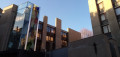
From the heart to the outskirts of the capital, this urban route crosses the 5th arrondissement, passing through ancient streets and past several churches. It then climbs the Butte aux Cailles and its streets decorated with murals. At the end of the hike, you can stroll through the picturesque Cité Florale.
From Île de la Cité to Porte de Charenton
 4.51 mi
+69 ft
-33 ft
2h 10
Easy
Departure from Paris
4.51 mi
+69 ft
-33 ft
2h 10
Easy
Departure from Paris
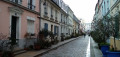
From the heart to the outskirts of the capital, an urban route that first crosses the Île de la Cité and the Île Saint-Louis. It continues along the banks of the Seine and then the Port de l'Arsenal. After passing by the Gare de Lyon, the route briefly follows the Coulée verte René Dumont. The walk ends via Square Saint-Éloi, the former Gare de Reuilly and Place Félix Éboué with its lion fountain.
Green spaces in the 1st and 2nd arrondissements of Paris
 2.54 mi
+157 ft
-115 ft
1h 20
Easy
Departure from Paris
2.54 mi
+157 ft
-115 ft
1h 20
Easy
Departure from Paris
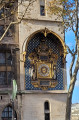
The1st arrondissement, modest in size, represents the historic and geographical heart of Paris; today, it is a district of museums and luxury boutiques. The Tuileries and Louvre Gardens, as well as the Palais Royal, managed by the State, make up for the limited number of municipal squares.
The 2nd arrondissement, the smallest in Paris, is livelier and more commercial. Formerly a financial district, it is now bustling with covered arcades, restaurants and businesses. The atmosphere is dynamic, friendly and very urban. It has only two municipal squares.
The wildlife of the Opéra and Europe districts
 3.66 mi
+108 ft
-33 ft
1h 45
Easy
Departure from Paris
3.66 mi
+108 ft
-33 ft
1h 45
Easy
Departure from Paris
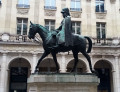
From the Louvre Museum to Place de Clichy, via Place de l'Opéra and Saint-Lazare station, this urban route explores the 1st, 2nd and 8th arrondissements of Paris in search of animal representations.
From the Louvre to the Bastille via the Tour Saint-Jacques
 4.01 mi
+10 ft
-3 ft
1h 50
Easy
Departure from Paris
4.01 mi
+10 ft
-3 ft
1h 50
Easy
Departure from Paris
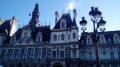
An urban route steeped in history, where 16th- and 17th-century buildings stand alongside modern architecture. This is how you will go from the Palais Royal to the Forum des Halles, from the Church of Saint-Eustache to the Centre Beaubourg, and from the Tour Saint-Jacques to the Opéra Bastille. The itinerary winds its way through streets, alleys, passageways and gardens, offering visitors the chance to discover a rich and diverse heritage.
Green spaces in Paris’s 6th arrondissement
 5.04 mi
+171 ft
-200 ft
2h 30
Easy
Departure from Paris
5.04 mi
+171 ft
-200 ft
2h 30
Easy
Departure from Paris
The sixth arrondissement of Paris is emblematic of Parisian elegance. A chic neighbourhood with legendary cafés, it has historical links to writers, philosophers and artists. It is as renowned for its intellectual heritage as it is for its architectural heritage, with its museums, art galleries and prestigious cultural institutions.
It boasts a dozen public squares and municipal gardens, including the famous Jardin du Luxembourg, which is managed by the state and will not be discussed here.
From Châtelet to Austerlitz
 4.21 mi
+138 ft
-135 ft
2h 05
Easy
Departure from Paris
4.21 mi
+138 ft
-135 ft
2h 05
Easy
Departure from Paris
A walk between Châtelet and Austerlitz, along picturesque streets rich in Parisian history with many points of interest: gardens, monuments, building facades, etc. Depending on your pace and curiosity, the route can take between two and four hours.
The Bestiary of the Louvre, the Tuileries and the Orsay
 5.05 mi
+26 ft
-26 ft
2h 20
Easy
Departure from Paris
5.05 mi
+26 ft
-26 ft
2h 20
Easy
Departure from Paris
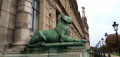
This urban route focuses on the heart of Paris, in a neighbourhood rich in world-famous museums, exploring depictions of animals. In the Tuileries Garden, these are particularly numerous and offer a conflicting view of the animal world, undoubtedly that of their time.
The bestiary of Paris
 146.53 mi
+2,999 ft
-2,625 ft
33 days
Easy
Departure from Paris
146.53 mi
+2,999 ft
-2,625 ft
33 days
Easy
Departure from Paris
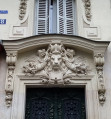
This guide brings together around thirty urban routes that allow you to discover representations of animals in the capital: sculptures, building decorations, murals, etc.
Sundials and astronomical curiosities in Paris
8.94 mi
+144 ft
-23 ft
4h 15
Moderate
Departure from Paris
A long urban trail on the theme of sundials and sites related to astronomy scattered throughout Paris: the Paris meridian, observatories, gnomons, etc. Best done on a sunny day so you can read the time along the way! The sundials are often high up, sometimes hidden by trees that have grown... you may have to search hard to find them.
From Paris to Bry-sur-Marne via the Bois de Vincennes and along the Marne
 15.57 mi
+177 ft
-154 ft
7h 20
Difficult
Departure from Paris
15.57 mi
+177 ft
-154 ft
7h 20
Difficult
Departure from Paris
In the eastern suburbs of Paris, along the route taken by Saint Columbanus, we find all the signs of the Columbanian influence that shaped our countryside and landscapes.
The first part of our 26km route through the Île-de-France region is flat, allowing us to take the time to visit the jewels revealed by the churches of Paris, as well as the towns that witnessed the birth of the monasteries that punctuate the route.
A short tour of the Marais
 2.68 mi
+10 ft
-10 ft
1h 15
Easy
Departure from Paris
2.68 mi
+10 ft
-10 ft
1h 15
Easy
Departure from Paris
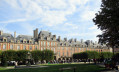
There's no need to wear wellies to explore the Marais. The streets are well paved and usually dry. You'll come across mansions and churches as you stroll through charming narrow streets.
Women's march of 5 October 1789: from Paris City Hall to Sèvres
 8.88 mi
+89 ft
-82 ft
4h 10
Moderate
Departure from Paris
8.88 mi
+89 ft
-82 ft
4h 10
Moderate
Departure from Paris
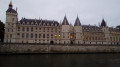
The first section of this women's march of 5 October 1789 follows fairly closely what we know today about the route taken at the time. Starting from the centre of Paris, we follow the course of the Seine and then cross the districts of Auteuil and Billancourt. We cross the Ile Seguin, where the Vieux Pont de Sèvres bridge used to be, and end up in Sèvres, where the 1789 procession made a stop. All along the way, there is a rich heritage to discover.
In the footsteps of the French Revolution
 21.14 mi
+1,020 ft
-712 ft
4 days
Moderate
Departure from Paris
21.14 mi
+1,020 ft
-712 ft
4 days
Moderate
Departure from Paris
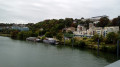
Here are four hikes that take in iconic locations from the French Revolution. One of them takes place in Versailles, where it all began in May 1789. Another takes place in Paris, which was the scene of many events, including the storming of the Bastille on 14 July 1789. The other two connect Paris to Versailles, attempting to reproduce the women's march of 5 October 1789.
The wildlife of Les Halles and Le Marais
 4.62 mi
+13 ft
-13 ft
2h 10
Easy
Departure from Paris
4.62 mi
+13 ft
-13 ft
2h 10
Easy
Departure from Paris
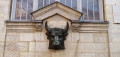
Discover numerous animal representations in the first arrondissements of Paris. The lively Les Halles district has seen modern architectural creations replace the former "belly of Paris". The Marais district still features many mansions built in the 17th century.
More walks in Malakoff
Select a point of interest below: