Country:
 City:
City:


Starting point and access: Michel-Ange-Molitor station.
- Metro – Lines 9 and 10. Take the only exit.
- Bus – Route 62.
The main places and buildings of interest are indicated in italics within the body of the description.
(S) As you exit the metro station, turn round and follow Rue Molitor towards the Church of Saint-François and the Jean Bouin Stadium. Take thefirst left onto Rue Erlanger. At the traffic lights, cross Boulevard Exelmans in two stages and follow it to the left. Take thefirst right onto Rue Michel-Ange. AtNo. 77bis is the house where Pierre Brossolette was born. Then turn left into Rue Claude Lorrain and walk past the entrance to Auteuil Cemetery.
Take thefirst right onto Avenue de la Frillière. At No. 11 is a school built in 1895 under the supervision of the architect Hector Guimard. At the end of the street, turn left onto Rue Parent de Rosan (there aretwo private villas on the left-hand side). At the end, turn left onto Rue Boileau. At the junction, continue straight ahead along a pedestrianised section of this street. You’ll emerge onto Boulevard Exelmans; follow it to the right (at No. 39, the Atelier Carpaux, dating from 1895 and designed by Hector Guimard).
(1) At the traffic lights, turn left to cross Boulevard Exelmans again. Continue along Rue Chardon-Lagache and take thefirst left, Rue de Musset. At the end (Gustave Eiffel’s former aerodynamics laboratory), rejoin Rue Boileau and follow it to the right. Walk past the embassies of Vietnam (no. 60) and Algeria (no. 40). Cross Rue Molitor and walk past Boileau’s former house (no. 26).
At the next junction, turn left onto Rue d’Auteuil. Opposite a small triangular square, veer to the right and then turn right onto Rue Jean de La Fontaine. Take thefirst right onto Rue Bastien Lepage. At the junction, continue straight ahead, slightly to the right, into Rue Leconte de Lisle (at No. 33, there is a gate with an atalante and a caryatid). Turn immediately left into Rue des Perchamps. At the Forkin the road (opposite an Art Deco building dating from 1929–1932), continue right along Rue des Perchamps. At the end, rejoin Rue La Fontaine and follow it to the right for a few metres.
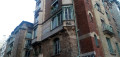
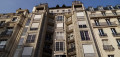
(2) Then turn left into Rue George Sand. At the traffic lights, cross Avenue Mozart, then Rue de la Source, and walk up Rue Henri Heine. Walk past the former Auteuil telephone exchange on your right and cross Rue Jasmin. Walk past a building from 1926 designed by Hector Guimard (No. 18) and then some buildings from 1925 designed by Jean Boucher (Nos. 24 and 26).
At the end of the street, turn left and head for the entrance to Square du Docteur Blanche atNo. 53bis on the street of the same name. If it is open (private road), you can visit the Le Corbusier Foundation at the far end of the square. Retrace your steps to the junction with Rue Henri Heine and continue straight on along Rue du Docteur Blanche. Cross Rue de l’Yvette on the right-hand side and you’ll reach the start of Rue Mallet-Stevens.
(3) Turn right into this cul-de-sac to admire the reinforced concrete buildings, all of which were designed by the architect Robert Mallet-Stevens. Retrace your steps.
(3) Continue along Rue du Docteur Blanche until you reach Rue de l’Assomption, then turn right onto it (Notre-Dame Church on your left). Just before a set of traffic lights, turn right under a portico and, at the Fork in the road shortly afterwards, turn right between the shops. You’ll come out onto Rue Serge Porkofiev; walk round Place du Préfet Claude Érignac in either direction and join Avenue Mozart.
Cross the avenue at the pedestrian crossing and continue straight ahead onto Avenue Adrien Hébrad. Go round Place Rodin on the left (with the artist’s sculpture in the centre) and take thesecond exit onto Avenue du Général Dubail. At the end, you’ll come to Rue de l’Assomption (with Lycée Molière opposite on the left); follow it to the right, then turn right onto Avenue Anne-Eugénie Milleret de Brou. At the end, follow Avenue du Recteur Poincaré to the left.
(4) At the traffic lights, turn left into Rue Jean de La Fontaine. At number 14, pass by the foot of the Castel Baranger, an Art Nouveau building designed by Hector Guimard between 1895 and 1899. At the junction, cross Boulevard de Boulainvilliers and follow Rue Raynouard. Walk past the Maison de la Radio et de la Musique on your right , designed by the architect Henry Bernard and opened in 1963. Cross Rue du Ranelagh, head uphill and take thesecond left, Rue des Vignes.
Then turn right into Rue Alfred Bruneau. Cross Place Chopin and continue straight ahead into Rue Lekain. At the end, turn right onto Rue de l’Annonciation. On your left, you’ll pass a building with rounded features, then the Church of Notre-Dame de Passy, whose tympanum is adorned with a depiction of the Annunciation.
(5) At the end of the street, rejoin Rue Raynouard; follow it to the right, passing the house of the writer Honoré de Balzac below on your left. Then, between numbers 51 and 55, walk past a building designed by the architects Auguste and Gustave Perret. At the corner of this building, go down a flight of steps on the left. At the bottom, turn left into a cobbled street and walk past the foot of the building you saw earlier. After the end of the wall of Balzac’s former property, the street narrows.
At the end, continue straight ahead onto Avenue Marcel Proust. At the corner of No. 14, climb the steps on the left leading up to Avenue du Parc de Passy. At the top, turn right onto Rue Raynouard. Note, at No. 20 , Square Raynouard, designed in 1913 by the architect Albert Vêque, and, between Nos. 17 and 13, an Art Deco building designed in 1931 by the architects Marcel Julien and Louis Duhayon. Immediately afterwards, head down a narrow staircase on the right, Rue des Eaux. At the bottom (at No. 12, a building constructed by François-Adolphe Bocage in 1911), turn left and you will immediately reach the entrance to Square Charles Dickens.
(6) If the gate is open (depending on the Wine Museum’s opening hours), go through it for a brief exploration of the square, which ends in a dead-end flight of steps. Retrace your steps.
(6) On leaving the square, continue straight on along Rue des Eaux (at No. 5, an Art Nouveau building from 1913 designed by Albert Vêque). Take thefirst left into Square Alboni. Pass under the elevated metro line and, just after that, you have two options:
- Take the escalator on the left, walk past the metro station entrance and take a second escalator.
- As shown on the map, carry on straight ahead, then turn left twice to walk uphill around the block via Square Alboni.
In both cases, you’ll emerge onto Rue Marietta Alboni; follow this street – straight ahead if you took the escalators, or to the right if you stayed in the square. Note the ‘lantern’ buildings from 1899, all designed by the architect Louis Dauvergne. At Place du Costa-Rica, turn right onto Boulevard Delessert. Between nos. 17 and11bis are buildings dating from 1910 to 1913, designed by the architect Alebert Sélonier.
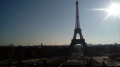
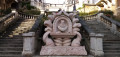
(7) Immediately afterwards, head down a staircase-like street on the right: Rue Beethoven. At the bottom (at No. 7, a building housing artists’ studios, dating from 1913 and designed by the architect Georges Thirion), turn left into Rue Chardin. At the end, turn left again into Rue Lenôtre. Then cross Boulevard Delessert, follow it to the left for a few dozen metres and climb the steps on the right, which lead up to Avenue de Camoëns. At the top (a lovely view of the Eiffel Tower if you turn round), continue along a pedestrian path.
You’ll come out onto Rue Benjamin Franklin; cross it at the pedestrian crossing and follow it to the right. At No. 25 is a building from 1904 by Pierre Humbert, and atNo. 25bis is a building from 1903 by Auguste and Gustave Perret. When the street splits into two branches, stay on the left-hand one, which is cobbled. Cross Rue Vineuse on the left-hand side, then Avenue Paul Doumer. Turn right at the foot of the wall of Passy Cemetery, pass a metro station on your right and arrive at Place du Trocadéro.
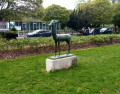
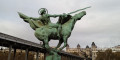
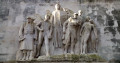
(8) Turn left to quickly reach the monument to the soldiers of the First World War, created in 1956 by the sculptor Paul Landowski. Retrace your steps.
(8) Cross Boulevard Paul Doumer again, turn left and walk past the entrance to the Musée de la Marine and the Musée de l’Homme. Then turn right and cross the Esplanade des Droits de l’Homme to enjoy a lovely view of the Eiffel Tower and the Seine. Retrace your steps, turn right at the foot of the Théâtre de Chaillot and you’ll immediately reach an exit from the Trocadéro metro station (E).
To get back home:
- Metro – Lines 6, 9.
- Bus – Routes 22, 30, 32, 63.



 Visorando Member
 Moderate