Women's march of 5 October 1789: from Paris City Hall to Sèvres

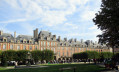
The first section of this women's march of 5 October 1789 follows fairly closely what we know today about the route taken at the time. Starting from the centre of Paris, we follow the course of the Seine and then cross the districts of Auteuil and Billancourt. We cross the Ile Seguin, where the Vieux Pont de Sèvres bridge used to be, and end up in Sèvres, where the 1789 procession made a stop. All along the way, there is a rich heritage to discover.

This walk is part of a multi-day hike: In the footsteps of the French Revolution

Details

2550409
Creation:
Last update:
Last review:
  • Walking
    Activity: Walking
  • ↔
    Distance: 14.29 km
  • ◔
    Average duration: 4h 10 
  • ▲
    Difficulty: Moderate

  • ⚐
    Back to start: No
  • ↗
    Ascent: + 27 m
  • ↘
    Descent: - 25 m

  • ▲
    Highest point: 62 m
  • ▼
    Lowest point: 26 m
  • ⚐ Country: France
  • ⚐ District: Paris (75000)
  • ⚑
    Start: N 48.857032° / E 2.351851°
  • ⚑
    End: N 48.822214° / E 2.23146°
  • ❏
    IGN map(s): Ref. 2314OT
  • Hour-by-hour weather

Photos

Description of the walk

Starting point and access: Place de l'Hôtel de Ville in Paris.
- Metro - Lines 1 and 11, Hôtel de Ville station. Take exit 5 Hôtel de Ville and, at the end of the corridor, climb the stairs on the right.
- Bus - Lines 38, 67, 69, 72, 75, 76, 96.

(S) Head south towards the Seine (Notre-Dame tower is clearly visible). With the Hôtel de Ville on your left, cross the square diagonally to the right. Go around a fountain on the right, then cross the Quai de l'Hôtel de Ville at the pedestrian crossing. Follow the quay to the left and note the statue of Étienne Marcel (first Mayor of Paris) in a garden on the left.

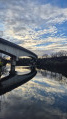
(1) At the traffic lights, turn sharply right to go down the old Georges Pompidou riverside road, now reserved for pedestrians. Go straight ahead, walk along the Seine on your left and pass successively under the Pont d'Arcole, the Pont Notre-Dame, the Pont au Change (note the Conciergerie on the opposite bank) and the Pont Neuf.

(2) When the paved road turns right into a tunnel, continue straight ahead on the cobbled riverbank. Stay as close as possible to the Seine and pass successively under the Pont des Arts (metal), the Pont du Carrousel and the Pont Royal (note the façade of the Musée d'Orsay on the opposite bank).

(3) Under the Passerelle Léopold Sédar Senghor, climb the stairs on the right. At the top, turn right to cross the Quai Aimé Césaire at the pedestrian crossing and enter the Jardin des Tuileries.

Ignore the staircase on the left and continue straight ahead to the wide central path, which offers beautiful views of the Arc de Triomphe du Carrousel and the Louvre Museum on the right, and the Obelisk of Concorde, the Arc de Triomphe de l'Étoile and the towers of La Défense on the left.

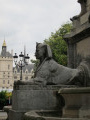
Follow the central path to the left. Go around the large octagonal pond on the left or right and note the sculptures representing allegories of rivers and streams. Head towards the exit and take the gate on the right.

(4) Cross Place de la Concorde in several stages, using the pedestrian crossings at the traffic lights ( traffic is usually heavy). On the central reservation, pass between the obelisk and the Fountain of the Rivers. On the other side of the square, at the foot of one of the sculptures known as Les Chevaux de Marly, turn left to cross the bottom of the Avenue des Champs Élysées. Walk up the avenue to the right for about 50 metres.

At the Wallace fountain, turn left, enter an unfenced garden and head towards a kiosk. Leave the kiosk on your left, then the Fontaine de Diane fountain and a restaurant on your right. You will come to a small avenue; follow it to the right. At the end, turn right onto Avenue Dutuit. Cross at the pedestrian crossing and walk along the right-hand side of a lawn with a pond. Go around the statue of Clemenceau on the right and cross the square at the pedestrian crossings.

(5) Turn left and walk past the statue of General de Gaulle. Take Avenue du Général Eisenhower and walk between the Grand Palais (on your left) and Square de Berlin (on your right). Cross Avenue Franklin Roosevelt and follow Rue François Goujon. Go around Place François Ier and continue straight ahead on Rue François Goujon. Note the Armenian Church of Saint-Jean-Baptiste on the left, then the Chapel of Notre-Dame de la Consolation. At the end, cross Place de la Reine Astrid (monument commemorating Belgium's gratitude to France).

(6) Go around Place de l'Alma on the right: cross Avenue Montaigne, Avenue Georges V and Avenue du Président Wilson in succession. Follow the latter to the right and, at the crossroads that quickly appears, turn left, still on Avenue du Président Wilson, towards the Trocadéro.

Continue straight ahead, slightly uphill, and pass between the Palais de Tokyo (on your left) and the Palais Galliera (on your right). Go around Place d'Iéna on the left and cross the avenue of the same name. Walk along the left side of the Economic, Social and Environmental Council building, then the Palais de Chaillot. This will take you to Place du Trocadéro (equestrian statue of Marshal Foch).

(7) Then turn left and cross the Esplanade des Droits de l'Homme to the viewpoint facing the Eiffel Tower. Retrace your steps briefly and go down a staircase (on the left when you have your back to the tower). Pass by the foot of an imposing statueof Hercules holding a bull by the horns and go down another staircase. Continue straight ahead along a wide gravel path and walk alongside the Musée de l'Homme building on your right.

At the corner of this building (bust of Paul Valéry), turn right. At the fork that immediately appears, take the left path and cross an artificial river. On the left, ignore the first staircase but climb the second (red and white arrow). At the top, take a small gate on the right to leave the garden.

(8) Then follow Rue Benjamin Franklin to the left. At the end, go around Place du Costa Rica on the left, cross Boulevard Delessert and follow Rue de l'Alboni.

At the Passy metro station, take one of the two staircases on either side of the station. At the bottom, follow the paved footpath under the metro bridge (which is elevated here). Take the footbridge over Avenue du Président Kennedy. At the exit, first turn right then left to take the Pont de Bir Hakeim on the right-hand pavement.

(9) In the middle of the bridge (marked "Viaduc de Passy 1903-1905"), take the stairs on the right down to the narrow Ile des Cygnes. Continue straight ahead along Allée des Cygnes and pass under a railway bridge.

As you approach the Pont de Grenelle, where the main path climbs upwards, take a gravel path on the left. Go down a staircase and then a flight of steps and pass under the bridge. Reach the tip of the island where the replica of the Statue of Liberty stands.

(10) Continue around the tip, pass under the bridge again (gym equipment, small climbing walls) and climb a staircase. Then climb another staircase on the right. At the top, take the footbridge on the right that leads to Pont de Grenelle. Follow the bridge to the left.

At the end, turn right to cross at the traffic lights. Turn right above the railway line and immediately descend to the left towards the Port de Javel. Continue straight ahead. As you approach the Pont Mirabeau, leave the tarmac road that goes under the bridge on the right and take the cobbled path that goes up to it, level with the Javel station.

(11) Take the bridge on the right to cross the Seine again and, at the end, cross Quai Louis Blériot. Immediately cross Rue de l'Amiral Cloué on the left and follow it to the right. At the crossroads, cross Avenue de Versailles and take Rue Mirabeau diagonally to the left. Continue straight ahead, cross Rue Wilhem on the left and walk along the left-hand side of Sainte-Périne Hospital.

(12) At the crossroads, turn left and follow Rue Chardon Lagache, still alongside the hospital (note the Art Deco building at No. 16 with a bas-relief depicting scenes of agricultural work). At the next traffic lights, turn right onto Rue Jouvenet. At the end, turn left onto Rue Boileau. Then take thefirst left, Rue de Musset.

At the crossroads, rejoin Rue Chardon Lagache, follow it to the right and cross Boulevard Exelmans in two stages. At the end of the street, turn right onto Avenue de Versailles. Continue straight ahead until you reach Place de la Porte de Saint-Cloud (central fountains).

(13) Go around the square on the right, cross Boulevard Murat and walk along the front of Sainte-Jeanne de Chantal Church. At the foot of the bell tower, turn left to cross at the pedestrian crossing. Immediately turn right, cross the access road to the bus station and turn left. Walk along a playground on your right and, before the metro entrance, climb the ramp on your right.

At the top, take the footbridge over Boulevard Périphérique (note the silhouette of the Parc des Princes stadium on your right). At the end of the footbridge, go through a gate on your right and enter Square Coquoin. Go through a tunnel and, at the exit, take the middle path at the triple fork. Go through another gate to leave the square and cross Avenue Ferdinand Buisson at the pedestrian crossing. Go under a porch and follow Rue du Chemin Vert to the end.

Then turn left to cross Avenue Édouard Vaillant at the traffic lights. Immediately turn right, cross Rue Thiers and follow the avenue towards Place Marcel Sembat. Just before you reach it, turn left into Passage Legrand.

(14) At the end, turn right to cross Boulevard de la République at the pedestrian crossing and immediately turn diagonally into Rue du Vieux Pont de Sèvres. At the next traffic lights, cross Boulevard Jean-Jaurès. Continue straight ahead and walk along the Billancourt market on your right and then the municipal swimming pool on your left. Then walk along Place Bir Hakeim on your left.

When you reach Rue Castéja (on your right), cross Rue du Vieux Pont de Sèvres (pedestrian crossing) and then turn right to cross Rue Yves Kermen. Immediately cross Cours de l'Ile Seguin on your right and follow the pedestrian path on your left, which runs parallel to a cycle path, towards the Seine Musicale. Continue straight ahead and cross several perpendicular streets (pedestrian crossings). Then take the Pont Renault bridge towards the Seine Musicale and step onto the Ile Seguin.

From there, follow the signs for "T2 Brimborion" (tram station). For a return journey by metro, see the alternative route in the practical information section.

(15) Continue straight ahead, leaving the Seine Musicale on your right, and take the Passerelle Sud. At the end, go down the stairs on the left. At the bottom, ignore the small tunnel on the right and go straight ahead onto a concrete path with the Seine on your left. After about 200 metres, climb the stairs on the right. Cross the street at the traffic lights, cross a small car park and climb one last set of stairs to reach the platform of the Brimborion tram station (E).

To return home:
- Tram - Line T2, towards La Défense and Pont de Bezons (immediate access) or Porte de Versailles (cross the track carefully at the designated crossing).

Waypoints

  1. S : km 0 - alt. 35 m - Paris City Hall
  2. 1 : km 0.29 - alt. 33 m - Access to Georges Pompidou Park - Rives de - Seine [la]
  3. 2 : km 1.27 - alt. 29 m - Berge - Tunnel junction
  4. 3 : km 2.45 - alt. 28 m - Passerelle Léopold Sédar Senghor
  5. 4 : km 3.05 - alt. 32 m - Place de la Concorde
  6. 5 : km 3.89 - alt. 33 m - Place Clemenceau
  7. 6 : km 4.81 - alt. 32 m - Place de l'Alma
  8. 7 : km 5.99 - alt. 60 m - Place du Trocadéro
  9. 8 : km 6.47 - alt. 62 m - Rue Benjamin Franklin
  10. 9 : km 7.12 - alt. 35 m - Ile des Cygnes - Pont de Bir-Hakeim
  11. 10 : km 7.97 - alt. 28 m - Pont de Grenelle - Statue de la Liberté (maquette répliquée)
  12. 11 : km 8.82 - alt. 32 m - Mirabeau Bridge - Gare de Javel
  13. 12 : km 9.63 - alt. 38 m - Crossroads - Rue Chardon Lagache
  14. 13 : km 10.98 - alt. 37 m - Porte de Saint-Cloud
  15. 14 : km 12.33 - alt. 35 m - Rue du Vieux Pont de Sèvres
  16. 15 : km 13.77 - alt. 34 m - Ile Seguin
  17. E : km 14.29 - alt. 37 m - Sèvres - Brimborion Tram Station

Notes

Good trainers or low-cut walking shoes are sufficient for this urban route.

There are a few toilets and drinking fountains along the route, shown on the map. There are also numerous bars, restaurants and shops along the way.

Public garden opening hours:
Tuileries Garden
- Opening hours: 7:30 a.m. from October to March; 7:00 a.m. from April to September.
- Closing times: 7.30pm from October to March; 9pm in September, April and May; 11pm from June to August.
Champs-Élysées Gardens - Open 24 hours a day.
Trocadéro Gardens - Open 24 hours a day.

Alternatives:
Return by metro - At the end of Cours de l'Ile Seguin, just before (15), do not cross the Seine via the Pont Renault bridge. Turn right to return to Pont de Sèvres metro station (terminus of line 9; several bus lines).
In the event of flooding along the riverbanks, between (S) and (3) and between (9) and (11), stay on the higher quays.
It is easy to interrupt the hike along the way if desired, as the route passes close to numerous underground stations (lines 1, 6, 9, 10) and several RER stations (line C).

Walk completed by the author on 12 September 2019.

Worth a visit

Historical note:
It was against a backdrop of bread shortages that thousands of women gathered at Place de Grève (now Place de l'Hôtel de Ville) on the morning of 5 October. They set off for Versailles at around 10 a.m. to see the king, demand bread and insist that he leave Versailles for Paris. They arrived in Versailles in the late afternoon, undoubtedly exhausted. The route they took through Paris and its suburbs is fairly well known: the banks of the Seine, Place de la Concorde (then called Place Louis XV), the lower Champs Élysées, Auteuil, Billancourt, Pont de Sèvres (which at the time was located at the downstream tip of Île Seguin and crossed the Seine in two stages) and Sèvres, where the procession stopped. For more details, see the Wikipedia article on the events of 5 and 6 October 1789, from which most of the above information is taken.

From the Hôtel de Ville (S) to the Passerelle Léopold Sédar Senghor (3):
- Paris City Hall. Seat of the municipal administration since the 14th century, it was burned down in 1871 during the Commune and rebuilt identically between 1874 and 1882. It was on the square in front of the City Hall, known at the time as Place de Grève, that many Parisian women gathered on 5 October 1789 before setting off on their march to Versailles.
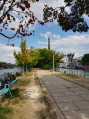
- A pleasant walk along the pedestrianised riverside path, passing under several beautiful Parisian bridges.
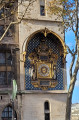
- View, on the opposite bank, of the Conciergerie, former residence of the kings of France (13th century). It was converted into a prison at the end of the 14th century, a role that was very important during the French Revolution. It was here that the deposed queen Marie-Antoinette was imprisoned. Today, the Conciergerie houses part of the Paris Law Courts.
- View, opposite bank, of the Musée d'Orsay, housed in the former Orléans railway station and inaugurated in 1986.

Tuileries Garden, between (3) and (4):
- It was at the Tuileries Palace (destroyed by fire in 1871) that the king and his family took up residence on 6 October 1789.
- Ponds.
- Numerous statues: characters from Greek mythology, animal scenes, allegories, contemporary sculptures, etc.

Place de la Concorde (4):
- Around the square: grand 18th-century hotels.
- On the outer circle - Street lamps with columns decorated with ancient galley rostra. Statues representing certain cities in France: Brest, Rouen, Lille, Strasbourg, Lyon, Marseille, Bordeaux and Nantes.
- On the central platform - Fountain of the Rivers to the north and Fountain of the Seas to the south. Luxor Obelisk in the centre (13th century BC, gifted by Egypt to France in the early 19th century). Standing 23 metres tall, its hieroglyphics glorify Pharaoh Ramses II.

From Place de la Concorde (4) to Place de l'Alma (6):
- Gardens surrounding the Petit Palais.
- Statues of Georges Clemenceau and General de Gaulle, on either side of (5).
- Grand Palais. Built in 1897 for the 1900 World's Fair, it features a monumental 240-metre-long nave topped by a large glass roof. Listed as a historic monument, it regularly hosts world-renowned art exhibitions.
- Armenian Cathedral of Saint John the Baptist (1904), 15 Rue Jean Goujon. At the foot of the cathedral is a small monument paying tribute to the Armenian volunteers who joined the French army in 1914-1918 and died for France.
- Monument of Belgium's gratitude to France (1923), in reference to the 1914-18 war during which Belgium was almost entirely occupied.

From Place de l'Alma (6) to Rue Benjamin Franklin (8):
- Palais de Tokyo and Musée d'Art Moderne de la Ville de Paris, Avenue du Président Wilson.
- Palais Galléria, opposite on the same avenue.
- Place du Trocadéro (7) (equestrian statue of Marshal Joffre).
- Esplanade du Trocadéro, also known as Esplanade des Droits de l'Homme, in memory of the signing of the Universal Declaration of Human Rights on 10 December 1948 in the Palais de Chaillot. View of the Seine and the Eiffel Tower on the opposite bank.
- Trocadéro Gardens: sculptures, ponds, etc.
- Musée de l'Homme.

From Rue Benjamin Franklin (8) to Pont Mirabeau (11):
- Clemenceau Museum, 8 Rue Benjamin Franklin, in the apartment where "The Tiger" lived from 1896 onwards.
- Superimposed bridges (9): Bir Hakeim road bridge and Passy viaduct (1905) for the elevated metro.
- Ile des Cygnes, a narrow, long artificial strip of land in the middle of the Seine.
- Replica of the Statue of Liberty (1889), at the downstream tip of the Ile des Cygnes (10). It is a copy reduced to a quarter of the size of the original statue. The original was created by French sculptor Auguste Bartoldi (1834-1904), gifted by France to the United States on the occasion of the centenary of their independence, and inaugurated in 1886. There are many replicas of this statue, including in Paris. The one on Ile des Cygnes was donated by the American community in Paris and inaugurated in 1889. It faces New York Harbour, in accordance with Bartoldi's wishes. The plaque on the statue bears two dates, 4 July 1776 and 14 July 1789, in reference to the respective national holidays of the two countries.

From the Pont Mirabeau (11) to the Porte de Saint-Cloud (13):
- Pont Mirabeau, under which, since Guillaume Apollinaire's verses in his 1913 collection Alcools, we know that "the Seine flows"... The construction of the 173-metre-long bridge was completed in 1896. The two piers are decorated with allegorical statues, with the downstream statue on the right bank representing the city of Paris.
- Art Deco building, 16 Rue Chardon Lagache, just after (12), with a bas-relief depicting scenes of agricultural work.
- Gustave Eiffel's aerodynamic laboratory, 67 Rue Boileau.

From the Porte de Saint-Cloud (13) to Sèvres (E):
- Fountains (1937) in the centre of Place de la Porte de Saint-Cloud, designed by Paul Landowski (1875-1961).
- Quartier du Trapèze, in Boulogne-Billancourt, from Rue Yves Kermen to Ile Seguin. This neighbourhood, which owes its name to its geometric shape, was long occupied by Renault factories, now demolished. It has undergone extensive construction and offers a wide variety of architectural styles.
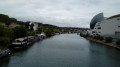
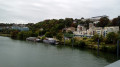
- Ile Seguin (15). The island was purchased by Louis Renault at the beginning of the 20th century. An assembly plant was built there, covering its entire area (a dozen hectares), and operated from 1929 to March 1992. After numerous political and administrative twists and turns, construction work on Ile Seguin began in 2014.
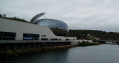
- La Seine Musicale (2017). This concert hall is the first building to be constructed on Seguin Island since the closure of the Renault factories.

Reviews and comments

4.7 / 5
Based on 6 reviews

Reliability of the description
5 / 5
Ease of following the route
4.7 / 5
Route interest
4.5 / 5
Marilise
Marilise

Overall rating : 4.7 / 5

Date of your route : Aug 25, 2025
Reliability of the description : ★★★★★ Very good
Ease of following the route : ★★★★☆ Good
Route interest : ★★★★★ Very good
Very busy route : No

A wonderful discovery of Paris with many monuments along the way.
The end of the walk was less interesting.
Very accurate information, well done.

Machine-translated

y.yvon
y.yvon

I loved this unexpected walk, which was a little longer than expected, but every extra kilometre was pure joy.

Machine-translated

VaPiano
VaPiano

Overall rating : 4.3 / 5

Date of your route : Sep 15, 2024
Reliability of the description : ★★★★★ Very good
Ease of following the route : ★★★★☆ Good
Route interest : ★★★★☆ Good
Very busy route : Yes

This route takes you through a wide variety of Parisian neighbourhoods, from historic Paris to the new districts around Île Seguin. While the points of interest vary, it is enjoyable to follow in the footsteps of the women of 1789! Some sections are a bit tiring as they are very urban, but overall the route is very well chosen. Thank you to its designer!

Machine-translated

Maury BUCHERE
Maury BUCHERE

Overall rating : 4.7 / 5

Date of your route : Jun 20, 2023
Reliability of the description : ★★★★★ Very good
Ease of following the route : ★★★★★ Very good
Route interest : ★★★★☆ Good
Very busy route : Yes

A very pleasant route and a lovely way to discover Paris. We set off with a map of Paris to help us find our way around, but it wasn't necessary as the directions were perfect. The only slight issue was finding the Pont de Sèvres underground station, but apart from that, everything was organised down to the last detail. I recommend this walk and the website. What's more, we had good weather on Pentecost.
Thank you to the team who write and manage the walks. I have never been disappointed to date.

Well done, keep up the good work. Thank you.

Machine-translated

weidenfeldm
weidenfeldm

Overall rating : 4.7 / 5

Date of your route : Aug 08, 2022
Reliability of the description : ★★★★★ Very good
Ease of following the route : ★★★★★ Very good
Route interest : ★★★★☆ Good
Very busy route : No

A route taken late in the evening, after the heat of the day, with the sun in full view and the Seine, always the Seine.
Very different Parisian atmospheres: the quays, the Trocadéro, which are very busy with lots of tourists, and finally the 16th arrondissement, which is much quieter.
I would add another curiosity, at 41 Rue Chardon Lagache, just before turning onto Rue Jouvente, the Hôtel Jassedé, built by Guimard.

Machine-translated

Michel George
Michel George

Overall rating : 5 / 5

Date of your route : Sep 01, 2021
Reliability of the description : ★★★★★ Very good
Ease of following the route : ★★★★★ Very good
Route interest : ★★★★★ Very good
Very busy route : No

A historical, urban and, above all, magnificent route: avenues, monuments, gardens, islands, viewpoints... and no crowds on 1 September. TOP!

Machine-translated

MTRP1974
MTRP1974
• Edited:

Overall rating : 5 / 5

Date of your route : May 24, 2020
Reliability of the description : ★★★★★ Very good
Ease of following the route : ★★★★★ Very good
Route interest : ★★★★★ Very good
Very busy route : Yes

Paris without a car during this route, and in good weather too. Lots of people on the quaysides as the gardens and parks were closed. A beautiful route and interesting from a historical point of view.

Machine-translated

Other walks in the area

For more walks, use our search engine .

The GPS track and description are the property of this route's author. Please do not copy them without permission.