Country:
 City:
City:


Our circular route starts and ends at Maubert-Mutualité metro station (line 10). Take exit 2 onto Place Maubert, which leads onto Boulevard Saint-Germain on the odd-numbered side.
(S/E) At the top of the stairs, walk straight on for a few metres and take the first right, Rue de la Montagne Sainte-Geneviève. Cross Rue des Écoles and continue straight ahead. You’ll come to a small square with, on your left, the monumental entrance to the former École Polytechnique. In the centre stands the old Sainte-Geneviève Fountain. Ignore Rue Descartes, which branches off to the left, and turn right into Rue de l’École Polytechnique.
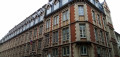
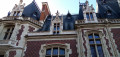
At the next junction, look out for a beautiful ochre-brick building on the right. Turn left onto Rue Valette. Note the large brick school building on the right, then turn into the first street on the left, Rue Laplace. Take note of the porch of the beautiful building at No. 9. Join Rue de la Montagne Sainte-Geneviève and follow it to the right. You’ll end up opposite the Church of Saint-Étienne-du-Mont, on Place de l’Abbé Basset.
(1) On your left, note an old wine merchant’s shop, with its grilles designed to protect the precious wares from thieves. Turn left onto Rue Saint-Étienne-du-Mont. At the end, follow Rue Descartes to the right to reach Rue Clovis. On the gable end of the building opposite, note the large blue tree. Turn left onto Rue Clovis to find yourself opposite the Collège des Écossais, a school for Scottish pupils in Paris who, under the Treaty of the Auld Alliance between Scotland and France at England’s expense (1295), were granted French nationality. Then turn right and head up Rue du Cardinal Lemoine.
(2) At the Fork in the road, opposite a café, continue to the left, still on Rue du Cardinal Lemoine. Ignore Rue Rollin on your left to reach Place de la Contrescarpe. Turn right and cross Rue Mouffetard (a few metres to the right on this street, you’ll see a distinctive old 18th-century red butcher’s façade featuring two gilded oxen) to take Rue Blainville.
Just before the junction with Rue Tournefort (on the left), look out for a beautiful cluster of buildings on the right, surrounding a small courtyard. Carry on straight ahead, passing a small square with the Wallace Fountain on your right. Immediately afterwards, turn left onto Rue Laromiguière. At the next junction, turn left onto Rue Amyot (a few metres to the right is an old country house nestled in a beautiful garden). This will take you onto Rue Tournefort.
(3) Turn right and, at the next junction, follow Rue du Pot de Fer to the left (many restaurants). At the end of the street, at the junction with Rue Mouffetard, look out for the Fontaine du Pot de Fer on your right – one of the fourteen fountains commissioned by Marie de Médicis to distribute, on the Left Bank, the surplus water supplied by the Arcueil aqueduct, which she had built to serve the Palais du Luxembourg.
Turn right and walk down Rue Mouffetard, a very old street as it follows the route of an ancient Gallic track. The houses date from the 17th and 18th centuries. At No. 53, during demolition work in 1938, a hidden treasure of over 3,000 gold coins from the reign of Louis XV was discovered. At number 69, note the wooden sign for the ‘Vieux Chêne’, and at number 81, a 17th-century gateway. At the next junction, leave Rue Mouffetard, pass under an archway on the right and head up Rue Calvin. At Place Lucien-Herr, turn left onto Rue Lhomond.
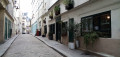
(4) At No. 55, turn left into the Passage des Postes to return to Rue Mouffetard and continue down the hill to the right. There are many old houses here and plenty of activity in this bustling shopping district. At the junction with Rue de l’Arbalète, carry straight on. At No. 122, look out for the beautiful sign reading ‘À la bonne source’ on the wall. Just after that, turn left into Rue Daubenton. Then turn right into Rue de Candolle and, without continuing all the way to Rue Monge, turn right again into Rue Censier to walk past the Church of Saint-Médard and arrive at a roundabout with a fountain. Look out for the beautiful, fully painted façade at No. 134 on Rue Mouffetard, on your right.
At the roundabout, carry on straight ahead onto Rue Édouard Quénu. Cross Rue Claude Bernard and continue straight on along Rue Broca. At number 17, you’ll see a beautiful contemporary building, and other fine, older buildings from number 42 onwards. Then pass under Boulevard de Port-Royal, walk past the Caserne de Lourcine and cross Rue Saint-Hippolyte. Shortly afterwards, you’ll reach Boulevard Arago.
(5) Turn right onto the boulevard and cross it wherever you like, but before you reach Rue de la Glacière. Cross Rue de la Glacière and continue along the boulevard, passing the Cité Fleurie on your left – a complex of 29 artists’ studios built between 1878 and 1880 using materials salvaged from the 1878 World’s Fair. This complex was home to Modigliani, Gauguin, Rodin, and others. It also features some remarkable trees, but is unfortunately closed to the public.
A little further on, turn left onto Rue de la Santé and walk past the famous Parisian prison, which is normally intended to ‘house’ defendants awaiting trial, as well as certain political prisoners. At the next junction, turn left onto Rue Léon-Maurice Nordmann. Further on, walk past the Cité des Vignes at No. 152, then the Cité Verte at No. 147 – two further artists’ communities. Cross Rue de la Glacière again, then ignore two streets on the right before coming out onto Boulevard Arago once more, which you follow to the right for a few metres.
(5) Turn right onto Rue de Julienne. On the right, in the grounds of Broca Hospital, note the ruins of the Abbaye des Cordelières, one of the nine great abbeys of Paris in 1674. Turn left onto Rue Pascal to return to Boulevard Arago and follow it to the right. Pass Rue des Cordelières, then turn right onto Rue Berbier-du-Mets. This street is built over the course of the River Bièvre, which was covered over in 1912.
Turn immediately left onto Rue des Gobelins. Note the beautiful projecting façades at No. 19 (a ‘Mémoire de Paris’ plaque). Turn right into Rue Gustave Geffroy to reach the Hôtel de la Reine Blanche. This fine building, with its mullioned windows, is the remnant of a larger complex built around 1520.
At the end of the street, turn left onto Rue Berbier-du-Mets. On your left is the former Manufacture des Gobelins, with a projecting section that was once the chancel of the chapel. On the right are the Mobilier National’s storage facilities, where all the furniture available to public institutions – such as ministries and embassies – is kept. This building was one of the first to be constructed from reinforced concrete, in 1935. At the end of the street, in a small square, head right towards the entrance to Square René Le Gall.
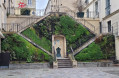
(6) Enter the square and go down the steps. This is where the Jardins des Gobelins used to be, intended for the factory’s employees, situated between the ‘Bièvre vive’ and the ‘Bièvre morte’. Head south-west, then turn left onto Place de la Bergère d’Ivry.
Follow Rue Corvisart to the left. When you reach Boulevard Auguste Blanqui, first turn right then left and pass under the elevated metro line (Corvisart station). Continue along the Eugène-Atget pedestrian passage, which runs beneath a block of flats. Climb a flight of steps and, at the top, turn left then diagonally right into Rue Jonas to leave the garden. Cross Rue des Cinq Diamants and carry on straight ahead. At the junction, follow Rue Samson to the left for a few metres, then turn right onto Rue Simonet.
(7) At the junction with Rue Bobillot, turn right twice and follow Rue de la Butte aux Cailles. Walk along this street, with Place Paul Verlaine on your left. There you can see a commemorative plaque marking the first hot-air balloon flight, which ended here after a nine-kilometre journey on 21 November 1783. Continue along Rue de la Butte aux Cailles until you reach the junction with Rue des Cinq Diamants.
(8) Turn right and, immediately afterwards, left into Rue Alphand. Take Passage Sigaud on your left, which soon curves to the right and leads onto Rue Barrault. Follow it to the left and, a little further on, you’ll see Rue Daviel on your right: a short detour down this street will take you to No. 10, where you’ll find Petite Alsace, or Cité Daviel, a beautiful complex of half-timbered houses dating from 1912. Back on Rue Barrault, continue to the right, then take the first street on the left, Rue Michal.
Turn right onto Rue de l’Espérance and follow this street, crossing Rue de la Providence and then Rue Tolbiac, until you reach Rue Barrault. Follow this street to the left for a few metres, then turn right onto Rue Auguste Lançon. Cross Rue Boussingault, then Rue des Orchidées, and you’ll find, just beyond, the Cité Florale, created in 1928 after a former pond fed by a branch of the Bièvre was filled in, and comprising pretty detached houses in various styles with small gardens.
(9) Turn left onto Rue des Orchidées, then right onto Rue des Glycines. Then turn left onto Rue des Iris and right onto Rue des Volubilis. Follow Rue des Glycines again, to the left, where there is a truly beautiful wisteria climbing the gate of the Villa des Glycines.
Join Rue Auguste Lançon and follow it to the left. Cross Rue Brillat-Savarin and you’ll come to the junction of Rue de Rungis and Rue de l’Amiral Mouchez. Cross the latter and continue straight ahead onto Rue Liard, which runs alongside the leafy cutting of the Petite Ceinture on your right. At the end of this street, climb the steps to enter Parc Montsouris. Turn immediately right onto Allée du Lac and continue along the edge of the pond (keep an eye out for birds). At the Fork in the road, head off to the left.
(10) At the next junction with Allée de la Vanne, continue along the path on the left, which continues to skirt the pond. After the statue ‘La mort du lion’, carry on straight ahead, moving away from the pond. At the next Fork in the road, carry on straight ahead again. Then take the paths on the right to cross over the railway line.
On the other side, continue to the right and then, at the Fork in the road, turn left. About fifty metres further on, turn left onto the Sentier du Tunnel. At the Fork in the road immediately after, continue to the right to reach the Allée de Montsouris. Continue straight ahead to exit the park at its south-western corner.
(11) Cross Boulevard Jourdan. On the other side, follow the boulevard to the left for just under a hundred metres.
(12) Enter the Cité Universitaire Internationale via the first entrance on your right. Carry on straight ahead and, at the Fork in the road which you’ll come to very soon, turn left. At the T-junction, turn left. Then take the first lane on the left, followed by the first lane on the right, at the corner of the Maison des Canadiens. Carry on straight ahead, past the Maison d’Argentine, until you reach the square by the university canteen.
Carry on straight ahead along Avenue Rockfeller, between the US Foundation and the Mexican House. At the next junction, turn right to pass between the Franco-British College and the Spanish College.
(13) Take the first lane on the left and follow it until you are running alongside the Swiss Foundation. Go round the House of Norway on the right and leave the House of Brazil on your right. At the next junction, continue to the right between the Danish Foundation and the House of India. Continue along this lane between the House of the National Agronomic Institute and the House of Italy to leave the Cité Internationale.
Then head left up Boulevard Jourdan, from where you can continue to admire the façades of the buildings in the Cité Internationale.
(12) Carry on along Boulevard Jourdan until you reach the junction with Avenue du Weill, which joins from the left. Then cross the boulevard.
(11) Opposite, take Avenue de Nansouty and walk alongside Montsouris Park on your right. Ignore five cul-de-sacs on the left, then turn into Square de Montsouris, a quiet street lined with beautiful houses in various styles, though mainly Art Nouveau and Art Deco.
At the end, turn left onto Avenue Reille and walk alongside the boundary wall of the Montsouris Reservoir, built between 1868 and 1873 as part of a network of new reservoirs intended to gradually improve the water supply for Parisians, as the waters of the Seine were becoming increasingly unfit for consumption due to industrial and urban development upstream of the capital.
At the fork in the road, turn right onto Place Jules Henaffe. At the junction, carry on straight ahead along Rue Beaunier. Note a beautiful building on your left at No. 3. At the junction with Rue du Père Corentin, carry on straight ahead, still on Rue Beaunier. You will eventually come out onto Avenue du Général Leclerc.
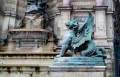
(14) Turn right, cross Rue Sarrette on your right and follow Avenue du Général Leclerc to the Alésia roundabout. Go round it on the right, cross Rue d’Alésia and then continue to the right of the church, still on Avenue du Général Leclerc. Carry on straight ahead to Place Denfert-Rochereau and its monumental lion commemorating National Defence (1870). This lion, created by Auguste Bartholdi, is a plaster model of the Lion of Belfort, one-third of its final size. If you haven’t already done so, cross Avenue du Général Leclerc so that it is on your right.
(15) At the Lion, situated on your right, turn left to walk alongside a park on your left and, at the junction, carry on straight ahead along Rue Froidevaux. At the next junction, carry on straight ahead along Rue Froidevaux, walking alongside the Montparnasse Cemetery on your right. Shortly afterwards, turn right into Rue Émile Richard, then turn right immediately to enter the eastern part of the cemetery.
Further on, turn left onto Avenue Thierry. A little further on, at Section 28 on your right, you’ll see the grave of Auguste Bartholdi (mentioned above). The statue and medallion were created by Rodin. At the end of this avenue, turn left, then left again to leave the cemetery.
Cross Rue Émile Richard and enter the western section of the cemetery opposite. Shortly afterwards, turn right onto Avenue de l’Est and walk past Niki de Saint-Phalle’s *L’Oiseau*. Turn left onto Avenue du Boulevard. A little further on, in section 21 on your right, look out for Marguerite Duras’s grave.
(16) At the entrance gate, turn left onto Avenue Principale. Cross Avenue du Nord, then, in Section 6, on your right, you’ll find the grave of Eugène Ionesco. Immediately afterwards, cross Allée Lenoir and you’ll reach the central roundabout.
Go round the roundabout to the left, noting, in section 2, on your left, the grave of Henri Troyat, then, on the other side of Avenue Transversale, in section 1, on your left, the grave of Serge Gainsbourg. Continue round the roundabout and past its statue, *Le Génie du Sommeil Éternel* (The Spirit of Eternal Sleep), cross the *Allée Principale*, then turn left onto *Avenue Transversale*. In section 4, on your left, you will find the grave of Jean Poiret.
Carry on straight ahead until you reach the junction with Avenue de l’Ouest and note, directly opposite you, in Section 15, the grave of the explorer Jules Dumont-d’Urville and his polychrome stone monument. Turn right. A little further on, in Section 6, on your right, you’ll see the grave of Charles Baudelaire (in the second row). Shortly afterwards, turn right onto Avenue du Nord for a short round trip to Niki de Saint-Phalle’s *Chat*.
Back on Avenue de l’Ouest, continue to the right, then, at the corner of the cemetery, turn right onto Avenue du Boulevard. In section 20, look out for the graves of Jean-Paul Sartre and Simone de Beauvoir.
(16) Turn left to leave the cemetery and emerge onto Boulevard Edgar Quinet. Cross the two lanes of the boulevard and continue straight ahead along Rue Huyghens. Note, on your left, the beautiful building next to the former Municipal Gymnasium at No. 10. Further on, cross Boulevard Raspail, then first turn left then right to reach Boulevard du Montparnasse. Cross it and carry on straight ahead along Rue de la Grande Chaumière.
At the end, turn left onto Rue Notre-Dame des Champs. Ignore Rue Jules Chaplain on your left, then, at the next junction, at the corner of a beautiful building, turn right onto Rue Vavin. Continue straight on until you reach the junction with Rue d’Assas, opposite one of the entrances to the Jardin du Luxembourg.
(17) Enter the garden, walk between a gazebo and the École d’Horticulture building, then turn left to walk alongside this building. At the Fork in the road just after this, veer to the right and carry on straight ahead until you reach a junction with a wide path. Cross it, then carry on straight ahead, between a children’s playground on your right and the statue of Frédéric Chopin on your left. At the next junction, look out for a replica of the Statue of Liberty at the end of the path on your left, then turn right and, shortly afterwards, walk between the theatre and the restaurant.
At the next crossroads, turn left, then take the first path on the right to come out facing a large pond. Head diagonally to the right to go round the right-hand side of the pond and, on the other side, head diagonally to the left, towards the Palais du Luxembourg. Admire the many statues of queens and Roman goddesses surrounding the pond. Walk between the palace and the pretty water feature (depicting a scene from the story of Acis and Galatea), then continue along the left-hand side of the palace to leave the garden.
(18) Cross Rue de Vaugirard and turn right to walk past the Théâtre de l’Odéon. At the corner of the theatre, turn left into Rue Corneille. When you reach Place de l’Odéon, turn right into Rue Racine. Cross Rue Monsieur le Prince and continue along Rue Racine. When you reach Boulevard Saint-Michel, cross it and turn left. Take the first street on the right, Rue du Sommerard. Walk past the magnificent Cluny Museum (National Museum of the Middle Ages) on your left. Continue walking past Square Paul Painlevé on your right.
Cross Rue de Cluny and carry on straight ahead. Shortly afterwards, cross Rue Saint-Jacques and carry on straight ahead again, still on Rue du Sommerard. Cross Rue Thénard and you’ll reach the junction with Rue Jean de Beauvais. Note the Romanian Orthodox church on your right, then turn left onto Boulevard Saint-Germain. Follow the boulevard to the right until you reach the Maubert-Mutualité metro station (S/E).



 tar(star)star:



 Visorando Member
 Easy
Easy