Country:
 City:
City:


Starting point: Place du Châtelet. To get there:
- Châtelet station, lines 1, 4, 7, 11 and 14,
- Châtelet/Les Halles RER A, B or D stations.
The main points of interest are indicated in italics in the description.
(S) From Place du Châtelet, head towards Boulevard de Sébastopol to enter the Square de la Tour Saint Jacques. Take Allée Waslaw Nijinski towards the Tour Saint Jacques. Please note: the tower is currently undergoing renovation work, so you will have to wait to climb the 300 steps of the monument during your guided tour.
Head back towards Place du Châtelet. Head towards Pont au Change. Cross the bridge.
(1) On the right, you will see Quai de l'Horloge, the Conciergerie and the clock tower of the Palais de la Cité. The clock has been in operation for over 650 years. Take Quai de la Corse to enter the flower market. Cross it, exiting on the right, at the entrance to the Palais de Justice de Paris. Head towards the Notre-Dame forecourt - Place Jean-Paul-II.
On the cathedral forecourt, there are several interesting sights to see: the layout of the old streets (Rues Neuve-Notre-Dame and de Venise), the mark indicating the location of the porch of the old Saint-Étienne Cathedral and the medallion marking the zero point of France's roads.
In front of the cathedral, you can visit freely, but it is advisable to book in advance. Turn right towards the Pont au Double bridge and cross it to reach Quai de Montebello. The bridge owes its name to the double toll that pedestrians had to pay to cross it.
(2) Cross Quai de Montebello, before entering Square René Viviani, walk along the square towards Rue de la Bûcherie. At 37 Rue de la Bûcherie, for lovers of English literature, there is a bookshop, library and literary café. Enter Square René Viviani. See: the oldest tree in Paris, a black locust tree planted in 1601, various remarkable features and places of remembrance. Head towards the medieval Church of Saint-Julien-le-Pauvre, built around 1160.
Take Rue Galande towards the Church of Saint-Séverin, Rue Saint-Séverin, turn left onto Rue des Prêtres Saint-Séverin.
(3) Take the time to appreciate the architectural ensemble: mainly flamboyant Gothic, formed by the Church of Saint-Séverin de Paris, the presbytery, Square André-Lefèbvre and the cloister. The church, both inside and out, is worth spending a little time exploring (gargoyles, stained glass windows, grand organ, pillars of the ambulatory...
At the intersection with Rue de la Parcheminerie, turn right to reach Rue de Harpe, then turn left to reach Boulevard Saint-Germain. Cross the boulevard and head left to enter the gardens of the Cluny Museum.
(4) Head towards thehistoric garden of the Abbots of Cluny, walking alongside the remains of the ancient Cluny thermal baths and the Hôtel de Cluny. Head towards Place Paul Painlevé and walk past the Hôtel de Cluny to reach Rue des Écoles, then turn left.
(5) Climb the stairs opposite the entrance to the Collège de France to reach Place Marcellin Berthelot. Walk along the building, turning left. Join Rue de Lanneau, leaving Impasse Chartière on your right. Rue de Lanneau, at number 7, a house with a sloping façade; between numbers 8 and 10, the cul-de-sac Bouvard; at number 11, a house with a half-timbered façade.
Continue straight on Rue de l'École Polytechnique to reach Placette Jacqueline-de-Romilly: former polytechnic school and Sainte-Geneviève fountain in the centre. Turn right onto Rue de la Montagne Sainte-Geneviève towards Place Sainte-Geneviève.
(6) On your left, you will see the Église Saint-Étienne-du-Mont, whose façade is flanked by a tall, narrow and unusual bell tower. Inside, there is a carved stone rood screen, a pulpit and the oldest organ case in Paris. The tombs of Blaise Pascal and Jean Racine are also here.
Leaving the church, head towards Place du Panthéon. Pass in front of the Panthéon (there is an admission charge to visit the nave and crypt). Head towards Rue Clotaire, passing in front of the5th arrondissement town hall. Turn left onto Rue des Fossés Saint-Jacques, then Rue de l'Estrapade. Rue de l'Estrapade, where you will findseveral plaques commemorating famous residents of the street, including Denis Diderot, and a beautiful listed mansion at number 9.
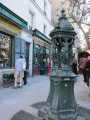
Take Rue Thouin on your left and note the Wallace fountain on Place Emmanuel-Levinas. At the end of the street, turn left onto Rue Cardinal Lemoine towards Place de la Contrescarpe. Pass one of the oldest bars in Paris, founded in the 16th century, with commemorative plaques marking the presence of Ernest Hemingway.
(7) Place de la Contrescarpe: a lively square, renovated in 2017 and 2022. Cross the square to take Rue Mouffetard, known as La Mouffe. One of the oldest streets in Paris, it dates back to the 3rd or 4th century. Very picturesque and 650 metres long. Numerous shops and old houses, the Caser Monge of the Republican Guard, a paved passageway, etc. Part of Rue Mouffetard was renovated during the summer of 2025.
(8) At the end of Rue Mouffetard is the Church of Saint-Médard, with its flamboyant Gothic architecture. Inside, there are numerous works of art and a large organ. Outside, there is a sundial on the south-east façade.
Take Rue Censier, walking alongside Square Miss Tic, formerly Square Saint-Médard, renamed in honour of the French street artist, then turn left onto Rue de Candolle. At the end of this street, cross Place Bernard-Halpern, formerly Place des Patriarches, with its Wallace fountain, to take Rue des Patriarches. At the end of this street, turn right onto Rue de l'Épée de Bois, then left onto Rue Gracieuse at 21, Caserne Monge de la Garde Républicaine.
(9) Cross Place Monge, which has a market on Wednesdays, Fridays and Sundays, to take Rue Monge. At number 14, you will see a bakery listed as a historic monument. After number 58, you will come to the intersection with Rue Rollin, blocked by a tall double staircase decorated with flowers and a wall fountain. Cross Rue Monge after the intersection with Rue Rollin and Rue de Navarre to reach number 49, one of the entrances to the Arènes de Lutèce.
(10) Enter the arena via Rue Monge, with the Cluny thermal baths seen earlier, which are the only buildings from the Roman era preserved in Paris. Cross the arena via Square des Arènes de Lutèce. Turn right onto Rue de Navarre, one of the oldest streets in Paris. Note the entrance to Monge Metro Station. Head towards Rue Lacépède, then turn left onto this street to head towards the Jardin des Plantes.
(11) Enter the Jardin des Plantes, take the second path on your right and note the Lebanese cedar tree, planted by Jussieu in 1734, to climb up to the Gloriette du Buffon through the Jardin des Plantes maze. Descend into the garden via a different path from the one you took on the way up to arrive between the garden's greenhouses . Note the statue of the bear hunter on your right.
Leaving the Grand Gallery of Evolution on your right, cross the garden with its many paths . Between March and May, notice the cherry trees in bloom, as well as the almond and plum trees, and the themed gardens : the alpine garden, the iris and perennial garden, and the ecological garden. Head towards the Gallery of Palaeontology and Comparative Anatomy to exit the Jardin des Plantes. Cross over to reach Paris Austerlitz Station (E).
To return:
- Metro: Lines 5 and 10.
- RER: Line C.

 Association / Club / Walk leader
 Difficult
  Visorando Member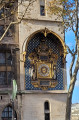
 Moderate