


Refine your search for walks in Kingersheim
Kingersheim walks


 On the banks of the Ill and Dollerbaechlein rivers in Kingersheim
 Visorando Member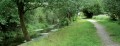
 4.82 mi
 +16 ft
 -16 ft
 2h 15
2h 15
 Easy
Easy
 Departure from Kingersheim (Haut-Rhin)
A lovely family walk that allows you to discover the potash villages from a different angle, along the Ill and Dollerbaechlein streams.
From Wittenheim to Ruelisheim
 5.37 mi
+20 ft
-20 ft
2h 30
Easy
Departure from Wittenheim (Haut-Rhin)
5.37 mi
+20 ft
-20 ft
2h 30
Easy
Departure from Wittenheim (Haut-Rhin)
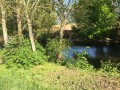
A short walk along the Dollerbaechlein.
The three waterways from Wittenheim to Ruelisheim
 7.07 mi
+36 ft
-36 ft
3h 15
7.07 mi
+36 ft
-36 ft
3h 15
 Moderate
Departure from Wittenheim (Haut-Rhin)
Moderate
Departure from Wittenheim (Haut-Rhin)
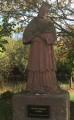
Discover the three waterways from Wittenheim to Ruelisheim: the Ill, the Quatelbach and the Dollerbaechlein.
Discover Richwiller and its industrial past
 Local authority4.96 mi
+43 ft
-43 ft
2h 20
Easy
Departure from Richwiller (Haut-Rhin)
Local authority4.96 mi
+43 ft
-43 ft
2h 20
Easy
Departure from Richwiller (Haut-Rhin)
The municipality of Richwiller is launching a series of historical discovery trails to help residents learn more about their village.
First loop: "Richwiller, its industrial past" with 18 stops.
From the banks of the Quatelbach to the Rhône-Rhine Canal
5.83 mi
+20 ft
-20 ft
2h 40
Easy
Departure from Baldersheim (Haut-Rhin)
A route north-east of Mulhouse, along the Quatelbach, then towards the Hardt, passing by the canal and the gravel pits. Classic lowland landscapes with lovely views of the Vosges and the Black Forest. Much of the route follows tarmac cycle paths and routes.
Shaded route in the city of Mulhouse
 Tourist office
 1.70 mi
+7 ft
-7 ft
0h 45
Easy
Departure from Mulhouse (Haut-Rhin)
1.70 mi
+7 ft
-7 ft
0h 45
Easy
Departure from Mulhouse (Haut-Rhin)
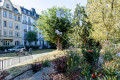
During a heatwave, we mainly seek shade or cool places. That is why this route was created. Enjoy this peaceful walk, far from the noise. To complete the circular route, return to the city centre.
Street art in Mulhouse
 2.10 mi
+3 ft
-3 ft
1h 00
Easy
Departure from Mulhouse (Haut-Rhin)
2.10 mi
+3 ft
-3 ft
1h 00
Easy
Departure from Mulhouse (Haut-Rhin)
Come and discover the works of the many street artists who adorn the city's walls and even... road signs! Clet, C215, Jana & Js are among those who embellish the streets of Mulhouse. Before starting this route,please note that street art is ephemeral, so some of the works may no longer be there when you take your walk. However, we invite you to keep your eyes peeled, as they may well be hidden.
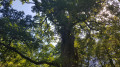
Lutterbach Wood Circular Loop
 5.19 mi
+20 ft
-20 ft
2h 25
Easy
Departure from Pfastatt (Haut-Rhin)
5.19 mi
+20 ft
-20 ft
2h 25
Easy
Departure from Pfastatt (Haut-Rhin)
This short forest trail will delight lovers of nature walks! Be careful, however, as the undergrowth is quite sparse. Although entirely in the forest, the trail is regularly exposed to the sun.
Contemporary art in Mulhouse
 2.65 mi
+3 ft
-10 ft
1h 15
Easy
Departure from Mulhouse (Haut-Rhin)
2.65 mi
+3 ft
-10 ft
1h 15
Easy
Departure from Mulhouse (Haut-Rhin)
Set off to discover the contemporary artworks scattered throughout Mulhouse. From the city centre to the Promenade William Wyler, along the Nouveau Bassin, where sculptures and installations interact with the water and trees. In just a few steps, let yourself be guided by iconic creations that reveal the city's daring spirit.
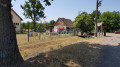
The potash basin of the Bois de Nonnenbruch
 5.30 mi
+23 ft
-23 ft
2h 30
Easy
Departure from Richwiller (Haut-Rhin)
5.30 mi
+23 ft
-23 ft
2h 30
Easy
Departure from Richwiller (Haut-Rhin)
Explore this area dotted with small ponds, a real green oasis right in the suburbs of Mulhouse!
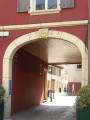
Old Mulhouse Trail
 1.42 mi
+3 ft
-7 ft
0h 40
Easy
Departure from Mulhouse (Haut-Rhin)
1.42 mi
+3 ft
-7 ft
0h 40
Easy
Departure from Mulhouse (Haut-Rhin)
Discover historic Mulhouse with this tourist trail! You will admire the most beautiful buildings in the city centre.In about an hour, you will stroll through the medieval streets, observing the houses that have marked the history of the city...
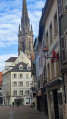
Street art and painted walls in Mulhouse
 5.40 mi
+13 ft
-13 ft
2h 30
Easy
Departure from Mulhouse (Haut-Rhin)
5.40 mi
+13 ft
-13 ft
2h 30
Easy
Departure from Mulhouse (Haut-Rhin)
This family walk will give you the chance to discover Mulhouse’s tradition of painted walls.From giant murals to the tiniest graffiti, street art is everywhere in Mulhouse: on walls, pavements, letterboxes and even on road signs!You’ll need to keep your eyes peeled!
19th-century trail in Mulhouse
 1.13 mi
+3 ft
-3 ft
0h 30
Easy
Departure from Mulhouse (Haut-Rhin)
1.13 mi
+3 ft
-3 ft
0h 30
Easy
Departure from Mulhouse (Haut-Rhin)
This trail will allow you to discover Mulhouse as it was in the 19th century, during its industrial textile boom. Find the locations of former factories, mansions and remnants of this unprecedented development.
Tour of the Lutterbach Woods
4.27 mi
+16 ft
-16 ft
2h 00
Easy
Departure from Lutterbach (Haut-Rhin)
When you think of hiking in Alsace, the Vosges mountains spring to mind. But the Alsace plain also offers some very pleasant walks. This is the case with this short, family-friendly circular in the Bois de Lutterbach, on the outskirts of Mulhouse. This walk is completely safe and accessible to almost everyone. Most of the route is through forest. The highlight of the hike is halfway along the route: the Gros Chêne de Pfastatt (Pfastatt Great Oak).
Lutterbach, its basilica and its woods
 5.32 mi
+52 ft
-52 ft
2h 30
Easy
Departure from Lutterbach (Haut-Rhin)
5.32 mi
+52 ft
-52 ft
2h 30
Easy
Departure from Lutterbach (Haut-Rhin)
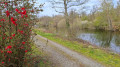
A family walk offering the chance to discover some of the attractions of Lutterbach, a town steeped in history and culture, home to one of the four basilicas of Alsace and a famous brewery rich in history, before enjoying the Bois de Lutterbach, the south-western part of the Forêt du Nonnenbruch (Marais des Nonnes), criss-crossed by numerous walking trails and serving as the urban area’s green lung.
This walk is accessible via Lutterbach railway station (Haut-Rhin).
The banks of the Ill in Mulhouse
 4.51 mi
+23 ft
-23 ft
2h 05
Easy
Departure from Mulhouse (Haut-Rhin)
4.51 mi
+23 ft
-23 ft
2h 05
Easy
Departure from Mulhouse (Haut-Rhin)
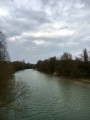
This is an undemanding hike, ideal for a Sunday stroll with the family.
This circular runs along the banks of the Ill and allows you to discover the "Japanese Bridge" behind the Mulhouse swimming pool, as well as the "Bois des Philosophes" near the University.
From Riedisheim to Rixheim via the vanished village of Leibersheim
 5.88 mi
+417 ft
-417 ft
3h 05
Easy
Departure from Riedisheim (Haut-Rhin)
5.88 mi
+417 ft
-417 ft
3h 05
Easy
Departure from Riedisheim (Haut-Rhin)
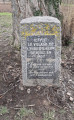
Between the two villages of Riedisheim and Rixheim lies a third, Leibersheim, which ceased to exist five centuries ago. You will also pass by the cemeteries of these two villages, one of which dates back more than two centuries. Finish by climbing the Fuchsberg hill to enjoy the beautiful scenery.