


Refine your search for walks in Essoyes
Essoyes walks


 The Blu plateau starting from Essoyes
 Visorando Member
 7.52 mi
 +551 ft
 -551 ft
 3h 55
3h 55
 Moderate
 Departure from Essoyes (Aube)
A lovely walk through the Champagne vineyards.
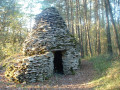
Cadoles and vineyards of Courteron along the ridge path
 6.91 mi
+495 ft
-479 ft
3h 35
Moderate
Departure from Courteron (Aube)
6.91 mi
+495 ft
-479 ft
3h 35
Moderate
Departure from Courteron (Aube)
Discover the cadoles of Courteron, as well as the magnificent vineyard landscape from the ridge path.
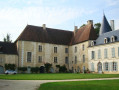
Setting off from the church in Ricey Bas, a stroll through the vineyards
 4.64 mi
+407 ft
-404 ft
2h 30
4.64 mi
+407 ft
-404 ft
2h 30
 Easy
Departure from Les Riceys (Aube)
Easy
Departure from Les Riceys (Aube)
The Riceys vineyards cover the largest area of any in the whole of Champagne. They boast three appellations d’origine contrôlée.
Located in the Côte des Bars, the vineyards are easily accessible to walkers, with access often made easier by roads maintained for vineyard operations.
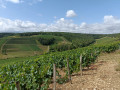
Forests and vineyards above Ricey Bas and Balnot
 12.85 mi
+1,096 ft
-1,089 ft
6h 50
12.85 mi
+1,096 ft
-1,089 ft
6h 50
 Difficult
Departure from Les Riceys (Aube)
Difficult
Departure from Les Riceys (Aube)
This circular walk takes us into the vineyard area of Les Riceys and Balnot-sur-Laignes. Leaving the vineyards behind, the return journey follows the course of the Laignes river and takes the route of the old "tacot" railway line which, from 1901, linked Les Riceys-Polisot to Cunfin.
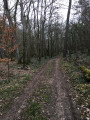
Cadoles, vineyards and forests of Les Riceys
 6.12 mi
+509 ft
-492 ft
3h 15
Moderate
Departure from Les Riceys (Aube)
6.12 mi
+509 ft
-492 ft
3h 15
Moderate
Departure from Les Riceys (Aube)
Discover some of the many Champenois cadoles, as well as the vineyards and forests of Les Riceys.
Through vineyards and cadoles, starting from Les Riceys
4.08 mi
+203 ft
-200 ft
2h 05
Easy
Departure from Les Riceys (Aube)
A walk through one of the most beautiful landscapes in Champagne, listed as a UNESCO World Heritage Site. Vineyards, woodland paths and cadoles.
Provisional route pending the opening of the official Cadoles de la Côte des Bar trail.
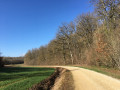
Vineyards and woodland around Champignol-lez-Mondeville
 7.85 mi
+630 ft
-646 ft
4h 10
Moderate
Departure from Champignol-lez-Mondeville (Aube)
7.85 mi
+630 ft
-646 ft
4h 10
Moderate
Departure from Champignol-lez-Mondeville (Aube)
Vineyards, fields and woods around Champignol-lez-Mondeville.
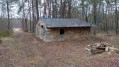
Le tour des fermes au départ de Ricey Haut
 7.90 mi
+528 ft
-528 ft
4h 00
Moderate
Departure from Les Riceys (Aube)
7.90 mi
+528 ft
-528 ft
4h 00
Moderate
Departure from Les Riceys (Aube)
Une belle balade familiale à partir des Riceys, commune viticole au Sud de la Champagne dans la côte des Bars, à la croisée des chemins avec la Bourgogne toute proche. Cette commune est composée des trois villages, Ricey Bas, Haute Rive et Ricey Haut. La commune bénéficie de trois appellations et bénéficie du plus grand terroir classé champagne.
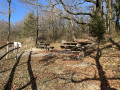
Fond du Pimeux via the Croix Bleue
 5.81 mi
+594 ft
-587 ft
3h 10
Easy
Departure from Bergères (Aube)
5.81 mi
+594 ft
-587 ft
3h 10
Easy
Departure from Bergères (Aube)
Bergères is a charming wine-growing commune in the Côte des Bar. This route offers picturesque landscapes of the Côte des Bar through valleys, hillsides, vineyards, fields, moors and forests. From April to June, magnificent orchids bloom on the calcareous soils of the Côte de l'Église and Côte Garnier. This route largely follows the Circuit de la Croix Bleue. It also follows the GR® de Pays des deux Bar and the GR® Gaston Bachelard.
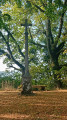
On the edge of southern Champagne, Molesme in Burgundy
 5.74 mi
+361 ft
-390 ft
2h 55
Easy
Departure from Molesme (Côte-d'Or)
5.74 mi
+361 ft
-390 ft
2h 55
Easy
Departure from Molesme (Côte-d'Or)
The walk starts in the small village of Molesme, situated in the north of the Côte-d’Or, in the valley of the Laigne – a tributary of the Seine – in a region straddling Burgundy and Champagne. Life in this village was strongly influenced by the monastic life of the abbey, which over the centuries experienced the consequences of the Hundred Years’ War, the Wars of Religion and the Revolution… The abbey is open to the public during the summer months by appointment. A leisurely walk allows you to explore and visit the ruins of the Oppidum of Vertillum, which was a major city in Roman times.
The vineyards and dry grasslands of Spoy
 5.15 mi
+394 ft
-390 ft
2h 45
Easy
Departure from Spoy (Aube)
5.15 mi
+394 ft
-390 ft
2h 45
Easy
Departure from Spoy (Aube)
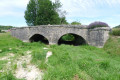
Starting from Spoy, this route takes you to the Fravaux wash house, the Pelouse de la Côte de l’Étang Nature Reserve and the Roman bridge.
Vineyards and woodland above Baroville
5.97 mi
+951 ft
-935 ft
3h 35
Moderate
Departure from Baroville (Aube)
A route exploring the vineyards and hills, as well as the Bois des Dames, Le Pimeux and La Grand-Côte above Baroville. It follows part ofthe GRP® – Gaston Bachelard (a philosopher born in Bar-sur-Aube) and theGR®145– Via Francigena (the route taken by pilgrims travelling to Rome).
The Sainte-Germaine hill
5.44 mi
+738 ft
-722 ft
3h 10
Easy
Departure from Bar-sur-Aube (Aube)
A lovely walk in the hills above Bar-sur-Aube, starting from the Sainte-Germaine Farm, where, if you’re lucky, you’ll be able to watch paragliders. Make the most of the beautiful views from this vantage point.
La Barse Route
 AONB
AONB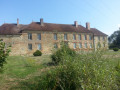 5.02 mi
+66 ft
-66 ft
2h 20
Easy
Departure from Montiéramey (Aube)
5.02 mi
+66 ft
-66 ft
2h 20
Easy
Departure from Montiéramey (Aube)
Two villages notable for their heritage are linked by this route, which crosses the River Barse, winding through pastures and orchards – a landscape typical of the humid Champagne region. The path passes by the former abbey of Montiéramey and two manor houses in Montreuil-sur-Barse.
The White Rabbit Trail
 2.08 mi
+43 ft
-43 ft
1h 00
Easy
Departure from Mesnil-Saint-Père (Aube)
2.08 mi
+43 ft
-43 ft
1h 00
Easy
Departure from Mesnil-Saint-Père (Aube)
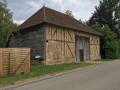
On the shores of Lake d’Orient, the traditional village of Mesnil-Saint-Père has retained its authentic Champagne charm. The interpretive trail winds its way between the houses and orchards, between the harbour and the church.
Route des Granges auboises
 4.77 mi
+66 ft
-66 ft
2h 15
Easy
Departure from Mesnil-Saint-Père (Aube)
4.77 mi
+66 ft
-66 ft
2h 15
Easy
Departure from Mesnil-Saint-Père (Aube)
Between lake and forest, countryside and orchards, this route includes the Sentier du Lapin Blanc (White Rabbit Trail). Revealing a preserved village and its barns, crossing a wood, open countryside and green meadows, running along the beach and the dyke, this route sums up all the attractions of the Forêt d'Orient Regional Nature Park.