


Refine your search for walks in Ueberstrass
Ueberstrass walks
 Sundgau circuit in Friesen-Ueberstrass
 Visorando Member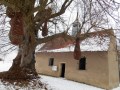
 4.81 mi
 +236 ft
 -226 ft
 2h 25
2h 25
 Easy
Easy
 Departure from Friesen (Haut-Rhin)
Friesen boasts an exceptional array of half-timbered houses built between 1499 and 1876. Thanks to meticulous inventory work, the walk allows you to see many reminders of a rural world that disappeared forever after the Second World War. A country lane then leads to the Notre-Dame de Grünenwald chapel and Ueberstrass, following in the footsteps of the Knights of Malta.
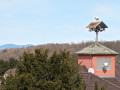
The Tour des Deux Seppois
 4.99 mi
+236 ft
-236 ft
2h 30
Easy
Departure from Seppois-le-Bas (Haut-Rhin)
4.99 mi
+236 ft
-236 ft
2h 30
Easy
Departure from Seppois-le-Bas (Haut-Rhin)
A route inviting you to explore the two neighbouring villages of Seppois-le-Bas and Seppois-le-Haut. You will also enjoy sections through the forest, including the Gobenwald.
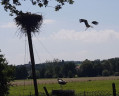
Hindlingen Stork Walk
 2.62 mi
+98 ft
-102 ft
1h 20
Easy
Departure from Hindlingen (Haut-Rhin)
2.62 mi
+98 ft
-102 ft
1h 20
Easy
Departure from Hindlingen (Haut-Rhin)
Enjoy a short walk starting from the stork park in the village of Hindlingen. Follow the Largue and discover the pretty half-timbered houses in the village of Friesen!
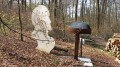
Circuit du Sundgau: The Etangs de Bisel walk
 7.30 mi
+98 ft
-98 ft
3h 25
7.30 mi
+98 ft
-98 ft
3h 25
 Moderate
Departure from Bisel (Haut-Rhin)
Moderate
Departure from Bisel (Haut-Rhin)
Speaking of this part of the Sundgau, André Gide wrote:"One is constantly surprised, as one crosses the forest, to find oneself in the presence of an unsuspected sheet of water, mysteriously asleep in the shelter of the beech forests; rushes adorn narrow sandy beaches at the edge of large fields of water lilies. There are also several reminders of the First World War and the front line that separated Largitzen from Bisel.
The Kilometre Zero Trail - World War I
 4.93 mi
+289 ft
-295 ft
2h 30
Easy
Departure from Pfetterhouse (Haut-Rhin)
4.93 mi
+289 ft
-295 ft
2h 30
Easy
Departure from Pfetterhouse (Haut-Rhin)
Kilometre Zero is the starting point of the front line established during theFirst World War. It is located on the current French-Swiss border, at a place called Le Largin. The Kilometre Zero trail explores three sections of the front line, the first kilometres of the French and German fronts, and the Swiss front at Le Largin, established along the border opposite the no man's land where boundary marker No. 111, considered the zero point of the Great War front line, is located.
The Sentier des Bornes in Rechesy
 Local authority
 10.15 mi
+797 ft
-791 ft
5h 20
10.15 mi
+797 ft
-791 ft
5h 20
 Difficult
Departure from Réchésy (Territoire-de-Belfort)
Difficult
Departure from Réchésy (Territoire-de-Belfort)
This long hike through fields and forests allows you to discover the peaceful Sundgau region of Belfort, walk along ponds and flirt with the Swiss Jura.
The trail is marked with a yellow ring.
Around the Vendeline in Réchésy
2.52 mi
+144 ft
-141 ft
1h 15
Easy
Departure from Réchésy (Territoire-de-Belfort)
A short walk that allows you to discover the charming village of Réchésy, situated 24 km south-east of Belfort, very close to the Swiss border.You’ll discover its church, the old tramway, the River Vendeline, an old mill, beautiful half-timbered houses and the ‘Académie de Réchésy’.This walk is signposted.
Sundgau route: the forgotten bunkers
 8.59 mi
+443 ft
-449 ft
4h 20
Easy
Departure from Hirtzbach (Haut-Rhin)
8.59 mi
+443 ft
-449 ft
4h 20
Easy
Departure from Hirtzbach (Haut-Rhin)
A hike starting from Hirtzbach that passes through Largitzen and Heimersdorf.
There are many remnants of theFirst World War along the route.
Sundgau route: between woods and ponds
 9.89 mi
+600 ft
-597 ft
5h 05
Moderate
Departure from Hirtzbach (Haut-Rhin)
9.89 mi
+600 ft
-597 ft
5h 05
Moderate
Departure from Hirtzbach (Haut-Rhin)
A hike through the beautiful Sundgau forests dotted with ponds, with no major difficulties except for the walking time.
There are many places to stop for a snack along the route.
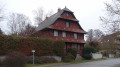
Along the Suarcine in Suarce
 1.81 mi
+52 ft
-52 ft
0h 55
Easy
Departure from Suarce (Territoire-de-Belfort)
1.81 mi
+52 ft
-52 ft
0h 55
Easy
Departure from Suarce (Territoire-de-Belfort)
A lovely walk in the Sundgau region at Suarce, 20 km south-east of Belfort. You’ll discover beautiful scenery along the Suarcine and magnificent half-timbered houses.
This 3 km walk is easily accessible to everyone.
It is signposted.
Sundgau circuit in Hirtzbach
 5.34 mi
+413 ft
-404 ft
2h 50
Moderate
Departure from Hirtzbach (Haut-Rhin)
5.34 mi
+413 ft
-404 ft
2h 50
Moderate
Departure from Hirtzbach (Haut-Rhin)
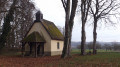
Hirtzbach is well worth a visit. The castle, English park and opulent residences of Unterdorf are neatly lined up on either side of the stream, whose banks are beautifully flowered in summer. Along the way, a rural and wooded detour leads to the site of the vanished village of Sankt-Glückern and the Landfürstenweyer, the Princes' Pond, with its still waters.
Walk of the little huts in Chavanatte
 4.67 mi
+98 ft
-69 ft
2h 15
Easy
Departure from Chavanatte (Territoire-de-Belfort)
4.67 mi
+98 ft
-69 ft
2h 15
Easy
Departure from Chavanatte (Territoire-de-Belfort)
A lovely walk in the Sundgau region at Chavanatte, 20 km south-east of Belfort. You’ll discover beautiful scenery along the Suarcine and magnificent half-timbered houses.
This walk is easily accessible to all and can be split into three circular routes.
It is signposted.
Sundgau Route: the Carspach loop
 7.68 mi
+361 ft
-354 ft
3h 50
Moderate
Departure from Carspach (Haut-Rhin)
7.68 mi
+361 ft
-354 ft
3h 50
Moderate
Departure from Carspach (Haut-Rhin)
Fancy a stroll through the woods for a few hours? This route is perfect for you.
Although it’s not difficult, it still lets you discover some of the “secrets” of this part of the Sundgau and make the most of a lovely time spent outdoors.
In the shadow of the Florimont towers
 3.66 mi
+161 ft
-148 ft
1h 50
Easy
Departure from Florimont (Territoire-de-Belfort)
3.66 mi
+161 ft
-148 ft
1h 50
Easy
Departure from Florimont (Territoire-de-Belfort)
A very pleasant walk to discover the village of Florimont and its surroundings in the lush countryside.
At the end, I suggest a short alternative route to reach the foot of the two towers.
Florimont is situated in the foothills of the Jura, 30 km from Belfort and a stone’s throw from Switzerland.
The route is marked with a Green Ring
Sundgau route: Riespach - Feldbach
 6.08 mi
+194 ft
-184 ft
3h 00
Moderate
Departure from Haut-Rhin
6.08 mi
+194 ft
-184 ft
3h 00
Moderate
Departure from Haut-Rhin
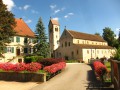
According to Marc Glotz, "The Sundgau has only two Romanesque churches, both founded by the dynasties that shared the region in the Middle Ages: the Habsburgs and the Ferrettes. While Ottmarsheim evokes Carolingian grandeur, Feldbach recalls monastic simplicity. You leave it as if returning from a pilgrimage, with a renewed sense of serenity and the impression of having encountered the fleeting shadows of the counts."
Between Altkirch and Wittersdorf
 5.72 mi
+505 ft
-476 ft
3h 05
Easy
Departure from Altkirch (Haut-Rhin)
5.72 mi
+505 ft
-476 ft
3h 05
Easy
Departure from Altkirch (Haut-Rhin)
A lovely walk with very varied scenery, including forests, countryside, and views of the Jura, the Black Forest, the Vosges and the pretty village of Wittersdorf below, as well as Altkirch.
Discovering the heritage around Dannemarie
9.64 mi
+315 ft
-318 ft
4h 40
Moderate
Departure from Dannemarie (Haut-Rhin) (Haut-Rhin)
You’ll discover Dannemarie’s monuments and the surrounding countryside, with a beautiful view of the Ballersdorf viaduct and, further afield, the Sundgau and the Vosges. At the end of the walk, you’ll admire the Relais Nautique along the Rhône–Rhine Canal, followed by the former Gilardoni tile works.
Sundgau route: the Hirsingue-Wittersdorf circular route via the Roman road
 12.56 mi
+843 ft
-843 ft
6h 30
Difficult
Departure from Hirsingue (Haut-Rhin)
12.56 mi
+843 ft
-843 ft
6h 30
Difficult
Departure from Hirsingue (Haut-Rhin)
A long hike with superb views of the Vosges, the Black Forest and the Jura.
There are numerous points of interest with information boards, benches and water points along the route.
Sundgau route: around the Illberg
 5.01 mi
+440 ft
-449 ft
2h 40
Easy
Departure from Altkirch (Haut-Rhin)
5.01 mi
+440 ft
-449 ft
2h 40
Easy
Departure from Altkirch (Haut-Rhin)
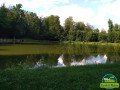
An easy walk that allows you to take in the forest air.
Not far from Altkirch town centre, there are some beautiful views and the Erlen pond, where you can sit and enjoy the surroundings.
Courtavon Circular
 3.84 mi
+623 ft
-623 ft
2h 20
Easy
Departure from Courtavon (Haut-Rhin)
3.84 mi
+623 ft
-623 ft
2h 20
Easy
Departure from Courtavon (Haut-Rhin)
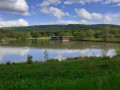
A short circular walk starting from the Courtavon lake, alternating between fields and woodland at La Montagne.
The Aspach Planet Trail
2.02 mi
+157 ft
-148 ft
1h 05
Easy
Departure from Aspach (Haut-Rhin) (Haut-Rhin)
The Chemin des Planètes, created by the Astroaspach club in partnership with the municipality of Aspach, is a 3 km route that offers an original way to discover our solar system through educational panels depicting the distance between the planets to scale: 1 metre walked represents 2,100,000 km in space. From the Sun to Neptune, what a journey!Along the way, you can also enjoy a stroll through the Litten Forest, its chapel (1862) and the village’s rural surroundings, walk through the narrow streets of Aspach and, at the end of the trail, cross the Jardin des Libellules (a community garden dedicated to water conservation and biodiversity).
Sundgau circuit: Wittersdorf-Emlingen-Walheim
 4.19 mi
+495 ft
-502 ft
2h 20
Moderate
Departure from Wittersdorf (Haut-Rhin)
4.19 mi
+495 ft
-502 ft
2h 20
Moderate
Departure from Wittersdorf (Haut-Rhin)
A wooded hill separates the Ill and Thalbach valleys. As you walk along it, you will discover an old vineyard, a quarry marked by tragedy, a botanical trail and the story of an unfortunate general. When you reach the Emlingen lime kilns, the 19th century suddenly springs to life, frozen in stone and iron.
Morimont Castle via the source of the Largue and the Rocher de la Sorcière
 5.71 mi
+1,007 ft
-1,014 ft
3h 30
Moderate
Departure from Oberlarg (Haut-Rhin)
5.71 mi
+1,007 ft
-1,014 ft
3h 30
Moderate
Departure from Oberlarg (Haut-Rhin)
The hike has been modified and no longer passes by the Ferme de la Vacherie.
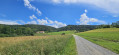
A lovely little walk, mostly on fairly wide paths, leading to beautiful viewpoints and sites of historical interest such as the Mannlefelsen caves and Morimont Castle.
There is a slight incline on the first part of the route to add a little spice to this easy hike.
Sundgau Circuit: Oberlarg - Around Morimont
 5.78 mi
+791 ft
-791 ft
3h 20
Moderate
Departure from Oberlarg (Haut-Rhin)
5.78 mi
+791 ft
-791 ft
3h 20
Moderate
Departure from Oberlarg (Haut-Rhin)
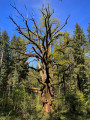
The landscapes you pass through here are among the most beautiful in the Sundgau region. The rock shelter of Mannlefelsen, a major Mesolithic site in Alsace, precedes the Ebourbettes, which tell the story of General Giraud's escape in 1942. Further on, the ruins of Morimont offer an interesting history lesson on how a medieval castle was adapted to firearms.
The Signal du Glaserberg from the source of the Ill and via the Col du Neuneich
 10.00 mi
+1,450 ft
-1,444 ft
5h 50
Moderate
Departure from Winkel (Haut-Rhin)
10.00 mi
+1,450 ft
-1,444 ft
5h 50
Moderate
Departure from Winkel (Haut-Rhin)
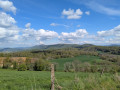
This hike allows you to discover parts of the region's history during the Second World War, in the context of the liberation of Alsace, by following part of the Sentier des Marocains (Moroccan Trail). It also allows you to discover magnificent landscapes in the Swiss Jura, the Sundgau and the foothills of the Vosges and the Black Forest, then to follow the source of the Ill on your return to the starting point.