


Refine your search for walks in Thoré-la-Rochette
Thoré-la-Rochette walks


 Along the hillside of Thoré-la-Rochette
 Visorando Member
 6.47 mi
 +394 ft
 -390 ft
 3h 20
3h 20
 Moderate
 Departure from Thoré-la-Rochette (Loir-et-Cher)
This route will take you from the world of vineyards to the defence line of the Saint-Rimay Tunnel. From cellars to blockhouses, you will also discover two restoration projects led by the Résurgence association along the way.
A beautiful view of the Loir valley will accompany you for much of your journey.
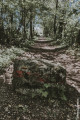
Along the Boulon in Mazangé
 5.93 mi
+259 ft
-259 ft
2h 55
5.93 mi
+259 ft
-259 ft
2h 55
 Easy
Departure from Mazangé (Loir-et-Cher)
Easy
Departure from Mazangé (Loir-et-Cher)
A very beautiful walk along the Boulon Valley.
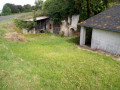
Walk in the woods of Houssay
 5.93 mi
+328 ft
-331 ft
3h 00
Easy
Departure from Houssay (Loir-et-Cher)
5.93 mi
+328 ft
-331 ft
3h 00
Easy
Departure from Houssay (Loir-et-Cher)
Pleasant walk except at the start. Beautiful valleys and woods.
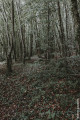
Lunay Pond
 6.00 mi
+269 ft
-276 ft
3h 00
Easy
Departure from Lunay (Loir-et-Cher)
6.00 mi
+269 ft
-276 ft
3h 00
Easy
Departure from Lunay (Loir-et-Cher)
A pleasant little walk through woods and vineyards.
The cave dwellings of Les Roches-Lévêque
4.25 mi
+351 ft
-348 ft
2h 15
Easy
Departure from Les Roches-l'Évêque (Loir-et-Cher)
Situated between the Loir and the rock on the hillside, this route allows you to discover a picturesque natural heritage, typical of the Loir Valley and its troglodyte dwellings.
Petit Pont to Azé circular route
4.32 mi
+226 ft
-217 ft
2h 10
Easy
Departure from Azé (Loir-et-Cher)
An easy, family-friendly walk in a lovely little village.
The Réveillon stream at Meslay
3.40 mi
+7 ft
-7 ft
1h 35
Easy
Departure from Meslay (Loir-et-Cher) (Loir-et-Cher)
A short walk starting from Meslay, passing the Château de Meslay, then following the Réveillon stream and winding through the village’s fields
Short circular loop in Areines
4.65 mi
+131 ft
-131 ft
2h 15
Easy
Departure from Areines (Loir-et-Cher)
Lovely views over the Vendôme area and the Loir Valley.
Circular walk starting from Rahart
 6.94 mi
+108 ft
-128 ft
3h 15
Moderate
Departure from Rahart (Loir-et-Cher)
6.94 mi
+108 ft
-128 ft
3h 15
Moderate
Departure from Rahart (Loir-et-Cher)
A lovely walk with plenty of sections through the woods.
Hiking is all about having ‘fun’, and even if it’s ‘customary’ to pass through the ‘desert’, don’t worry – you’ll always make it to the church.
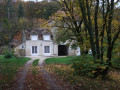
The Houzée from Malignas
 6.48 mi
+253 ft
-266 ft
3h 10
Easy
Departure from Crucheray (Loir-et-Cher)
6.48 mi
+253 ft
-266 ft
3h 10
Easy
Departure from Crucheray (Loir-et-Cher)
Walk through the woods and along the Houzée valley with its beautiful mills. Very beautiful valley.
Lisle via the Loir
 5.50 mi
+16 ft
-16 ft
2h 35
Easy
Departure from Saint-Firmin-des-Prés (Loir-et-Cher)
5.50 mi
+16 ft
-16 ft
2h 35
Easy
Departure from Saint-Firmin-des-Prés (Loir-et-Cher)
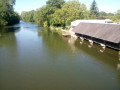
A pleasant and easy walk on either side of the Loir.
Le Chamort from Pezou
5.96 mi
+203 ft
-177 ft
2h 55
Easy
Departure from Pezou (Loir-et-Cher)
An easy, very pleasant walk through woods (pleasant in hot weather), across the plain and with a beautiful view of the Loir valley.
Walking trails in La Ville-aux-Clercs: Blue route
 6.00 mi
+69 ft
-69 ft
2h 50
Easy
Departure from La Ville-aux-Clercs (Loir-et-Cher)
6.00 mi
+69 ft
-69 ft
2h 50
Easy
Departure from La Ville-aux-Clercs (Loir-et-Cher)
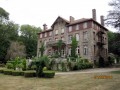
Of the four walking routes on offer around La Ville-aux-Clercs, here is the Blue route.
Walking trails in La Ville-aux-Clercs: Red route
 6.49 mi
+164 ft
-141 ft
3h 05
Easy
Departure from La Ville-aux-Clercs (Loir-et-Cher)
6.49 mi
+164 ft
-141 ft
3h 05
Easy
Departure from La Ville-aux-Clercs (Loir-et-Cher)
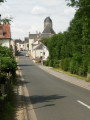
La Ville-aux-Clercs offers four walking routes that are also suitable for mountain bikes: here is the Red route in the heart of the Perche Vendômois region.
Over hill and dale to Courtanvaux
3.93 mi
+177 ft
-190 ft
2h 00
Easy
Departure from Bessé-sur-Braye (Sarthe)
The Braye, celebrated in song by Ronsard, meets the Loir here. Whilst Bessé-sur-Braye is best known to locals for its thriving paper industry, this village in the Calais region is also home to a Renaissance gem, the Château de Courtanvaux, which is said to have hosted Henry IV. Its large wooded park is open to the public all year round, and serves as the starting point for this walk, which also takes you through lovely countryside along a small tarmac road.
The Jewel of Courtanvaux
 Tourism professional
 4.41 mi
+305 ft
-322 ft
2h 20
Easy
Departure from Bessé-sur-Braye (Sarthe)
4.41 mi
+305 ft
-322 ft
2h 20
Easy
Departure from Bessé-sur-Braye (Sarthe)
Bessé dates back to the Middle Ages. At that time, the parish comprised numerous fiefdoms, including Courtanvaux, a parish seigneury elevated to a marquisate in 1609. The village developed particularly from the18th century onwards thanks to the establishment of pre-industrial sites, as evidenced by the cotton mill set up by Elie Savatier in 1735 (on the site of a former linen weaving mill) or the paper mill established at La Roche in 1824. The latter has since become the town’s main industrial site.
The Tannery and 5 Mills Route starting from Château-Renault
 8.13 mi
+397 ft
-397 ft
4h 05
Moderate
Departure from Château-Renault (Indre-et-Loire)
8.13 mi
+397 ft
-397 ft
4h 05
Moderate
Departure from Château-Renault (Indre-et-Loire)
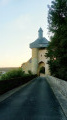
Hillside route along the riverbanks, on foot or by mountain bike. Some of the hill climbs are a bit steep. Take your time to enjoy the route.
The Calaisienne Loop
 9.62 mi
+318 ft
-305 ft
4h 40
Moderate
Departure from Saint-Calais (Sarthe)
9.62 mi
+318 ft
-305 ft
4h 40
Moderate
Departure from Saint-Calais (Sarthe)
The evolution of Saint-Calais is evident in its town planning, which developed in the Middle Ages on either side of the Anille. On the right bank, the former abbey site founded inthe 6th century is still visible in the two tall gables of the current resource centre. During the Revolution, it gave way to another administrative centre with imposing buildings and the straight streets typical ofthe 19th century. On the left bank, on the hillside between the river and the castle founded inthe 11th century to rival the powerful abbey, you can easily make out the medieval quarter, which was built around the axis of the Grande Rue on an irregular and densely packed grid of plots.
The ‘Route des Cormiers’
 10.01 mi
+541 ft
-512 ft
5h 05
Moderate
Departure from Conflans-sur-Anille (Sarthe)
10.01 mi
+541 ft
-512 ft
5h 05
Moderate
Departure from Conflans-sur-Anille (Sarthe)
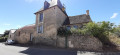
Setting off from this village-street with its rich architectural heritage, head along the ancient sunken paths, sections (1) to (6) ofthe GR®® 235, lined with a variety of trees – oaks, service trees, serviceberries, wild pear trees and so on – offering walkers an enchanting, shaded route. These paths, in the heart of the rolling countryside of the Perche Sarthois, are linked by a network of quiet country lanes, offering stunning 180° panoramic views from the higher points.
Route of photography from Conflans-sur-Anille
 14.34 mi
+617 ft
-600 ft
7h 10
14.34 mi
+617 ft
-600 ft
7h 10
 Difficult
Departure from Conflans-sur-Anille (Sarthe)
Difficult
Departure from Conflans-sur-Anille (Sarthe)
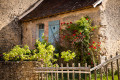
Situated on a small spur at the confluence of the Anille and Roulecrotte rivers, the village, first mentioned in the 13th century, retains several old houses, including the town hall, a former presbytery built in the 15th century. The church, rebuilt around 1780, features a beautiful collection of murals painted around 1860 using potassium silicate (a new technique for the time).