Country:
 City:
City:


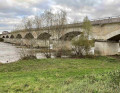
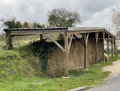
Free parking is available on the market square in Amboise, except on Friday and Sunday mornings when the market is held. There are two entrances to the car park: either on the east side via Chemin de l'Abattoir, or on the west side via Quai du Mail. Park on the market square near the old abattoirs (small houses on the square). On market days, use the Mail car park or the Kiosque car park, which are accessible from Quai du Général de Gaulle. Take the stairs up to the market square and walk to the old slaughterhouses.
(S/E) With your back to the Loire, go up Quai du Général de Gaulle (ramp or stairs) and walk along the Loire towards the town centre and the Royal Castle. Sandy path overlooking the Loire. You will reach a crossroads just before the town hall.
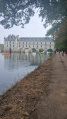
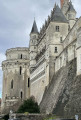
(1) Turn right to cross Quai du Général de Gaulle at the pedestrian crossing. Pass Rue FrançoisIer and immediately turn left onto Rue de la Concorde. Walk past the Town Hall (on your left) and the Royal Castle (on your right). Admire the view of the Royal Castle of Amboise, in particular the Tour ronde des Minimes and the Renaissance royal residence.
(2) Take Quai Charles Guinot on the right at the Hôtel des Minimes. Walk along the Loire. After the Hôtel Le Choiseul, turn right onto the small Rue du Rocher des Violettes (narrow street). Continue to the Maison des Pages de Charles VII.
(3) Continue to the right to face the Maison des Pages de Charles VII, then continue up the very steep hill. As you pass, admire the Maison des Pages perched high up on the cliff. Climb to the top and enjoy the view of the Loire, from the old bridge on the left to the new bridge on the right. Continue up Rue des Châteliers to the Châteliers plateau and Rue Augustin Thierry. You will reach the Gallo-Roman oppidum at the intersection of Rue des Châteliers and Rue Augustin Thierry. The ancient Gallic and then Gallo-Roman village is located on the Châteliers (or Châtelliers) plateau.
(4) Cross Rue Augustin Thierry, then first turn left then right to take the path that runs alongside the vineyard (on the left) and the buried water tower (on the right). A sign indicates the access to Rue Léonard Perrault. Follow the grassy path, walk along the stone wall, then turn right (wooded path) towards Rue Léonard Perrault (caution: dirt path may be slippery on rainy days). As you walk, admire the view of the L'Amasse river valley and the town of Amboise.
At the bottom of the path, turn left onto Rue Léonard Perrault and continue to the Château du Clos Lucé, at the crossroads of Rue Victor Hugo and Rue de la Malonnière.
(5) Take Rue du Clos Lucé opposite, passing in front of the main entrance to the Château Le Clos Lucé (formerly Château du Cloux, where Leonardo da Vinci lived and died on 2 May 1519). Continue down Rue du Clos Lucé, following the high walls. Just before the small car park, turn left onto Allée du Pont Moulin to reach the intersection before the entrance to Château Gaillard (signposted).
(6) Go to the entrance of the château to catch a glimpse of the building and gardens designed by Dom Pacello da Mercogliano, the king's gardener (1496).
(7) Turn around and return to the previous intersection.
(6) Turn left at the system of sluice gates that regulates the River L'Amasse and cross the stone bridge.
Continue straight ahead on the grassy path to Allée du Clos Pacello. Do not turn right onto the avenue, but walk along the pavilion to find a narrow path behind it. Turn right onto the dirt path behind the first pavilion (narrow passage). At the end of this path running alongside the pavilion gardens, take Avenue Léonard de Vinci on the left. You will reach a roundabout.
(8) Cross L'Amasse on the left, taking the wooden bridge towards the meadow. Walk along the L'Amasse river and exit onto Rue de la Côte Chaude on the left. Turn left and you will soon reach the Chemin des Breussolières crossroads. Turn left onto this steeply ascending road. At the top of the road, turn left onto Rue de la Malonnière to reach the Gallo-Roman rampart.
(9) In front of the house covered with Virginia creeper, take Rue du Vallum on the right. Note: this was probably once the entrance to the Gallic village of Ambacia, capital of the Turons. Follow the old rampart Rue du Vallum (houses have been built on top of it). At the crossroads with Rue Augustin Thierry, see the section of the ancient Gallic rampart (-400 BC) under a shelter on the right. Cross Rue Augustin Thierry and continue straight ahead along the ancient rampart (grassy mound) until you reach a fence. You will come to the T-junction leading to the Butte de César.
(10) Go down to the left and follow the grassy path to reach the VVF (Village Vacances Familles): admire the Butte de César on your left (a burial mound from the Bronze Age or early Iron Age, well before the 1st century, which has nothing to do with Julius Caesar). In front of the entrance to the VVF, cross Rue Rouget de l'Isle, take the grassy path and pass in front of the transformer (on your right): along the path on your left, you will see some traces of the Gallic temple (1st century BC) covered with tarpaulins.
Walk along the VVF and turn right towards the Loire to go around the VVF (downhill). Follow the CR73. Turn right again, following the narrow path lined with hedges, and pass in front of the old buried water towers (Véolia site). Turn left and go down the steps: be careful, the steps are high and sometimes slippery. You will arrive at the caves and troglodyte houses.
(11) At the bottom of the stairs, turn left, follow the Quai des Violettes for about a hundred metres and take the Rue des Caves on the right to reach the Quai Charles Guinot. Admire the huge cellars and houses built into the cliff. Turn left onto Quai Charles Guinot and cross at the pedestrian crossing to walk on the sandy pavement (on the Loire side).
At the Amboise Nord - Île d'Or sign, carefully descend the stairs to follow the Loire cycle path on the left. Pass under the Amboise bridge and head for the car park at the Amboise market square (S/E).


 Visorando Member

 Moderate