


Refine your search for walks in Saint-Trojan-les-Bains
Saint-Trojan-les-Bains walks


 The southern tip of the Île d'Oléron, starting from Saint-Trojan
 Visorando Member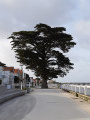
 10.15 mi
 +79 ft
 -79 ft
 4h 45
4h 45
 Moderate
 Departure from Saint-Trojan-les-Bains (Charente-Maritime)
A circular walk that takes you from the village of Saint-Trojan to explore the national forest, the wild Atlantic coast with the impressive Maumusson channel, and Gatseau Bay. A complete panorama to discover this southern tip of the Île d’Oléron, far from the cars and crowds on the beaches.Please note: To walk easily on the hard sand between (4) and (5), you must check the tide times (see the Practical Information section)
Saint-Trojan-les-Bains on the Île d'Oléron
 10.33 mi
+52 ft
-52 ft
4h 50
Moderate
Departure from Saint-Trojan-les-Bains (Charente-Maritime)
10.33 mi
+52 ft
-52 ft
4h 50
Moderate
Departure from Saint-Trojan-les-Bains (Charente-Maritime)
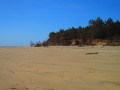
The commune of Saint-Trojan-les-Bains is located at the south-western tip of the Île d'Oléron, bathed by the Pertuis de Maumusson and the Coureau d'Oléron.
Its large sandy beaches, pine forest, mimosa trees and mild climate make Saint-Trojan-les-Bains a very popular seaside resort.
Around Ors and its oyster channel at Château-d'Oléron
 4.67 mi
+13 ft
-10 ft
2h 10
4.67 mi
+13 ft
-10 ft
2h 10
 Easy
Departure from Le Château-d'Oléron (Charente-Maritime)
Easy
Departure from Le Château-d'Oléron (Charente-Maritime)
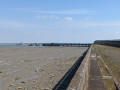
Walk around the village of Ors, its oyster channel and Grésillon.
Ors was the arrival and departure point for tourists during the heyday of the ferry (1945–1966) until the viaduct was built (1966). Traffic jams are guaranteed in the narrow, winding streets!
Stunning views of the Oléron viaduct and the old Ors jetty, which linked the mainland to the port of Chapus in Bourcefranc.
Vert Bois beach and Grande Plage on the Île d'Oléron
6.88 mi
+20 ft
-23 ft
3h 10
Moderate
Departure from Le Grand-Village-Plage (Charente-Maritime)
Circular coastal loop on the west coast of Île d'Oléron. The first part is in the Saint-Trojan National Forest, followed by a long walk on the beach, before a final stretch in the forest. Visorando app recommended.
The tour of Pointe de Gatseau and Pertuis de Maumusson
 3.11 mi
+10 ft
-10 ft
1h 25
Easy
Departure from Saint-Trojan-les-Bains (Charente-Maritime)
3.11 mi
+10 ft
-10 ft
1h 25
Easy
Departure from Saint-Trojan-les-Bains (Charente-Maritime)
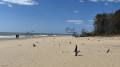
This short 5 km circular takes you around Pointe de Gatseau, the southernmost point of the Île d'Oléron, and allows you to discover the wild Pertuis de Maumusson (passage between the island and the mainland), which is only accessible on foot or by mini train during the season
Between marshes, forest and vineyards at the start of Château-d'Oléron
 6.10 mi
+13 ft
-13 ft
2h 50
Easy
Departure from Le Château-d'Oléron (Charente-Maritime)
6.10 mi
+13 ft
-13 ft
2h 50
Easy
Departure from Le Château-d'Oléron (Charente-Maritime)
An easy hike between the marshes of Château, La Chevalerie, Grésillon, Le Fief de la Gombaudière, Le Riveau and La Renisière. Please note that this hike is not possible in winter, as some paths are impassable when wet. From April to October, no problem.
Vasselot Coastal Dune Circular Loop
5.37 mi
+36 ft
-36 ft
2h 30
Easy
Departure from La Tremblade (Charente-Maritime)
The first part of the hike is on the beach, along the edge of a shifting dune, sometimes on old sections of the Coubre coastal forest, returning via a path through the undergrowth.The Visorando app is highly recommended (to locate (2) in particular).
A circular route through the wild section of the Coubre National Forest
 8.98 mi
+492 ft
-482 ft
4h 35
Moderate
Departure from La Tremblade (Charente-Maritime)
8.98 mi
+492 ft
-482 ft
4h 35
Moderate
Departure from La Tremblade (Charente-Maritime)
You will be walking between points (2) and (7), running close to the boundary of a private hunting reserve. With a bit of luck, you may spot some large game, but of course you cannot enter the reserve.
At the Tour du Gardour, a former navigation mark, you can enjoy a view of the ocean; a little further on, there is a lovely panorama of the southern tip of Île d’Oléron and the Pertuis de Maumusson.
The grand tour of Marennes, between fresh water and salt water
9.08 mi
+39 ft
-49 ft
4h 15
Moderate
Departure from Marennes (Charente-Maritime)
A walk between land and sea, following in the footsteps of the ghost trains of an old railway line.
From Brouage to Hiers
 6.69 mi
+46 ft
-46 ft
3h 05
Easy
Departure from Hiers-Brouage (Charente-Maritime)
6.69 mi
+46 ft
-46 ft
3h 05
Easy
Departure from Hiers-Brouage (Charente-Maritime)
A circular starting from the citadel of Brouage takes you through the marsh to Hiers.If you are quiet enough along the route, you will be able to see herons, egrets, nutria and, in summer, storks up close.Most of the route follows tarmaced marsh roads that are very quiet.
The ramparts of Brouage
 1.25 mi
+23 ft
-23 ft
0h 35
Easy
Departure from Hiers-Brouage (Charente-Maritime)
1.25 mi
+23 ft
-23 ft
0h 35
Easy
Departure from Hiers-Brouage (Charente-Maritime)
Set off to explore Brouage!
 La Cotinière, Château d'Oléron
 21.98 mi
+23 ft
-20 ft
4 hrs
Moderate
Departure from Saint-Pierre-d'Oléron (Charente-Maritime)
21.98 mi
+23 ft
-20 ft
4 hrs
Moderate
Departure from Saint-Pierre-d'Oléron (Charente-Maritime)
A circular route in the south of the Île d’Oléron, mostly on cycle paths. A hybrid or mountain bike is preferable to a road bike on this terrain.
La Cotinière, the Chassiron lighthouse
26.10 mi
+26 ft
-30 ft
4 hrs
Moderate
Departure from Saint-Pierre-d'Oléron (Charente-Maritime)
A circular route on the Île d’Oléron starting from the port of La Côtinière, but which can be started from any point. Mostly on cycle paths. A hybrid or mountain bike is more comfortable on this terrain than a road bike.
In the Moëze-Oléron Nature Reserve
2.46 mi
+10 ft
-10 ft
1h 10
Easy
Departure from Saint-Froult (Charente-Maritime)
A short walk for birdwatchers and other nature lovers.
The Moëze Nature Reserve
 2.49 mi
+7 ft
-7 ft
1h 10
Easy
Departure from Saint-Froult (Charente-Maritime)
2.49 mi
+7 ft
-7 ft
1h 10
Easy
Departure from Saint-Froult (Charente-Maritime)
A short walk in the heart of a protected natural environment, where you can encounter many species of birds and enjoy a guaranteed change of scenery.
Oyster beds of Saint-Pierre-d'Oléron
7.11 mi
+20 ft
-20 ft
1.5 hrs
Easy
Departure from Saint-Pierre-d'Oléron (Charente-Maritime)
Circular loop to discover the oyster beds around Saint-Pierre-d'Oléron, which can be added to the Île d'Oléron cycle tour.
Taillée du Pas de la Vache
 5.84 mi
+43 ft
-43 ft
2h 45
Easy
Departure from Saint-Just-Luzac (Charente-Maritime)
5.84 mi
+43 ft
-43 ft
2h 45
Easy
Departure from Saint-Just-Luzac (Charente-Maritime)
Circular through the former salt marshes of Saint-Just-Luzac
Promenade des Carrelets in Port-les-Barques
4.63 mi
+26 ft
-23 ft
2h 10
Easy
Departure from Port-des-Barques (Charente-Maritime)
A round trip walk from the carrelets of Port-les-Barques to those of Île Madame. Please note: only possible at low tide.
Boyardville – Le Douhet circular loop
 14.18 mi
+26 ft
-26 ft
6h 35
14.18 mi
+26 ft
-26 ft
6h 35
 Difficult
Departure from Saint-Georges-d'Oléron (Charente-Maritime)
Difficult
Departure from Saint-Georges-d'Oléron (Charente-Maritime)
A circular walk covering a section of the north-eastern coast of Île d’Oléron and passing through the Saumonards State Forest. From Boyardville, you pass the Pointe des Saumonards whilst looking out over Fort Boyard, then the mussel beds in the Anse de la Maleconche, before arriving at the small marina at Douhet. After passing through the salt marshes and the village of Foulerot, you reach the forest of maritime pines and holm oaks typical of the Atlantic dune coastline. This route takes you along a mix of small roads, forest tracks, sandy beaches and seaside paths.
Around l'îIe Madame
 4.16 mi
+36 ft
-36 ft
1h 55
Easy
Departure from Port-des-Barques (Charente-Maritime)
4.16 mi
+36 ft
-36 ft
1h 55
Easy
Departure from Port-des-Barques (Charente-Maritime)
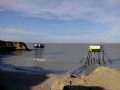
A pleasant walk passing by the Passe aux boeufs causeway, then around an island steeped in history. Numerous and varied views of the surrounding islands and coastline.
 From La Biroire to Gautrelle Beach
13.92 mi
+20 ft
-20 ft
1 hr
Easy
Departure from Saint-Pierre-d'Oléron (Charente-Maritime)
Cycle through the stone villages on the west coast of Saint-Pierre-d'Oléron, crossing bucolic countryside, vineyards, forests and marshes, before arriving at the magnificent sandy beach of La Gautrelle.
Beach, dunes and forest around La Coubre Lighthouse
8.38 mi
+66 ft
-36 ft
3h 55
Moderate
Departure from La Tremblade (Charente-Maritime)
This circular loop around the Coubre Lighthouse on the Tremblade coast offers varied landscapes: walking along the Côte Sauvage beach, between the dunes and Bonne Anse Bay, and in the Coubre Forest. The Visorando app is recommended.
From L'Îleau to La Coindrie
 6.31 mi
+23 ft
-26 ft
2h 55
Moderate
Departure from Saint-Pierre-d'Oléron (Charente-Maritime)
6.31 mi
+23 ft
-26 ft
2h 55
Moderate
Departure from Saint-Pierre-d'Oléron (Charente-Maritime)
A route through vineyards, woods and beaches. Typical landscapes of the Île d'Oléron.
The Fountain and Fort Lupin
 4.00 mi
+10 ft
-10 ft
1h 50
Easy
Departure from Saint-Nazaire-sur-Charente (Charente-Maritime)
4.00 mi
+10 ft
-10 ft
1h 50
Easy
Departure from Saint-Nazaire-sur-Charente (Charente-Maritime)
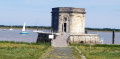
Many forts were built in the Charente estuary. They defended access to Rochefort, a military arsenal. Fort Lupin was one of them. As for the Fontaine Lupin, it allowed ships coming from Rochefort to take on water before setting sail. Tree trunks were placed in the Fosse aux Mâts to harden them before they were fitted to the ships.
From Saint Georges d'Oléron to the Chassiron lighthouse
 Association / Club / Walk leader
 16.34 mi
+23 ft
-23 ft
3 hrs
Easy
Departure from Saint-Georges-d'Oléron (Charente-Maritime)
16.34 mi
+23 ft
-23 ft
3 hrs
Easy
Departure from Saint-Georges-d'Oléron (Charente-Maritime)
A very pleasant bike ride that mostly follows cycle paths. This tour will take you across a large part of the island of Oléron, but you will also ride along the shore for much of the way, going to the end of the island, the Chassiron lighthouse.
Saumonards Forest, Boyardville and the marshes
16.01 mi
+23 ft
-23 ft
2.5 hrs
Easy
Departure from Saint-Georges-d'Oléron (Charente-Maritime)
A cycle route that crosses the Saumonards forest, the town of Boyardville and the marshes of the Île d'Oléron, this very varied route mostly follows cycle paths or small roads.
From Fouras to Fort La Pointe
 5.38 mi
+43 ft
-33 ft
2h 30
Easy
Departure from Fouras (Charente-Maritime)
5.38 mi
+43 ft
-33 ft
2h 30
Easy
Departure from Fouras (Charente-Maritime)
This hike allows you to discover two links in the chain of defences that protected Rochefort in the 17th and 18th centuries. The route, which largely follows the coast, is easy and does not present any navigation difficulties.
Charente Estuary, Saint-Laurent Marshes and Pointe de la Fumée
 15.37 mi
+39 ft
-66 ft
2.5 hrs
Moderate
Departure from Fouras (Charente-Maritime)
15.37 mi
+39 ft
-66 ft
2.5 hrs
Moderate
Departure from Fouras (Charente-Maritime)
A lovely circular route between land and sea, with superb views of the islands and the offshore forts. The route starts between the Charente and the grazed marshes of Saint-Laurent-de-la-Prée and ends with a return trip to the Pointe de la Fumée and its magnificent panoramic views. A few forts on land and several seaside houses add a lovely touch of heritage. In summer, this mountain bike route can be combined with a refreshing swim in the sea.
The Carrelets of Anse de Fouras
 4.35 mi
+39 ft
-39 ft
2h 00
Easy
Departure from Fouras (Charente-Maritime)
4.35 mi
+39 ft
-39 ft
2h 00
Easy
Departure from Fouras (Charente-Maritime)
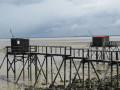
This walk will take you along the coastline of Anse de Fouras, with its variously designed and decorated carrelets (fishing huts). Enjoy the beautiful maritime atmosphere and heritage.
Plaisance Beach and Marais du Douhet
3.20 mi
+13 ft
-13 ft
1h 30
Easy
Departure from Saint-Georges-d'Oléron (Charente-Maritime)
A short circular loop of ornithological interest around the Marais du Douhet, in Saint-Pierre-d'Oléron, including a pleasant section on Plaisance Beach.
Le Bois Madame and Soumard
 6.00 mi
+26 ft
-26 ft
2h 45
Easy
Departure from Saint-Laurent-de-la-Prée (Charente-Maritime)
6.00 mi
+26 ft
-26 ft
2h 45
Easy
Departure from Saint-Laurent-de-la-Prée (Charente-Maritime)
Starting from Saint-Laurent-de-la-Prée, between woods and marshes, in the heart of the peninsula, with a beautiful view of the Anse de Fouras on the edge of the Bois Madame.
From Pointe de la Parpagnole to Charras in Saint-Laurent-de-la-Prée
6.26 mi
+69 ft
-72 ft
2h 55
Easy
Departure from Saint-Laurent-de-la-Prée (Charente-Maritime)
The route follows the Charente River near its estuary to the mouth of the Charras Canal, opening up a view of a vast circular bend in the river.
The forts of the estuary
 7.79 mi
+56 ft
-56 ft
3h 40
Moderate
Departure from Saint-Laurent-de-la-Prée (Charente-Maritime)
7.79 mi
+56 ft
-56 ft
3h 40
Moderate
Departure from Saint-Laurent-de-la-Prée (Charente-Maritime)
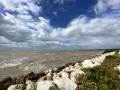
One of the most beautiful walks on the Fouras peninsula: from the banks of the Charente to the Espérance beach in Fouras, it takes in the islands and forts that protected the Rochefort harbour.
Between Saint-Laurent-de-la-Prée and Fouras along the Charente
 10.55 mi
+26 ft
-26 ft
4h 50
Moderate
Departure from Saint-Laurent-de-la-Prée (Charente-Maritime)
10.55 mi
+26 ft
-26 ft
4h 50
Moderate
Departure from Saint-Laurent-de-la-Prée (Charente-Maritime)
A circular starting from Saint-Laurent-de-la-Prée to reach the Charente and its numerous carrelets, then the ocean and the seaside resort of Fouras. The return journey is along the north coast.
The marshes of Mornac-sur-Seudre
 3.75 mi
+16 ft
-16 ft
1h 45
Easy
Departure from Mornac-sur-Seudre (Charente-Maritime)
3.75 mi
+16 ft
-16 ft
1h 45
Easy
Departure from Mornac-sur-Seudre (Charente-Maritime)
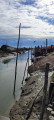
A delightful, easy walk to discover the marshes surrounding the picturesque village of Mornac-sur-Seudre.
Mornac-sur-Seudre interpretive trail
2.10 mi
+16 ft
-16 ft
1h 00
Easy
Departure from Mornac-sur-Seudre (Charente-Maritime)
Discover a typical oyster-farming village on a trail lined with numerous information panels, allowing you to stroll through the village, then walk alongside the many colourful oyster farmers' huts to finally reach the Seudre.
From Les Payolles Campsite, towards the dunes, beaches and village
3.62 mi
+26 ft
-26 ft
1h 40
Easy
Departure from Saint-Georges-d'Oléron (Charente-Maritime)
You won’t be able to resist the charm of this little village with its narrow streets, dunes and beaches. The name Chaucreis thought to derive from the word “Chancre”, which means “crab” in the local dialect, recalling the presence of a nearby rocky area where velvet crabs and edible crabs thrive.
The people of Chaucre have long relied on the shore to supplement their income through shore fishing or fishing in the sluice—alternating with viticulture and agriculture. The Rue des Naufrageurs also pays tribute to their enduring reputation as former wreckers…
The village is a microcosm of the island’s traditional way of life. Discover its 17 stone-built wells. One of them can be found in Rue de la Bardelle. A few dozen metres further on, in Rue du Vieux Chaucre, several wine cellars bear witness to the importance of viticulture.
Among the village’s attractions is its famous 19th-century bread oven, one of the few public ovens still in use on the island – during the “bread festival” days.
The village of Chaucre and the circular beach walk starting from the campsite
2.28 mi
+23 ft
-23 ft
1h 05
Easy
Departure from Saint-Georges-d'Oléron (Charente-Maritime)
Discover the charm of this little village with its narrow streets, numerous wells and traditional houses, with their external staircases. Its name is said to derive from the word “Chancre”, which means “crab” in the local dialect, recalling the presence of a nearby rocky area where velvet crabs and edible crabs thrive. The villagers of Chaucre have long relied on the shoreline to supplement their income through shore fishing or fishing in the sluice – alternating with viticulture and agriculture. A street named Rue des Naufrageurs also pays tribute to their enduring reputation as former wreckers. The village is a microcosm of the island’s traditional way of life. Discover the 17 masonry wells here. One of them can be found in Rue de la Bardelle. A few dozen metres further on, in Rue du Vieux Chaucre, several wine cellars bear witness to the importance of viticulture. Their wide openings are flanked by arched windows that once looked out onto the wine press.