


Refine your search for walks in Flandre
Flandre walks


 Walk to Kemmel
 Visorando Member
 8.11 mi
 +712 ft
 -712 ft
 4h 20
4h 20
 Average
 Departure from Heuvelland (Flandre-Occidentale)
Short route on beautiful, well-maintained Belgian trails with good signage.Simple signposting: there are posts with numbers and an arrow indicating the number you want to go to (not easy to explain but obvious when you're there).
In wet weather, some areas may be soggy or even very muddy.
Around and on Mont Rouge
 10.03 mi
+787 ft
-814 ft
5h 20
10.03 mi
+787 ft
-814 ft
5h 20
 Difficult
Departure from Heuvelland (Flandre-Occidentale)
Difficult
Departure from Heuvelland (Flandre-Occidentale)
A long, slightly winding route to enjoy the beautiful Belgian trails, which are well maintained and clearly marked.
Simple signposting: there are posts with numbers and an arrow indicating the number you want to go to (not easy to explain but obvious when you're there).
Difficult route, even very difficult in wet weather.
Ijse Valley in Huldenberg
 Association / Club / Walk leader
 9.51 mi
+348 ft
-325 ft
4h 40
Average
Departure from Huldenberg (Brabant flamand)
9.51 mi
+348 ft
-325 ft
4h 40
Average
Departure from Huldenberg (Brabant flamand)
This walk is suitable for Nordic walking. Huldenberg is a municipality in the province of Flemish Brabant, not far from the linguistic border. The region is known for its table grape cultivation and the De Doode Bemde nature reserve. Doode means 'dead' (soil unsuitable for agriculture) and Bemde means 'wet meadow'.
Around Mont Kemmel in Dries
5.61 mi
+486 ft
-469 ft
3h 00
 Easy
Departure from Heuvelland (Flandre-Occidentale)
Easy
Departure from Heuvelland (Flandre-Occidentale)
This is an easy hike despite a section on Mont Kemmel with steep slopes and steps. The rest is pleasant, with sections through vineyards and views of the surrounding countryside.
Tervuren Park, along the Voer and back through the fields
 6.70 mi
+292 ft
-295 ft
3h 20
Average
Departure from Tervuren (Brabant flamand)
6.70 mi
+292 ft
-295 ft
3h 20
Average
Departure from Tervuren (Brabant flamand)
This walk passes through Tervuren Park and then follows the Voer river with theGR® Dijeland to discover the hinterland through the fields.
The Seven Fountains, ponds, woods and countryside from Rhode-Saint-Genèse
 3.65 mi
+200 ft
-223 ft
1h 50
Easy
Departure from Sint-Genesius-Rode (Brabant flamand)
3.65 mi
+200 ft
-223 ft
1h 50
Easy
Departure from Sint-Genesius-Rode (Brabant flamand)
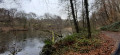
A lovely little walk around the enchanting Sept Fontaines ponds between Rhode-Saint-Genèse and Braine l'Alleud. It also takes you off the beaten track through the surrounding countryside and forests.
Mont Rouge from Loker
4.70 mi
+325 ft
-322 ft
2h 25
Easy
Departure from Heuvelland (Flandre-Occidentale)
A pleasant short hike near Loker and Le Mont Rouge, with easy-to-use numbered markings.
The ponds near Ypres
 15.91 mi
+207 ft
-210 ft
7h 30
Difficult
Departure from Ieper (Flandre-Occidentale)
15.91 mi
+207 ft
-210 ft
7h 30
Difficult
Departure from Ieper (Flandre-Occidentale)
A long walk in Belgium, a little flat, but the length makes up for it. It will allow you to discover beautiful lakes, the Palingbeek estate and part of the ramparts of Ypres.
It may be a little monotonous, but it is sometimes pleasant to hike on well-maintained trails with good signposting. Our Pas-de-Calais has some progress to make in this area. The signposting system is the same as for the Mont Kemmel and Mont Rouge walks.
Mont Rouge, route courte
4.37 mi
+525 ft
-551 ft
2h 30
Easy
Departure from Heuvelland (Flandre-Occidentale)
This is a more family-friendly version of my two other hikes on Mont Rouge. It's short but with a good elevation gain. Half of the route is in the countryside and half in the woods, with a minimum of tarmac. Enough to keep you busy for half a day while getting plenty of fresh air!
Sentier des Gueux
 6.10 mi
+312 ft
-315 ft
3h 05
Easy
Departure from Heuvelland (Flandre-Occidentale)
6.10 mi
+312 ft
-315 ft
3h 05
Easy
Departure from Heuvelland (Flandre-Occidentale)
A pleasant route in Belgium.
This is the Sentier des Gueux (Geuzen walking route), the end of which I have modified.
It uses the same signposting as the Mont Kemmel and Mont Rouge routes.
It is an easy walk along small roads, wide farm tracks and some very pleasant paths (including a "paved slanting street"!).
The Red and the Black
 10.86 mi
+1,276 ft
-1,270 ft
6h 05
Difficult
Departure from Heuvelland (Flandre-Occidentale)
10.86 mi
+1,276 ft
-1,270 ft
6h 05
Difficult
Departure from Heuvelland (Flandre-Occidentale)
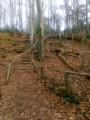
Return to Mont Rouge, passing through the Bois du Mont Noir. Enjoy a beautiful stroll through the woods, ending with a superb (and challenging) staircase.
Be careful, as soon as it gets a little wet, the paths become very difficult and you can sometimes find yourself with mud up to your mid-shoes. This was the case this morning (19 November 2021).
Route des Châteaux à Tongeren
 8.40 mi
+272 ft
-279 ft
4h 05
Average
Departure from Tongeren (Province de Limbourg)
8.40 mi
+272 ft
-279 ft
4h 05
Average
Departure from Tongeren (Province de Limbourg)
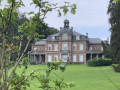
A pleasant walk in the north-western part of the town of Tongeren, following old tree-lined railway tracks, crossing the Herkwinning Nature Reserve and taking in a few castles and fortified farms in a varied environment of copses, low-stem orchards, meadows and fields.
Route proposed by the walking club "Les Pantouflards de Wihogne" (FFBMP, LG041).
The Gasthuisbossen from Ypres
6.00 mi
+144 ft
-144 ft
2h 55
Easy
Departure from Ieper (Flandre-Occidentale)
A very pleasant hike: lots of woodland, very few small roads and some beautiful clearings.
A good half-day in the great outdoors.
This hike can be combined with a stroll through the Palingbeek Estate for a route of about 22 km (connecting route between Palingbeek and Gasthuisbossen).
Fouron-le-Comte and the Altenbroek reserve from Gravenvoeren
 7.45 mi
+732 ft
-741 ft
4h 05
Average
Departure from Voeren (Province de Limbourg)
7.45 mi
+732 ft
-741 ft
4h 05
Average
Departure from Voeren (Province de Limbourg)
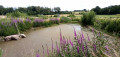
A magnificent walk starting from the village of Fouron-le-Comte ('s-Gravenvoeren in Dutch), somewhat hilly, passing through the Altenbroek woodland reserve and venturing partially beyond the Belgian-Dutch border.
Return to Kemmel
 7.48 mi
+623 ft
-643 ft
4h 00
Average
Departure from Heuvelland (Flandre-Occidentale)
7.48 mi
+623 ft
-643 ft
4h 00
Average
Departure from Heuvelland (Flandre-Occidentale)
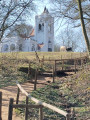
Another way to approach Kemmel, this time from the east. There are some sections in common with the first hike, but the paths are taken in the opposite direction, which allows you to enjoy them in a different way. And we can thank our Belgian neighbours for the quantity and quality of the trails they offer us.
Waiter, a 3 Monts, please!
 14.95 mi
+1,319 ft
-1,325 ft
8h 00
Difficult
Departure from Heuvelland (Flandre-Occidentale)
14.95 mi
+1,319 ft
-1,325 ft
8h 00
Difficult
Departure from Heuvelland (Flandre-Occidentale)
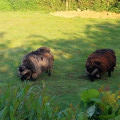
A patchwork of different routes in the area for a long hike that will delight your thighs.As for the mountains, like the Musketeers, there are four (or even five, I forgot the Baneberg near the mill), as you climb Mont Noir twice.In short, a nice climb in the Flat Country on numerous paths and a few small, quiet roads.
It's a demanding route, because even between the mountains, there are plenty of small hills. But, as is often the case in Belgium, the trails are well maintained and constantly being improved.
From the Flemish Ardennes to the Pays des Collines
 13.89 mi
+633 ft
-643 ft
6h 55
Difficult
Departure from Flandre-Orientale
13.89 mi
+633 ft
-643 ft
6h 55
Difficult
Departure from Flandre-Orientale
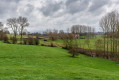
A cross-border walk between East Flanders and Hainaut. This route takes in a varied landscape, mainly rural, but also featuring hedgerows and woodland. The terrain remains gentle in this undulating region.
From Rhodes-Saint-Genèse to the Solvay Estate through the forest
 6.19 mi
+387 ft
-397 ft
3h 10
Average
Departure from Sint-Genesius-Rode (Brabant flamand)
6.19 mi
+387 ft
-397 ft
3h 10
Average
Departure from Sint-Genesius-Rode (Brabant flamand)
A very beautiful and varied route, set against the backdrop of the Sonian Forest.
A stroll through the Palingbeek estate
 6.69 mi
+295 ft
-289 ft
3h 20
Average
Departure from Ieper (Flandre-Occidentale)
6.69 mi
+295 ft
-289 ft
3h 20
Average
Departure from Ieper (Flandre-Occidentale)
A lovely cool walk when it’s hot in the Palingbeek Estate, which is remarkably well-maintained considering we’re in Belgium.There are numerous paths on the site; I recommend using the app.For history buffs, there are plenty of information boards (in multiple languages!).
Please note, it gets very busy at weekends.
This walk can be combined with the Gasthuisbossen for a route of around 22 km (connecting route between Palingbeek and the Gasthuisbossen)
Tongrian Hesbaye: Lauw – Hestappe
 7.82 mi
+200 ft
-190 ft
3h 45
Average
Departure from Tongeren (Province de Limbourg)
7.82 mi
+200 ft
-190 ft
3h 45
Average
Departure from Tongeren (Province de Limbourg)
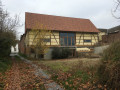
A refreshing country walk in Tongrian Hesbaye, taking us from the small village of Rutten to Lauw, following the River Geer and returning via Herstappe, a Walloon enclave in the heart of Flemish Limburg.
Walk organised by the walking club ‘Les Pantouflards de Wihogne’ (FFBMP, LG041)
The Patte d’Oie Pond, starting from Rhodes
 4.79 mi
+171 ft
-138 ft
2h 20
Easy
Departure from Sint-Genesius-Rode (Brabant flamand)
4.79 mi
+171 ft
-138 ft
2h 20
Easy
Departure from Sint-Genesius-Rode (Brabant flamand)
A lovely little walk where you can enjoy the coolness of the Sonian Forest on hot days or the magnificent autumn colours. In spring, carpets of hyacinths and anemones add touches of blue and pinkish-white to certain parts of the forest.
Veurne and Beauvoorde circular loop in the Flemish region
 11.67 mi
+30 ft
-30 ft
5h 25
Average
Departure from Veurne (Flandre-Occidentale)
11.67 mi
+30 ft
-30 ft
5h 25
Average
Departure from Veurne (Flandre-Occidentale)
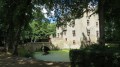
Just a few kilometres from the French-Belgian border, a walk in Flanders, in the heart of the ‘flat country’. This walk will take you from the charming and picturesque town of Veurne (Furnes in French) to Beauvoorde Castle. Before setting off, do take a stroll around the town to admire the many Renaissance houses and perhaps visit the town hall, St Walburga’s Church or the bakery museum.
 Circular route from Puurs
32.38 mi
+75 ft
-72 ft
4 hrs
Average
Departure from Puurs (Province d'Anvers)
A day-long walk along the Scheldt, taking the ferry at Sint-Amands. The walk starts at the church in Puurs, with parking available. The path is completely flat and away from the road network. It’s a relaxing day out that’s perfect for the whole family.
Scherpenberg and Rodeberg, mid-season route
 12.37 mi
+942 ft
-938 ft
6h 30
Difficult
Departure from Heuvelland (Flandre-Occidentale)
12.37 mi
+942 ft
-938 ft
6h 30
Difficult
Departure from Heuvelland (Flandre-Occidentale)
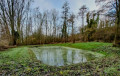
When the weather becomes a little wetter, you can still hike on Mont Rouge.
This route alternates between small roads (with little traffic), paths and forest trails, which makes it a little less strenuous.
It is a winding route, so the app is very useful.
There is quite a bit of elevation gain and, in wet weather, the trails are quite slippery. The walk is therefore quite tiring (equivalent to a 25 km route).
Bruges celebrates Christmas
 7.12 mi
+30 ft
-30 ft
3h 20
Average
Departure from Flandre-Occidentale
7.12 mi
+30 ft
-30 ft
3h 20
Average
Departure from Flandre-Occidentale
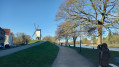
Bruges becomes an enchanted setting during the Christmas market: chalets, the smell of hot chocolate, lights and golden reflections on the canals. Stroll through cobbled streets, medieval houses and illuminated bridges.Nicknamed the "Venice of the North", the city combines historic charm and peaceful corners, perfect for a stroll through its old town and green spaces.Bruges also has its stories: legends of haunted alleys, tales of guilds and small courtyards hidden behind façades.Despite the winter, swans, ducks and moorhens enliven the canals, while the Minnewater and the Beguinage offer havens of nature.With superb views from the bridges, local crafts, carousels and a magical atmosphere, this walk promises a unique blend of heritage, festive magic and culinary delights.
Loker via Saint Jans Cappel, Mont Noir, Douve valley and Mont Rouge
9.37 mi
+712 ft
-702 ft
4h 55
Average
Departure from Heuvelland (Flandre-Occidentale)
Departure and arrival at the car park of Loker Church via the countryside of Saint Jans Cappel and the Marguerite Yourcenar Nature Reserve at Mont Noir. Pass through the Douve Valley, which forms the border with France, and along Mont Rouge.
Dranouter via Monteberg, Lettenberg and Kemmelberg
9.31 mi
+774 ft
-804 ft
4h 55
Average
Departure from Heuvelland (Flandre-Occidentale)
Start and finish at the car park of the church in Dranouter via Monteberg, Lettenberg and Kemmelberg.
Pass along the Monteberg vineyard and through the woods of the Kemmelberg provincial estate.
Hopping back and forth across the linguistic border at the start of the Kwadebeek
9.11 mi
+384 ft
-384 ft
4h 30
Average
Departure from Sint-Genesius-Rode (Brabant flamand)
A splendid piece of nature to discover near the capital, straddling the provinces of Flemish Brabant and Walloon Brabant. Half countryside, half forest, the walk is only semi-urban around km 5, along the railway line, and between km 9 and 10 in a residential area on either side of the Ermite crossroads.
Historical and cross-border route from Kanne
 8.64 mi
+860 ft
-866 ft
4h 45
Average
Departure from Riemst (Province de Limbourg)
8.64 mi
+860 ft
-866 ft
4h 45
Average
Departure from Riemst (Province de Limbourg)
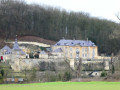
This walk explores some of the region's gems. The route passes successively by a mill on the Geer (Jeker in Dutch) with a wooden paddle wheel that is still fully functional, Neercanne Castle, the Cannerbos, a magnificent tree-lined avenue in the Milleniumbos, a few vineyards, the old Nekum mill (no longer with a wheel), the Maastricht Fort plateau with some beautiful views of the city, Huis de Torentjes, a curious cave/chapel dedicated to Our Lady of Lourdes, the Zonneberg, the Slavantebos, the panoramic site of the former ENCI quarry, the Villa Castrum (admire the tuffeau stone used in its renovation) and, finally, the strange and extremely rare feature of the Geer, which passes under the Albert Canal via a siphon. All in all, this route offers a multitude of historical and educational points of interest for young and old alike.
Roller coaster and maze on the Monts de Flandre
13.66 mi
+1,427 ft
-1,417 ft
7h 30
Difficult
Departure from Heuvelland (Flandre-Occidentale)
This is a route on which I had fun concentrating as many difficulties as possible (more than 400 m of elevation gain). This gives it a somewhat labyrinthine feel, but it allows you to avoid tarmac as much as possible. So you walk from peak to peak on well-marked, clean paths. The use ofthe Visorando app is highly recommended, even though the numbering system is very practical.
Westvleteren, Sint-Sixtus Abbey via the Dozinghembos
9.56 mi
+105 ft
-102 ft
4h 30
Average
Departure from Vleteren (Flandre-Occidentale)
Departure from the car park of Sint-Sixtus Abbey in Westvleteren. Pass through the Dozinghembos, along anunpaved path in the Dozinghembos and partly between fields. Then into the forest that is part of the Sixtusbossen.Following this route, you will encounter several beautiful forests in this part of the province of West Flanders. You will also enjoy wide views of the agricultural landscape.
The Kwadebeek Valley in Rhode-Saint-Genèse
3.39 mi
+118 ft
-125 ft
1h 40
Easy
Departure from Sint-Genesius-Rode (Brabant flamand)
A 5 km circular route, largely shaded, in and around the pretty and very peaceful Kwadebeek Valley (which is a ‘natuurpunt’ in Rhode-Saint-Genèse). No traffic noise (what a joy!) but plenty of birdsong in spring.
Circular via Voormezele starting from Dikkebus Pond
9.62 mi
+108 ft
-95 ft
4h 30
Average
Departure from Ieper (Flandre-Occidentale)
Start and finish at the Dikkebus pond car park. The route crosses a meadow where, in summer, you may encounter cows grazing on the grass.
Short tour of Ottenburg
 9.08 mi
+486 ft
-482 ft
4h 35
Average
Departure from Huldenberg (Brabant flamand)
9.08 mi
+486 ft
-482 ft
4h 35
Average
Departure from Huldenberg (Brabant flamand)
This invitation to discover Walloon Brabant, on the border between Flemish Brabant and Walloon Brabant, alternates between countryside and forest, nature and urban areas, as well as a short section in the northern zone of Wavre, passing by the unmissable GSK, one of the largest employers in Wallonia.
 Blue Circular starting from Hoeilaart
14.63 mi
+2,966 ft
-2,959 ft
2.5 hrs
Average
Departure from Hoeilaart (Brabant flamand)
A 24 km circular between wide forest paths and more technical sections. In short, two hours of pure joy in the heart of nature!
The route starts at the town hall in Hoeilaart and passes through Groenendaal. It is very well marked with the blue mountain bike logo.
Dadizele Pompeschitter, Ter Hand and Panemolen 16
9.96 mi
+112 ft
-105 ft
4h 40
Average
Departure from Moorslede (Flandre-Occidentale)
A circular walking route starting from the car park at the Basilica of Notre-Dame de Dadizele. This route takes in country lanes, green fields, chapels and local farms.
Loker, Mont Rouge, the Douve Valley and the Entre-deux-Monts vineyards
9.44 mi
+682 ft
-699 ft
4h 55
Average
Departure from Heuvelland (Flandre-Occidentale)
A circular walking route starting at Loker Church, via Mont Rouge, the Behaegel estate, the Douve Valley, the Entre-deux-Monts vineyards, the Hellegatbos, the Westouter countryside and the Scherpenberg.
Loker, Scherpenberg, Sulferberg, Westouter, Mont Noir and Mont Rouge
9.45 mi
+656 ft
-673 ft
4h 55
Average
Departure from Heuvelland (Flandre-Occidentale)
A circular walking route starting from Loker Church via Scherpenberg, Sulferberg, the Westouter countryside, Marguerite Yourcenar Park, Mont Noir, the Douve Valley and Mont Rouge.
De Klijte and the countryside around Reningelst and Dikkebus
9.58 mi
+141 ft
-138 ft
4h 30
Average
Departure from Heuvelland (Flandre-Occidentale)
A circular walking route starting at the church in the hamlet of De Klijte in Reningelst, through the countryside around Reningelst and Dikkebus, and past the Klein-Vierstraat British Military Cemetery
Loker, the Sulferberg, Westouter, Mont Noir and the Douve Valley
9.44 mi
+646 ft
-669 ft
4h 55
Average
Departure from Heuvelland (Flandre-Occidentale)
A circular walking route starting from Loker Church, passing through the Sulferberg, the Westouter vineyards, Marguerite Yourcenar Park, Mont Noir, the Douve Valley and the Behaegel Estate
Loker, Mont Rouge, the Monteberg vineyard and the Douve Valley
9.40 mi
+686 ft
-686 ft
4h 55
Average
Departure from Heuvelland (Flandre-Occidentale)
A circular walking route starting from Loker Church, passing through Mont Rouge, the Douve Valley, the Behaegel estate, the British Military Cemetery No. 10 at Locre, Dranouter Church and the Monteberg vineyard.
Geluveld, Polygonbos, Nonnebossen and The Brothers in Arms Memorial
9.64 mi
+302 ft
-308 ft
4h 40
Average
Departure from Zonnebeke (Flandre-Occidentale)
A circular walking route starting from the car park at Geluveld Church, via the Polygoonbos, the Nonnebossen, the ‘The Brothers in Arms’ memorial and the Buttes New British Cemetery in Polygon Wood.
Geluveld, Polygoonbos, Nonnebossen and The Brothers In Arms Memorial
6.27 mi
+115 ft
-102 ft
3h 00
Average
Departure from Zonnebeke (Flandre-Occidentale)
A circular walking route starting from the car park at Geluveld Church, via the Polygoonbos (one of Belgium’s oldest state-owned forests), the Nonnebossen and the Brothers In Arms Memorial
Dikkebus Pond, the Dickebusch Military Cemetery and the hamlet of Klijte
9.66 mi
+144 ft
-135 ft
4h 35
Easy
Departure from Ieper (Flandre-Occidentale)
A circular walking route starting from the car park at Zillebeke Pond, passing through the Dickebusch Old Military Cemetery, the hamlet of De Klijte and the British Military Cemetery ‘The Huts’ in Ypres
Historic centre of Tongeren and Kevie Nature Reserve
 7.73 mi
+66 ft
-69 ft
3h 35
Average
Departure from Tongeren (Province de Limbourg)
7.73 mi
+66 ft
-69 ft
3h 35
Average
Departure from Tongeren (Province de Limbourg)
A pleasant and varied walk, combining culture and exercise, in and around Tongeren, Belgium’s oldest town. It takes you through the historic districts (the Beguinage, the ramparts, the basilica, etc.) as well as the adjoining nature reserve. The Geer (Jeker in Dutch), its branches and tributaries are a defining feature of the region.
Zillebeke, Hooge Crater Cemetery, Bellewaerde and Mont Sorrel
9.45 mi
+213 ft
-200 ft
4h 30
Average
Departure from Ieper (Flandre-Occidentale)
A circular walking route starting from Zillebeke Church and passing through the fourth-largest Commonwealth military cemetery in Europe, with 5,923 graves: Hooge Crater Cemetery. The walk passes by Bellewaerde Park, Mont Sorrel, Zwarte Leen and Palingbeek.
Zillebeke, Hooge Crater, Bellewaerde, Mont Sorrel and Palingbeek
9.66 mi
+417 ft
-417 ft
4h 50
Average
Departure from Ieper (Flandre-Occidentale)
A circular walking route starting from Zillebeke Church via the Hooge Crater: the fourth-largest Commonwealth military cemetery in Europe, with 5,923 graves. Nearby are Bellewaerde amusement park, Mont Sorrel and the Palingbeek Estate nature reserve.
 From Ghent to Ostend
45.11 mi
+144 ft
-135 ft
4 hrs
Difficult
Departure from Gent (Flandre-Orientale)
This cycle route links the elegant city of Ghent with the North Sea beaches at Ostend. Ideal for an idyllic getaway or as a stage on a cycle tour, this route mainly follows the Ghent–Bruges–Ostend Canal, offering a flat, safe route that is completely free of motor traffic.
Borgloon and its Transparent Chapel
3.43 mi
+174 ft
-167 ft
1h 45
Easy
Departure from Borgloon (Province de Limbourg)
A short, peaceful walk in Borgloon, through the countryside and past fruit orchards. The walk follows land consolidation and country lanes used by a few farm vehicles and cyclists, with a brief detour past the Transparent Chapel and the Roman Villa landmark.
A short trip into the Netherlands near Mesch
3.03 mi
+148 ft
-148 ft
1h 30
Easy
Departure from Voeren (Province de Limbourg)
A short walk through the woods near Mesch, in the Netherlands, along the border with Mouland (Moelingen)
This is a family-friendly walk (suitable for even very young children) with the option of stopping for a bite to eat at the customs post between Mouland and Mesch or in the village centre.
More walks in Flandre
Select an area below: