


Refine your search for walks in Province de Limbourg
Province de Limbourg walks


 Route des Châteaux à Tongeren
 Visorando Member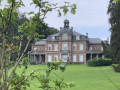
 8.40 mi
 +272 ft
 -279 ft
 4h 05
4h 05
 Moderate
 Departure from Tongeren (Province de Limbourg)
A pleasant walk in the north-western part of the town of Tongeren, following old tree-lined railway tracks, crossing the Herkwinning Nature Reserve and taking in a few castles and fortified farms in a varied environment of copses, low-stem orchards, meadows and fields.
Route proposed by the walking club "Les Pantouflards de Wihogne" (FFBMP, LG041).
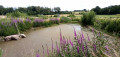
Fouron-le-Comte and the Altenbroek reserve from Gravenvoeren
 7.45 mi
+732 ft
-741 ft
4h 05
Moderate
Departure from Voeren (Province de Limbourg)
7.45 mi
+732 ft
-741 ft
4h 05
Moderate
Departure from Voeren (Province de Limbourg)
A magnificent walk starting from the village of Fouron-le-Comte ('s-Gravenvoeren in Dutch), somewhat hilly, passing through the Altenbroek woodland reserve and venturing partially beyond the Belgian-Dutch border.
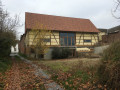
Tongrian Hesbaye: Lauw – Hestappe
 7.82 mi
+200 ft
-190 ft
3h 45
Moderate
Departure from Tongeren (Province de Limbourg)
7.82 mi
+200 ft
-190 ft
3h 45
Moderate
Departure from Tongeren (Province de Limbourg)
A refreshing country walk in Tongrian Hesbaye, taking us from the small village of Rutten to Lauw, following the River Geer and returning via Herstappe, a Walloon enclave in the heart of Flemish Limburg.
Walk organised by the walking club ‘Les Pantouflards de Wihogne’ (FFBMP, LG041)
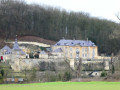
Historical and cross-border route from Kanne
 8.64 mi
+860 ft
-866 ft
4h 45
Moderate
Departure from Riemst (Province de Limbourg)
8.64 mi
+860 ft
-866 ft
4h 45
Moderate
Departure from Riemst (Province de Limbourg)
This walk explores some of the region's gems. The route passes successively by a mill on the Geer (Jeker in Dutch) with a wooden paddle wheel that is still fully functional, Neercanne Castle, the Cannerbos, a magnificent tree-lined avenue in the Milleniumbos, a few vineyards, the old Nekum mill (no longer with a wheel), the Maastricht Fort plateau with some beautiful views of the city, Huis de Torentjes, a curious cave/chapel dedicated to Our Lady of Lourdes, the Zonneberg, the Slavantebos, the panoramic site of the former ENCI quarry, the Villa Castrum (admire the tuffeau stone used in its renovation) and, finally, the strange and extremely rare feature of the Geer, which passes under the Albert Canal via a siphon. All in all, this route offers a multitude of historical and educational points of interest for young and old alike.
Historic centre of Tongeren and Kevie Nature Reserve
 7.73 mi
+66 ft
-69 ft
3h 35
Moderate
Departure from Tongeren (Province de Limbourg)
7.73 mi
+66 ft
-69 ft
3h 35
Moderate
Departure from Tongeren (Province de Limbourg)
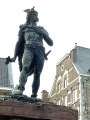
A pleasant and varied walk, combining culture and exercise, in and around Tongeren, Belgium’s oldest town. It takes you through the historic districts (the Beguinage, the ramparts, the basilica, etc.) as well as the adjoining nature reserve. The Geer (Jeker in Dutch), its branches and tributaries are a defining feature of the region.
Borgloon and its Transparent Chapel
3.43 mi
+174 ft
-167 ft
1h 45
 Easy
Departure from Borgloon (Province de Limbourg)
Easy
Departure from Borgloon (Province de Limbourg)
A short, peaceful walk in Borgloon, through the countryside and past fruit orchards. The walk follows land consolidation and country lanes used by a few farm vehicles and cyclists, with a brief detour past the Transparent Chapel and the Roman Villa landmark.
A short trip into the Netherlands near Mesch
3.03 mi
+148 ft
-148 ft
1h 30
Easy
Departure from Voeren (Province de Limbourg)
A short walk through the woods near Mesch, in the Netherlands, along the border with Mouland (Moelingen)
This is a family-friendly walk (suitable for even very young children) with the option of stopping for a bite to eat at the customs post between Mouland and Mesch or in the village centre.
From castles to orchards in Sint-Pieters-Heurne
 10.32 mi
+374 ft
-354 ft
5h 05
Moderate
Departure from Heers (Province de Limbourg)
10.32 mi
+374 ft
-354 ft
5h 05
Moderate
Departure from Heers (Province de Limbourg)
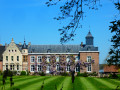
Starting from Sint-Pieters-Heurne, the walk takes you through the rather hilly countryside of Limburg Hesbaye, passing by a castle here, a chapel there, a limestone cave, an orchard, or a large square-shaped Hesbaye farmhouse.Although the region is criss-crossed by land consolidation tracks and concrete cycle paths, traffic is usually limited to a few farm vehicles, bicycles and occasionally a group or two of Vespa enthusiasts.That said, the route also follows numerous country lanes and forest tracks where you mainly come across only walkers or joggers.The numerous orchards (pear and apple trees) add a pleasant touch to the route when in bloom.
Through the orchards around Hoepertingen
 11.38 mi
+266 ft
-246 ft
5h 30
Moderate
Departure from Sint-Truiden (Province de Limbourg)
11.38 mi
+266 ft
-246 ft
5h 30
Moderate
Departure from Sint-Truiden (Province de Limbourg)
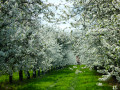
Pear, apple and cherry trees, a few vines and strawberry plants ensure the richness and reputation for fruit-growing of this part of the Limburg Hesbaye. Orchards galore to admire in spring during the blossom and later in the season for their fruit production.
From the Albert Canal to Montagne Saint-Pierre
8.80 mi
+659 ft
-650 ft
4h 35
Moderate
Departure from Riemst (Province de Limbourg)
A fairly varied walk around the Albert Canal and part of Montagne Saint-Pierre, including a short detour into Dutch territory. The route passes by Neercanne Castle, where the Maastricht Treaty was signed on 9 December 1991.
Remersdael – Mortroux
 6.76 mi
+456 ft
-948 ft
3h 30
Moderate
Departure from Voeren (Province de Limbourg)
6.76 mi
+456 ft
-948 ft
3h 30
Moderate
Departure from Voeren (Province de Limbourg)
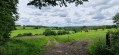
A short walk for this27th stage, but one packed with beautiful sights: buildings, panoramic views and landscapes. A stage where you really get a feel for what a steep climb or descent is like. They aren’t long, but your quadriceps will certainly feel the strain. It’s also a stage that gives pride of place to country lanes and footpaths.
The sand dunes of the Oudsberg
 11.43 mi
+161 ft
-141 ft
5h 25
Moderate
Departure from Opglabbeek (Province de Limbourg)
11.43 mi
+161 ft
-141 ft
5h 25
Moderate
Departure from Opglabbeek (Province de Limbourg)
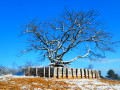
The Limburg Campine region is home to many gems, including several nature reserves with magnificent sand dunes. This walk crosses the Oudsberg nature reserve on the last authorised paths, offering alternating landscapes of heathland and pine or deciduous forests (beech, birch, etc.). Although the entire route is relatively flat, the nature reserve, at the geographical centre of the route, is quite hilly for the region.Of course, the sand under the snow is only visible in certain places. However, without the snow, the sand is clearly visible in the heart of the Oudsberg nature reserve. Most of the route is wooded, but the landscape is a little more rural at the eastern and northern ends.
Hike without description to be followed with the Visorando app.
Walk in the Pays de Herve, between Aubel and Fourons
 14.05 mi
+1,115 ft
-1,115 ft
7h 25
14.05 mi
+1,115 ft
-1,115 ft
7h 25
 Difficult
Departure from Voeren (Province de Limbourg)
Difficult
Departure from Voeren (Province de Limbourg)
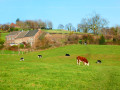
In the Pays de Herve, known for its hedgerows and livestock farming, Aubel is the land of syrup made from apples, pears and, in some cases, sugar beet... a real treat for many enthusiasts. The Fourons, which became a Limburg enclave after the political and linguistic disputes between Flemish and Walloons ended in the late 20th century, offer the same type of rolling countryside, but with a little more woodland. The region is also renowned, like the English countryside, for its countless country lanes, cattle grids, turnstiles and gates that prevent livestock from escaping onto the roads, into fields or into neighbours' pastures. Hikers will discover monumental churches as well as countless crosses, chapels and shrines.
Schulensmeer and Schulensbroek
 7.74 mi
+20 ft
-20 ft
3h 35
Moderate
Departure from Herk-de-Stad (Province de Limbourg)
7.74 mi
+20 ft
-20 ft
3h 35
Moderate
Departure from Herk-de-Stad (Province de Limbourg)
Schulen Lake and the adjacent marshes are part of the Wijers region , which is home to 1,001 ponds. It is a paradise not only for birds, but also for birdwatchers and walkers. Of course, bird populations vary depending on the season, but you will almost always see egrets, ducks, cormorants, coots, herons, geese and sometimes even the odd kingfisher. Goats and sheep are helping to rehabilitate some of the banks.
Schulensboek, Demer valley
9.82 mi
+36 ft
-36 ft
4h 35
Moderate
Departure from Herk-de-Stad (Province de Limbourg)
Welcome to the Demer valley, where water, reeds and meadows form a living landscape, shaped by time and floods. Around the village of Schulen, the Gulkerveld is reminiscent of the former floodplain, once feared, now a refuge for birds and botanists.With its 700 hectares, the Schulensbroek nature reserve is one of the largest wetlands in Flanders. Herons, greylag geese, lapwings and bitterns share the ponds and meadows.The Halbekerdijk, an old dyke, bears witness to the struggle against the waters, while the drier Vijversheide contrasts with its pine and birch trees. The Schulensmeer, created to regulate the floods of the Demer, has become a paradise for aquatic wildlife.Area: +700 ha, origin: floodplain, special features: artificial lake turned reserve, migratory birds, wetland flora.Here, the water tells the story of the landscape and the passage of time.
The land of 1001 ponds between Hasselt and the Demer valley
10.68 mi
+66 ft
-75 ft
5h 00
Moderate
Departure from Hasselt (Province de Limbourg)
Between Hasselt and the Demer valley lies a world of water and mist, shaped by floods and time. Herkenrode Abbey, founded in the 12th century, marks the starting point: a Cistercian centre, it recalls the ancient link between spirituality and nature.In Stokrooie, the landscape becomes wetter before reaching the Albert Canal, dug in the 20th century, a marriage between industry and ecology.The Wijvenheide nature reserve reveals its peaceful ponds, where herons, kingfishers and ospreys thrive. The Kleine Vijver, Witven and Grote Platwijer are home to a rich variety of flora and fauna, between reed beds and floodplains.The Zonderikbeek and Vrankenschans meander through peat bogs and fields, witnesses to a time when the Demer shaped local life.The walk ends at the Bosvijver and the Vossen Kuil, where the silence of the water mingles with the breath of the wind.
Circular through the Limburg orchards starting from Helshoven
 8.11 mi
+213 ft
-220 ft
3h 55
Moderate
Departure from Borgloon (Province de Limbourg)
8.11 mi
+213 ft
-220 ft
3h 55
Moderate
Departure from Borgloon (Province de Limbourg)
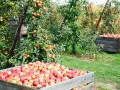
Pear, apple and cherry trees, as well as vines, strawberry plants and currant bushes, ensure the wealth and reputation of this part of Limburg's Hesbaye region for its fruit production. There are orchards galore to admire in spring when they are in bloom and later in the season when they are producing fruit.
Loop between Fouron-Saint-Pierre and Kijs through the forest reserves
 7.83 mi
+745 ft
-735 ft
4h 15
Moderate
Departure from Voeren (Province de Limbourg)
7.83 mi
+745 ft
-735 ft
4h 15
Moderate
Departure from Voeren (Province de Limbourg)
A very beautiful, somewhat hilly hike starting from Fouron-Saint-Pierre, taking you through the Konenbos, Veursbos and Vrouwenbos forest reserves, interspersed with more rural landscapes. The route also crosses the Pietershof vineyard. At the end of the walk, you can take a break at the Commanderie, either to visit the site or to enjoy a delicious rainbow trout, as there is a fish farm (the oldest in Belgium!) next door.
In the heart of Limburg's fruit-growing region since Kozen
10.29 mi
+102 ft
-102 ft
4h 50
Moderate
Departure from Nieuwerkerken (Province de Limbourg)
The Sint-Truiden region is renowned for its cherry (to a lesser extent), apple and pear orchards. The walk offers the chance to see them up close (very close). We particularly recommend it during the flowering season, usually in April.
The Wijers ponds
 9.09 mi
+36 ft
-36 ft
4h 15
Easy
Departure from Zonhoven (Province de Limbourg)
9.09 mi
+36 ft
-36 ft
4h 15
Easy
Departure from Zonhoven (Province de Limbourg)
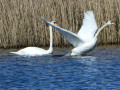
This region, with its 1,001 ponds and numerous nature reserves, is full of beautiful trails for hikers. Here is one that takes you between the main Wijers ponds and the Albert Canal, which connects the Meuse and Scheldt rivers between Liège and the port of Antwerp.The ponds and the surrounding aquatic and rural landscapes are absolutely magnificent in good weather.
A walk around the Terhills slag heaps
 7.65 mi
+472 ft
-469 ft
3h 55
Moderate
Departure from Dilsen-Stokkem (Province de Limbourg)
7.65 mi
+472 ft
-469 ft
3h 55
Moderate
Departure from Dilsen-Stokkem (Province de Limbourg)
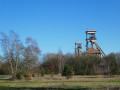
Terhills is, above all, the former site of the Eisden coal mine, with its four slag heaps – three of which are open to the public – its two headframes over the old shafts, and the large management and engineers’ building, which has been magnificently restored and converted into a luxury hotel.Terhills is also the site of a former gravel quarry. It has now become a vast natural area open to the public, with several signposted walking routes starting from the main entrance to the Haute-Campine National Park, situated next to the hotel.There is also a holiday village, the Terhills Resort, situated on the north-western shore of the lake, as well as a water sports centre, the Terhills Cablepark, located on the north-eastern shore of the lake.
More walks in Province de Limbourg
Select an area below: