


Refine your search for walks in Verruyes
Verruyes walks


 Around the Massicart in Verruyes
 Visorando Member
 7.05 mi
 +407 ft
 -400 ft
 3h 35
3h 35
 Moderate
 Departure from Verruyes (Deux-Sèvres)
The vast majority of this walk takes place within the municipality of Verruyes. You’ll start by following paths through the Gâtinais countryside alongside the Ruisseau du Massicart, which flows into the Chambon – on which the Barrage de la Touche Poupard is built. Finally, a series of small roads will take you back to the starting point. You’ll pass through small hamlets typical of the region.
Saint-Georges-de-Noisné circular via Soleil Levant
 5.69 mi
+338 ft
-341 ft
2h 55
Moderate
Departure from Saint-Georges-de-Noisné (Deux-Sèvres)
5.69 mi
+338 ft
-341 ft
2h 55
Moderate
Departure from Saint-Georges-de-Noisné (Deux-Sèvres)
This circular route takes you along the Soleil Levant lake, along theGR® 364 andGRP® des Marches de Gâtine footpaths, and to the village of Les Nénéens.
Circular Touche Poupard in Saint-Georges-de-Noisné
 4.80 mi
+174 ft
-207 ft
2h 20
4.80 mi
+174 ft
-207 ft
2h 20
 Easy
Departure from Saint-Georges-de-Noisné (Deux-Sèvres)
Easy
Departure from Saint-Georges-de-Noisné (Deux-Sèvres)
This is an easy route that runs along the right bank of the Touche Poupard reservoir, crosses a few small streams that partially feed the dam, and passes through a few hamlets in Saint-Georges-de-Noisné. Part of the GRP® des Marches de Gâtine and GR®364 trails are used. Waterproof walking shoes with good gripping soles are recommended in case of recent rainfall.
The Bois de Cathelogne
 6.61 mi
+436 ft
-446 ft
3h 25
Moderate
Departure from Saint-Georges-de-Noisné (Deux-Sèvres)
6.61 mi
+436 ft
-446 ft
3h 25
Moderate
Departure from Saint-Georges-de-Noisné (Deux-Sèvres)
A walk that takes place largely within the commune of the ‘Nénéens’ (the inhabitants of Saint-Georges-de-Noisné). You’ll pass through villages with working farms. The first part follows shaded paths in summer, though these can be damp in winter. The rest of the route takes you along two stretches of minor roads, ending with a walk through the Bois de Cathelogne, with its ponds and a cabin that has a touch of Canada about it.
Les villages de Clavé
 6.66 mi
+243 ft
-253 ft
3h 15
Moderate
Departure from Clavé (Deux-Sèvres)
6.66 mi
+243 ft
-253 ft
3h 15
Moderate
Departure from Clavé (Deux-Sèvres)
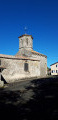
A walk through a small village in the Gâtine region. The route follows small roads and paths, passing through several villages in the area, takes a section ofthe GR®® 364 and ends by skirting the Soleil Levant lake.
Circular loops around Saint-Projet
 Association / Club / Walk leader
 6.90 mi
+338 ft
-338 ft
3h 30
Moderate
Departure from La Chapelle-Bâton (Deux-Sèvres)
6.90 mi
+338 ft
-338 ft
3h 30
Moderate
Departure from La Chapelle-Bâton (Deux-Sèvres)
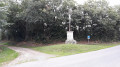
This route consists of three circular loops that are linked, allowing you to adjust the length of the walk as you wish. In a delightfully undulating landscape, dotted with fountains and wash houses, you’ll walk along paths that are more or less overgrown with grass and small country lanes passing through villages with beautifully restored old houses.
Around the Touche-Poupard reservoir
 13.68 mi
+522 ft
-515 ft
6h 45
13.68 mi
+522 ft
-515 ft
6h 45
 Difficult
Departure from Clavé (Deux-Sèvres)
Difficult
Departure from Clavé (Deux-Sèvres)
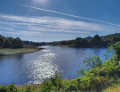
A pleasant walk around the Touche-Poupard reservoir, presenting no difficulty other than its length. There are plenty of spots along the route where you can stop for a nice break.
The Soleil Levant lake from Clavé
 4.08 mi
+141 ft
-148 ft
2h 00
Easy
Departure from Clavé (Deux-Sèvres)
4.08 mi
+141 ft
-148 ft
2h 00
Easy
Departure from Clavé (Deux-Sèvres)
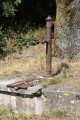
A pleasant walk around the Soleil Levant lake behind the Clavé dam bridge. The route follows both banks in turn along paths that are steep in places, offering lovely scenery and fine views of Lac de la Touche Poupard. The walk takes in a landscape information board, the Church of Notre-Dame de Clavé, the Gros Chêne fountain, old hamlets and the Clavé garden.
 Parcours autour de Clavé
7.31 mi
+427 ft
-436 ft
3 hrs
Moderate
Departure from Clavé (Deux-Sèvres)
Ce parcours comporte des chemins variés, assez peu de route.
Il est à faire plutôt en été, automne (chemins assez humides).
Il faut soit des poneys aguerris, soit être prêt à quitter sa monture pour lui montrer le passage en 2 ou 3 endroits.
Il n'y a qu'1 ou 2 chemins où le galop est possible.
Beaucoup de pas, du trot de temps à autre.
À éviter les après-midis en week-end du fait de la présence de piétons autour du lac à Clavé.
A tour of the hamlets in Augé
 5.82 mi
+433 ft
-427 ft
3h 05
Easy
Departure from Augé (Deux-Sèvres) (Deux-Sèvres)
5.82 mi
+433 ft
-427 ft
3h 05
Easy
Departure from Augé (Deux-Sèvres) (Deux-Sèvres)
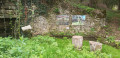
This walk, starting from the village of Augé, will take you through some of the hamlets that make up the parish, along shaded paths and small country lanes. You’ll have the chance to pass three of Augé’s many wash houses and catch a glimpse of the Houmelière farmhouse.
The Montbrune stream and the village of Augé
 7.92 mi
+633 ft
-617 ft
4h 10
Moderate
Departure from Augé (Deux-Sèvres) (Deux-Sèvres)
7.92 mi
+633 ft
-617 ft
4h 10
Moderate
Departure from Augé (Deux-Sèvres) (Deux-Sèvres)
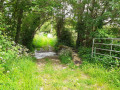
This unmarked hike will first take you through the village of Augé and its narrow streets, then along paths that will lead you to the Montbrune stream via several footbridges and through a few pretty villages with their wash houses. The end of the route is on the old Deux-Sèvres tramway line (TDS).
Le Chambon and La Ligueure
 8.02 mi
+702 ft
-702 ft
4h 20
Moderate
Departure from Augé (Deux-Sèvres) (Deux-Sèvres)
8.02 mi
+702 ft
-702 ft
4h 20
Moderate
Departure from Augé (Deux-Sèvres) (Deux-Sèvres)
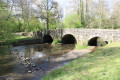
A unique walk offering the chance to explore the Chambon and Ligueure valleys, featuring fountains and wash houses, family cemeteries, the Roman bridge at Azay-le-Brûlé, the Valette dairy farm, the village of Augé with its narrow lanes and medieval houses, and the church at Augé.
A glimpse of Lac de la Touche-Poupard from Lachereau
 5.52 mi
+144 ft
-144 ft
2h 40
Easy
Departure from Exireuil (Deux-Sèvres)
5.52 mi
+144 ft
-144 ft
2h 40
Easy
Departure from Exireuil (Deux-Sèvres)
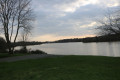
A very beautiful walk to discover a section ofthe GR® de Pays des Marches de Gâtine along Lac de la Touche Poupard. This route offers lovely views and magnificent scenery, made all the more enjoyable by the frequent sunshine.
Cherveux, Lussais and Villeneuve lakes from Saint-Christophe-sur-Roc
 7.42 mi
+354 ft
-358 ft
3h 45
Moderate
Departure from Saint-Christophe-sur-Roc (Deux-Sèvres)
7.42 mi
+354 ft
-358 ft
3h 45
Moderate
Departure from Saint-Christophe-sur-Roc (Deux-Sèvres)
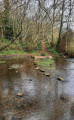
A pleasant, mostly shaded walk, mainly along very narrow roads.
Route des lavoirs de Saint-Christophe-sur-Roc
 6.69 mi
+276 ft
-285 ft
3h 20
Moderate
Departure from Saint-Christophe-sur-Roc (Deux-Sèvres)
6.69 mi
+276 ft
-285 ft
3h 20
Moderate
Departure from Saint-Christophe-sur-Roc (Deux-Sèvres)
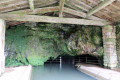
A pleasant walk exploring the restored wash houses, between the Roche and Musson valleys. This route takes you past the Romanesque church, the Tree of Liberty and the Hosanna cross in the village, then on to the wash house at Boisne, the wash house at La Perdillière, the wash house at Chazais and the wash house at La Roche, as well as the underground river. The route offers varied scenery and a chance to experience the natural beauty of this lovely corner of the Gâtine region.
Circular Pommier starting from Lachereau
 5.28 mi
+207 ft
-210 ft
2h 35
Easy
Departure from Exireuil (Deux-Sèvres)
5.28 mi
+207 ft
-210 ft
2h 35
Easy
Departure from Exireuil (Deux-Sèvres)
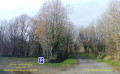
In the commune of Exireuil, this short route follows the eastern bank of the La Touche Poupard reservoir.Starting from the Lachereau sailing club car park, it partly follows the GR®364 trail, passes through the Bois de la Vergne and Bois de Chantoiseau woods, and joins the Clavé au Pommier road.
Circular walk around Saivres
 6.04 mi
+387 ft
-358 ft
3h 05
Moderate
Departure from Saivres (Deux-Sèvres)
6.04 mi
+387 ft
-358 ft
3h 05
Moderate
Departure from Saivres (Deux-Sèvres)
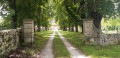
This walk circles the village of Saivres via minor roads, dirt tracks and footpaths. It passes through several of the area’s many villages. You will cross the River Chambon twice, via the Cailletière and Coutancière footbridges, and walk past the Château de l’Herbaudière.
.
The Donia Quarry
6.55 mi
+571 ft
-591 ft
3h 30
Moderate
Departure from Saivres (Deux-Sèvres)
A 3-hour walk in the commune of Saivres along the sunken paths that are still accessible. You’ll explore the banks of the Chambon downstream of the Touche Poupart dam, a stretch offering a view of the Donia quarry, its working face and its spoil heap. The walk ends with a stroll through an arboretum.
The Brangeard Valley, starting from the Cherveux-Saint-Christophe pond
 6.03 mi
+325 ft
-341 ft
3h 05
Easy
Departure from Saint-Christophe-sur-Roc (Deux-Sèvres)
6.03 mi
+325 ft
-341 ft
3h 05
Easy
Departure from Saint-Christophe-sur-Roc (Deux-Sèvres)
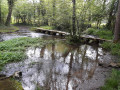
Setting off from the Cherveux-Saint-Christophe lake, you’ll reach the water tower, the highest point on the route, surrounded by countryside stretching as far as the eye can see, then a shaded path will lead you to the hamlet of Lussais. You’ll then enjoy the lush greenery of the Brangeard, Musson and Marcusson valleys as you follow a circular route along small roads, footpaths and grassy tracks that will take you back to the lake where you started.
Around the Brangeard and Marcussusson streams
 5.32 mi
+305 ft
-292 ft
2h 45
Easy
Departure from Cherveux (Deux-Sèvres)
5.32 mi
+305 ft
-292 ft
2h 45
Easy
Departure from Cherveux (Deux-Sèvres)
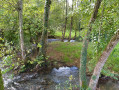
This walk, which takes place entirely within the commune of Cherveux, allows you to explore the Brangeard and Marcusson streams. You’ll follow hiking trails and small country lanes, passing through a few hamlets.
The Brangeard Valley
 3.95 mi
+272 ft
-266 ft
2h 05
Easy
Departure from Cherveux (Deux-Sèvres)
3.95 mi
+272 ft
-266 ft
2h 05
Easy
Departure from Cherveux (Deux-Sèvres)
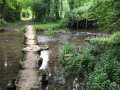
A bucolic route with some elevation, partly following the paths marked out by the municipality around the Brangeard, Marcusson and Musson rivers. Some sections are steep and others may be flooded depending on the season.
Circular route of the Rabané and Renardière valleys
 5.60 mi
+472 ft
-443 ft
3h 00
Easy
Departure from Exireuil (Deux-Sèvres)
5.60 mi
+472 ft
-443 ft
3h 00
Easy
Departure from Exireuil (Deux-Sèvres)
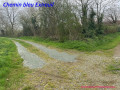
A peaceful hike in the countryside around Exiroise and Nanteuillaise. This circular hike, marked by the presence of several streams, takes you through villages, across a ford and past a 19th-century private cemetery.