


Refine your search for walks in Verrières (Charente)
Verrières (Charente) walks


 The Bellevue route: between hillsides and valleys
 Local authority
 4.17 mi
 +138 ft
 -141 ft
 2h 00
2h 00
 Easy
Easy
 Departure from Verrières (Charente) (Charente)
The commune is bordered to the south by the Né valley, towards which its land slopes gently. Vineyards, the main crop, cover more than two-thirds of the commune’s area and produce excellent, refined Grande Champagne brandies.
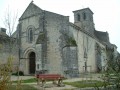
Côt Route
 10.86 mi
+463 ft
-453 ft
5h 25
10.86 mi
+463 ft
-453 ft
5h 25
 Difficult
Departure from Juillac-le-Coq (Charente)
Difficult
Departure from Juillac-le-Coq (Charente)
Juillac-Le-Coq is crossed by the Mothe stream, a tributary of the Charente. The village has a population of around 667. Wine-growing is its main industry.
The Côt Route (short circular route)
3.77 mi
+69 ft
-69 ft
1h 45
Easy
Departure from Juillac-le-Coq (Charente)
Juillac-Le-Coq is crossed by the Mothe stream, a tributary of the Charente. The village has a population of around 667. Wine-growing is its main industry.
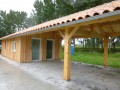
Circuit du Dolmen
 7.20 mi
+236 ft
-236 ft
3h 30
7.20 mi
+236 ft
-236 ft
3h 30
 Moderate
Departure from Saint-Fort-sur-le-Né (Charente)
Moderate
Departure from Saint-Fort-sur-le-Né (Charente)
Situated at 25m altitude - the river Né and the Motte stream are the principal water courses which cross the locality.
In certain places there are excellent views towards and from the village, the Dolmen, of the vineyards, the landscape of the Grande Champagne and surrounding villages. In every season you can discover a certain charm and appeal in St. Fort.
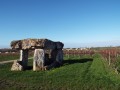
"Step by Step" through the village centre of Saint-Fort-sur-le-Né
 2.62 mi
+98 ft
-72 ft
1h 15
Easy
Departure from Saint-Fort-sur-le-Né (Charente)
2.62 mi
+98 ft
-72 ft
1h 15
Easy
Departure from Saint-Fort-sur-le-Né (Charente)
Situated at an altitude of 25 metres, the River Né and the Motte stream are the main watercourses flowing through the commune of Saint-Fort-sur-le-Né.
From certain vantage points, there are excellent views of the village, the dolmen, the vineyards, the Grande Champagne countryside and the other surrounding villages.
Each season offers a chance to discover its own unique charms.
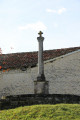
Around the Né, through woods and vineyards
 Visorando Member
 7.16 mi
+249 ft
-276 ft
3h 30
Moderate
Departure from Saint-Palais-du-Né (Charente)
7.16 mi
+249 ft
-276 ft
3h 30
Moderate
Departure from Saint-Palais-du-Né (Charente)
A lovely walk through the woods and vineyards of Petite Champagne around the River Né. Along the route, you’ll see fine examples of farmhouses with Charente-style gates, as well as old mills. The walk crosses the Île de Breuil after fording a stream. There are also fountains dotted along the route or nearby, including the Fontaine de Zade.
Circuit des Trois Pierres
 5.91 mi
+125 ft
-125 ft
2h 50
Easy
Departure from Angeac-Champagne (Charente)
5.91 mi
+125 ft
-125 ft
2h 50
Easy
Departure from Angeac-Champagne (Charente)
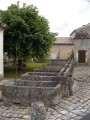
A lovely walk through the Charentais vineyards, passing beautiful buildings and around the village of Roissac.
Angeac- Champagne counts numerous prosperous-looking Charentais houses, witness to the wealth which lies in the local economy producing cognac, its principal occupation. The entrances to the estates are marked by a gate or porch way: there are at least 50. They are unique and typical of our local heritage. At Roissac village they embellish the main street.
Route des Petaux
 6.71 mi
+361 ft
-384 ft
3h 25
Moderate
Departure from Ambleville (Charente)
6.71 mi
+361 ft
-384 ft
3h 25
Moderate
Departure from Ambleville (Charente)
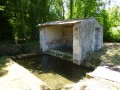
The village is crossed by the Collinaud, a tributary of the Né. Primarily focused on wine-growing, Ambleville also has fertile land for growing cereals.
The Petaux Route (short circular route)
 4.13 mi
+207 ft
-200 ft
2h 05
Easy
Departure from Ambleville (Charente)
4.13 mi
+207 ft
-200 ft
2h 05
Easy
Departure from Ambleville (Charente)
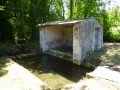
The Collinaud, a tributary of the Né, flows through the village. Whilst Ambleville is primarily focused on wine-growing, it also has fertile land suitable for growing cereals.
Circuit de la Motte
 1.24 mi
+102 ft
-105 ft
0h 40
Easy
Departure from Ambleville (Charente)
1.24 mi
+102 ft
-105 ft
0h 40
Easy
Departure from Ambleville (Charente)
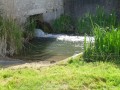
The commune of Ambleville is crossed by the Collinaud, a stream tributary of the River Né, which includes wash-houses typically found in this area of Grande Champagne. During your walk you will have the chance to discover La Motte, a hamlet in this commune. Take the time to admire the rolling countryside and La Motte wash-house.
This walk can be enjoyed with all the family, because children will find it fun to cross the Collinaud by way of the stepping stones.
Criteuil-la-Magdeleine loop
9.72 mi
+272 ft
-259 ft
4h 40
Moderate
Departure from Criteuil-la-Magdeleine (Charente)
Starting from the car park at the church in Criteuil-la-Magdeleine, the route runs alongside the Né and Collinaud rivers and crosses the vineyards of the Grande Champagne region. Points of interest along the route include: the Church of Saint-Macrin - Saint Jean Baptiste, the Chapel of La Magdeleine, beautiful wine estates, the wash house, the drinking water pumping station, the remains of a watermill and windmill, and various viewpoints.
Ugni Blanc Route
 4.63 mi
+141 ft
-138 ft
2h 15
Easy
Departure from Criteuil-la-Magdeleine (Charente)
4.63 mi
+141 ft
-138 ft
2h 15
Easy
Departure from Criteuil-la-Magdeleine (Charente)
Set slightly apart from the main roads, the village seems to have fallen asleep… And yet, at the start of the last century, it was home to numerous shops and craftsmen who made it famous throughout the surrounding area. Criteuil-la-Magdeleine boasts a wealth of large houses, known as ‘logis’, and around ten mills (no longer in operation today) situated on the River Né. Some of these can be seen from the walking trail.
The Bois de Saint-Eugène in Archiac, in the Champagne region
 Tourist office6.19 mi
+440 ft
-440 ft
3h 15
Moderate
Departure from Archiac (Charente-Maritime)
Tourist office6.19 mi
+440 ft
-440 ft
3h 15
Moderate
Departure from Archiac (Charente-Maritime)
Hike down the vineyard-covered slopes of the Petite Champagne region, home to Cognac brandies, and venture into the woodland with its fabulous atmosphere. In Saint-Eugène, the hill, crowned by a beautiful church overlooking the Né valley, offers a magnificent panoramic view of the vineyards.
Crêtes de Segonzac circuit
 6.08 mi
+358 ft
-341 ft
3h 05
Moderate
Departure from Segonzac (Charente)
6.08 mi
+358 ft
-341 ft
3h 05
Moderate
Departure from Segonzac (Charente)
The Gaul root of its name means 'strength, courage'. The Hundred Years War persuaded the construction of numerous underground passages, which enabled the inhabitants to take refuge from extreme violence. Without a doubt Protestantism has left its mark in the area, particularly with the Segonzacais. The first Reformed church was founded in 1558. Troubles occurred in 1562 and the parish church was burnt down. Today's Temple church is the third constructed since the Edict of Nantes.
Circuit Romain in Segonzac
 8.92 mi
+482 ft
-459 ft
4h 30
Moderate
Departure from Segonzac (Charente)
8.92 mi
+482 ft
-459 ft
4h 30
Moderate
Departure from Segonzac (Charente)
Segonzac: the root of its name means 'strength, courage' in Gaulish.
Archaeological digs have revealed a Neolithic inhabitation (approx. 5000 B.C)
The Hundred Years' War persuaded the construction of numerous underground passages, which enabled the inhabitants to take refuge from extreme violence.
Protestantism has, without a doubt, left its mark in the area, particularly with the Segonzacais. The first Reformed church was founded in 1558. Troubles occurred in 1562 and the parish church was burnt down. Today's Temple is the third constructed since the Edict of Nantes.
According to a legend at the start of the 17th century, it was at Segonzac that a vintner named Chevalier de la Croix Maron invented double distillation.