


Refine your search for walks in Saint-Dolay
Saint-Dolay walks


 Roho moors and marshes
 Visorando Member
 6.71 mi
 +453 ft
 -459 ft
 3h 30
3h 30
 Moderate
 Departure from Saint-Dolay (Morbihan)
The village of Saint-Dolay overlooks the plateau that borders the south bank of the Vilaine. This flat landscape is cut by a valley with sometimes steep slopes, where the Moulin Neuf stream flows. While moors cover the slopes and heights of the valley, marshes and peat bogs cover the bottom. Add to this variety of vegetation a remarkable geological diversity, and you will have many reasons to explore this route.
Around the Roho Mill and the Saint-Dolay marshes
4.58 mi
+335 ft
-308 ft
2h 25
 Easy
Departure from Saint-Dolay (Morbihan)
Easy
Departure from Saint-Dolay (Morbihan)
Saint-Dolay features the typical landscapes of the region, though with a notable abundance of water and mills.This runoff and surface water has created marshes and ponds around the Moulin de Roho.This circular route is part ofthe PR®® known as the Boucle du Marais de Roho.
The Vilaine hills via Saint-Cry and Sainte-Anne
8.46 mi
+623 ft
-627 ft
4h 25
Moderate
Departure from Nivillac (Morbihan)
The Bovenant hill is one of the hills overlooking the Vilaine marshes, between Saint-Dolay and Béganne. A stone’s throw away, the villages of Saint-Cry and Sainte-Anne are two small settlements where life revolves around their respective chapels. Further north, Ruelmin is practically right on the water’s edge. The suggested route connects these different places through a rolling landscape that alternates between farmland and woodland, with water running as a common thread throughout.
The Canal and Étang Aumée in Fégréac
8.27 mi
+299 ft
-299 ft
4h 05
Moderate
Departure from Fégréac (Loire-Atlantique)
The landscape around Fégréac is characterised by three small valleys overlooked by the village. The first is home to the River Isac and the canal linking Nantes to Brest; the second is home to the Dréneuc stream and the marshes bordering it; and the third has been transformed into a large pond which once supplied the Aumée Mill. All converge on the River Vilaine, which can be seen at the Bellion lock. After passing through all these water-dominated spots, you return to the starting point by following the canal.
A circular route starting from Nivillac
5.74 mi
+295 ft
-295 ft
2h 55
Easy
Departure from Nivillac (Morbihan)
On either side of La Roche-Bernard, the Vilaine flows through the South Armorican Fold, the first range of hills behind the coastline. Here, the river has carved out a steep-sided valley, and the proposed route allows you to explore the section immediately upstream of the Morbihan Bridge. The wooded slopes, varying in steepness, line the mirror-like surface formed by the dark waters of the Vilaine.
Circuit de Trévineuc
6.27 mi
+591 ft
-568 ft
3h 25
Easy
Departure from Nivillac (Morbihan)
Le port de Foleux marque la limite occidentale des marais de Redon. À cet endroit, la Vilaine se resserre et se fraie un passage entre les reliefs du Sillon de Bretagne. Le circuit proposé permet de découvrir la rive Sud de ce goulet. Il parcourt le bord de l'eau et joue aux montagnes russes à travers le relief assez accidenté de Nivillac.
Saint-Jean-la-Poterie circular loop
 3.53 mi
+341 ft
-361 ft
1h 55
Easy
Departure from Saint-Jean-la-Poterie (Morbihan)
3.53 mi
+341 ft
-361 ft
1h 55
Easy
Departure from Saint-Jean-la-Poterie (Morbihan)
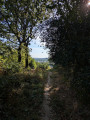
A walk around Saint-Jean-la-Poterie along the banks of the Oust.
The Vilaine river, right bank and left bank at La Roche-Bernard
 5.96 mi
+522 ft
-518 ft
3h 10
Moderate
Departure from Nivillac (Morbihan)
5.96 mi
+522 ft
-518 ft
3h 10
Moderate
Departure from Nivillac (Morbihan)
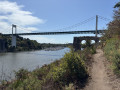
As you approach La Roche-Bernard, the Vilaine river winds its way through the geological folds of southern Armorica. The result is a rugged, wooded landscape that is very pleasant to walk through.
The banks of the Vilaine
 11.32 mi
+614 ft
-614 ft
5h 45
Moderate
Departure from La Roche-Bernard (Morbihan)
11.32 mi
+614 ft
-614 ft
5h 45
Moderate
Departure from La Roche-Bernard (Morbihan)
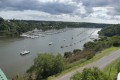
A very pretty route which starts in the countryside and forest and then follows the course of the Vilaine river.
The start and finish are at the very pretty port of La Roche-Bernard.
Around La Roche-Bernard
5.30 mi
+272 ft
-266 ft
2h 40
Easy
Departure from La Roche-Bernard (Morbihan)
Although La Roche-Bernard is an urban centre that locals refer to as a ‘town’, its area (40 ha) and population (approx. 700 inhabitants) make it one of the smallest county towns in France. It is surrounded by the communes of Nivillac, Herbignac and Férel, across which the majority of the urban area is spread. The proposed route takes you around the area.
La Roche-Bernard bridge loop
 3.07 mi
+518 ft
-499 ft
1h 50
Moderate
Departure from La Roche-Bernard (Morbihan)
3.07 mi
+518 ft
-499 ft
1h 50
Moderate
Departure from La Roche-Bernard (Morbihan)
An hour-and-a-half circuit with a few tricky sections. This pleasant walk alternates seamlessly between passages at water's edge and ridge-climbing, and also spans two bridges some 50 m above the Vilaine. The bridge circuit allows you to discover a small section of the river as it crosses the Sillon de Bretagne. Get your calves ready!
Saint-Cornely route
 6.84 mi
+692 ft
-699 ft
3h 45
Moderate
Departure from Péaule (Morbihan)
6.84 mi
+692 ft
-699 ft
3h 45
Moderate
Departure from Péaule (Morbihan)
Saint Cornely is the patron saint of horned animals. It is therefore fitting that his chapel is located in a very agricultural part of Péaule. But during this walk, which criss-crosses the plateau above the Vilaine, you will have other things to do than count cows and other quadrupeds. Keep your eyes open, there is much to see in this meander of the Vilaine
The Brivet between Branduca and Coisnongle
7.34 mi
+49 ft
-49 ft
3h 25
Moderate
Departure from Drefféac (Loire-Atlantique)
At Pontchâteau, the Brivet flows into a gorge in the Sillon de Bretagne before heading off towards the Brière marshes. But upstream of this gorge, it meanders through the marshes that fill the basin between Dréfféac and Sainte-Anne-sur-Brivet. The suggested route takes you along this very tranquil river, through beautiful wooded countryside, before following its course as closely as possible. And you might even be lucky enough to spot the storks that nest here.
The Gagneries de la Chapelle des Marais circuit
8.32 mi
+10 ft
-10 ft
3h 50
Moderate
Departure from La Chapelle-des-Marais (Loire-Atlantique)
Farming in the marshes has always relied on mowing and grazing the meadows when they were no longer covered in water. Cows prefer dry land to the aquatic environment, and providing them with winter refuge areas is key to ensuring the continuation of this farming practice. This route invites you to discover the pastures of La Chapelle des Marais.
The Pontchâteau viaduct, from above and below
 2.76 mi
+194 ft
-164 ft
1h 25
Easy
Departure from Pontchâteau (Loire-Atlantique)
2.76 mi
+194 ft
-164 ft
1h 25
Easy
Departure from Pontchâteau (Loire-Atlantique)
A short walk to explore Pontchâteau from above and below the viaduct, taking you through the marshes and the town centre.
The Brière Marshes: a chance to spot storks
 8.50 mi
+125 ft
-121 ft
4h 00
Moderate
Departure from Pontchâteau (Loire-Atlantique)
8.50 mi
+125 ft
-121 ft
4h 00
Moderate
Departure from Pontchâteau (Loire-Atlantique)
On your way to and from Pontchâteau town centre, discover the Brière marshes. With a bit of luck (in season), you may spot a nest of storks.
Route of the Mills in Marzan
6.17 mi
+479 ft
-472 ft
3h 15
Easy
Departure from Marzan (Morbihan)
Located opposite La Roche-Bernard, on the other bank of the Vilaine, the commune of Marzan stretches across a plateau overlooking the river. On these heights, exposed to sea winds, the remains of several windmills can still be seen. Streams have carved out the rock and flow at the bottom of the valleys. Where it was possible to dam them, water mills were built. The proposed route takes you from one to the other through varied and pleasant countryside.
From Fescal to the Vilaine
 6.57 mi
+505 ft
-505 ft
3h 30
Moderate
Departure from Péaule (Morbihan)
6.57 mi
+505 ft
-505 ft
3h 30
Moderate
Departure from Péaule (Morbihan)
North of La Roche-Bernard, the Vilaine has carved its bed into a rocky plateau, and the streams that join it have also settled in fairly steep valleys. The remains of windmills on the heights and watermills along the streams mark this route, which winds around the former estate of Fescal Castle. This route runs mainly through wooded areas, interspersed with wooded hedgerow landscapes.
Long route east of Péaule
 12.64 mi
+1,188 ft
-1,191 ft
6h 50
Moderate
Departure from Péaule (Morbihan)
12.64 mi
+1,188 ft
-1,191 ft
6h 50
Moderate
Departure from Péaule (Morbihan)
The Péaule countryside has a rather unique network of paths. Land consolidation has not been destructive here, and large, beautiful hedges still line the roads.
Elsewhere, the Vilaine and its tributary streams have carved into the rocky plateau to create a generally wooded landscape where you can take a stroll.
The long route on offer allows you to enjoy these different but always interesting landscapes, which follow one another during a beautiful day's walk.
Around the Brivet from Pontchâteau
 16.20 mi
+328 ft
-328 ft
7h 45
16.20 mi
+328 ft
-328 ft
7h 45
 Difficult
Departure from Pontchâteau (Loire-Atlantique)
Difficult
Departure from Pontchâteau (Loire-Atlantique)
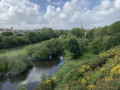
This walk will take you on a journey of discovery around the Pontchâteau area, winding your way along the River Brivet. The route mainly follows easily accessible paths, with a few sections on roads with very little traffic. You’ll encounter plenty of wildlife and a wide variety of vegetation. Please note that after heavy rain, the banks of the Brivet may be flooded.
Walk through the woods of Pontchâteau
 3.05 mi
+118 ft
-141 ft
1h 30
Moderate
Departure from Pontchâteau (Loire-Atlantique)
3.05 mi
+118 ft
-141 ft
1h 30
Moderate
Departure from Pontchâteau (Loire-Atlantique)
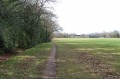
A Sunday stroll through the woods of Coët-Roz, the venue for the French, European and World Cyclo-cross Championships. Nature and bird lovers will be in their element. Mountain bikers will appreciate the challenging terrain. Another special mountain bike route is described.
Le Calvaire – Bodio – town centre
 7.77 mi
+177 ft
-180 ft
3h 45
Easy
Departure from Pontchâteau (Loire-Atlantique)
7.77 mi
+177 ft
-180 ft
3h 45
Easy
Departure from Pontchâteau (Loire-Atlantique)
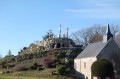
Walk around Pontchâteau and the surrounding area – Le Calvaire – Bodio – Return via Pontchâteau town centre
You can ask for a map of the Calvary walk at the Tourist Information Office before you set off, or download it from the internet.
Route from the Chapel of Saint-André
5.04 mi
+272 ft
-292 ft
2h 35
Easy
Departure from Péaule (Morbihan)
The commune of Péaule is located on a plateau that has been carved out by rivers, creating valleys of varying depths. In the eastern part of the commune, these valleys, which lead towards the Vilaine, create a forest atmosphere that is pleasant to walk through. Deciduous trees on the slopes and at the bottom of the valley, and conifers on the moors at the top, provide the setting for this well-shaded walk, where sunken paths give way to tree-lined avenues.
Short circular around Moulin de Quip
 3.04 mi
+177 ft
-187 ft
1h 35
Easy
Departure from Allaire (Morbihan)
3.04 mi
+177 ft
-187 ft
1h 35
Easy
Departure from Allaire (Morbihan)
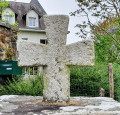
This is a gentle, enchanting walk that allows you to enjoy the woodland paths and the coolness of the long pond at the 18th-century Moulin de Quip mill.
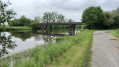
Bailey Bridge seen from Saint-Perreux
 5.64 mi
+20 ft
-16 ft
2h 35
Easy
Departure from Saint-Perreux (Morbihan)
5.64 mi
+20 ft
-16 ft
2h 35
Easy
Departure from Saint-Perreux (Morbihan)
A pleasant route along the Oust and the Arz, ideal for anglers.
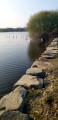
Île aux Pies and Vallée de l'Oust
 19.02 mi
+719 ft
-719 ft
9h 20
Difficult
Departure from Redon (Ille-et-Vilaine)
19.02 mi
+719 ft
-719 ft
9h 20
Difficult
Departure from Redon (Ille-et-Vilaine)
Discover the Oust Valley and the Nantes-Brest Canal, near Redon, and Bains-sur-Oust with this circular route that combines towpaths, forest paths and communal roads.
A few high points will give you a magnificent view of Île aux Pies and the Oust Valley.
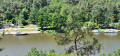
The tour of Île aux Pies, starting from La Potinais
 13.25 mi
+492 ft
-492 ft
6h 30
Difficult
Departure from Saint-Vincent-sur-Oust (Morbihan)
13.25 mi
+492 ft
-492 ft
6h 30
Difficult
Departure from Saint-Vincent-sur-Oust (Morbihan)
To cross the geological fold that extends the Landes de Lanvaux, the Oust has carved its way through the rocky plateau to wind its way through the Île aux Pies gorge. Upstream, at the confluence of the Oust and the Aff, the alluvial plain is sometimes dry, sometimes covered in water. You need to choose the right time to set off. Early spring seems to be the best season to fully enjoy the landscapes you pass through... without getting your feet wet.
From Ranrouët Castle to La Brière
7.49 mi
+26 ft
-26 ft
3h 30
Moderate
Departure from Herbignac (Loire-Atlantique)
The Château de Ranrouët is a medieval gem nestled on the edge of the marshes. Here, there is no fortified rock, but a slight elevation in the greenery. The marshes that surround it provided protection, and the proposed route winds through the surrounding countryside where land and water constantly mix.
The Herbignac Potters’ Trail
8.17 mi
+79 ft
-79 ft
3h 50
Moderate
Departure from Herbignac (Loire-Atlantique)
Passing through clay extraction sites and former pottery villages, this route pays tribute to one of Herbignac’s traditional trades, which continued until the mid-20th century.
The banks of the Brière at Marlais
8.21 mi
+39 ft
-39 ft
3h 50
Moderate
Departure from Herbignac (Loire-Atlantique)
This route runs between the Brière and Mès marshes. These two protected wetlands are home to numerous birds, which you may spot along the way.
 Tour of the thatched-roof villages of Saint-Lyphard
18.20 mi
+138 ft
-148 ft
2 hrs
Easy
Departure from Saint-Lyphard (Loire-Atlantique)
Remnants of a time when much of what enabled the people of Bréca to make a living was extracted from the marsh, thatched cottages are still very much in evidence around Saint-Lyphard. There are said to be no fewer than 500 of them.
To discover this exceptional heritage, why not hop on your bike and explore the narrow roads and farm tracks that criss-cross the Saint-Lyphard area? A complete change of scenery is guaranteed!
The Gannedel and Massérac Marshes
21.40 mi
+443 ft
-443 ft
2.5 hrs
Easy
Departure from Sainte-Marie (Ille-et-Vilaine) (Ille-et-Vilaine)
Upstream from Redon, the Vilaine valley stretches out between the hillsides that flank it to the north and south. Vast expanses of wild or cultivated marshland follow one another, through the midst of which the river flows.
Cycling along the small roads that wind around these marshes is a refreshing way to explore the area and its villages, away from the main roads.
More walks in Saint-Dolay
Select a point of interest below: