


Refine your search for walks in Plobannalec-Lesconil
Plobannalec-Lesconil walks


 Megalithic circuit
 Visorando Member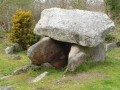
 7.42 mi
 +39 ft
 -39 ft
 3h 25
3h 25
 Moderate
 Departure from Plobannalec-Lesconil (Finistère)
Discover the megaliths (dolmens, covered passageway, menhir) facing the open sea.
Return via the coastal path and Lesconil Port.
Between megaliths and crosses in Plobannalec-Lesconil
 3.94 mi
+30 ft
-30 ft
1h 50
3.94 mi
+30 ft
-30 ft
1h 50
 Easy
Departure from Plobannalec-Lesconil (Finistère)
Easy
Departure from Plobannalec-Lesconil (Finistère)
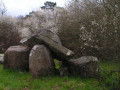
Follow this short route, created by the "Lire à Plobannalec" association, and head into the countryside to discover various elements of the local heritage: megalithic sites, crosses and fountains.
A historical stroll through Lesconil
 3.62 mi
+33 ft
-33 ft
1h 40
Easy
Departure from Plobannalec-Lesconil (Finistère)
3.62 mi
+33 ft
-33 ft
1h 40
Easy
Departure from Plobannalec-Lesconil (Finistère)
Lesconil enjoyed a golden age during the heyday of its fishing port and was, at the same time, a popular holiday resort.Yachting has largely replaced fishing, but the old infrastructure still serves as a reminder of that era.This short walk aims to rediscover some of the historical aspects of life in this little port and its magnificent setting.
Ria, countryside, seaside and Lesconil harbour
 6.40 mi
+23 ft
-23 ft
3h 00
Easy
Departure from Plobannalec-Lesconil (Finistère)
6.40 mi
+23 ft
-23 ft
3h 00
Easy
Departure from Plobannalec-Lesconil (Finistère)
Walking up the Stêr estuary, an area ideal for bird watching in areas exposed at low tide, along paths and small country roads, the trail through the dunes and then along the seafront between large boulders, and finally the port of Lesconil, which has now lost its former aura.
Enough to satisfy the curiosity of hikers and give them the opportunity to enjoy a breath of fresh sea air.
Please note: diversion fromthe PR® (see practical information).
Heritage around Plonivel
 5.20 mi
+30 ft
-30 ft
2h 25
Easy
Departure from Plobannalec-Lesconil (Finistère)
5.20 mi
+30 ft
-30 ft
2h 25
Easy
Departure from Plobannalec-Lesconil (Finistère)
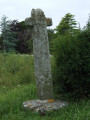
Plonivel is a former parish abolished during the Revolution, and the Saint-Brieuc Chapel was its parish church.
This route, which initially follows the Stêr estuary, a river in Lesconil, invites walkers to discover a rich heritage around this chapel: a manor house, various crosses, Gallic stelae, fountains and the ruins of an old chapel.
Seaside, built-up areas and countryside in Loctudy
 6.83 mi
+23 ft
-23 ft
3h 10
Moderate
Departure from Plobannalec-Lesconil (Finistère)
6.83 mi
+23 ft
-23 ft
3h 10
Moderate
Departure from Plobannalec-Lesconil (Finistère)
This flat route combines sections of coastal paths (GR®34 ), at least where the path is not diverted from the seafront due to buildings encroaching on the coastline, with small roads between built-up areas and the countryside. A lovely touch of heritage comes in the form of two small, unassuming chapels, each with its own votive fountain.
Coastal and inland areas between Lesconil and Treffiagat
 6.56 mi
+39 ft
-39 ft
3h 05
Moderate
Departure from Plobannalec-Lesconil (Finistère)
6.56 mi
+39 ft
-39 ft
3h 05
Moderate
Departure from Plobannalec-Lesconil (Finistère)
The first part of the coastal route takes you along the Lesconil dune with its large granite boulders of various shapes, then along the beaches.
The return route through the hinterland takes you past two menhirs, one of which is partly submerged in a marsh, and then to the Saint-Fiacre Chapel in its beautiful flower-filled enclosure.
Seaside and countryside between Lesconil and Loctudy
 7.73 mi
+26 ft
-26 ft
3h 35
Moderate
Departure from Loctudy (Finistère)
7.73 mi
+26 ft
-26 ft
3h 35
Moderate
Departure from Loctudy (Finistère)
This route combines sections along the coast, at least when hikers are not diverted due to the privatisation of certain sections of the coastline, small country roads and a path along the Ster estuary, a river whose appearance changes with the tide. Along the way, you will discover three chapels and a manor house.
Please note: after point (11), thePR®® is prohibited by municipal decree. You must follow the diversion put in place (August 2021).
Heritage along the river, through the woods and countryside from Loctudy to Pont-l’Abbé
 9.90 mi
+43 ft
-43 ft
4h 35
Moderate
Departure from Loctudy (Finistère)
9.90 mi
+43 ft
-43 ft
4h 35
Moderate
Departure from Loctudy (Finistère)
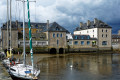
This route, which follows the Pont-l’Abbé River on the outward leg and then winds through woods and countryside on the return, offers the chance to discover a rich historical heritage: churches, chapels, castles, manor houses, mills, old residences, bridges and menhirs, to name just a few of the most remarkable monuments that line the route.
Discovering Loctudy
 5.42 mi
+33 ft
-33 ft
2h 30
Easy
Departure from Loctudy (Finistère)
5.42 mi
+33 ft
-33 ft
2h 30
Easy
Departure from Loctudy (Finistère)
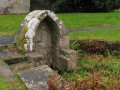
Enjoy exploring Loctudy through its streets and alleys, beaches and shorelines.
Via the ports of Loctudy
 5.26 mi
+20 ft
-20 ft
2h 25
Easy
Departure from Loctudy (Finistère)
5.26 mi
+20 ft
-20 ft
2h 25
Easy
Departure from Loctudy (Finistère)
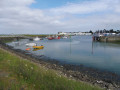
Three main points of interest on this route through Loctudy:- at the start, the marina with a ferry to Île-Tudy,- shortly afterwards, Saint-Tudy Church, which hides a very well-preserved Romanesque interior behind an 18th-century façade,- at the end of the route, the fishing port and its famous “Demoiselles de Loctudy” (langoustines).
Between these points, the route winds its way through narrow streets, connecting paths and along the seafront by the beach.
Along the Pont-L'Abbé river
 6.32 mi
+30 ft
-30 ft
2h 55
Easy
Departure from Pont-l'Abbé (Finistère)
6.32 mi
+30 ft
-30 ft
2h 55
Easy
Departure from Pont-l'Abbé (Finistère)
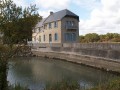
Wooded route following the right bank of the Pont-L'Abbé river towards its estuary between Île-Tudy and the port of Loctudy. The river is dotted with small private islands connected to the bank by a bridge.After passing by the Chapelle du Croaziou chapel, the return journey takes you through the countryside along a long farm track.The landscape in the first part of the route is completely different depending on the tide level.
From menhir to menhir via Saint Fiacre Chapel
 6.01 mi
+43 ft
-43 ft
2h 50
Easy
Departure from Treffiagat (Finistère)
6.01 mi
+43 ft
-43 ft
2h 50
Easy
Departure from Treffiagat (Finistère)
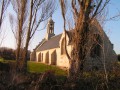
Starting from the port of Léchiagat, let's go and discover two very different menhirs, as well as the Saint Fiacre chapel and its fountain.
Heritage sites around Plomeur
 14.66 mi
+82 ft
-82 ft
6h 50
14.66 mi
+82 ft
-82 ft
6h 50
 Difficult
Departure from Plomeur (Finistère)
Difficult
Departure from Plomeur (Finistère)
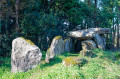
Discover an exceptional religious, megalithic and natural heritage between the village of Plomeur and Pointe de la Torche, via bucolic footpaths, farm tracks and quiet country lanes.
Route de Saint-Côme
 6.21 mi
+43 ft
-43 ft
2h 55
Easy
Departure from Plomeur (Finistère)
6.21 mi
+43 ft
-43 ft
2h 55
Easy
Departure from Plomeur (Finistère)
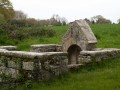
Countryside route allowing you to discover the Kerfland Menhirs as well as Saint-Côme Chapel and its fountain.
Around the Port of Guilvinec
 6.44 mi
+39 ft
-36 ft
3h 00
Moderate
Departure from Guilvinec (Finistère)
6.44 mi
+39 ft
-36 ft
3h 00
Moderate
Departure from Guilvinec (Finistère)
Discover the port of Guilvinec and its maritime environment. You will also encounter two menhirs along the way.
Around the Chapel of La Tréminou
 6.52 mi
+66 ft
-75 ft
3h 05
Moderate
Departure from Plomeur (Finistère)
6.52 mi
+66 ft
-75 ft
3h 05
Moderate
Departure from Plomeur (Finistère)
An easy route through the countryside along small roads and shaded country lanes.
This magnificent chapel also played an important role in the Bonnets Rouges revolt in 1675. This revolt was a violent protest against the new taxes imposed by King Louis XIV: the creation of a tax on stamped paper and a tax on the possession of pewter objects, but also a protest against the harshness and increase in seigneurial taxes.
Gardens, heritage, greenway and river around Pont-l'Abbé
 5.25 mi
+95 ft
-95 ft
2h 30
Easy
Departure from Pont-l'Abbé (Finistère)
5.25 mi
+95 ft
-95 ft
2h 30
Easy
Departure from Pont-l'Abbé (Finistère)
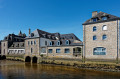
This semi-urban route begins with a visit to the Jardin des Camélias, which has been recently renovated but is little known despite its location in the heart of the town. It continues with a tour of the main monuments of Pont-l'Abbé before heading out into the countryside on the outskirts of Tréméoc and returning to the starting point via a greenway and the banks of the Pont-l'Abbé river.
Pont-l'Abbé towpath and Rosquerno Wood
 3.46 mi
+39 ft
-39 ft
1h 40
Easy
Departure from Pont-l'Abbé (Finistère)
3.46 mi
+39 ft
-39 ft
1h 40
Easy
Departure from Pont-l'Abbé (Finistère)
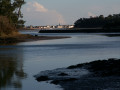
This easy route begins on the towpath of the Rivière de Pont-l'Abbé, where the landscape changes with the tide, then continues through the protected natural area of the Bois de Rosquerno. After passing near the Rosquerno equestrian centre, the route continues past the Manoir de Trévanec, a little gem of Pont-l'Abbé’s heritage dating back to the 15th century, before rejoining the towpath.
Towpath and undergrowth along the Pont-l'Abbé River
 4.09 mi
+36 ft
-36 ft
1h 55
Easy
Departure from Pont-l'Abbé (Finistère)
4.09 mi
+36 ft
-36 ft
1h 55
Easy
Departure from Pont-l'Abbé (Finistère)
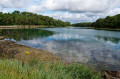
This short walk from Pont-l'Abbé offers a wealth of heritage. It starts on the towpath along the river and continues through the woods past the Manoir de Trévannec before returning to the starting point.
Route of the towpath and tour of the lake
 6.07 mi
+39 ft
-39 ft
2h 50
Easy
Departure from Pont-l'Abbé (Finistère)
6.07 mi
+39 ft
-39 ft
2h 50
Easy
Departure from Pont-l'Abbé (Finistère)
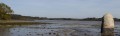
After following the Pont-l'Abbé river, return to discover the lake and some of Pont-l'Abbé's historic sites, such as the Notre-Dame de Carmes Chapel and the old Lambour district with its partly ruined church.
Between the north and south of Pont-l'Abbé
 7.09 mi
+108 ft
-108 ft
3h 20
Moderate
Departure from Pont-l'Abbé (Finistère)
7.09 mi
+108 ft
-108 ft
3h 20
Moderate
Departure from Pont-l'Abbé (Finistère)
This route from north to south of Pont-l'Abbé allows you to discover pieces of the town's history. The Saint-Jacques de Lambour Chapel with its decapitated bell tower is a reminder of the Red Cap Revolt of 1675. The greenway follows a section of the old Transbigouden railway line that linked Pont-L'Abbé to Quimper and operated until 1963 the Château des Barons, built in the 13th and 14th centuries by the Barons of Pont, who became powerful lords, the inhabited bridge and, finally, the 19th-century towpath , built to cope with an increase in traffic and tonnage in the port.
Old railway lines in Pont-l’Abbé
 3.44 mi
+95 ft
-95 ft
1h 40
Easy
Departure from Pont-l'Abbé (Finistère)
3.44 mi
+95 ft
-95 ft
1h 40
Easy
Departure from Pont-l'Abbé (Finistère)
Pont-l’Abbé station was a major railway junction for three railway lines.
The main line, linking Quimper to Pont-l’Abbé, closed in 1988 (freight).
In 1907, the Pont-l’Abbé–Saint-Guénolé line opened to link the ports of the Bigouden region. This train, known as the ‘Train Birinik (bernique)’, mainly carried fish and shellfish. It was also widely used by locals to get around, travelling at a speed of 20 km/h. The line closed in 1963.
Finally, the line from Audierne, opened in 1912, was known as the “carrot train” as it was mainly used to transport vegetables. It was also used by passengers. Its existence was short-lived, as it closed in 1935.
This walk follows sections of these tracks
Route of the 2 churches and 3 chapels between Saint-Jean-Trolimon and Plomeur
 11.61 mi
+49 ft
-49 ft
5h 25
Moderate
Departure from Saint-Jean-Trolimon (Finistère)
11.61 mi
+49 ft
-49 ft
5h 25
Moderate
Departure from Saint-Jean-Trolimon (Finistère)
Discover two churches, three chapels and picturesque hamlets in the countryside between Saint-Jean-Trolimon and Plomeur via idyllic footpaths, farm tracks and quiet country lanes.
More walks in Plobannalec-Lesconil
Select a point of interest below: