


Refine your search for walks in Fos-sur-Mer
Fos-sur-Mer walks


 Château de Fos-sur-Mer and Étang de l'Estomac
 Visorando Member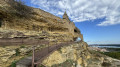
 4.61 mi
 +105 ft
 -102 ft
 2h 15
2h 15
 Easy
Easy
 Departure from Fos-sur-Mer (Bouches-du-Rhône)
This hike offers striking contrasts between the historic centre of Fos-sur-Mer with its Hauture hilltop castle on one side, the Étang de l'Estomac lagoon and former Fos salt marshes on the other, and the surrounding industrial activity characterised by the numerous oil tankers in the nearby Gulf of Fos.
Information panels will help you discover the history of the former salt marshes.
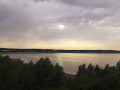
The oppidum of Saint-Blaise
 4.36 mi
+105 ft
-118 ft
2h 05
Easy
Departure from Saint-Mitre-les-Remparts (Bouches-du-Rhône)
4.36 mi
+105 ft
-118 ft
2h 05
Easy
Departure from Saint-Mitre-les-Remparts (Bouches-du-Rhône)
Stroll across the Castillon plateau to discover one of the Mediterranean's major archaeological sites and its surroundings, which include four ponds.
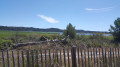
The Engrenier and Pourra ponds
 9.41 mi
+315 ft
-318 ft
4h 35
9.41 mi
+315 ft
-318 ft
4h 35
 Moderate
Departure from Saint-Mitre-les-Remparts (Bouches-du-Rhône)
Moderate
Departure from Saint-Mitre-les-Remparts (Bouches-du-Rhône)
A beautiful hike in the Saint-Blaise area, near Fos-sur-Mer, around the ponds of Lavalduc, Citis, Pourra and Engrenier.
⚠️ 29/04/2024: hike modified to avoid the path that runs along the Martigues canal beside the Lavaduc pond on the edge of the cliff (private site).
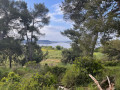
Between the Étang de Lavalduc and the Salin de Rassuen
 3.56 mi
+105 ft
-102 ft
1h 45
Moderate
Departure from Istres (Bouches-du-Rhône)
3.56 mi
+105 ft
-102 ft
1h 45
Moderate
Departure from Istres (Bouches-du-Rhône)
Discover the Étang de Lavalduc, the remarkable oak grove and the Salin de Rassuen on a route where motor vehicles are prohibited.
Around Vigne Gaste
 4.38 mi
+72 ft
-98 ft
2h 05
Easy
Departure from Istres (Bouches-du-Rhône)
4.38 mi
+72 ft
-98 ft
2h 05
Easy
Departure from Istres (Bouches-du-Rhône)
This route is 100% on paths closed to motor vehicles. You’ll discover the Rassuen salt marsh, Citis Pond, Lavalduc Pond and the ruins of the aqueduct. All this amidst a Mediterranean landscape rich in biodiversity. Due to the many paths on the site, it is advisable to follow the route on the Visorando app.
The Caderaou Balcony (le balcon de Caderaou)
 7.57 mi
+837 ft
-814 ft
4h 15
Moderate
Departure from Saint-Mitre-les-Remparts (Bouches-du-Rhône)
7.57 mi
+837 ft
-814 ft
4h 15
Moderate
Departure from Saint-Mitre-les-Remparts (Bouches-du-Rhône)
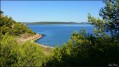
A hike along the balcony with superb views of the Etang de Berre (a small inland sea called Lake Berre).
Around Fanfarigoule
5.84 mi
+39 ft
-39 ft
2h 45
Easy
Departure from Istres (Bouches-du-Rhône)
Starting from Istres, you will park near the ZAC des Cognets. This walk is 50% on small roads and 50% on footpaths. Far from any houses, you will enjoy the peace and quiet and the scents of Provence.
Figuerolles loop
 Tourist office
 3.78 mi
+233 ft
-236 ft
1h 55
Easy
Departure from Martigues (Bouches-du-Rhône)
3.78 mi
+233 ft
-236 ft
1h 55
Easy
Departure from Martigues (Bouches-du-Rhône)
Nature walk to discover the agricultural heritage of the Grand Parc de Figuerolles. Loop that allows you to walk along the Étang de Berre.
The Étang de l'Olivier
4.81 mi
+118 ft
-118 ft
2h 20
Easy
Departure from Istres (Bouches-du-Rhône)
A lovely route around the Étang de l'Olivier lake near the town of Istres.
Le Barabant and Saint-Étienne hill
 3.42 mi
+318 ft
-318 ft
1h 50
Easy
Departure from Istres (Bouches-du-Rhône)
3.42 mi
+318 ft
-318 ft
1h 50
Easy
Departure from Istres (Bouches-du-Rhône)
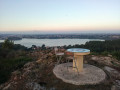
A short hike above Istres with views of the Étang de Berre and La Crau.
Saint-Julien-les-Martigues – Plaine d’Escourillon
 4.46 mi
+545 ft
-541 ft
2h 30
Easy
Departure from Martigues (Bouches-du-Rhône)
4.46 mi
+545 ft
-541 ft
2h 30
Easy
Departure from Martigues (Bouches-du-Rhône)
An easy walk along wide paths through a wooded area between Saint-Julien and La Mède, with lovely views of the Côte Bleue, the Gulf of Fos, the Étang de Berre and Martigues.
Loop of military remains at La Couronne
 6.61 mi
+400 ft
-371 ft
3h 25
Moderate
Departure from Martigues (Bouches-du-Rhône)
6.61 mi
+400 ft
-371 ft
3h 25
Moderate
Departure from Martigues (Bouches-du-Rhône)
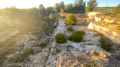
The military remains of La Couronne – Carro are located on the ridge and along the coast. These structures, built by the German army in 1943-1944, are arranged in a more or less strategic manner on these sites. A walk to discover them reveals exceptional panoramic views of the Mediterranean and the hills of this unspoilt area.
Circular botanical loop of the Carro Plain
2.58 mi
+46 ft
-46 ft
1h 15
Easy
Departure from Provence-Alpes-Côte d'Azur
The Carro Plain Botanical Trail offers unique and educational walks to discover all the natural beauty of the Côte Bleue.
The Carro Plain is of major floristic interest, largely due to the presence of a unique substrate (Miocene molasse deposits or Burdigalian calcarenite).
It is home to, amongst other things, eight protected species of vascular plants.
Winegrowers’ trail and circular panoramic loop in Saint-Julien-les-Martigues
 7.00 mi
+476 ft
-476 ft
3h 40
Moderate
Departure from Martigues (Bouches-du-Rhône)
7.00 mi
+476 ft
-476 ft
3h 40
Moderate
Departure from Martigues (Bouches-du-Rhône)
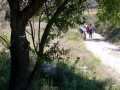
Between the Mediterranean and the Étang de Berre, on the western edge of the Nerthe massif, lies the terroir of the ‘Venice of Provence’. The vineyard covers nearly 200 hectares, situated mainly in the geological depression of Saint-Pierre and Saint-Julien.
Winegrowers’ Trail – ‘Venise Provençale’ Circular Loop
 11.41 mi
+1,027 ft
-1,043 ft
6h 10
Moderate
Departure from Martigues (Bouches-du-Rhône)
11.41 mi
+1,027 ft
-1,043 ft
6h 10
Moderate
Departure from Martigues (Bouches-du-Rhône)
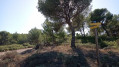
Between the Mediterranean and the Étang de Berre, on the western edge of the Nerthe massif, lies the region known as the ‘Venice of Provence’.
The vineyard covers nearly 200 hectares within the Saint-Pierre, Saint-Julien geological subsidence basin. A few plots are still cultivated in the communes of Châteauneuf-les-Martigues, Saint-Mitre-les-Remparts and Sausset-les-Pins. The majority of the plots fall within the Coteaux d’Aix-en-Provence AOP, with a small portion classified as IGP Méditerranée.
Little Camargue
 3.12 mi
+20 ft
-20 ft
1h 25
Easy
Departure from Saint-Chamas (Bouches-du-Rhône)
3.12 mi
+20 ft
-20 ft
1h 25
Easy
Departure from Saint-Chamas (Bouches-du-Rhône)
A short walk in a protected area on the edge of the Étang de Berre and its industries. All the vegetation of the wetlands, birds galore.
Moderator's note Please note that part of this loop is closed between April and July. See notices.
From Carro to Bonnieu via Les Auffans and the military ruins
 7.54 mi
+331 ft
-331 ft
3h 45
Moderate
Departure from Martigues (Bouches-du-Rhône)
7.54 mi
+331 ft
-331 ft
3h 45
Moderate
Departure from Martigues (Bouches-du-Rhône)
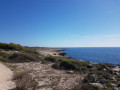
This pleasant and fairly easy circular will allow you to discover the hinterland of Port de Carro and La Couronne, in particular the ruins of part of the "Mediterranean Wall" erected by the Germans during the Second World War, as well as the coastline, which has been barely altered by the Ponteau power station.
La Couronne stone circular
 7.34 mi
+197 ft
-171 ft
3h 35
Moderate
Departure from Martigues (Bouches-du-Rhône)
7.34 mi
+197 ft
-171 ft
3h 35
Moderate
Departure from Martigues (Bouches-du-Rhône)
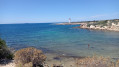
This tour of eight stone quarries in La Couronne, three inland and five coastal, provides an insight into the scale of the quarrymen's work over the centuries, reveals traces of exploitation, attempts to distinguish differences in extraction strategies and shows which periods of activity can be identified.
Visit the Fauconnière and Saut valleys
 9.56 mi
+1,434 ft
-1,447 ft
5h 40
9.56 mi
+1,434 ft
-1,447 ft
5h 40
 Difficult
Departure from Châteauneuf-les-Martigues (Bouches-du-Rhône)
Difficult
Departure from Châteauneuf-les-Martigues (Bouches-du-Rhône)
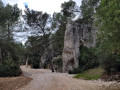
Route between Saint-Julien-les-Martigues and Châteauneuf-les-Martigues on forest paths and tracks, discovering the cliffs of the Fauconnière and Saut valleys (climbing sites), withgeological curiosities: pierced rock, needles and rock formations.From the peaks, you will have magnificent views of the Étangs de Berre and Bolmon lakes and, in the background, the main mountain ranges of Provence.
Parc de la Poudrerie and Miramas-le-Vieux
 3.26 mi
+240 ft
-240 ft
1h 40
Easy
Departure from Saint-Chamas (Bouches-du-Rhône)
3.26 mi
+240 ft
-240 ft
1h 40
Easy
Departure from Saint-Chamas (Bouches-du-Rhône)
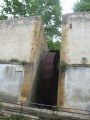
This hike takes you through the Parc de la Poudrerie in Saint-Chamas (please note the opening hours; see Practical Information), as well as the medieval village of Miramas-le-Vieux. You can see the old buildings, exhibitions on site and, with a bit of luck, spot some birds.Following the GPX track may prove useful.
The tour of Saint-Chamas
 3.02 mi
+289 ft
-276 ft
1h 40
Easy
Departure from Saint-Chamas (Bouches-du-Rhône)
3.02 mi
+289 ft
-276 ft
1h 40
Easy
Departure from Saint-Chamas (Bouches-du-Rhône)
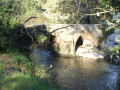
A short tour of Saint-Chamas, its town centre, the Notre-Dame Chapel with a view of the Étang de Berre, the Pont Flavien, a Roman ruin, and the Vallon de la Touloubre.
From Saint-Chamas to Miramas via Miramas-le-Vieux
 4.42 mi
+358 ft
-308 ft
2h 20
Easy
Departure from Saint-Chamas (Bouches-du-Rhône)
4.42 mi
+358 ft
-308 ft
2h 20
Easy
Departure from Saint-Chamas (Bouches-du-Rhône)
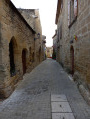
A route linking Saint-Chamas station to Miramas station, passing through the former Poudrerie Park (please note the opening hours; see ‘Practical information’), Miramas-le-Vieux and following the Voie Verte.
Saint-Julien les Martigues
 7.89 mi
+896 ft
-896 ft
4h 25
Moderate
Departure from Martigues (Bouches-du-Rhône)
7.89 mi
+896 ft
-896 ft
4h 25
Moderate
Departure from Martigues (Bouches-du-Rhône)
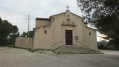
A circular route starting from Saint-Julien les Martigues that passes by an old windmill, then overlooks the large water reserve of the Canal de Provence in the forest before reaching the Vallon de Valtrède. Expect to encounter many wild goats along the way.
The Amandier caves
 7.21 mi
+1,125 ft
-1,148 ft
4h 40
Moderate
Departure from Martigues (Bouches-du-Rhône)
7.21 mi
+1,125 ft
-1,148 ft
4h 40
Moderate
Departure from Martigues (Bouches-du-Rhône)
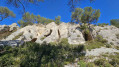
Starting from Saint-Julien-les-Martigues, head towards Chemin du Trou du Loup (GRP®2013) to discover several magnificent caves on the heights of L'Amandier, which are curiously absent from IGN maps and hiking guides. A pleasant route, mostly on steep paths through the forest and along the valley floors.
Circular La Couronne
 2.51 mi
+59 ft
-59 ft
1h 10
Easy
Departure from Martigues (Bouches-du-Rhône)
2.51 mi
+59 ft
-59 ft
1h 10
Easy
Departure from Martigues (Bouches-du-Rhône)
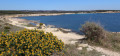
An aperitif (or after-dinner) walk on Couronne beach, allowing you to visit the Cap Couronne lighthouse.
From Miramas-le-Vieux to the Saint-Michel Chapel
 7.58 mi
+709 ft
-709 ft
4h 05
Moderate
Departure from Miramas (Bouches-du-Rhône)
7.58 mi
+709 ft
-709 ft
4h 05
Moderate
Departure from Miramas (Bouches-du-Rhône)
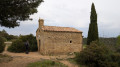
Miramas-le-Vieux is a pretty little medieval village overlooking the northern part of the Étang de Berre, which is well worth a visit at the start or end of your walk. This route crosses the site of the former national gunpowder factory, which can be visited on Wednesdays or Sundays, heading towards the Chapelle Saint-Michel, which overlooks Istres, the Étang de l’Olivier and its fountain, and the Étang de Berre. Unfortunately, we were unable to complete the planned circular route as, as is often the case in Provence these days, wire mesh barriers have sprung up since our last visit two years ago, so we had to settle for the route published today.
Boumandariel local loop
 3.52 mi
+174 ft
-177 ft
1h 45
Easy
Departure from Martigues (Bouches-du-Rhône)
3.52 mi
+174 ft
-177 ft
1h 45
Easy
Departure from Martigues (Bouches-du-Rhône)
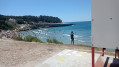
This local loop in Boumandariel, located in the southern part of the Martigues coastline, allows you to discover a natural heritage with exceptional flora and fauna.
The Côte Bleue seen from above from Sausset-les-Pins
 Association / Club / Walk leader
 7.58 mi
+558 ft
-404 ft
4h 00
Moderate
Departure from Sausset-les-Pins (Bouches-du-Rhône)
7.58 mi
+558 ft
-404 ft
4h 00
Moderate
Departure from Sausset-les-Pins (Bouches-du-Rhône)
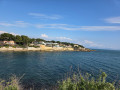
This is a very pleasant hike, with around a third of the route along the coast, which is very relaxing. The rest of the route is on very passable paths. The elevation gain is very modest: 160 m over a distance of 13 km. There is just one slightly tricky section on rocks for about ten metres, but it's nothing too difficult. It is located in the highest part of the walk, dominated by a cross. There is a beautiful spot for a lunch break with a panoramic view of Sausset-les-Pins. The view is impressive on a clear day.
The drystone shelters and the bee wall in Cornillon Confoux
 4.63 mi
+138 ft
-131 ft
2h 15
Easy
Departure from Cornillon-Confoux (Bouches-du-Rhône)
4.63 mi
+138 ft
-131 ft
2h 15
Easy
Departure from Cornillon-Confoux (Bouches-du-Rhône)
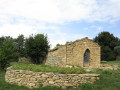
During this very easy walk on flat ground alternating between tracks and small roads, you can admire beautiful drystone shelters and a bee wall.
Drystone shelters are huts built from dry stones that served as temporary dwellings for farmers in Provence in the 19th century. The bee wall, or Apier, is an 18th-century dry stone wall, 60 metres long, with 56 niches (originally 200) where beekeepers used to shelter their straw hives from the mistral wind and bad weather.
More walks in Fos-sur-Mer
Select a point of interest below: