


Refine your search for walks in Bonnemain
Bonnemain walks


 Circular starting from Bonnemain via La Perinne and Les Ormes.
 Association / Club / Walk leader
 8.02 mi
 +164 ft
 -164 ft
 3h 50
3h 50
 Moderate
 Departure from Bonnemain (Ille-et-Vilaine)
Bonnemain is one of the twenty-six communes in the canton of Combourg (also known as Romantic Brittany). This walk complements the one to the north-east, which runs between the village and the Domaine des Ormes. It winds its way through the countryside, via sunken paths and a few pretty little houses.
Around Bonnemain
 4.60 mi
+98 ft
-98 ft
2h 10
4.60 mi
+98 ft
-98 ft
2h 10
 Easy
Departure from Bonnemain (Ille-et-Vilaine)
Easy
Departure from Bonnemain (Ille-et-Vilaine)
Bonnemain is one of the twenty-six communes in the canton of Combourg (also known as Romantic Brittany). This walk complements the one to the north-east, which runs between the village and the Domaine des Ormes. It winds its way through the countryside via sunken paths and past some pretty little houses.
The Domaine des Ormes from Bonnemain
 5.67 mi
+72 ft
-69 ft
2h 40
Easy
Departure from Bonnemain (Ille-et-Vilaine)
5.67 mi
+72 ft
-69 ft
2h 40
Easy
Departure from Bonnemain (Ille-et-Vilaine)
Located in the north-west of the Ille-et-Vilaine department, Bonnemain is one of the twenty-six parishes in the canton of Combourg, also known as Romantic Brittany. This gentle walk allows you to discover the surrounding countryside and the Domaine des Ormes, renowned for its campsite. The path is lined with some beautiful stone houses and two wayside crosses. The path around the Étang de la Sablonnière is particularly pleasant.
Around Riniac
4.87 mi
+174 ft
-190 ft
2h 25
Easy
Departure from Combourg (Ille-et-Vilaine)
A countryside walk along sunken lanes and, to a lesser extent, on the hills overlooking the town of Combourg. A route with no particular difficulty. It alternates between paths through woodland and paths across fields. A significant portion is on roads with very little traffic. Riniac is of no particular interest. It is more of a "dormitory" village, but with pretty houses. The countryside offers beautiful views.
Saint-Léonard, Les Ormes and the ‘White City’
 7.41 mi
+108 ft
-105 ft
3h 30
Moderate
Departure from Epiniac (Ille-et-Vilaine)
7.41 mi
+108 ft
-105 ft
3h 30
Moderate
Departure from Epiniac (Ille-et-Vilaine)
The route takes you through the Domaine des Ormes Park, which has been developed as a luxury campsite. It then leads you through the countryside along wooded paths and small roads. With a bit of luck, if you keep quiet, you might spot some large game, including wild boar, and no doubt some birds such as little egrets, great egrets or grey herons.
No particular difficulty.
Trémeheuc Wind Farm
 5.24 mi
+46 ft
-46 ft
2h 25
Easy
Departure from Trémeheuc (Ille-et-Vilaine)
5.24 mi
+46 ft
-46 ft
2h 25
Easy
Departure from Trémeheuc (Ille-et-Vilaine)
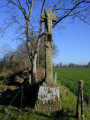
The route is very pleasant, often following wide paths lined with oak and chestnut trees. It winds through wooded countryside dotted with sunken lanes. And with a bit of luck, you might spot some of the local wildlife early on – and, if you’re lucky, roe deer frolicking at the foot of the wind turbines.
Circular loop through the Parc de la Higourdais via Le Brégain to Épiniac
 8.66 mi
+374 ft
-387 ft
4h 20
Moderate
Departure from Epiniac (Ille-et-Vilaine)
8.66 mi
+374 ft
-387 ft
4h 20
Moderate
Departure from Epiniac (Ille-et-Vilaine)
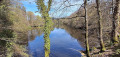
This route crosses the Parc de la Higourdais on the heights of Épiniac. It leads to the banks of the Ruisseau du Landal, which it follows through woodland that is particularly pleasant in summer. It then continues, half on road and half on footpaths. The walk passes over Brégain Hill, which offers a beautiful view of the Guyoult basin to the north. In good weather, you can see Mont-Saint-Michel to the north-east. The return journey takes you along small roads that are generally quite pleasant and quiet, allowing you to discover old hamlets and some beautiful stone houses.
The Parc de la Higourdais and the Croix de Pierre
 Visorando Member
 7.44 mi
+102 ft
-69 ft
3h 30
Moderate
Departure from Epiniac (Ille-et-Vilaine)
7.44 mi
+102 ft
-69 ft
3h 30
Moderate
Departure from Epiniac (Ille-et-Vilaine)
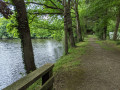
The Parc de la Higourdais is managed by the Ille-et-Vilaine Departmental Council. It was the Council that had the mill and the bakehouse restored. Furthermore, along the route you will come across no fewer than five crosses.
From Château du Haut Mesnil to Notre-Dame de Tronchet Abbey
 5.46 mi
+46 ft
-46 ft
2h 35
Easy
Departure from Le Tronchet (Ille-et-Vilaine)
5.46 mi
+46 ft
-46 ft
2h 35
Easy
Departure from Le Tronchet (Ille-et-Vilaine)
A pleasant walk to discover the Abbey of Notre-Dame du Tronchet. The route takes you through a heavily wooded landscape, including the Mesnil State Forest, the Château du Haut Mesnil with its chapel, and then Lake Mireloup. It is a route rich in both natural and cultural interest.
The Forges route in Baguer-Morvan
 6.01 mi
+141 ft
-141 ft
2h 55
Easy
Departure from Baguer-Morvan (Ille-et-Vilaine)
6.01 mi
+141 ft
-141 ft
2h 55
Easy
Departure from Baguer-Morvan (Ille-et-Vilaine)
This route runs largely through the countryside and follows sunken lanes. It passes through several hamlets whose names raise questions about their origins: Les Forges, Le Portail des Forges and La Ville Feu.
Circular route to the Étang de Beaufort via Mireloup and Le Tronchet
 8.39 mi
+361 ft
-361 ft
4h 10
Moderate
Departure from Plerguer (Ille-et-Vilaine)
8.39 mi
+361 ft
-361 ft
4h 10
Moderate
Departure from Plerguer (Ille-et-Vilaine)
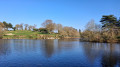
The route links two of the reservoirs in the Plerguer region. It alternates between small country roads and sections in the undergrowth, particularly in the Mesnil Forest, along the Mireloup Reservoir.The route does not present any particular difficulties despite the significant cumulative elevation gain (for the region).
Circular routes via Pont Allain and Le Perray from Étang de Beaufort
 7.18 mi
+266 ft
-266 ft
3h 30
Moderate
Departure from Plerguer (Ille-et-Vilaine)
7.18 mi
+266 ft
-266 ft
3h 30
Moderate
Departure from Plerguer (Ille-et-Vilaine)
The route links two of the water retention ponds in the Plerguer area. It alternates between sections on small country roads and stretches through the undergrowth. The route is mainly on hard ground, small roads or stony paths; it is particularly uninteresting during the wet months from autumn to March but can be enjoyed in the other months of the year.The route presents no particular difficulties.
Circular route via the wind farm and the ‘hanged wolf’ in Trémeheuc
 7.73 mi
+105 ft
-105 ft
3h 40
Moderate
Departure from Trémeheuc (Ille-et-Vilaine)
7.73 mi
+105 ft
-105 ft
3h 40
Moderate
Departure from Trémeheuc (Ille-et-Vilaine)
The route follows part of the Wind Farm route, which it complements. Just like the route mentioned above, this route is very pleasant, often following wide avenues lined with oak and chestnut trees. It winds through wooded countryside dotted with sunken lanes. And with a bit of luck, you might spot some of the local wildlife – early in the morning, and if you’re lucky, roe deer and rabbits, or perhaps even more.
Circular route via Lannoué and Parc de la Higourdais from Epiniac
 8.39 mi
+223 ft
-217 ft
4h 05
Moderate
Departure from Epiniac (Ille-et-Vilaine)
8.39 mi
+223 ft
-217 ft
4h 05
Moderate
Departure from Epiniac (Ille-et-Vilaine)
The route consists almost equally of small roads and grassy paths. It is suitable for all seasons. No particular difficulty. The route winds through the various woods of the commune, which are fairly rich in game. The section near the Parc de la Higourdais is particularly pleasant, with paths running alongside the two ponds.
The Breil and Moulin de la Corbonnais route in Epiniac
 5.03 mi
+338 ft
-318 ft
2h 35
Easy
Departure from Epiniac (Ille-et-Vilaine)
5.03 mi
+338 ft
-318 ft
2h 35
Easy
Departure from Epiniac (Ille-et-Vilaine)
A short, peaceful walk near Epiniac. It takes you along some pleasant sunken lanes that are passable in almost all seasons and not too difficult. Here and there you’ll find listed buildings. It’s not impossible to come across a herd of wild boars in the undergrowth, especially during the hunting season! So be careful.
Circular Belle Noë in Épiniac
 5.53 mi
+144 ft
-171 ft
2h 40
Easy
Departure from Epiniac (Ille-et-Vilaine)
5.53 mi
+144 ft
-171 ft
2h 40
Easy
Departure from Epiniac (Ille-et-Vilaine)
A gentle walk north of Epiniac. It winds through the woods around the village, along pleasant paths with no particular difficulty.The route can be muddy between November and March but is not flooded. The area is rich in wildlife; you may occasionally encounter a herd of wild boar in the undergrowth, especially during the hunting season! So please take care.
Combourg Lake, the Étang des Mufins and the Haute Boissière
 6.26 mi
+135 ft
-135 ft
3h 00
Moderate
Departure from Combourg (Ille-et-Vilaine)
6.26 mi
+135 ft
-135 ft
3h 00
Moderate
Departure from Combourg (Ille-et-Vilaine)
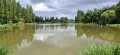
A route mainly on land. It will take you past Combourg’s two main bodies of water, the lake and the Étang des Maffins. Then, after passing through the La Croix Briand housing estate, it will take you to La Haute Boissière via a charming little sunken path. This spot is situated on a small hill about 80 metres above sea level, offering a lovely panoramic view of Combourg and the surrounding area in fine weather.
Jardin d'Amour and the covered walkway at La Roche aux Fées in the Mesnil Forest
 4.95 mi
+66 ft
-66 ft
2h 20
Easy
Departure from Tressé (Ille-et-Vilaine)
4.95 mi
+66 ft
-66 ft
2h 20
Easy
Departure from Tressé (Ille-et-Vilaine)
This route takes you through wooded and hedgerow landscapes. Running exclusively through the undergrowth, it takes you through the Mesnil State Forest (600 ha), formerly owned by the privateer Surcouf. The paths are well-maintained but numerous, particularly in the southern section; follow the route carefully, ideally using a smartphone, as it is easy to take a wrong turn. The covered walkway, known as ‘La Roche aux Fées’, should not be confused with another walkway of the same name, which is more monumental and located in Janzé.
Circular starting from Dol-de-Bretagne via Epiniac and the Chemin des Évêques.
 8.19 mi
+233 ft
-236 ft
4h 00
Moderate
Departure from Dol-de-Bretagne (Ille-et-Vilaine)
8.19 mi
+233 ft
-236 ft
4h 00
Moderate
Departure from Dol-de-Bretagne (Ille-et-Vilaine)
A peaceful hike along grassy paths and a few quiet roads. You will follow part of the Chemin des Évêques, which was used by bishops to reach their summer residence. The nearby Château du Domaine des Ormes was once (in the early 14th century) the summer residence of the bishops of Dol-de-Bretagne. Today, it is a campsite. The paths are shaded. If you walk them in autumn, you can collect lots of chestnuts.
The menhir of La Butte in Cuguen
 6.78 mi
+200 ft
-223 ft
3h 15
Moderate
Departure from Cuguen (Ille-et-Vilaine)
6.78 mi
+200 ft
-223 ft
3h 15
Moderate
Departure from Cuguen (Ille-et-Vilaine)
A very pleasant route along sunken paths (sometimes wet) and hedgerow paths. You will walk alongside small streams with the incessant sound of lapping water as they cross a stony area. The highlight of this hike is the Butte menhir.
The Witches’ Route via Quelmé
 7.84 mi
+394 ft
-374 ft
3h 55
Moderate
Departure from Combourg (Ille-et-Vilaine)
7.84 mi
+394 ft
-374 ft
3h 55
Moderate
Departure from Combourg (Ille-et-Vilaine)
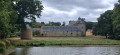
This extended version of the Witches’ Route winds its way through the Combournais countryside. Between the refreshing shade of the Haute Vallée and the picturesque villages and traditional (restored) houses, you can enjoy breathtaking views of this charming little town. Along the way, you can also admire the Manoir du Grand Trémaudan and its superb dovecote.
The Witches’ Route in Combourg
 5.14 mi
+269 ft
-249 ft
2h 35
Easy
Departure from Combourg (Ille-et-Vilaine)
5.14 mi
+269 ft
-249 ft
2h 35
Easy
Departure from Combourg (Ille-et-Vilaine)
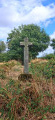
The Circuit des Sorciers takes you through the wooded countryside around Combourg. The route winds its way through the refreshing shade of the Haute Vallée in summer and past the small villages and houses characteristic of the region, offering breathtaking views of the ‘small town of character’ of Combourg.
Le Clos Chapelle, south-west of Dol-de-Bretagne
 8.91 mi
+167 ft
-164 ft
4h 15
Moderate
Departure from Dol-de-Bretagne (Ille-et-Vilaine)
8.91 mi
+167 ft
-164 ft
4h 15
Moderate
Departure from Dol-de-Bretagne (Ille-et-Vilaine)
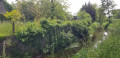
This route allows us to alternate between the discovery of a hilly landscape, marked by hedgerows and embankments, and the open landscape of the Dol marshes, criss-crossed by its vast network of canals and ditches and punctuated by the omnipresence of Mont-Dol and Dol-de-Bretagne Cathedral.
Le Marais Blanc and Le Haut Pont via the Mont Dol hill
 8.40 mi
+194 ft
-217 ft
4h 00
Moderate
Departure from Dol-de-Bretagne (Ille-et-Vilaine)
8.40 mi
+194 ft
-217 ft
4h 00
Moderate
Departure from Dol-de-Bretagne (Ille-et-Vilaine)
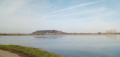
The route is mainly in the countryside, through the Marais Blanc and Marais Noir marshes, with no particular difficulties except for the ascent of the Mont-Dol hill via the north face (slippery in wet weather) and the descent to the town hall (uneven steps). The route takes the Chemin Vert between Dol de Bretagne and Mont-Dol. Beautiful view of the Marais Blanc and the Bay of Mont Saint-Michel from the top of the Mont Dol hill.
Circular Eastern of Dol-de-Bretagne via Champ Dolent
6.78 mi
+108 ft
-115 ft
3h 10
Moderate
Departure from Dol-de-Bretagne (Ille-et-Vilaine)
Dol-de-Bretagne is a small town full of character offering numerous hiking opportunities, the most popular being the Marais Blanc and Marais Noir trails. The route suggested here follows part of the Nominöe route, but differs in that it passes through the countryside further south, taking in the Menhir du Champ Dolent and the Fontaine Saint-Samson.
Circular route between Tressé and Mesnil-Roch through the two forests.
 13.57 mi
+315 ft
-308 ft
6h 30
13.57 mi
+315 ft
-308 ft
6h 30
 Difficult
Departure from Tressé (Ille-et-Vilaine)
Difficult
Departure from Tressé (Ille-et-Vilaine)
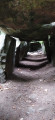
This route will take you through wooded and hedgerow landscapes. Mostly in the undergrowth, it will take you through the Mesnil State Forest (600 ha), formerly owned by the privateer Surcouf, as well as a very small part of the Coëtquen Forest (557 ha). Due to land consolidation policies, many hedgerows have disappeared over the last 50 years. However, hedges and embankments play an important role in the diversity of fauna and flora. They shelter livestock from the wind, limit water runoff and slow down the wind. Birds, insects and small mammals find shelter and food in these areas. Hedgerows are also a source of renewable energy and carbon sinks. For the past twenty years or so, local authorities have been encouraging the restoration of hedgerows and copses.
The Priory of Brégain
10.08 mi
+299 ft
-279 ft
4h 55
Moderate
Departure from La Boussac (Ille-et-Vilaine)
Set off to explore the local bocage landscape, with its meadows enclosed by embankments, fences or stone walls.
Circular route in Dol-de-Bretagne via La Belle Étoile
 5.71 mi
+112 ft
-102 ft
2h 45
Easy
Departure from Dol-de-Bretagne (Ille-et-Vilaine)
5.71 mi
+112 ft
-102 ft
2h 45
Easy
Departure from Dol-de-Bretagne (Ille-et-Vilaine)
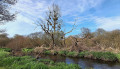
This circular route takes you on a tour of Dol-de-Bretagne, a former episcopal city, notably the 13th-century Saint-Samson Cathedral and beautifully restored half-timbered houses. The route follows the Promenade des Remparts and country lanes along the Guyoult coastal river.
Route Nominoë in Dol-de-Bretagne
 5.03 mi
+66 ft
-69 ft
2h 20
Easy
Departure from Dol-de-Bretagne (Ille-et-Vilaine)
5.03 mi
+66 ft
-69 ft
2h 20
Easy
Departure from Dol-de-Bretagne (Ille-et-Vilaine)
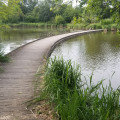
Throughout the walk, visitors can explore the town of Dol-de-Bretagne, the Guyoult and the Dol marshes.
The Marais Blanc and La Banche starting from Quercourt.
8.07 mi
+7 ft
-3 ft
3h 45
Moderate
Departure from Dol-de-Bretagne (Ille-et-Vilaine)
This is an easy route through the Marais Blanc and along the Canal de la Banche and the Banche itself. It allows you to discover a few old farms scattered throughout the marsh.
Route de la Mancelière from Baguer-Pican
 6.71 mi
+213 ft
-230 ft
3h 15
Moderate
Departure from Baguer-Pican (Ille-et-Vilaine)
6.71 mi
+213 ft
-230 ft
3h 15
Moderate
Departure from Baguer-Pican (Ille-et-Vilaine)
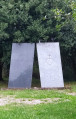
A fairly easy walk, following sunken paths through the countryside and woodland. Very pleasant in fine weather, it can also be enjoyed in winter, although the ground is wetter.There are some beautiful houses in the hamlet of Le Chatel, which was a strategic location during the French Revolution and the Second World War. The route also follows part of the ancient Roman road that linked Corseul to Avranches.
Route from the Saint-Macaire Fountain to Baguer Pican
 5.12 mi
+203 ft
-223 ft
2h 30
Easy
Departure from Baguer-Pican (Ille-et-Vilaine)
5.12 mi
+203 ft
-223 ft
2h 30
Easy
Departure from Baguer-Pican (Ille-et-Vilaine)
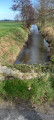
Trail, half on dirt track, half on road. Beautiful sights with the Saint-Macaire (or Maker) Fountain on one side and the megalithic rock site (also known as the "Field of Tombs") on the other. Part of the trail runs along the Canal de la Banche, which joins Dol de Bretagne at Quercourt.
La Bouhourdais in Saint-Domineuc
9.37 mi
+69 ft
-66 ft
4h 20
Moderate
Departure from Saint-Domineuc (Ille-et-Vilaine)
The route first follows the towpath along the Ille-et-Rance Canal – the very backbone of the region – which was built during the Napoleonic era (late 19th century) to link the English Channel to the Atlantic Ocean for merchant shipping, and continues through the countryside around Saint-Domineuc.
More walks in Bonnemain
Select a point of interest below: