


Refine your search for walks in La Framboisière
La Framboisière walks


 Les Framboisiers de la Framboisière
 Visorando Member
 2.22 mi
 +26 ft
 -26 ft
 1h 05
1h 05
 Easy
Easy
 Departure from La Framboisière (Eure-et-Loir)
No raspberries in sight: for now, but where on earth have the raspberry bushes of La Framboisière gone?The village’s name is more likely to be linked to the Bois Francs – the free-hold woods.The Raspberry Festival takes place every two years. It brings together local artisans who showcase their products related to the preparation of dishes made with red berries.A short walk to explore the fields and woodland edge between the Senonches State Forest and the village. A stroll past the majestic oaks of La Framboisière and Le Grand Village. Reminders of an old railway line.
Tour du Gué au Chéron in the Senonches forest
 6.18 mi
+52 ft
-52 ft
2h 55
Easy
Departure from Senonches (Eure-et-Loir)
6.18 mi
+52 ft
-52 ft
2h 55
Easy
Departure from Senonches (Eure-et-Loir)
Le Gué au Chéron is a district of the Senonches National Forest. This tour starts in Tardais and leads through fields into the forest. It follows the edge of the forest, passing in front of the majestic Chêne de la Framboisière oak tree. After crossing the old La Loupe-Verneuil railway line, the trail follows the Gervaine, a stream that was canalised in the 18th century to float timber down the Avre and Seine rivers to Rouen.The trail then runs alongside the Étang de la Bénette, managed by the Conservatoire des Espaces Naturels, which preserves its exceptional flora and fauna. A long forest line crosses the Rond de Sauveloup, then joins the small road from Tardais to Laudigerie. It takes you past the lake and the Château de Tardais before reaching this picturesque village with its wash house, small church and tiny town hall. Vlaminck stayed here frequently and immortalised this view of "the road" in winter under the snow from the town hall to the church in one of his paintings.
Around Tardais
 7.23 mi
+66 ft
-82 ft
3h 25
7.23 mi
+66 ft
-82 ft
3h 25
 Moderate
Departure from Senonches (Eure-et-Loir)
Moderate
Departure from Senonches (Eure-et-Loir)
Allow a day to complete this route and visit Senonches. As it is easier to find shelter in town for lunch in winter or in case of bad weather, this route suggests setting off from Tardais in the morning, heading towards Senonches where you can picnic or eat in a restaurant, and, after visiting the town and the castle, returning to Tardais at the end of the afternoon. The route takes you around Tardais and connects it to Senonches. It is varied, passing between the castle and the lake, crossing the forest, taking you through the recently developed town centre and leading to Lake Arthur Rémy. After passing by the castle and the church, it returns across fields and through the forest again. It follows the edge of the village. Here you will find the magnificent Tardais Beech, a remarkable listed tree. At 185 years old, it is suffering, like all the beech trees in the forest, from global warming, which will cause them to disappear in the short term. So don't delay in going to see it.
The Louvilliers arm
 3.30 mi
+105 ft
-105 ft
1h 35
Easy
Departure from Senonches (Eure-et-Loir)
3.30 mi
+105 ft
-105 ft
1h 35
Easy
Departure from Senonches (Eure-et-Loir)
A circular path at the far end of the Bras de Louvilliers in the Senonches State Forest, taking in the valley of the Ruisseau de Saint-Cyr and the site of the Poste de Louvilliers forest lodge with its pond and magnificent oak tree. The path then winds its way above the Blaise valley before skirting the Bois du Paradis. Quite a journey!
The Diane and Actaeon Route in the Senonches State Forest
 6.29 mi
+66 ft
-62 ft
2h 55
Easy
Departure from Senonches (Eure-et-Loir)
6.29 mi
+66 ft
-62 ft
2h 55
Easy
Departure from Senonches (Eure-et-Loir)
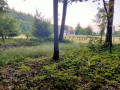
Three circular walks in the Senonches State Forest follow one another along the Ligne des Trois Pierres: the Rond des Gardes, the Rond d’Actéon and the Rond de Diane. If mythology is to be believed, the hunter Actéon would have had good reason to be on his guard when he caught Diana bathing. The chaste goddess, enraged, is said to have instantly transformed him into a stag and had him devoured by his own hounds! You’re unlikely to suffer such a misfortune whilst walking this short circular route. Diane and Actéon are now nothing more than forest crossroads. Even so, this cruel tale reminds us that voyeurism is always punished and that we must be wary when walking our beloved dogs. Come on, let’s set off on this short, entirely woodland walk. It is particularly recommended for the growing number of residents in the Moinerie and HLM neighbourhoods.
Tour des canards in Senonches
 3.41 mi
+52 ft
-52 ft
1h 35
Easy
Departure from Senonches (Eure-et-Loir)
3.41 mi
+52 ft
-52 ft
1h 35
Easy
Departure from Senonches (Eure-et-Loir)
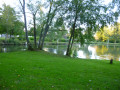
In Senonches, starting from the Jacques-Yves Cousteau School, there is a short circuit designed for families, leading from the Moinerie housing estate or the HLM social housing complex to the Arthur Rémy pond. Here you will find a whole happy flock of waterfowl, games for the little ones and picnic tables for the grown-ups. You can fish or follow a fitness trail. Crossing the town centre, you will pass by the main points of interest: the listed cinema, Town Hall, media library, castle museum and church.
Circular des Templiers à la Saucelle
 5.32 mi
+66 ft
-66 ft
2h 30
Easy
Departure from La Saucelle (Eure-et-Loir)
5.32 mi
+66 ft
-66 ft
2h 30
Easy
Departure from La Saucelle (Eure-et-Loir)
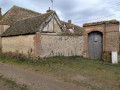
On the edge of the Senonches Forest, north of Perche, La Saucelle is a real crossroads between different historical and natural sites. On this short route, come and discover what the Knights Templar brought to the village. It was here, in La Saucelle, that they first settled in the Drouais region, and even in Eure-et-Loir. This settlement, in 1165, was made possible thanks to donations from local lords. These were largely plots of land in the Carnutes Forest. The Knights Templar cleared these plots and all those that followed, creating the vast plain that surrounds the village.
The Champs Élysées of the Perche
 3.65 mi
+26 ft
-26 ft
1h 40
Easy
Departure from La Puisaye (Eure-et-Loir)
3.65 mi
+26 ft
-26 ft
1h 40
Easy
Departure from La Puisaye (Eure-et-Loir)
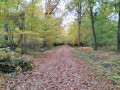
This short loop in the Bois de la Saucelle, near Puisaye, is mainly woodland. It confirms the toponymic meaning of the name Puisaye, which refers to a wetland area. Through private woods, the circuit follows wide avenues, including the Ligne Jacob, whose length, width and majesty could justify the mischievously pretentious name of "Champs Élysées du Perche". However, don't expect to find shops and noisy café terraces here. All you will hear is birdsong. Enjoy the peace and quiet of this unspoilt, authentic natural environment, exploring it on tiptoe so as not to disturb the many animals that you are sure to glimpse if you are discreet.Avoid this route on hunting days. Danger!
Tour du Bon Dieu de Laudigerie
 4.79 mi
+95 ft
-98 ft
2h 15
Easy
Departure from Senonches (Eure-et-Loir)
4.79 mi
+95 ft
-98 ft
2h 15
Easy
Departure from Senonches (Eure-et-Loir)
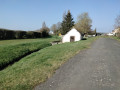
This ‘tour’ won’t make the Good Lord of Laudigerie jealous – that figure of Christ fixed to the cross by the side of the D20. It was carved by a clog-maker from the hamlet from a log that had long been used for farm work. This is said to be the origin of the somewhat ironic and disillusioned local expression used to describe frivolous people: “He’s like the Good Lord of Laudigerie, who’s played more tricks than he’s performed miracles!” Devotion, however, remains strong; a small ceremony takes place there on the eve of 15 August, and the statue of Our Lady of Sorrows, placed in the ‘Lourdes’ grotto, is always adorned with flowers. This route leads across the fields from Senonches to Laudigerie. It was once a village of clog-makers and woodworkers. The workshops have disappeared, and the former industrial clog-making factory, which you pass by, has been converted first into an office furniture factory and then into a plastic recycling plant. The return journey takes you along the edge of the forest and offers an opportunity to reflect on the town’s liberation on 14 August 1944.
The Swallows’ Circular Path in Senonches
 10.21 mi
+148 ft
-138 ft
4h 50
Moderate
Departure from Senonches (Eure-et-Loir)
10.21 mi
+148 ft
-138 ft
4h 50
Moderate
Departure from Senonches (Eure-et-Loir)
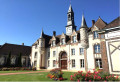
Itwas believedthat harbouring a swallow’s nest under one’s roof would bring happiness to the home. The shelter provided for the children of Soissons – who took refuge in Senonches from Christmas 1914 until the end of the war – was, for the families of the mobilised soldiers, as much a humanitarian act as a feeble ‘talisman’ intended to ward off misfortune. Alas, 76 names were nevertheless inscribed on the town’s war memorial in 1922! Lucien Descaves, author of works now largely forgotten, co-founder and later president of the Académie Goncourt, had owned a second home in Senonches since 1910. Having lived through these events, he recounted them in his novel *L’hirondelle sous le toit* (*The Swallow Under the Roof*), published in 1924.Join Nanette and Nanand as you explore this small town situated between Beauce and Perche, renamed “Bourg en Thimerais or Bourg en Forêt”. The book, recently republished, serves as a guiding thread for this walk, which can also be undertaken simply for the pleasure of discovering the town and its forest.
Walk around the Bois de la Saucelle in La Puisaye
 7.00 mi
+69 ft
-79 ft
3h 15
Moderate
Departure from La Puisaye (Eure-et-Loir)
7.00 mi
+69 ft
-79 ft
3h 15
Moderate
Departure from La Puisaye (Eure-et-Loir)
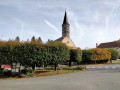
Starting from the village of La Puisaye – whose village centre has recently been beautifully refurbished, complete with its wash house and a leisure area near the town hall and the church – this circular walk takes you through woods and fields around the Bois de la Saucelle, which should not be confused with the neighbouring village of the same name. With its long forest lanes, the return route along the Meuvette takes you past the Étang de Rouge, a prime spot for recreational fishing home to carp and enormous catfish.
A weekend with the Duke of Saint-Simon
 24.27 mi
+276 ft
-292 ft
2 days
24.27 mi
+276 ft
-292 ft
2 days
 Difficult
Departure from Senonches (Eure-et-Loir)
Difficult
Departure from Senonches (Eure-et-Loir)
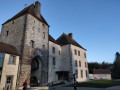
What if you were invited by the Duke of Saint-Simon, famous chronicler of the Court of Versailles, to celebrate his350th birthday in La Ferté-Vidame?
Imagine being able to accept this unlikely invitation and spending a weekend on this two-stage loop that will take you from Senonches, through forests and farmland, to his "favourite residence".
Since 1975, the Saint-Simon Prize has been awarded every September to a contemporary memoirist during the book festival. In 2025, it will be the50th edition and we will celebrate the 350th anniversary of the duke, who was born in 1675.
Set off to explore his estate and the "Petites Cités de Caractère" (small towns of character) of Senonches and La Ferté-Vidame along long forest paths, ponds and country lanes.
If you are unable to meet the duke and his beloved wife, the Maison Saint-Simon will tell you about his life and work. Visit the romantic ruins of the castle built by the Marquis de Laborde shortly before the Revolution in the park.
From Senonches to La Ferté-Vidame
11.71 mi
+167 ft
-72 ft
5h 30
Moderate
Departure from Senonches (Eure-et-Loir)
This first stage connects Senonches to La Ferté Vidame. Through the national forest, the route takes you to the village of La Framboisière, the Château de la Hézière, near which there was once a glassworks, and, via a long forest road, leads to La Puisaye. After skirting the Étang de Rouge, the path crosses farmland and arrives at La Ferté-Vidame, the stronghold of the Duke of Saint-Simon, famous chronicler of the court of Versailles. At the entrance to the park, in the Pavillon Saint-Dominique, home to the tourist office, the Maison Saint-Simon presents his life and work. A walk in the park allows you to contemplate the vast views, the ponds and the ruins of the castle of the Marquis de la Borde, which replaced the medieval fortress, the "favourite residence" of the memoirist, in the 18th century. Recently restored, the "little castle" once belonged to King Louis-Philippe, benefactor of the village. The classical-style Saint-Nicolas Church contains the tomb of the duke and his wife.
The venerable trees of the Senonches forest
 7.23 mi
+125 ft
-125 ft
3h 25
Moderate
Departure from Senonches (Eure-et-Loir)
7.23 mi
+125 ft
-125 ft
3h 25
Moderate
Departure from Senonches (Eure-et-Loir)
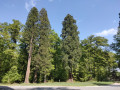
The ancients revered old trees. Like them, pay homage to the "elders" of the forest. After skirting Lake Arthur Rémy, then the Vente des Trous iron ore extraction site, this circuit will take you, via secret paths and long avenues, to the seniors of the forest.First, wish the Three Brothers a happy340th birthday. Younger, but just as sturdy, seven sequoias and a cedar have been watching over the Rond de Monsieur for over a century. After passing through this imposing circle, visit the King of the Forest, who is said to sometimes sit on the gigantic throne of the Chêne Fauteuil. Finally, don't forget to say hello to the chestnut tree at the Rond de Condé.Take the time to enjoy the peace and quiet of the woods by stopping at the rest areas you'll find along the way. At "L'Orée du Bois" (The Edge of the Woods), learn to use your five senses to better experience the forest. Complete your knowledge by discovering a "Forest of Stories" at the château.
In Senonches, I go to Les Evés!
 3.91 mi
+89 ft
-89 ft
1h 50
Easy
Departure from Senonches (Eure-et-Loir)
3.91 mi
+89 ft
-89 ft
1h 50
Easy
Departure from Senonches (Eure-et-Loir)
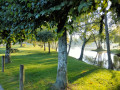
The name "Les Evés" refers, locally, to places where water is abundant. This water, which is everywhere, is particularly present in this "district" of the forest, south of the village. It is carried by gutters and streams from the forest to the ponds and wash houses. This short route takes you on a tour of places where water has been collected over the years, not far from the town, to be regulated and used for the activities of the Senonchois.After inspiring dreams of a spa resort in 1936-37, the water has nevertheless contributed to the town's development as a tourist destination. Successive municipal councils have worked to develop what was once a marshy area, which has now become a tourist complex with sports and leisure facilities, ideally located near the new La Loge des Bois secondary school.
Wash houses, springs and streams around Senonches
 4.46 mi
+98 ft
-98 ft
2h 10
Easy
Departure from Senonches (Eure-et-Loir)
4.46 mi
+98 ft
-98 ft
2h 10
Easy
Departure from Senonches (Eure-et-Loir)
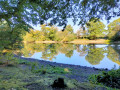
The name Senonches comes from the Latin Senunchia: land with marshy waterways. In fact, the area was once covered with ponds and waterways, making it a vast marshland.This circular allows you to discover the many places where water springs up and flows around the town. It is built on wet land that has had to be drained over the years by capturing springs, installing drainage systems and digging streams to carry water to the ponds that now give the town its charm. Along these streams, numerous wash houses were established at the end of the 19th century and still bear witness to the hard work of women at that time.Follow this route, which stays within the urban area but also sometimes passes along the edge of the woods.
Take a circular walk in the lower Senonches Forest
 11.06 mi
+404 ft
-381 ft
5h 25
Difficult
Departure from Senonches (Eure-et-Loir)
11.06 mi
+404 ft
-381 ft
5h 25
Difficult
Departure from Senonches (Eure-et-Loir)
This grand tour of the lower Senonches state-owned forest follows the forest’s edge, moving from Rond to Rond – these large crossroads connecting the forest paths. Whilst the surrounding landscape is occasionally visible, the route mostly remains within the woods.Starting from Parc Arthur Rémy or the holiday village, it heads south through the forest, descending and then ascending the geological fault that forced the River Eure to flow eastwards, whereas its natural course was to head north to join the River Seine. It is only able to do so as it approaches Chartres.The route passes very close to Belhomert and Fontaine-Simon, villages which can be reached and from which you can also set off. The return journey follows a picturesque path along the disused La Loupe–Verneuil railway line via Senonches. This route is not recommended for those seeking noise and bustle, or who are averse to the tranquillity of the woodland!
Senonches - La Loupe
 8.30 mi
+207 ft
-217 ft
4h 00
Moderate
Departure from Senonches (Eure-et-Loir)
8.30 mi
+207 ft
-217 ft
4h 00
Moderate
Departure from Senonches (Eure-et-Loir)
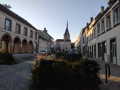
This last stage of our journey through the Vlaminck region takes us from Senonches to La Loupe. Initially mainly wooded, the route then crosses the Eure valley, passing close to the Fontaine-Simon water park, where you can stop for refreshments. La Loupe station provides a quick return to Paris-Montparnasse.
In the Senonch region
 Tourism professional
 3.16 mi
+66 ft
-66 ft
1h 30
Easy
Departure from Senonches (Eure-et-Loir)
3.16 mi
+66 ft
-66 ft
1h 30
Easy
Departure from Senonches (Eure-et-Loir)
A town of water and greenery, Senonches invites you to explore its winding paths along the forest edge, beside springs, and through narrow streets lined with beautiful ‘grison’ buildings.
The Chemin du Maupas
 4.25 mi
+36 ft
-36 ft
2h 00
Easy
Departure from Senonches (Eure-et-Loir)
4.25 mi
+36 ft
-36 ft
2h 00
Easy
Departure from Senonches (Eure-et-Loir)
This circular loop in the Senonches State Forest, starting from the Grand Rond – a magnificent star-shaped junction of forest tracks – first follows long forest tracks leading to the Rond des Quatre Barrières and then to the Rond des Hussards. A path then winds its way between the state-owned forest and private woodland. After passing through the Rond de la Rachée, the route passes at the foot of the Chêne d’Hérissé, the sole survivor of the 1999 storm in this area. Shortly before the finish, the Hêtre du Haut Cornet stands a few metres from the path.