


Refine your search for walks in Théminettes
Théminettes walks


 The gariottes of Théminettes
 Visorando Member
 2.65 mi
 +138 ft
 -115 ft
 1h 20
1h 20
 Easy
Easy
 Departure from Théminettes (Lot)
A short walk starting from the village of Théminettes in the heart of the Causses du Quercy Regional Nature Park. You will discover beautiful dry stone huts, imposing low walls, the famous Francès sinkhole (after an eventful underground journey, its waters reappear at Cabouy, near Rocamadour, before flowing into the Dordogne at Lacave) and the village of Théminettes.
L’Hôpital-Beaulieu and the Ouysse Fossil Valley
 5.64 mi
+262 ft
-233 ft
2h 50
Easy
Departure from Issendolus (Lot)
5.64 mi
+262 ft
-233 ft
2h 50
Easy
Departure from Issendolus (Lot)
Starting from the square near the Issendolus chapel, this 9 km route takes you to the former convent at Hôpital-Beaulieu. You’ll follow shaded paths through the wide, dry valley of the Ouysse, which now disappears underground at Thémines.
This route follows minor roads and public footpaths.
Around the village of Fons
 5.47 mi
+728 ft
-725 ft
3h 10
Easy
Departure from Fons (Lot) (Lot)
5.47 mi
+728 ft
-725 ft
3h 10
Easy
Departure from Fons (Lot) (Lot)
This short route will introduce you to the historic village of Fons, its monuments (castle and monastery) and allow you to admire the scenery along ridge paths for more than half the route. You’ll catch a glimpse of the towers of Cardaillac and look down over the village of Fourmagnac. The route follows small roads and public footpaths.
On the limestone plateau at the start of Grèzes
13.13 mi
+1,053 ft
-1,043 ft
6h 55
 Difficult
Departure from Grèzes (Lot) (Lot)
Difficult
Departure from Grèzes (Lot) (Lot)
This hike, which is not particularly difficult, takes walkers from the village of Grèzes to the cliffs overlooking the River Célé at Espagnac-Sainte-Eulalie. It then heads north to the Bélinac menhir (one of the few menhirs in the department) before returning to the village of Livernon and then Grèzes.
It mostly follows wide limestone paths, lined with moss-covered walls and shaded by oak trees.
Sheep trail in Espédaillac
 2.47 mi
+200 ft
-203 ft
1h 20
Easy
Departure from Espédaillac (Lot)
2.47 mi
+200 ft
-203 ft
1h 20
Easy
Departure from Espédaillac (Lot)
This route invites you to discover sheep and their environment. At each stage, it reveals how sheep farming has shaped the landscapes of the Causse.
Route of the Espédaillac farmhouses
 6.49 mi
+276 ft
-259 ft
3h 15
6.49 mi
+276 ft
-259 ft
3h 15
 Moderate
Departure from Espédaillac (Lot)
Moderate
Departure from Espédaillac (Lot)
This route takes you on a tour of various farmhouses around the village of Espédaillac, along beautiful paths lined with dry stone walls. This circular route is marked with small signs depicting a hiker in a yellow arrow.
Discovery trail exploring the small heritage sites of Espédaillac and the trees of the Causse.
 4.98 mi
+269 ft
-279 ft
2h 30
Easy
Departure from Espédaillac (Lot)
4.98 mi
+269 ft
-279 ft
2h 30
Easy
Departure from Espédaillac (Lot)
This route introduces you to around twenty trees, shrubs and bushes, as well as some examples of vernacular heritage, commonly referred to as "small heritage", found on the Causse.
During your walk, you can enrich your knowledge by scanning the QR code on each sign to access a detailed information sheet.
Approximately 8 km long, it complements the 2.5 km route (tree discovery) that already exists on Visorando, which starts at the same point.
Route to discover the trees, shrubs and small trees of Espédaillac
 1.55 mi
+49 ft
-66 ft
0h 45
Easy
Departure from Espédaillac (Lot)
1.55 mi
+49 ft
-66 ft
0h 45
Easy
Departure from Espédaillac (Lot)
This route introduces you to around twenty trees, shrubs and small trees found on the Causse.
At the foot of each one, you’ll find a sign indicating the tree’s name.
You’ll also find a QR code which you can scan using your smartphone.
See the ‘Practical Information’ section.
Around Gramat Animal Park
 4.31 mi
+174 ft
-174 ft
2h 10
Easy
Departure from Gramat (Lot)
4.31 mi
+174 ft
-174 ft
2h 10
Easy
Departure from Gramat (Lot)
Flat route around Gramat Animal Park. The first part is on the Causse plateau in the meadows, with beautiful views of the villages and hills. From point (5), we go around the animal park where you can see a few animals.
Moulin de Goule Circular Loop
 Association / Club / Walk leader
 5.38 mi
+1,093 ft
-1,115 ft
3h 25
Moderate
Departure from Sainte-Colombe (Lot) (Lot)
5.38 mi
+1,093 ft
-1,115 ft
3h 25
Moderate
Departure from Sainte-Colombe (Lot) (Lot)
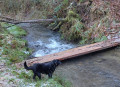
This walk through undulating terrain will take you along streams to the ridgelines, offering sweeping views of the Ségala.
According to legend, the locals did not know where to build the church. In a fit of frustration, the mason threw his hammer into the sky. A dove caught it in mid-air and then dropped it. The answer had thus come from the heavens. The image of the dove has often been used by the local council; it appears on the stained-glass windows holding a branch, as well as on the corners of the bell tower.
Route of the Happy Valley in Terrou
 7.98 mi
+1,335 ft
-1,362 ft
4h 50
Moderate
Departure from Terrou (Lot)
7.98 mi
+1,335 ft
-1,362 ft
4h 50
Moderate
Departure from Terrou (Lot)
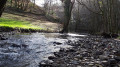
Discover the Bave valley and the small Lot village of Ladirat.
La Bave
 5.48 mi
+912 ft
-938 ft
3h 20
Moderate
Departure from Terrou (Lot)
5.48 mi
+912 ft
-938 ft
3h 20
Moderate
Departure from Terrou (Lot)
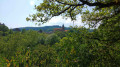
Hike to discover the Bave, a tributary of the Dordogne. Along the way, see the remains of Gallo-Roman sarcophagi and enjoy a beautiful view of the Saint-Laurent towers in Saint-Céré.
Viewpoint route starting from Terrou
5.43 mi
+1,178 ft
-1,201 ft
3h 30
Moderate
Departure from Terrou (Lot)
A lovely walk in the hills above Terrou: chestnut and walnut trees, Salers and Limousin cattle. Beautiful views of the Tours Saint-Laurent.
The two bell towers
8.82 mi
+1,339 ft
-1,316 ft
5h 15
Moderate
Departure from Montet-et-Bouxal (Lot)
A beautiful, shaded walk offering stunning views over the Haut Ségala hills.
On the cliffs of the Célé, starting from Espagnac-Sainte-Eulalie
11.87 mi
+2,228 ft
-2,247 ft
7h 25
Difficult
Departure from Espagnac-Sainte-Eulalie (Lot)
Between Figeac and its confluence with the Lot, the Célé river crosses a limestone plateau. It winds its way between cliffs offering stunning views of the valley. This hike follows part of the river's course. The elevation gain on this walk will delight the more athletic, but it can also be easily split into two to suit everyone.
Espagnac – Marcilhac-sur-Célé
 9.80 mi
+1,929 ft
-1,936 ft
6h 10
Moderate
Departure from Espagnac-Sainte-Eulalie (Lot)
9.80 mi
+1,929 ft
-1,936 ft
6h 10
Moderate
Departure from Espagnac-Sainte-Eulalie (Lot)
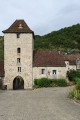
Thissecond stage on theGR®651takes you through places with ancient stone buildings: the Priory of Espagnac, the Château des Anglais in Saint-Sulpice, troglodyte houses and the caselles of Marcilhac. It also offers magnificent views of the Célé valley from the balcony-like path on the plateau.
This stage also allows you to explore the causse and its network of low stone walls, evidence of the region’s once-thriving agricultural past.
Cavarrot and Monteil mills from Boussac
 5.06 mi
+653 ft
-643 ft
2h 55
Easy
Departure from Boussac (Lot) (Lot)
5.06 mi
+653 ft
-643 ft
2h 55
Easy
Departure from Boussac (Lot) (Lot)
A route that will allow you to discover the landscapes of the Gorges du Célé, the small shaded paths on the Causse and the meadows along the river. It follows small roads and public paths that are often inaccessible to motor vehicles.
Espagnac-Sainte-Eulalie - Sauliac-sur-Célé
 15.03 mi
+2,605 ft
-2,677 ft
9h 10
Difficult
Departure from Espagnac-Sainte-Eulalie (Lot)
15.03 mi
+2,605 ft
-2,677 ft
9h 10
Difficult
Departure from Espagnac-Sainte-Eulalie (Lot)
The twenty-eighth stage of the Camino de Santiago. A truly beautiful stage that winds through the Célé Valley. As you follow the river, the rocky cliffs open up to reveal their dark caves, pretty villages, cave dwellings and mills. The Célé Valley undulates along a route that is both wild and poetic, and is sure to fill you with wonder!
Château des Anglais in Autoire
 1.57 mi
+528 ft
-531 ft
1h 10
Easy
Departure from Loubressac (Lot)
1.57 mi
+528 ft
-531 ft
1h 10
Easy
Departure from Loubressac (Lot)
A family walk, fairly shaded, featuring a renovated ruined castle and magnificent views. Stone or metal steps in some places. An easy walk, but a little close to the cliff edge at times.
Route of the Château des Anglais in Brengues
5.12 mi
+1,184 ft
-1,184 ft
3h 25
Moderate
Departure from Brengues (Lot)
This splendid route has many attractions: the Château des Anglais clinging to the cliff, the Priory of Espagnac-Sainte-Eulalie and several superb views of the Célé Valley.
Circular walk between Autoire and Castelnau-Bretenoux Castle
 11.96 mi
+1,673 ft
-1,703 ft
6h 55
Difficult
Departure from Autoire (Lot)
11.96 mi
+1,673 ft
-1,703 ft
6h 55
Difficult
Departure from Autoire (Lot)
A rewarding walk offering the chance to discover three remarkable villages: Autoire, Loubressac and the castle village of Castelnau-Bretenoux. The Autoire waterfall is another must-see attraction. The detour via the Château des Anglais is also well worth the trip. There is a great variety of landscapes, ranging from the limestone plateau and its cliffs to the steep-sided Autoire valley, via the broad Bave plain – landscapes dotted with manor houses and traditional architecture of great interest.
Under the suns of Lurçat
 3.86 mi
+719 ft
-715 ft
2h 25
Easy
Departure from Saint-Céré (Lot)
3.86 mi
+719 ft
-715 ft
2h 25
Easy
Departure from Saint-Céré (Lot)
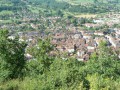
This path will take you up to the heights to the ancient castrum of a certain Sérénus, lord of the area who gave his name to the town that developed at his feet: Saint-Céré.
Rocamadour via quiet paths
13.00 mi
+1,437 ft
-1,460 ft
7h 15
Difficult
Departure from Rignac (Lot) (Lot)
This circuit allows you to discover Rocamadour as the pilgrims who came on foot did, the causse to the south of the citadel and the Alzou valley with its old mills.
Figeac - Espagnac-Sainte-Eulalie
 15.81 mi
+1,227 ft
-1,316 ft
8 hrs
15.81 mi
+1,227 ft
-1,316 ft
8 hrs
 Very difficult
Departure from Figeac (Lot)
Very difficult
Departure from Figeac (Lot)
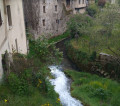
The twenty-seventh stage of the Way of St James. For this stage, you’ll leave theGR®® 65to follow a charming alternative route that will take you off the beaten track and allow you to discover unspoilt nature with breathtaking scenery. Just before the charming little village of Béduer, you’ll leave theGR®® 65 to take the Célé route on theGR®® 651. You’ll pass through the villages of Boussac and Corn, with their old houses typical of the Quercy region and their troglodyte caves. Then, nestled in the bend of the River Célé, you’ll discover Espagnac-Sainte-Eulalie – two authentic villages merged into one. It’s worth noting that the magnificent priory and its exceptional bell tower alone are well worth the detour. It’s not without reason that the area is known as Val Paradis.
The Bois des Jonquilles in Alvignac
 6.11 mi
+794 ft
-787 ft
3h 30
Easy
Departure from Alvignac (Lot)
6.11 mi
+794 ft
-787 ft
3h 30
Easy
Departure from Alvignac (Lot)
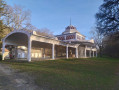
This route takes you to the Salmière spring, the site of Fort de Cantal and an astonishing fortified caselle.
The name of the village of Alvignac comes from the name of a man named Alvinius, who lived in Gallo-Roman times, to which the possessive suffix "acum" was added.
Route of the Fountains and Washhouses in Alvignac
 4.08 mi
+568 ft
-564 ft
2h 20
Moderate
Departure from Alvignac (Lot)
4.08 mi
+568 ft
-564 ft
2h 20
Moderate
Departure from Alvignac (Lot)
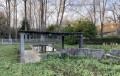
A very lovely route, offering the chance to discover the fountains and washhouses around Alvignac. The first part of the route follows a small road, and the second part takes you along paths and through woodland.
The Gouffre de Padirac and its surroundings
 11.15 mi
+1,624 ft
-1,647 ft
6h 35
Moderate
Departure from Padirac (Lot)
11.15 mi
+1,624 ft
-1,647 ft
6h 35
Moderate
Departure from Padirac (Lot)
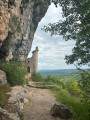
This day hike allows you to discover the Gouffre de Padirac and the listed villages of Loubressac and Autoire. From the promontory, you can enjoy a splendid view of the valley.
The Célé Valley in 7 stages
 66.17 mi
+7,936 ft
-8,537 ft
7 days
Moderate
Departure from Faycelles (Lot)
66.17 mi
+7,936 ft
-8,537 ft
7 days
Moderate
Departure from Faycelles (Lot)
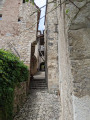
The Célé Valley is one of several routes on the Way of St James. Some say it is one of the most beautiful.
From Faycelles, near Figeac, to Cahors, via Espagnac, Saint-Cirq-Lapopie and Vers, this 7-stage hike takes its time around the villages of the Célé and then the Lot. It’s the perfect way to appreciate the monuments, landscapes and people of this very welcoming region.Don’t hesitate: it’s beautiful, friendly and welcoming.Return to the starting point by SNCF bus.
Faycelles – Espagnac
 11.77 mi
+492 ft
-958 ft
5h 50
Moderate
Departure from Faycelles (Lot)
11.77 mi
+492 ft
-958 ft
5h 50
Moderate
Departure from Faycelles (Lot)
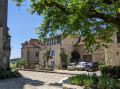
From the top of the Faycelles plateau, between the Lot and the Célé rivers, the route leads to the starting point ofthe GR®®651for thefirst descent into the Célé valley.Medieval villages such as Faycelles, Corn and Espagnac, ancient stone castles, churches, chapels and priories: you’re definitely on a route of the Way of St James. The most beautiful one, they say.The route is very shaded and benefits from the coolness of the Célé valley.