


Refine your search for walks in Saint-Gilles-les-Forêts
Saint-Gilles-les-Forêts walks


 Mont Gargan
 Visorando Member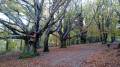
 1.60 mi
 +367 ft
 -367 ft
 1h 05
1h 05
 Easy
Easy
 Departure from Saint-Gilles-les-Forêts (Haute-Vienne)
During a short climb and a small circular route, Mont Gargan, a memorial site steeped in history, offers landscapes of moors and woods, unobstructed views and heritage.
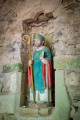
Boucle de la Chapelle Saint-Dulcet
 4.30 mi
+456 ft
-469 ft
2h 20
Easy
Departure from Chamberet (Corrèze)
4.30 mi
+456 ft
-469 ft
2h 20
Easy
Departure from Chamberet (Corrèze)
A very pleasant loop in the Monédières, with many sections in the forest, leading to the charming and unusual Saint-Dulcet Chapel. A very easy circuit with little elevation gain, making it accessible to all fitness levels.
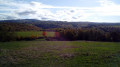
Circular route on the slopes of the Puy des Fages
 5.06 mi
+538 ft
-564 ft
2h 50
5.06 mi
+538 ft
-564 ft
2h 50
 Moderate
Departure from Soudaine-Lavinadière (Corrèze)
Moderate
Departure from Soudaine-Lavinadière (Corrèze)
Starting from the village of Soudaine-Lavinadiaire, with its beautiful church and archaeological remains, you follow the valley of the River Soudaine before climbing the slopes of the Puy des Fages, from where you can enjoy sweeping views. To complete the picture, there are a few refreshing streams and green pastures, where Limousin cows and horses graze.
The Neuvic-Entier route
 9.93 mi
+971 ft
-988 ft
5h 25
Moderate
Departure from Neuvic-Entier (Haute-Vienne)
9.93 mi
+971 ft
-988 ft
5h 25
Moderate
Departure from Neuvic-Entier (Haute-Vienne)
A hilly route that will allow you to explore the countryside and hills near the village of Neuvic-Entier.
The Gorges de la Vienne starting from Bussy Varache
7.38 mi
+1,129 ft
-1,129 ft
4h 25
Moderate
Departure from Eymoutiers (Haute-Vienne)
A forest walk along the Gorges de la Vienne and on the hillsides above the river, starting from Bussy Varache. Few viewpoints, as the gorges are currently very wooded (2026). The Vienne is visible thanks to a round trip that branches off the main route.
A stroll through Eymoutiers
1.23 mi
+69 ft
-85 ft
0h 35
Easy
Departure from Eymoutiers (Haute-Vienne)
A walk through a formerly prosperous town on the Plateau de Millevaches, the former capital of the Limousin tanning industry, built on the banks of the Vienne, but which is sadly slowly falling into ruin. It boasts many beautiful old houses, many of which are no longer maintained.
Tour of Puy d'Orliac
 5.00 mi
+600 ft
-607 ft
2h 50
Moderate
Departure from Veix (Corrèze)
5.00 mi
+600 ft
-607 ft
2h 50
Moderate
Departure from Veix (Corrèze)
Starting from the charming Romanesque church in Veix, this is a pleasant circular forest route dotted with green pastures and beautiful old houses.
The Font Faure
4.57 mi
+404 ft
-410 ft
2h 25
Easy
Departure from Benayes (Corrèze)
An easy route with magnificent views of Forsac Castle and the village of Masseret. You will pass by Font Faure, a devotional fountain that is the site of a pilgrimage where the clothes of the sick are placed on the cross. The fountain is located in the beautiful and large forest of the same name, part of which is a hunting reserve, near Forsac.
Le Père Castor, Meuzac Évasions trail
 Association / Club / Walk leader5.15 mi
+322 ft
-328 ft
2h 40
Easy
Departure from Meuzac (Haute-Vienne)
Association / Club / Walk leader5.15 mi
+322 ft
-328 ft
2h 40
Easy
Departure from Meuzac (Haute-Vienne)
Meuzac welcomes you for a walk rich in natural heritage (Limousin bocage and forests) and architectural heritage (fortified Romanesque church). You will come across numerous ponds, including the Plan d'Eau de la Roche (swimming) and the Plan d'Eau de Forgeneuve (water skiing). Don't miss the Père Castor media library.
Throughout the walk, you will find a series of questions and answers (the question on one signpost, the answer on the next).
The oaks of Murat
0.99 mi
+118 ft
-115 ft
0h 35
Easy
Departure from Gourdon-Murat (Corrèze)
A mini-hike to discover the remarkable heritage of the hamlet of Murat: the Moulin de Travers site, the beautiful Saint-Pierre-aux-Liens church, a beautiful carved cross and two very beautiful oak trees.
Suc au May in the Monédières massif
 5.49 mi
+1,033 ft
-1,033 ft
3h 25
Moderate
Departure from Saint-Augustin (Corrèze) (Corrèze)
5.49 mi
+1,033 ft
-1,033 ft
3h 25
Moderate
Departure from Saint-Augustin (Corrèze) (Corrèze)
A pleasant hike leading to the summit of Knoll Mary, which overlooks the Freysselines cirque and the Ganezande Pond. At the summit, equipped with an orientation table, there are beautiful views of the surrounding area.
Circuit of the Bois de Crosas via Le Puy-la-Besse
5.72 mi
+479 ft
-479 ft
3h 05
Easy
Departure from Peyrat-le-Château (Haute-Vienne)
A walk that begins along the shores of Lake Vassivière before heading up into the hills, passing the summit of the Petit Puy de la Besse, which offers panoramic views of the wooded hills surrounding the lake. Part of the route follows the Chemin des Poètes, dotted with carved stones.
Tour of Vassivière Island
4.05 mi
+108 ft
-108 ft
1h 55
Easy
Departure from Beaumont-du-Lac (Haute-Vienne)
An artistic tour of Vassivière Island along a path lined with numerous works from the International Centre for Art and Landscape. The route also takes you through the heart of the island, where you’ll find the museum, the old castle, a bread oven and a shop selling local crafts.
Nergout - Vassivière Dam
 11.57 mi
+666 ft
-735 ft
5h 55
11.57 mi
+666 ft
-735 ft
5h 55
 Difficult
Departure from Beaumont-du-Lac (Haute-Vienne)
Difficult
Departure from Beaumont-du-Lac (Haute-Vienne)
Nature and Land Art for this second stage, around the 5th largest artificial lake in France!
The Auchaise and Auphèle embankments
3.05 mi
+315 ft
-331 ft
1h 40
Easy
Departure from Royère-de-Vassivière (Creuse)
A short walk that takes you up to a slight elevation as you pass through the hamlet of Auchaise, with its traditional houses, before descending to the lakeside, crossing its two embankments, and then heading down to the foot of the dam on the Maulde.
Route around Lake Vassivière
23.57 mi
+1,280 ft
-1,286 ft
2 days
Moderate
Departure from Royère-de-Vassivière (Creuse)
This two-stage route of 2 x 18 km will take you on a journey of discovery around one of the largest artificial lakes in France.
You can expect to see mid-mountain landscapes, varied vegetation including fir forests, moors and peat bogs, and wild flora and fauna on this tour of Lake Vassivière, commonly known as "Little Canada".
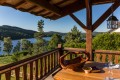
The highlight of the route: a stopover at the Pourvoirie du Lac stopover lodge (accommodation, breakfast and dinner with a panoramic view of the lake).
From the Vassivière Dam to Nergout
 11.99 mi
+614 ft
-551 ft
6h 05
Moderate
Departure from Royère-de-Vassivière (Creuse)
11.99 mi
+614 ft
-551 ft
6h 05
Moderate
Departure from Royère-de-Vassivière (Creuse)
This first stage takes you through unspoilt countryside, with a route that is both wild and surprising.
Around the Cirque de Freysselines
 7.62 mi
+1,188 ft
-1,211 ft
4h 30
Difficult
Departure from Saint-Augustin (Corrèze) (Corrèze)
7.62 mi
+1,188 ft
-1,211 ft
4h 30
Difficult
Departure from Saint-Augustin (Corrèze) (Corrèze)
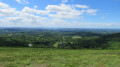
A beautiful outing in the Monédières, starting with the ascent of the knoll at May (900m) and the descent into the Puy de Chauzeix forest, leading to the Étang de Ganezande.
Route of the two dykes at Vassivière
 Tourist office
 4.35 mi
+417 ft
-413 ft
2h 20
Easy
Departure from Royère-de-Vassivière (Creuse)
4.35 mi
+417 ft
-413 ft
2h 20
Easy
Departure from Royère-de-Vassivière (Creuse)
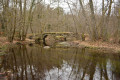
The dam is complemented by the Auchaise dyke, which seals off a depression in the ground on the right bank about 400m from the main structure. This reservoir also receives water diverted from the upper basins of the Taurion (La Vaud-Gelade), Vienne, Dorat and Chandouille (Faux-la-Montagne) rivers.
Route des Deux Digues (Saint-Martin route)
 5.88 mi
+459 ft
-446 ft
3h 05
Moderate
Departure from Royère-de-Vassivière (Creuse)
5.88 mi
+459 ft
-446 ft
3h 05
Moderate
Departure from Royère-de-Vassivière (Creuse)
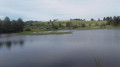
The embankments and the beautiful view of the lake, the sweeping landscapes beyond Le Chataignoux, the lovely rows of trees, the walk around Peu de Vaux, and the arrival at Auchaise are all delightful surprises on this walk near Lake Vassivière.
The Chassagnas Peninsula on Lake Vassivière
 4.49 mi
+364 ft
-371 ft
2h 25
Easy
Departure from Royère-de-Vassivière (Creuse)
4.49 mi
+364 ft
-371 ft
2h 25
Easy
Departure from Royère-de-Vassivière (Creuse)
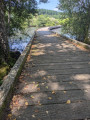
Chassagnas, of Latin origin, Cassania or Gallic Cassanus, refers to the oak tree. Chassagnas consists of a wooded slope down to the edge of Lake Vassivière and a partially cleared summit offering a 180° view of the lake.The Chassagnas peninsula, jutting out into the heart of Lake Vassivière, forms the boundary between Creuse and Haute-Vienne. Together with its twin, the Puy du Rocher, which overlooks Vauveix, it acts as a barrier between the lake's two main bays.
Route des Tourbières - Vassivière
 8.83 mi
+837 ft
-843 ft
4h 45
Moderate
Departure from Royère-de-Vassivière (Creuse)
8.83 mi
+837 ft
-843 ft
4h 45
Moderate
Departure from Royère-de-Vassivière (Creuse)
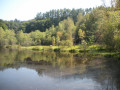
Peat bogs develop in granite basins called alveoli, where the acidic, poor soil provides favourable conditions for their growth. These fragile environments are home to a specific flora composed of very particular primitive plants: sphagnum mosses. The different stages are visible here: low marshes covered with quaking bogs, active raised bogs, and peat heaths bordered by willows and birches.
Masgrangeas Wood and Chassagnas Peninsula
7.97 mi
+761 ft
-781 ft
4h 20
Moderate
Departure from Royère-de-Vassivière (Creuse)
A walk on the Millevaches Plateau, mainly through woodland, passing through the pretty hamlet of Masgrangeas. After a circular route through the Bois de la Roche, the route continues with a circular route around the Chassagnas Peninsula, along Lake Vassivière, then a walk around the small Île de Vauveix.
The Habriat Stream
 3.25 mi
+279 ft
-276 ft
1h 45
Easy
Departure from Saint-Pardoux-Corbier (Corrèze)
3.25 mi
+279 ft
-276 ft
1h 45
Easy
Departure from Saint-Pardoux-Corbier (Corrèze)
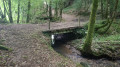
A lovely path winding through the countryside along sunken lanes. A fairly shaded and cool route, recommended in hot weather.
Report from a user on 28 October 2024:Following the bad weather of recent months, the path from "La Brégère" is closed to cyclists and >hikers by a municipal order. Indeed, the two bridges over the Habriat stream are impassable. No >repair date mentioned.