


Refine your search for walks in Rampillon
Rampillon walks
 The fortified farms of Brie and the Bois-Poussin stronghold
 Visorando Member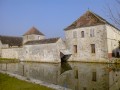
 9.97 mi
 +79 ft
 -66 ft
 4h 40
4h 40
 Moderate
 Departure from Nangis (Seine-et-Marne)
Mostly dating from the late Middle Ages, fortified farms are a typical part of the architectural heritage of the Brie region. This walk takes you past several such farms, including the Fief de Bois-Poussin stronghold, and gives you the chance to discover the rich heritage of Nangis with its ancient fortified castle, church and market halls. The walk takes you along paths between fields and small roads with little traffic, and along the banks of the brooks that wind through this farming plain.
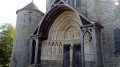
Medieval churches of Brie: the Templar church of Rampillon
 11.51 mi
+72 ft
-72 ft
5h 20
Moderate
Departure from Nangis (Seine-et-Marne)
11.51 mi
+72 ft
-72 ft
5h 20
Moderate
Departure from Nangis (Seine-et-Marne)
Across the Brie plain, discover a beautiful 13th-century church with fortification elements inherited from its Templar past.
From Donnemarie-Dontilly to Montereau-Fault-Yonne in Bassée-Montois
 16.56 mi
+669 ft
-850 ft
8h 10
16.56 mi
+669 ft
-850 ft
8h 10
 Difficult
Departure from Donnemarie-Dontilly (Seine-et-Marne)
Difficult
Departure from Donnemarie-Dontilly (Seine-et-Marne)
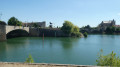
Twenty-fourth stage of the Grand Tour of Île-de-France via the GR®11, starting from Donnemarie-Dontilly after spending the night there at the end ofthe previous stage. This stage connects the Montois region to the Seine Valley and Montereau-Fault-Yonne, the confluence of the Seine and Yonne rivers. It thus transitions from an agricultural landscape to a marshland landscape in the valley, ending in a more urban environment.
Villefermoy Forest - Southern Circular Loop
 8.74 mi
+33 ft
-33 ft
4h 05
Moderate
Departure from La Chapelle-Rablais (Seine-et-Marne)
8.74 mi
+33 ft
-33 ft
4h 05
Moderate
Departure from La Chapelle-Rablais (Seine-et-Marne)
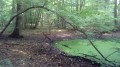
A hike mainly through forest, which also includes passages between fields and offers some interesting heritage features.
This hike is reserved for those who are not put off by trudging through dense vegetation.
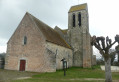
Medieval churches south of Provins
 11.43 mi
+810 ft
-810 ft
6h 00
Moderate
Departure from Lizines (Seine-et-Marne)
11.43 mi
+810 ft
-810 ft
6h 00
Moderate
Departure from Lizines (Seine-et-Marne)
A lovely circular route through the valleys and plateaus south of Provins, culminating in the gem that is Saint-Loup-de-Naud and its extraordinary carved gateway.
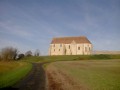
Medieval churches of Brie - Paroy, Donnemarie and Dontilly
 10.83 mi
+620 ft
-607 ft
5h 30
Moderate
Departure from Donnemarie-Dontilly (Seine-et-Marne)
10.83 mi
+620 ft
-607 ft
5h 30
Moderate
Departure from Donnemarie-Dontilly (Seine-et-Marne)
Between woods and fields, discover three of the oldest churches in the Ile-de-France region. The approach to the church of Paroy, isolated on its hill, offers a beautiful sight. Two other churches, a few wash houses and old wells, and beautiful farmhouses complete this heritage-rich hike.
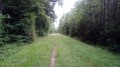
Villefermoy Forest - Northern Circular Loop
 8.24 mi
+102 ft
-112 ft
3h 55
Moderate
Departure from La Chapelle-Rablais (Seine-et-Marne)
8.24 mi
+102 ft
-112 ft
3h 55
Moderate
Departure from La Chapelle-Rablais (Seine-et-Marne)
One of the few forest trails that can be followed in the heart of Brie. A route that is mainly in cool shade, with a brief stretch through the fields around the Ferme d'Heurtebise.
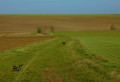
Around La Chapelle-Iger and the Château de Champ Gueffier
 6.36 mi
+197 ft
-197 ft
3h 05
6.36 mi
+197 ft
-197 ft
3h 05
 Easy
Departure from La Chapelle-Iger (Seine-et-Marne)
Easy
Departure from La Chapelle-Iger (Seine-et-Marne)
A beautiful walk in the Brie region, through fields and valleys, with stunning views. Not recommended in summer when it is very hot as there are very few trees to provide shade from the sun.
Fortified farms of Brie - Le Fief des Epoisses
 4.36 mi
+26 ft
-26 ft
2h 00
Easy
Departure from Mormant (Seine-et-Marne)
4.36 mi
+26 ft
-26 ft
2h 00
Easy
Departure from Mormant (Seine-et-Marne)
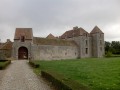
Mostly dating from the late Middle Ages, fortified farms are a typical architectural feature of the Brie region. This hike connects several of them, including one of the most famous, the Fief des Epoisses. You will follow paths between fields and small roads with little traffic.
La Fayette and the wash houses at the start of Courpalay
9.17 mi
+269 ft
-269 ft
4h 25
Moderate
Departure from Courpalay (Seine-et-Marne)
An easy, mainly rural walk, which passes by four interesting wash houses, several small typical churches, and the former Priory of Segrès. The highlight of this circular walk is the superb Château de la Grange Bléneau, whose origins date back to the 14th century and which, among other illustrious figures, hosted General de La Fayette from 1802 to 1834. Another mark of La Fayette's passage is the poplar tree known as the "Tree of Liberty", which he is said to have planted in 1831 in front of the church in Bernay.
From Longueville to Donnemarie-Dontilly through the Montois
 14.37 mi
+951 ft
-876 ft
7h 25
Difficult
Departure from Longueville (Seine-et-Marne) (Seine-et-Marne)
14.37 mi
+951 ft
-876 ft
7h 25
Difficult
Departure from Longueville (Seine-et-Marne) (Seine-et-Marne)
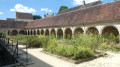
Twenty-third stage of the Grand Tour of Île-de-France via the GR®11, and the first of a series of two stages, including this one, needed to connect the Longueville and Montereau stations, through the Montois and the Seine Valley.For this first stage of the diptych, we suggest spending the night in a bed and breakfast in Donnemarie-Dontilly, roughly halfway between the two stations, after a beautiful crossing of the Montois, in a landscape that is a little more varied and hilly than the Brie just to the north.
Medieval churches of Brie: Lourps and Chalmaison along the Voulzie
 10.58 mi
+525 ft
-541 ft
5h 20
Moderate
Departure from Longueville (Seine-et-Marne) (Seine-et-Marne)
10.58 mi
+525 ft
-541 ft
5h 20
Moderate
Departure from Longueville (Seine-et-Marne) (Seine-et-Marne)
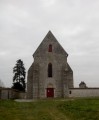
Straddling the Voulzie and Ru des Méances rivers, this hike alternates between woodland and cultivated fields. The Chapelle de Lourps stands out from afar, while the Église de Chalmaison only reveals itself at the last moment. Two old water mills add to the charm of this route.
From Longueville to Provins via Chalautre-la-Petite
 6.85 mi
+469 ft
-443 ft
3h 35
Moderate
Departure from Longueville (Seine-et-Marne) (Seine-et-Marne)
6.85 mi
+469 ft
-443 ft
3h 35
Moderate
Departure from Longueville (Seine-et-Marne) (Seine-et-Marne)
A hike from station to station that allows you to reach the town of Provins, a UNESCO World Heritage Site, on foot. From place to place, the route offers increasingly close views of the Upper Town of Provins. In a refreshing setting, the village of Chalautre-la-Petite also boasts an interesting heritage.
The Saint-Edme trail
 7.10 mi
+299 ft
-328 ft
3h 30
Moderate
Departure from Longueville (Seine-et-Marne) (Seine-et-Marne)
7.10 mi
+299 ft
-328 ft
3h 30
Moderate
Departure from Longueville (Seine-et-Marne) (Seine-et-Marne)
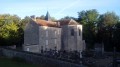
Alternating between fields and woods on either side of the Ru des Méances, this hike takes you to a 13th-century church and an old fountain, both dedicated to Saint Edme, who retired here at the end of his life.
Medieval churches of Brie: Saint-Loup-de-Naud
 6.63 mi
+217 ft
-226 ft
3h 15
Moderate
Departure from Sainte-Colombe (Seine-et-Marne) (Seine-et-Marne)
6.63 mi
+217 ft
-226 ft
3h 15
Moderate
Departure from Sainte-Colombe (Seine-et-Marne) (Seine-et-Marne)
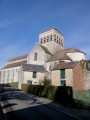
Built high up, the church of Saint-Loup dominates the village and can be seen from afar. This beautiful example of Romanesque architecture in the Île-de-France region is the destination of this walk, which takes you along country lanes and woodland paths, as well as village footpaths, and runs alongside streams and the grassy embankment of an underground aqueduct. A bucolic and heritage-rich hike in a peaceful setting.
From Mormant to Marles-en-Brie via the Château du Vivier
 14.43 mi
+131 ft
-135 ft
6h 45
Difficult
Departure from Mormant (Seine-et-Marne)
14.43 mi
+131 ft
-135 ft
6h 45
Difficult
Departure from Mormant (Seine-et-Marne)
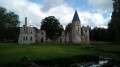
A walk from station to station, along the back roads of the Brie region and through fields and woods. Several heritage highlights along the way, including some beautiful churches, a menhir and, as the highlight, the ruined château of Le Vivier.
Route west of Bombon via Saint-Méry
8.97 mi
+184 ft
-203 ft
4h 15
Moderate
Departure from Bombon (Seine-et-Marne)
A moderate-difficulty walk, with little elevation gain, west of Bombon, passing through Saint-Méry, then across fields and two small woods. It then follows and crosses the Ru d’Ancœur, the Ru de la Prée and the Ru des Moines, passing by the Flagy Mill and the Voies Mill
Bombon was the birthplace of the 1918 Victory. Indeed, General Foch moved his command post to Bombon in 1918. His marshal’s baton ‘was presented to him in the castle’s main courtyard in the presence of all the chiefs of staff, Marshal Haig, Marshal Pershing, General Pétain and the highest political authorities, the President of the Republic, Raymond Poincaré, Clemenceau […], Painlevé, former Minister of War and former President of the Council. General Weygand […] was by his side.”
Bombon and its surrounding countryside
 5.17 mi
+167 ft
-174 ft
2h 30
Easy
Departure from Bombon (Seine-et-Marne)
5.17 mi
+167 ft
-174 ft
2h 30
Easy
Departure from Bombon (Seine-et-Marne)
A picturesque walk starting from Bombon, a small, typical Briard village. The route goes round two châteaux, follows the Ru d’Ancœur (a peaceful little stream) and crosses woods and cultivated fields.
This walk is easy, but the section along the river can be muddy in winter. Please also be aware of hunting seasons.
Along the Yerres around Bernay-Vilbert
 4.69 mi
+66 ft
-69 ft
2h 15
Easy
Departure from Bernay-Vilbert (Seine-et-Marne)
4.69 mi
+66 ft
-69 ft
2h 15
Easy
Departure from Bernay-Vilbert (Seine-et-Marne)
This walk offers views of the Yerres, a priory, two wash houses and cows, alternating between woods and fields.
Provins, the medieval town and the Durteint valley
 9.47 mi
+430 ft
-423 ft
4h 40
Moderate
Departure from Provins (Seine-et-Marne)
9.47 mi
+430 ft
-423 ft
4h 40
Moderate
Departure from Provins (Seine-et-Marne)
This easy walk takes you past all the interesting buildings in Provins, both in the upper and lower towns, and follows the streets with the finest clusters of half-timbered houses. The circular route rounds off this urban route with a countryside detour to a few points of interest, whilst also offering views of the upper town as a whole.
From Provins to Longueville between the Voulzie and Méances valleys.
 11.67 mi
+653 ft
-679 ft
5h 55
Moderate
Departure from Provins (Seine-et-Marne)
11.67 mi
+653 ft
-679 ft
5h 55
Moderate
Departure from Provins (Seine-et-Marne)
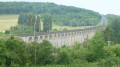
Twenty-second stage of the Grand Tour of Île-de-France via the GR®11. A short stage connecting Longueville to Provins, allowing you to rest after the long previous stages crossing Brie. As the stage is short, we suggest starting with a short circular loop through the old town of Provins to discover its rich heritage.
Loop east of Provins via Sourdun and the Château de l'Ormurion
 11.31 mi
+446 ft
-443 ft
5h 35
Difficult
Departure from Provins (Seine-et-Marne)
11.31 mi
+446 ft
-443 ft
5h 35
Difficult
Departure from Provins (Seine-et-Marne)
A hike mainly through fields with a few passages through woods. There is some beautiful heritage in Sourdun (church, castle) and the route offers some beautiful views, albeit distant, of the Collegiate Church of Saint-Quiriace and the César Tower in Provins.
Medieval walk in Provins
 4.61 mi
+220 ft
-230 ft
2h 20
Easy
Departure from Provins (Seine-et-Marne)
4.61 mi
+220 ft
-230 ft
2h 20
Easy
Departure from Provins (Seine-et-Marne)
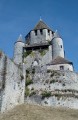
Listed as a UNESCO World Heritage Site, the medieval walls of Provins are worth a visit in their own right! This urban walk, enhanced by waterways, allows you to discover the town's main sites and monuments: ramparts, Romanesque church and Gothic collegiate church, former convent, and the famous César Tower.
The route was designed by the Pays du Provinois Community of Communes and marked by the FFRP.
Tour of Île aux Moines and a stroll along the banks of the Seine
 4.14 mi
+23 ft
-23 ft
1h 55
Easy
Departure from Marolles-sur-Seine (Seine-et-Marne)
4.14 mi
+23 ft
-23 ft
1h 55
Easy
Departure from Marolles-sur-Seine (Seine-et-Marne)
A short walk starting from the beautiful church in Marolles-sur-Seine, an excuse for a leisurely stroll or a picnic by the water.
From Champcenest to Provins through Brie
 17.12 mi
+200 ft
-417 ft
8h 05
17.12 mi
+200 ft
-417 ft
8h 05
 Very difficult
Departure from Champcenest (Seine-et-Marne)
Very difficult
Departure from Champcenest (Seine-et-Marne)
This is the twenty-first stage of the Grand Tour of Île-de-France via the GR®11, and the last of the three stages through Brie between Coulommiers and Provins. It is still quite long but without any real difficulty.This stage completes the crossing of Brie, reaching Provins, whose iconic monuments (Caesar's Tower and the dome of the Collegiate Church of Saint-Quiriace) can be seen from afar in good weather, marking the destination of the stage!
 The banks of the Seine via Saint-Mammès, from Montereau-Fault-Yonne
19.19 mi
+187 ft
-167 ft
2.5 hrs
Moderate
Departure from Montereau-Fault-Yonne (Seine-et-Marne)
A cycle ride along the Seine on the towpath, following the right bank all the way. Pass the Grande Paroisse leisure centre, continue on to Champagne-sur-Seine and cross the Seine. Follow the left bank for a short while, near Saint-Mammès, then head towards Moret-du-Loing and the Canal du Loing, and reach Montereau by following the Yonne for a short stretch.
Around Lumigny, Nesles la Gilberde and Ormeaux
9.54 mi
+505 ft
-476 ft
4h 50
Moderate
Departure from Lumigny-Nesles-Ormeaux (Seine-et-Marne)
Comprising three villages and three hamlets, this commune is located about 50 kilometres east of Paris. The village of Lumigny is situated at the foot of a sand hill, similar in nature to the Butte de Doue.
Along the River Yonne from Montereau, amongst the river, fields and woodland
 17.99 mi
+20 ft
-20 ft
1.5 hrs
Easy
Departure from Montereau-Fault-Yonne (Seine-et-Marne)
17.99 mi
+20 ft
-20 ft
1.5 hrs
Easy
Departure from Montereau-Fault-Yonne (Seine-et-Marne)
A pleasant walk offering varied scenery. The outward journey mostly follows the Yonne towpath. The return route alternates between fields, wooded areas and bodies of water. You’ll often come across wildlife (rabbits, hares, squirrels, numerous species of birds and, if you’re lucky, deer).
The Javot Valley starting from Machault
 8.40 mi
+381 ft
-377 ft
4h 10
Moderate
Departure from Machault (Seine-et-Marne) (Seine-et-Marne)
8.40 mi
+381 ft
-377 ft
4h 10
Moderate
Departure from Machault (Seine-et-Marne) (Seine-et-Marne)
Variation of the "From vineyards to orchards in the Javot valley" hike available on the FFRP Seine-et-Marne hiking website.
Double circular route starting from Chaumes-en-Brie
 13.42 mi
+436 ft
-459 ft
6h 35
Difficult
Departure from Chaumes-en-Brie (Seine-et-Marne)
13.42 mi
+436 ft
-459 ft
6h 35
Difficult
Departure from Chaumes-en-Brie (Seine-et-Marne)
Around Chaumes-en-Brie through the villages of Maurevert, Forest, Arcy and Argentières, with the Yerres, Bréon and Vivier and Arcy castles.
Note: in the description below, the (*) refers to the section: During the hike or nearby.
Circular route starting from Chaumes-en-Brie
 9.40 mi
+282 ft
-276 ft
4h 35
Moderate
Departure from Chaumes-en-Brie (Seine-et-Marne)
9.40 mi
+282 ft
-276 ft
4h 35
Moderate
Departure from Chaumes-en-Brie (Seine-et-Marne)
Around Chaumes-en-Brie through the villages of Arcy and Argentières, with the Yerres, the Bréon and the castles of Vivier and Arcy.
Circular loop near Yerres
 12.50 mi
+171 ft
-164 ft
5h 55
Difficult
Departure from Lumigny-Nesles-Ormeaux (Seine-et-Marne)
12.50 mi
+171 ft
-164 ft
5h 55
Difficult
Departure from Lumigny-Nesles-Ormeaux (Seine-et-Marne)
A slightly hilly hike through fields and woods, not forgetting the Yerres and its pond.
Where the Seine and Yonne rivers meet, passing through Marolles-sur-Seine
12.55 mi
+39 ft
-39 ft
5h 50
Difficult
Departure from Montereau-Fault-Yonne (Seine-et-Marne)
Passing through the Seiglats Regional Nature Reserve on this hike, you will see a variety of birds, including birds of prey and passerines, as well as locks along the banks of the Seine and Yonne rivers and ponds.
From Montereau-Fault-Yonne to Pont-sur-Yonne
 Association / Club / Walk leader
 18.24 mi
+62 ft
-16 ft
10 hrs
Very difficult
Departure from Montereau-Fault-Yonne (Seine-et-Marne)
18.24 mi
+62 ft
-16 ft
10 hrs
Very difficult
Departure from Montereau-Fault-Yonne (Seine-et-Marne)
This is the first stage of the Via Burgundia®, which takes you across the whole of Burgundy from Montereau-Fault-Yonne to Mâcon, south of Saône-et-Loire. This major route, covering almost 500 km, is divided into three sections: the Yonne section, the Morvan section and, finally, the Southern Burgundy section.
This first section follows the course of the River Yonne from its confluence with the River Seine to Pont-sur-Yonne. It involves very little elevation gain but remains a fairly long stage if you cover it in a single day. The route winds its way along the River Yonne, past fields of cereals and ponds (or ‘noues’), particularly after Bichain.
From Montereau-Fault-Yonne to Moret-sur-Loing, from one confluence to another.
 15.76 mi
+492 ft
-456 ft
7h 40
Difficult
Departure from Montereau-Fault-Yonne (Seine-et-Marne)
15.76 mi
+492 ft
-456 ft
7h 40
Difficult
Departure from Montereau-Fault-Yonne (Seine-et-Marne)
This is the twenty-fifth stage of the Grand Tour of Île-de-France via the GR®11, starting from Montereau station, not far from the confluence of the Seine and the Yonne, and ending at Moret-Veneux-les-Sablons station, not far from the confluence of the Seine and the Loing. The stage, entirely on the GR®11, follows a route on the left bank of the Seine, joining the Orvanne valley a little further south, and returns to Moret-sur-Loing and its beautiful historic centre, following the Canal du Loing on its towpath.
From Montereau to Vernou-sur-Seine via the towpath and the plateau
 8.52 mi
+249 ft
-207 ft
4h 10
Moderate
Departure from Montereau-Fault-Yonne (Seine-et-Marne)
8.52 mi
+249 ft
-207 ft
4h 10
Moderate
Departure from Montereau-Fault-Yonne (Seine-et-Marne)
A three-stage walk from station to station. First, you cross the town of Montereau, the highlight being the Gothic collegiate church and the double bridge at the confluence of the Seine and the Yonne. Next, you follow the towpath, which is mostly shaded. Finally, you climb to a higher elevation before descending to Vernou-sur-Seine station.
(Please note) Just before (9), the underpass beneath the railway line is closed (see the comment posted on 21 July 2026). Until this obstruction is cleared, one option is to turn right to find a level crossing. Once you have crossed the tracks safely, follow the D39 to the left until you reach point (9).
Along the River Yonne from Montereau-Fault-Yonne
11.58 mi
+43 ft
-23 ft
5h 20
Moderate
Departure from Montereau-Fault-Yonne (Seine-et-Marne)
A walking route from station to station, starting at Montereau Fault-Yonne station and ending at Villeneuve-la-Guyard along the River Yonne, allowing you to explore the ponds and marshes near the finish. A peaceful, quiet walk along the water’s edge, passing through the village of Misy-sur-Yonne, which is known for its historic site.
At the confluence of the Seine and Yonne rivers
7.38 mi
+16 ft
-16 ft
3h 25
Moderate
Departure from Montereau-Fault-Yonne (Seine-et-Marne)
Hiking around Varenne-sur-Seine. The trails leading to springs, mills and wash houses complete this circuit, passing by the Noue Notre-Dame leisure centre and the botanical garden with its castle.
The sand pits of the Yonne
 9.05 mi
+16 ft
-16 ft
4h 10
Moderate
Departure from Misy-sur-Yonne (Seine-et-Marne)
9.05 mi
+16 ft
-16 ft
4h 10
Moderate
Departure from Misy-sur-Yonne (Seine-et-Marne)
A hike with a water theme! First, across fields, you will pass sand pits and disused quarries that have been transformed into vast ponds. The second part takes place entirely along the Yonne, which you follow for about 7 km. Two churches and two castles complete the picture nicely.
A family walk along the River Yonne from Cannes-Écluses
 20.29 mi
+36 ft
-39 ft
4 hrs
Moderate
Departure from Cannes-Écluse (Seine-et-Marne)
20.29 mi
+36 ft
-39 ft
4 hrs
Moderate
Departure from Cannes-Écluse (Seine-et-Marne)
Circular mountain bike route along the banks of the Yonne, starting from Cannes-Écluses.Ideal for families as it runs alongside the river, is flat and features numerous picnic tables and benches along the route.The route alternates between tarmac roads (a minority), gravel roads and dirt tracks.
Amillis route
3.84 mi
+157 ft
-141 ft
1h 55
Easy
Departure from Amillis (Seine-et-Marne)
Circular route around the village of Amillis, located in the countryside 7 kilometres from Coulommiers. A route that passes through woods and along fields and meadows. Very quiet, rarely used paths with monuments to see.
Countryside and châteaux of the Brie region
 4.85 mi
+43 ft
-43 ft
2h 15
Easy
Departure from Fontenay-Trésigny (Seine-et-Marne)
4.85 mi
+43 ft
-43 ft
2h 15
Easy
Departure from Fontenay-Trésigny (Seine-et-Marne)
A varied walk through fields, woods and the old town, where many eras coexist.
From Vernou-sur-Seine to Fontainebleau via Saint-Mamès and Thomery
 10.25 mi
+495 ft
-463 ft
5h 10
Moderate
Departure from Vernou-la-Celle-sur-Seine (Seine-et-Marne)
10.25 mi
+495 ft
-463 ft
5h 10
Moderate
Departure from Vernou-la-Celle-sur-Seine (Seine-et-Marne)
A very varied hike from station to station. The Chemin des Herces, high up, offers beautiful views of the Seine and the town of Saint-Mammès, where you will find a beautiful Romanesque church. After walking along the Seine, you stroll between the old vine walls of Thomery. You return to the banks of the Seine and the hike ends with a detour into the Fontainebleau National Forest.
From Marles-en-Brie to Mortcerf via the Crécy Forest
 9.95 mi
+131 ft
-167 ft
4h 40
Moderate
Departure from Marles-en-Brie (Seine-et-Marne)
9.95 mi
+131 ft
-167 ft
4h 40
Moderate
Departure from Marles-en-Brie (Seine-et-Marne)
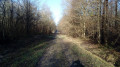
A walk from station to station that starts in the fields of the Brie plateau and continues through the Crécy Forest. The Château de La Houssaye-en-Brie, along with a few old houses in the village, add a lovely touch of heritage.