Country:
 City:
City:


Aaaaah, away from the city centre, you can breathe – that’s another reason why we love living in St-Cyprien: lower-rise buildings, wider streets and, above all, space for greenery and a neighbourhood life that gives Toulouse its status as a ‘working-class’ city, where life is good.
I suggest we take a stroll through the streets of St-Cyprien and bring back a little piece of the nature found in the neighbourhood.
(S) Right, let’s get started. I love community gardens; they combine farming, social connections and mutual support. We’ll meet in a large square, at the very back of which lies the Jardin partagé des Micocouliers.
The hackberry is a deciduous tree with oval, serrated, alternate and rough leaves, featuring three veins running from their base. They resemble those of the stinging nettle. Well-suited to the Mediterranean climate, the hackberry is a tree symbolic of Provence; it provides plenty of cool shade with its foliage.
Although the square is the perfect spot for a game of pétanque, resist the temptation and carry on with your visit.
(1) Continue along Rue des Fontaines to reach Parc de Bourrassol, situated on Impasse Pouvillon.
Take a moment to admire these majestic trees and, in particular, have a close look at their leaves. Here’s a clue to help you recognise them: the flowers are used to make soothing herbal teas and are a delight for beekeepers. These are lime trees. They’re commonly found in parks and along avenues, their dense foliage providing shelter from the sun.
(2) Head back along Rue des Fontaines to discover a small, leafy park: the Jardin des Fontaines. You’ll feel like settling down on the grass or having a game of table tennis.
During this stroll, keep your eyes peeled to spot nature at every turn. If you don’t recognise a particular plant, you can identify it using apps such as PlantNet, or look it up later in a book or plant guide.
Next stop: head to Rue des Braves to admire another form of nature – an urban mural. It’s called Summer Garden and was created by YGrek Beats.
(3) Walk a short way to the next stop at 45 Avenue de Lombez. This is the Clinique Pasteur, where the roof features 500 m² of cultivable land dedicated to growing certain vegetables and herbs to supply the clinic with its own produce.
(4) Now off we go for another artistic detour. Head towards Les Arènes, 8 Rue de Bagnolet. Look closely to spot an animal, a sort of fox. It’s multicoloured – it’s an urban mural called Guache (COL), Coyote.
(5) For those with a bike – a mode of transport I particularly enjoy for exploring the neighbourhood and taking in the scenery – there’s a self-service bike repair station available at 59 Rue Louis Vestrepain. Why not make the most of the park just behind it whilst you’re there?
(6) Carry on walking a little further to discover a little-known park, situated at 47 Rue Adolphe Coll. This is a lovely spot to take a short break.
You’ll then come to another park at 31 Rue de Bourrassol. This neighbourhood is full of places to rest, observe and enjoy nature.
(7) Walk a little further down the street to 50 Rue de Bourrassol. You’ll reach a new community garden called ‘Le coin de terre toulousain Édouard Bertrand’.
Finally, head to Place du Ravelin, where you’ll find a little surprise in the reading box situated in the heart of the square. It’s a little notebook dedicated to this lovely walk, in which you can leave a little memento, a trace of your visit, or a note for your neighbours... (E).


 Visorando Member
 Association / Club / Walk leader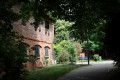
 Moderate