


Refine your search for walks in Poland
Poland walks


 A stroll through Bielsko-Biała, from the old town to the cartoon heroes
 Visorando Member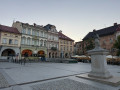
 2.93 mi
 +66 ft
 -69 ft
 1h 25
1h 25
 Easy
Easy
 Departure from Poland
Bielsko-Biała was formed by the merger of two towns separated by the River Biała: Bielsko in Silesia and Biała in Galicia. This circular route connects their two centres. On the hill in the old town, you’ll discover the Rynek and its arcades, St Nicholas’s Cathedral with its bell tower inspired by Italian campaniles, and the only statue of Martin Luther in Poland. Across the river, the old town of Biała reveals the façades of the ‘little Polish Vienna’, its imposing town hall and the statues of Bolek, Lolek and Reksio, heroes from the country’s oldest animation studio. In the evening, the illuminated monuments and neon lights on the Biała Bridge add to the atmosphere, though the circular route is well worth a stroll at any time of day.
Caves and valleys of Ojców National Park from Złota Góra
 7.40 mi
+1,470 ft
-1,476 ft
4h 40
7.40 mi
+1,470 ft
-1,476 ft
4h 40
 Moderate
Departure from Poland
Moderate
Departure from Poland
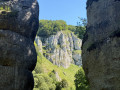
To the north of Kraków, Ojców National Park unfolds its limestone valleys amongst white cliffs, rocky spires and beech forests. Starting from the Złota Góra plateau, this circular route descends into the Prądnik Valley, passes at the foot of the ruins of Ojców Castle and crosses the village before reaching Jaskinia Ciemna, which opens out like a balcony above the valley. The route then takes in the viewing points on Góra Koronna, passes through the rocky gateway of Brama Krakowska and climbs up to Jaskinia Łokietka. The return journey takes you through the coolness of the Dolina Sąspowska, where the path follows the stream from footbridge to footbridge until it reaches a long wooden boardwalk.
A stroll through Kraków, from Rynek Główny to Ghetto Heroes’ Square
 7.10 mi
+358 ft
-371 ft
3h 35
Moderate
Departure from Poland
7.10 mi
+358 ft
-371 ft
3h 35
Moderate
Departure from Poland
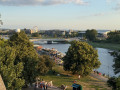
A former royal capital situated on the Vistula, Kraków unfolds its cobbled squares, narrow streets and neighbourhoods, each with its own distinct atmosphere. This stroll takes you from one end of the city to the other, from the vast Rynek Główny and St Mary’s Basilica to St Florian’s Gate, then through the Green Ring of the Planty to the Gothic courtyard of the Collegium Maius. You then climb Wawel Hill, between the Cathedral of the Kings of Poland and the ramparts overlooking the river, before greeting the dragon at the foot of the cliff. The route continues to Kazimierz, with its synagogues and terraces, crosses the Vistula via a footbridge adorned with bronze acrobats, then takes in Podgórze, the former independent town. It ends on the hills, between Krakus Hill – an abandoned quarry now overgrown with vegetation – and Ghetto Heroes’ Square.
Trzy Korony from Sromowce Niżne via the Wąwóz Szopczański
 4.26 mi
+1,736 ft
-1,736 ft
3h 30
Moderate
Departure from Poland
4.26 mi
+1,736 ft
-1,736 ft
3h 30
Moderate
Departure from Poland
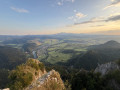
Starting from Sromowce Niżne, in Lesser Poland, this circular route takes you to the Trzy Korony, the ‘Three Crowns’, whose limestone peaks rise up in the heart of the Pieniny National Park. The ascent begins in the Wąwóz Szopczański, a deep gorge flanked by two high white cliffs, then continues through the forest along a long path of steps to the Przełęcz Szopka pass, where the view already stretches as far as the Tatra Mountains. A final rocky outcrop leads to Okrąglica and its metal walkway clinging to the rock face, suspended above the Dunajec gorge, its villages and its patchwork of fields. The return route winds down the other side, through the Polana Kosarzyska clearing, before plunging back into the forest and returning to the village.
The Centenary Hall and Szczytnicki Park in Wrocław
 2.44 mi
+43 ft
-46 ft
1h 10
Easy
Departure from Poland
2.44 mi
+43 ft
-46 ft
1h 10
Easy
Departure from Poland
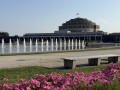
To the east of Wrocław, the Centennial Hall displays its immense concrete dome, a masterpiece listed as a UNESCO World Heritage Site. This circular walk takes you around the entire site and the surrounding Szczytnicki Park. You’ll walk past the base of the great hall and the slender spire of the Iglica, reach a remarkable log church nestled amongst the trees, then stroll along the banks of the ponds and canals in the landscaped park. You’ll walk alongside the Four Domes Pavilion, passing under the vine-covered pergola whilst admiring the jets of the Multimedia Fountain, opposite the market hall.
Śnieżka and the peaks of the Krkonoše Mountains from Karpacz
 12.31 mi
+3,615 ft
-3,625 ft
8h 50
12.31 mi
+3,615 ft
-3,625 ft
8h 50
 Very difficult
Departure from Poland
Very difficult
Departure from Poland
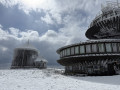
Starting from Karpacz in Lower Silesia, this long mountain hike leads to Śnieżka, the highest peak in the Sudetes, on the border between Poland and the Czech Republic. You’ll first climb through the wild Sowia Dolina valley, passing over footbridges and past the Kaskada Joanna waterfall, before reaching the long ridge of the Karkonosze Mountains and following its peaks all the way to Śnieżka. The descent runs alongside the Kocioł Małego Stawu glacial cirque and its lake nestled beneath the rock faces, then heads down through the forest towards Karpacz, in the heart of the Karkonosze National Park. Please note that the high ridge remains snow-covered and windswept for much of the year.
A stroll through Wrocław, from the Rynek to Ostrów Tumski and other treasures
 7.70 mi
+36 ft
-62 ft
3h 35
Moderate
Departure from Poland
7.70 mi
+36 ft
-62 ft
3h 35
Moderate
Departure from Poland
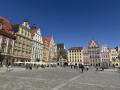
A metropolis in Lower Silesia nestled amongst the many branches of the Odra, Wrocław ranks among Poland’s most beautiful cities, with its bridges, islands and hundreds of bronze dwarves hidden on street corners. This stroll takes you from one end of the city to the other, taking in its most iconic sights. You’ll set off in search of the little musician dwarves, cross the vast Rynek lined with colourful patrician houses, stroll along the banks of the Odra opposite the cathedral’s spires, then head for Cathedral Island and its cobbled alleyways. The walk then heads towards the regenerated Nadodrze district and its painted courtyards, crossing a string of islands and bridges as it follows the river, before ending in front of a striking locomotive towering skywards. A wonderful way to discover Wrocław on foot, combining medieval heritage and urban art.
Around Fort IV of the Osowiec Fortress
 3.14 mi
+72 ft
-43 ft
1h 30
Easy
Departure from Poland
3.14 mi
+72 ft
-43 ft
1h 30
Easy
Departure from Poland
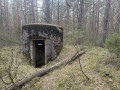
In the heart of Biebrza National Park, Poland’s largest, this circular forest trail circles Fort IV of the Osowiec fortress. Built by the Russian army to block access to the Biebrza Marshes, the stronghold was largely blown up by its garrison during the Great War. Fort IV, the most recent of the four structures and one of the first to be cast entirely in concrete, lies in ruins, overgrown with moss in the middle of a sparse pine forest: gutted barracks, a vaulted powder magazine, small blockhouses and earthen ramparts bordering a moat, overlooked by an observation platform.
The Waniewo footbridge, in the heart of the Narew marshes
 1.72 mi
+30 ft
-20 ft
0h 50
Easy
Departure from Poland
1.72 mi
+30 ft
-20 ft
0h 50
Easy
Departure from Poland
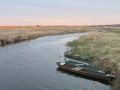
On the edge of eastern Poland, the Narew National Park protects a wild river that branches into a multitude of intertwining channels, nicknamed the ‘Amazon of Podlasie’. From the village of Waniewo, the famous kładka – a long wooden footbridge – winds its way through the reed beds and marshes. The walkway is interspersed with waterways which you cross yourself on small floating rafts, hauling yourself along a chain from one bank to the other. Further on, a watchtower stands on the hilltop of the former fortified castle that once guarded the river crossing.
Tykocin, a Baroque gem on the banks of the Narew
 1.83 mi
+26 ft
-20 ft
0h 50
Easy
Departure from Poland
1.83 mi
+26 ft
-20 ft
0h 50
Easy
Departure from Poland
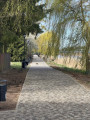
Situated on the banks of the River Narew, on the edge of Podlasie, Tykocin is regarded as one of Poland’s most beautiful small Baroque towns and was for a long time a major centre of Jewish life in the country. This easy circular walk first follows the ‘bulwary’ promenade along the river, opposite the old metal bridge and its willow-lined banks. It then heads into the heart of the town, from the Great Synagogue to the vast square where the statue of Hetman Czarniecki and the Baroque Church of the Holy Trinity stand, before meandering through the cobbled streets lined with traditional wooden houses.
Crossing the High Tatras from Zakopane to Starý Smokovec
 24.49 mi
+6,030 ft
-5,879 ft
3 days
24.49 mi
+6,030 ft
-5,879 ft
3 days
 Difficult
Departure from Poland
Difficult
Departure from Poland
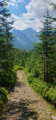
A three-stage traverse of the High Tatras, starting from the heights of Zakopane in Poland and ending in Starý Smokovec in Slovakia.
The route begins with a first day spent mainly in woodland, leading to the Schronisko mountain hut. The second stage, which is much more demanding, forms the heart of the trek: after a long walk through the valley and the forest, a particularly steep climb takes you up to the heights of the Tatras and across the Slovak border before reaching the Sliezski Dom hotel. The final day, which is considerably shorter, takes you back down to Starý Smokovec.
A hike full of contrasts, with the second day suited to hikers in very good physical condition.
From the Schronisko refuge to Sliezski Dom
13.21 mi
+3,967 ft
-1,946 ft
9h 30
Very difficult
Departure from Poland
This is the key stage of the crossing and by far the most demanding. After a start to the route requiring a detour via the road, the trail enters a wooded valley and follows a river before tackling the long climb to the heights of the Tatras. The end of the stage presents the bulk of the difficulty, with an elevation gain of around 1,000 metres over just 3 km.
Covering 21 km with 1,200 m of ascent, this day’s walk requires a very good level of fitness.
From Zakopane to the Schronisko mountain refuge
 6.86 mi
+1,709 ft
-1,660 ft
4h 40
Moderate
Departure from Poland
6.86 mi
+1,709 ft
-1,660 ft
4h 40
Moderate
Departure from Poland
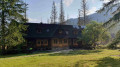
This first stage allows you to gradually leave the Zakopane area behind and enter the wooded areas of the Tatra National Park. A relatively balanced day’s walk before the much more demanding mountain stage the following day.
More walks in Poland
Select an area below:
- Brama Krakowska (Porte de Cracovie)
- Carrière Liban (Kamieniołom Libana)
- Cathédrale du Wawel (Katedra Wawelska)
- Cathédrale Saint-Jean-Baptiste de Wrocław
- Chapelle Na Wodzie d'Ojców
- Château d'Ojców
- Cirque Kocioł Małego Stawu et lac Mały Staw
- Collegium Maius de Cracovie
- Dom Śląski
- Dragon du Wawel (Smok Wawelski)
- Église de la Sainte-Trinité de Tykocin
- Église en bois Saint-Jean-Népomucène de Wrocław
- Église Saint-Benoît de Cracovie (Kościół św. Benedykta)
- Église Saint-Joseph de Podgórze
- Fort IV « Nowy » de la forteresse d'Osowiec
- Gare de Bielsko-Biała Główna
- Góra Koronna (438 m)
- Grande synagogue de Tykocin (Wielka Synagoga w Tykocinie)
- Grodzisko na górze Okopy (site fortifié de la colline d'Okopy)
- Halle du Centenaire de Wrocław (Hala Stulecia)
- Hôtel de ville de Bielsko-Biała
- Jaskinia Ciemna (Grotte obscure)
- Jaskinia Łokietka (Grotte du Roi Łokietek)
- Kaskada Joanna
- Katedra św. Mikołaja (cathédrale Saint-Nicolas)
- La Vistule (Wisła)
- Łomnica
- Nadodrze et ses cours peintes
- Narew
- Parc national de la Biebrza
- Parc national de la Narew
- Passerelle Ojca Bernatka
- Pergola et Fontaine Multimédia de la Halle du Centenaire (Wrocławska Fontanna)
- Plac Nowy de Cracovie
- Place des Héros du Ghetto (Plac Bohaterów Getta)
- Pomnik Bolka i Lolka (Statue de Bolek et Lolek)
- Pomnik Marcina Lutra (Statue de Martin Luther)
- Pomnik Reksia (Statue de Reksio)
- Porte Saint-Florian (Brama Floriańska)
- Prądnik (rivière)
- Przełęcz Szopka
- Rocher Jonaszówka
- Rynek de Wrocław
- Rynek Główny de Cracovie
- Sanctuaire de Skałka (Cracovie)
- Sąspówka (ruisseau)
- Spalona Strażnica
- Tertre de Krakus (Kopiec Krakusa)
- Trzy Korony / Okrąglica (982 m)
- Vieille Synagogue de Cracovie (Stara Synagoga)
- Wąwóz Szopczański