A stroll through Kraków, from Rynek Główny to Ghetto Heroes’ Square

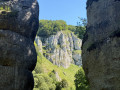
A former royal capital situated on the Vistula, Kraków unfolds its cobbled squares, narrow streets and neighbourhoods, each with its own distinct atmosphere. This stroll takes you from one end of the city to the other, from the vast Rynek Główny and St Mary’s Basilica to St Florian’s Gate, then through the Green Ring of the Planty to the Gothic courtyard of the Collegium Maius. You then climb Wawel Hill, between the Cathedral of the Kings of Poland and the ramparts overlooking the river, before greeting the dragon at the foot of the cliff. The route continues to Kazimierz, with its synagogues and terraces, crosses the Vistula via a footbridge adorned with bronze acrobats, then takes in Podgórze, the former independent town. It ends on the hills, between Krakus Hill – an abandoned quarry now overgrown with vegetation – and Ghetto Heroes’ Square.

Details

104256662
Creation:
Last update:
Last review:
  • Walking
    Activity: Walking
  • ↔
    Distance: 7.10 mi
  • ◔
    Average duration: 3h 35 
  • ▲
    Difficulty: Moderate

  • ⚐
    Back to start: No
  • ↗
    Ascent: + 358 ft
  • ↘
    Descent: - 371 ft

  • ▲
    Highest point: 807 ft
  • ▼
    Lowest point: 663 ft
  • ⚐ Country: Poland
  • ⚑
    Start: N 50.059801° / E 19.942432°
  • ⚑
    End: N 50.04679° / E 19.954873°
  • Hour-by-hour weather

Photos

Description of the walk

Head to the Poczta Główna tram stop on Westerplatte Street, at the foot of the main post office.

(S) Cross Westerplatte Street at the pedestrian crossing, cut across Planty Avenue by turning onto Sienna Street opposite, heading north-west. Follow it for about 200 metres, climb a few steps and cross Mały Rynek diagonally. This will take you to Plac Mariacki, at the apse of St Mary’s Basilica, which you walk round to reach Rynek Główny.

(1) Walk across the square and turn left along the Cloth Hall. Follow it to its end, go round the isolated tower of the old town hall, then walk back up the other side until you return to the foot of the basilica.

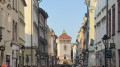
(1) Turn left onto Floriańska Street and follow it for about 350 metres, past shops and terraces, until you reach the fortified gate at the end of the street.

(2) Pass under St Florian’s Gate to leave the Old Town and discover, opposite, the rounded mass of the Barbican. Pass back under the gate in the opposite direction, just as travellers on the Royal Route would have done.

(2) Then turn immediately right onto Pijarska Street, which is spanned by the brick arcade of the Czartoryski Museum. Follow it, veering slightly to the right, cross Sławkowska Street carefully and turn right onto it for a few metres, then enter the greenery of the Planty on the left. The hustle and bustle of the city centre suddenly fades away beneath the tall trees. Follow the park’s main avenue for about 600 metres, carefully crossing three streets in succession. At St Anne’s Church, cross carefully and turn left onto Świętej Anny Street, which leads back into the Old Town for about 120 metres. On your right, you’ll see the façade of the Collegium Maius. Turn right onto Jagiellońska Street.

(3) About forty metres further on, turn right into the Ogród Profesorski, the professors’ garden. Walk through it and back.

(3) Then return to Jagiellońska Street for about thirty metres until you reach Gołębia Street, which you should follow to the left. At the end of the street, turn right onto Bracka Street and follow it to its end. Cross the road carefully and take Franciszkańska Street on the right, which runs alongside St Francis’s Basilica and passes beneath the Pope’s window. You’ll reach the Planty; follow them immediately to the left for about 400 metres, crossing Poselska Street carefully and passing close to the garden of the Archaeological Museum, until you reach the foot of Wawel Hill. Take the pavement on the left and follow it for about 60 m, carefully crossing Podzamcze Street at the pedestrian crossing with the central island, then turn right to begin the cobbled ascent up Wawel Hill. Pass through the Coat of Arms Gate and reach the esplanade at the foot of the cathedral.

(4) Walk past the cathedral’s porch, then continue straight ahead and walk round the large inner courtyard and the excavated remains at the top of the hill to reach the other end of the site, dominated by a large tower. Do not go down the road to the left, which is closed to pedestrians, but exit at the very end, at the wall bordering a restaurant terrace. Walk along this wall and go down the stairs you come to.

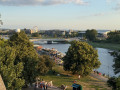
(5) At the bottom of the steps, carry on for a few metres and turn right for a round trip of about 300 m along the ramparts, ending on a balcony-style terrace overlooking the Vistula. Retrace your steps along the same path.

(5) Near the stairs you descended a little earlier, carry on straight ahead and pass under the Brama Bernardyńska. A few dozen metres past the gate, look out for the small, inconspicuous staircase on the right which leads back down to the street. Take it, walk a few metres along Smocza Street, reach the banks of the Vistula and head down to the right until you reach the Wawel Dragon.

(6) At the foot of the cliff stands the Wawel Dragon, in front of the entrance to its cave. Retrace your steps and continue along the park’s riverside walkway for about 400 metres. Leave the riverbank, cross Józefa Dietla Street and its tram tracks via the pedestrian crossing, then follow Świętego Stanisława Street opposite for about 150 metres. Climb the steps into the Skałka enclosure.

(7) After visiting the sanctuary, exit through the opposite gate, which opens onto Skałeczna Street; head straight ahead. Follow it for about 350 metres, passing under a second massive archway, then past the foot of a high brick wall. Cross Augustriańska Street with care. At the end of the street, carefully cross Krakowska Street and its tram tracks, then turn left onto it and walk for about 130 metres. Turn right just before the Stradom bus stop, onto Beera Meiselsa Street. Walk alongside a small square, past a long row of terraces, and carefully cross two streets to reach Plac Nowy.

(8) Walk round the Okrąglak, the round market hall situated in the middle of the square. Exit on the opposite side, carefully crossing Estery Street, and take Warszauera Street, in front of the Estera Hotel. The first synagogue appears on the left. At the end of the street, turn right into Jakuba Street and walk alongside a long wall made partly of brick and partly of stone. Take the first left after the wall ends, into Ciemna Street. At the end, wind your way first to the right then to the left to emerge onto a paved esplanade.

(9) Very wide stone steps lead down to the right towards a square below, set against the old synagogue. Then go back up the steps and turn left to reach the southern end of Szeroka Street. Continue straight on through Plac Bawół and then along Bartosza Street, turning right at the end onto Świętego Wawrzyńca Street. Cross it carefully about thirty metres further on to reach the left-hand pavement, then follow it for about 170 metres. Take the first left, onto Gazowa Street, and walk down it towards the river for about 250 metres. At the bottom of the street, turn right, crossing Gazowa Street carefully, then walk along Podgórska Street. Cross it carefully at the pedestrian crossing about 40 metres further on and head for the Ojca Bernatka Footbridge to walk onto its deck.

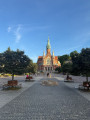
(10) Cross the Vistula via the footbridge. On the other bank, head slightly to the right along Kazimierza Brodzińskiego Street for about 100 metres. Leave Staromostowa Street on your right and veer slightly to the left to stay on the same street: the spire of St Joseph’s Church can be seen in the distance. At the bottom of the street, cross carefully – first to the right, then to the left – across the main road and its tram tracks, to emerge onto the triangular Rynek Podgórski square.

(11) Walk across the square, which narrows towards St Joseph’s Church, and continue to the foot of the church. Carefully cross Jana Zamoyskiego Street at the large pedestrian crossing, then, before the steps, turn left to walk round the outside of the church grounds. The pavement soon turns into a cobbled flight of steps which you must climb. Pass the entrance to Bednarski Park on your right and continue uphill to Plac Lasoty.

(12) Cross the cobbled street carefully, then turn left as soon as possible to cut across the small square, passing the bust of Edward Dembowski. As you leave the square, turn right and cross the street carefully to walk along the pavement of Aleja Edwarda Dembowskiego. Follow it straight on for about 300 metres, until you reach the end of the street where the footbridge appears.

(13) Cross Aleja Powstańców Śląskich and then the railway line. Just after the bend in the footbridge, turn right to go down the steps. At the bottom, turn right, then right again onto the small road that winds its way uphill into the woods. At the bend, leave the road to the right and take the path that appears there. Continue straight up the hill, cutting across small roads and paths here and there, until you reach some stone steps. When you reach the foot of Krakus Hill, go round it to the left, then, at the three-way junction, turn right to begin the final ascent.

(14) Walk back down from the mound, turn sharply right to move away from it, then veer left at the ruins. A little further on, walk downhill alongside a wire fence, turn right and continue downhill alongside an iron railing. About twenty metres past the end of the railing and an abandoned building, turn left. After another short descent, turn left again and enter the Carrière Liban.

(15) Take a detour to the right into a small clearing, from where you can see the disused lime kiln buildings, then retrace your steps. At the junction where you arrived, carry on straight ahead. Walk past a gate and enter the forest again to the right; go straight on at the next junction, then turn right to join Swoszowicka Road. Turn right onto it and carefully cross the road and then the bridge. Walk down the road overlooking the railway tracks, pass under a footbridge, carefully cross Za Torem Street again and climb the stairs.

(13) At the top of the steps, turn left to cross the footbridge again, over the railway line and Aleja Powstańców Śląskich. On the other side, turn right onto the path. Climb up to the right up a small embankment, then turn left along the gate. Continue straight on along Porucznika Antoniego Stawarza Street for about 100 metres. Turn right towards the hill where St Benedict’s Church stands.

(16) In front of St Benedict’s Church, turn back towards the junction with Porucznika Antoniego Stawarza Street and take the grassy path on the right. Further down, just before entering the woods, turn sharply right onto a discreet path that is easy to miss. Be careful: two paths branch off to the right at this point; take the one on the right. About thirty metres further on, at the three-way junction, go left and begin a short but very steep descent. The path joins Rękawka Street; cross it carefully before turning left onto it, then take the next right onto Stefana Czarnieckiego Street. Follow it for about 120 metres, cross Bolesława Limanowskiego Street and its tram tracks carefully at the pedestrian crossing, continue along the pavement, then cross another street carefully at the pedestrian crossing to reach the next square.

(17) Cross Plac Bohaterów Getta, dotted with its bronze chairs. Leave the square on the right, cross the first lane of Rue Na Zjeździe with care and head for the Plac Bohaterów Getta tram stop (E).

Waypoints

  1. S : mi 0 - alt. 692 ft - Poczta Główna tram stop
  2. 1 : mi 0.28 - alt. 722 ft - Rynek Główny de Cracovie
  3. 2 : mi 0.84 - alt. 722 ft - Porte Saint-Florian (Brama Floriańska)
  4. 3 : mi 1.53 - alt. 709 ft - Collegium Maius de Cracovie
  5. 4 : mi 2.31 - alt. 784 ft - Cathédrale du Wawel (Katedra Wawelska)
  6. 5 : mi 2.47 - alt. 709 ft - Ramparts terrace - La Vistule (Wisła)
  7. 6 : mi 2.91 - alt. 689 ft - Dragon du Wawel (Smok Wawelski)
  8. 7 : mi 3.27 - alt. 682 ft - Sanctuaire de Skałka (Cracovie)
  9. 8 : mi 3.74 - alt. 679 ft - Plac Nowy de Cracovie
  10. 9 : mi 4.04 - alt. 676 ft - Vieille Synagogue de Cracovie (Stara Synagoga)
  11. 10 : mi 4.5 - alt. 679 ft - Passerelle Ojca Bernatka
  12. 11 : mi 4.72 - alt. 669 ft - Rynek Podgórski - Église Saint-Joseph de Podgórze
  13. 12 : mi 4.99 - alt. 745 ft - Plac Lasoty
  14. 13 : mi 5.24 - alt. 705 ft - Footbridge over the railway line
  15. 14 : mi 5.56 - alt. 804 ft - Tertre de Krakus (Kopiec Krakusa)
  16. 15 : mi 5.95 - alt. 696 ft - Carrière Liban (Kamieniołom Libana)
  17. 16 : mi 6.64 - alt. 755 ft - Église Saint-Benoît de Cracovie (Kościół św. Benedykta)
  18. 17 : mi 7 - alt. 663 ft - Place des Héros du Ghetto (Plac Bohaterów Getta)
  19. E : mi 7.1 - alt. 663 ft - Plac Bohaterów Getta tram stop

Notes

Access:

The route connects two tram stops. At the start, the Poczta Główna stop is served by several MPK lines and is about a ten-minute walk from Kraków Główny railway station. At the finish, the Plac Bohaterów Getta stop allows you to head straight back to the city centre or to the railway station. Tickets can be purchased from ticket machines at the stops, on board using a debit or credit card, or via an app (jakdojade, mPay). Expect to pay 9 zł (~€2.10) for a 90-minute ticket and 20 zł (~€4.70) for a 24-hour ticket; fares for 2026 are subject to regular review.

Professors’ Garden:

The Ogród Profesorski, where the route makes a return trip to the (3), was closed for renovation in August 2026, with a reopening announced for December 2026. Whilst it remains closed, skip this detour and continue along Jagiellońska Street until you reach Gołębia Street, where you should turn left.

Attractions requiring an admission fee:

Wawel Hill, its outer courtyard and arcaded courtyard are free to enter. At (4), a visit to the cathedral, the royal crypts, the Zygmunt Bell and the museum costs 26 zł (~€6), or 18 zł (~€4.20) on a reduced-rate ticket. At (3), the Gothic courtyard of the Collegium Maius is free from 9 am to 6 pm; the museum costs 12 zł (~€2.80) and 6 zł (~€1.40) on a reduced rate, with free entry on Wednesdays from 1 pm to 3.30 pm (opening times and prices at bilety.uj.edu.pl). The Old Synagogue (9) and the Eagle Pharmacy (17), both city museums, charge 22 zł (~€5.20) and 16 zł (~€3.80) for concessions, with one free day per week – Mondays for the former and Wednesdays for the latter (opening times and prices at bilety.muzeumkrakowa.pl). Krakus Mound and the Liban Quarry are free to enter. 2026 prices, reviewed annually.

Equipment and safety:

Sturdy footwear is advisable for the second half of the route: the descent following the ‘16 ’ is short but very steep, and the dirt tracks on the higher ground become slippery in wet weather. The Liban Quarry is not a developed site; its industrial remains are rusty and the surrounding area is unstable: please stay on the paths.

Water and refreshments:

There are plenty of cafés, restaurants and shops up to the (12), particularly around Rynek Główny and in Kazimierz. Between the (13) and the (16), on the heights of Krzemionki, there are no refreshment points: take water with you, especially in hot weather.

Worth a visit

(1) Rynek Główny is one of the largest medieval market squares in Europe. St Mary’s Basilica stands there with its two towers of unequal height. Every hour, a trumpet call, the hejnał, rings out from the top of the taller tower and stops abruptly mid-note; according to legend, this commemorates a trumpeter struck by an arrow. Inside stands the great Gothic altarpiece by Veit Stoss. In the centre of the square stands the Cloth Hall (Sukiennice), a long market hall that still houses stalls beneath its vaults, whilst the tower of the former town hall stands alone beside it.

(2) St Florian’s Gate is one of the last remaining vestiges of Kraków’s medieval fortifications. It marked the start of the Royal Route, the route taken for ceremonial processions to Wawel. Directly in front of it stands the Barbican, a circular, brick-built outwork. The rest of the ramparts has given way to the Planty, the ring of gardens encircling the Old Town.

(3) The Collegium Maius is the oldest building of the Jagiellonian University, founded in 1364. Its Gothic courtyard, lined with arcaded galleries, is open to visitors free of charge during the day. The museum houses the university’s collections, including ancient astronomical instruments.

(4) Wawel Cathedral was the site of the coronation and burial of the kings of Poland, and its royal crypts are open to visitors. Large bones hang from its porch, which tradition claims were once part of a dragon. The site also includes the Royal Castle and its arcaded courtyard, which are open to the public.

(5) The rampart terrace, reached via a short walk there and back, offers a sweeping view of the Vistula, its terrace barges and its bridges. On the way, you pass the base of the Kolumna Niepodległości.

(6) The Wawel Dragon, a bronze sculpture standing at the foot of the cliff, intermittently spews a jet of flame in front of the entrance to the cave with which legend associates it. It is said to have been vanquished by Krak, the mythical founder of the city, the very man whose mound awaits visitors at (14).

(7) Skałka, the ‘little rock’, is home to the church and monastery of the Pauline Fathers, associated with the martyrdom of Saint Stanislaus, Bishop of Kraków. The crypt houses the graves of leading figures in Polish culture. Just outside the enclosure, St Catherine’s Church rises above the street with its immense brick walls.

(8) Plac Nowy is one of the heartlands of Kazimierz, with its terraces, bars and small shops. Around the Okrąglak, the round market hall in the centre, stalls sell zapiekanki – long half-baguettes topped with various fillings and then baked under the grill: a delicious, simple, cheap and filling snack!

(9) The Old Synagogue, which marks the southern end of Szeroka Street, is the oldest surviving synagogue in Poland and now houses a museum. The street, which the route joins at this end, resembles an elongated square more than a street and stretches far to the north. It was for a long time one of the centres of Jewish life in Kazimierz, and several other synagogues, as well as the old Jewish cemetery, are just a short walk away.

(10) The Ojca Bernatka Footbridge, opened on 30 September 2010, spans the Vistula with a 145-metre steel arch and connects Kazimierz to Podgórze. The acrobats suspended above the deck are sculptures by Jerzy Kędziora, from the series ‘Between Heaven and Earth’, which sway in the wind.

(11) Podgórze was not a district of Kraków but an independent town, with Rynek Podgórski as its central square. The square narrows deliberately towards the neo-Gothic Church of St Joseph, designed by Jan Sas-Zubrzycki and consecrated on 24 October 1909, whose spire dominates the entire neighbourhood.

(12) Plac Lasoty and the surrounding streets form a quiet residential neighbourhood in the higher parts of Podgórze. The bust in the centre of the square is that of Edward Dembowski, a Polish philosopher, literary critic and independence activist. Just before this lies the entrance to Bednarskiego Park, a pleasant spot for a break in the shade.

(14) Krakus Mound rises to a height of around 16 metres and has a base diameter of 60 metres. Legend has it that this is the tomb of Krakus, the mythical founder of the city, but its date and purpose remain uncertain. The summit, which is freely accessible, offers a panoramic view of Kraków: Wawel and the Old Town on one side, Podgórze, the former industrial areas and the quarry on the other. It is a very popular spot at sunset.

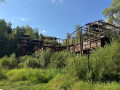
(15) The Liban Quarry is a former limestone quarry where the industrialist Bernard Liban installed a lime kiln from 1873 onwards. The cliffs, the rusted structures and the vegetation that has reclaimed the site give it a unique atmosphere. From April 1942 to July 1944, the Germans operated a forced-labour camp there, where more than 2,000 people were detained. In 1993, Steven Spielberg had the Płaszów camp reconstructed there for ‘Schindler’s List’, including the barracks, watchtowers and the commandant’s villa. The quarry is not the former Płaszów camp; it merely served as a film set. The path paved with gravestones that visitors walk along is a remnant of that film shoot.

(16) St Benedict’s Church, a small, isolated white chapel on the hill of Wzgórze Lasoty, overlooks the rooftops of Podgórze.

(17) Plac Bohaterów Getta, formerly Plac Zgody, was at the heart of the ghetto established in Podgórze in 1941. Its liquidation took place on 13 and 14 March 1943. The empty bronze chairs scattered across the square form the memorial, echoing the furniture and objects abandoned in the streets during the deportations. At number 18 on the square, the ‘Under the Eagle’ pharmacy (Apteka pod Orłem) belonged to Tadeusz Pankiewicz, the only non-Jewish Pole permitted to work in the ghetto. It is now a museum.

For more walks, use our search engine .

The GPS track and description are the property of this route's author. Please do not copy them without permission.