


Refine your search for walks in Monchy-le-Preux
Monchy-le-Preux walks


 Caribou from Monchy-le-Preux
 Association / Club / Walk leader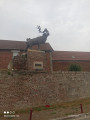
 6.37 mi
 +108 ft
 -105 ft
 3h 00
3h 00
 Moderate
 Departure from Monchy-le-Preux (Pas-de-Calais)
This walk will take you through the plains and woods of the Arrageois region, which marked the limit of the German advance during the First World War. The marker can be seen on the RD 939. From Monchy, the Germans bombarded Arras, destroying the belfry.
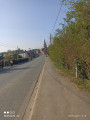
Lacs et marais depuis Roeux
 8.18 mi
+66 ft
-66 ft
3h 50
Moderate
Departure from Rœux (Pas-de-Calais)
8.18 mi
+66 ft
-66 ft
3h 50
Moderate
Departure from Rœux (Pas-de-Calais)
Boucle par Roeux et Biache-Saint-Vaast, entre lacs et marais.
From Lac Bleu to the Plouvain Marsh
 Visorando Member3.42 mi
+59 ft
-59 ft
1h 35
Visorando Member3.42 mi
+59 ft
-59 ft
1h 35
 Easy
Departure from Rœux (Pas-de-Calais)
Easy
Departure from Rœux (Pas-de-Calais)
A peaceful, shaded walk around Lac Bleu, along the River Scarpe and through the Plouvain Marshes. Easily accessible and suitable for all seasons.
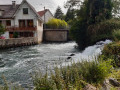
Fampoux from top to bottom
 5.39 mi
+135 ft
-135 ft
2h 35
Easy
Departure from Fampoux (Pas-de-Calais)
5.39 mi
+135 ft
-135 ft
2h 35
Easy
Departure from Fampoux (Pas-de-Calais)
A short walk around Fampoux, best done when the sun isn’t too strong!
Chemin du Marasquay à Athies
8.19 mi
+98 ft
-98 ft
3h 50
Moderate
Departure from Athies (Pas-de-Calais)
Venez découvrir les village de Fampoux, Feuchy et Athies en passant par les bois, étangs et marais.
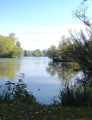
Marsh trail around Biache - Saint-Vaast
 6.28 mi
+26 ft
-26 ft
2h 55
Easy
Departure from Biache-Saint-Vaast (Pas-de-Calais)
6.28 mi
+26 ft
-26 ft
2h 55
Easy
Departure from Biache-Saint-Vaast (Pas-de-Calais)
Hiking through the marshes of Biache - Saint-Vaast, Plouvain Roeux and Pelves.
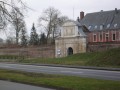
 The city centre
 16.26 mi
+197 ft
-207 ft
2.5 hrs
Easy
Departure from Beaurains (Pas-de-Calais)
16.26 mi
+197 ft
-207 ft
2.5 hrs
Easy
Departure from Beaurains (Pas-de-Calais)
A route combining town and countryside, taking you round Arras. A mix of rural landscapes and historic monuments such as the Citadel, the English Memorial and the ramparts.
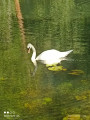
Les bords de la Scarpe depuis Saint-Laurent-Blangy
 7.62 mi
+43 ft
-39 ft
3h 30
Moderate
Departure from Saint-Laurent-Blangy (Pas-de-Calais)
7.62 mi
+43 ft
-39 ft
3h 30
Moderate
Departure from Saint-Laurent-Blangy (Pas-de-Calais)
Superbe randonnée entre rivière et marais et leur biodiversité
The twenty-foot ditch from Bailleul-Sir-Berthoult
8.04 mi
+148 ft
-151 ft
3h 50
Moderate
Departure from Bailleul-Sir-Berthoult (Pas-de-Calais)
This flat hike will take you from Bailleul-sir-Berthout to the villages of Gavrelle and Oppy, along good paths.
Bailleul was completely destroyed during the First World War.
In 1833, Minister Guizot passed a law requiring all municipalities to have a school.
 The Canadian Vimy Memorial: in the footsteps of the Great War
15.36 mi
+367 ft
-390 ft
2 hrs
Easy
Departure from Arras (Pas-de-Calais)
An easy cycle ride along quiet country lanes, offering the chance to discover major sites – particularly those associated with Canada – from the First World War.
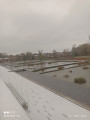
Arras and its monuments
 6.57 mi
+102 ft
-108 ft
3h 05
Moderate
Departure from Arras (Pas-de-Calais)
6.57 mi
+102 ft
-108 ft
3h 05
Moderate
Departure from Arras (Pas-de-Calais)
This walk will introduce you to Arras, starting along the Scarpe river. You will then continue through the town and admire its monuments, from the citadel to the execution wall, the belfry and the main square.
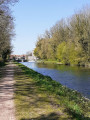
Between Vitry and Brebières
 4.01 mi
+26 ft
-26 ft
1h 50
Easy
Departure from Vitry-en-Artois (Pas-de-Calais)
4.01 mi
+26 ft
-26 ft
1h 50
Easy
Departure from Vitry-en-Artois (Pas-de-Calais)
A short, picturesque round trip along the towpath.
Tour du Trou à l’Eau
4.45 mi
+43 ft
-43 ft
2h 05
Easy
Departure from Boyelles (Pas-de-Calais)
A countryside walk that can be enjoyed in all weathers.
Short route around Farbus
3.29 mi
+141 ft
-144 ft
1h 40
Easy
Departure from Farbus (Pas-de-Calais)
A circular route around Farbus, allowing you to explore the village and the surrounding countryside.
Bois de Berthonval depuis Thélus
 7.26 mi
+312 ft
-295 ft
3h 35
Moderate
Departure from Thélus (Pas-de-Calais)
7.26 mi
+312 ft
-295 ft
3h 35
Moderate
Departure from Thélus (Pas-de-Calais)
À la decouverte des villages de Thélus et Farbus, en passant par le Bois de Berthonval.
Woods and trenches between Thélus and Vimy
7.66 mi
+318 ft
-331 ft
3h 45
Moderate
Departure from Thélus (Pas-de-Calais)
Very few roads on this rural route, which becomes quite difficult in wet weather. Although the elevation gain does not seem significant, the Sentier de la Vignette, on the northern edge of Vimy Wood, is very hilly, with steep slopes that will give your calves a good workout. It is, of course, possible to go down into the trenches and wander a little through this labyrinth.
La plaine au Nord d'Arras et le Bois de Vimy
14.48 mi
+663 ft
-673 ft
7h 15
 Difficult
Departure from Thélus (Pas-de-Calais)
Difficult
Departure from Thélus (Pas-de-Calais)
A countryside walk near the town of Arras.Plenty of paths and small roads that are not really suitable for vehicles.
To spice up the route a little, I’ve added a section of the Vignette trail (going in the opposite direction, so there are no signposts) which takes you round the Bois de Vimy. This route is quite challenging but very enjoyable and is now well maintained.
Discover the villages of Thélus, Willerval and Farbus
 8.25 mi
+197 ft
-180 ft
4h 00
Easy
Departure from Thélus (Pas-de-Calais)
8.25 mi
+197 ft
-180 ft
4h 00
Easy
Departure from Thélus (Pas-de-Calais)
You will discover the villages of Thélus, Willerval, and Farbus. These three villages are less than 10 km from Vimy and its Canadian First World War memorial, which is well worth a visit to complement this hike.