


Refine your search for walks in Lavau (Yonne)
Lavau (Yonne) walks


 P'ti Jean
 Visorando Member
 6.96 mi
 +174 ft
 -180 ft
 3h 20
3h 20
 Moderate
 Departure from Lavau (Yonne) (Yonne)
Marked route No. 81.Wooded sections, rural and sunken paths, and small roads in the heart of the countryside make up the charm of this walk through the lands of the former Grand Treasurer of the Kingdom of France, Jacques Cœur.
Les Gallons
12.10 mi
+246 ft
-276 ft
5h 45
Moderate
Departure from Lavau (Yonne) (Yonne)
Marked route No. 36.
A route south of Lavau featuring frequent fords, all of which have been improved, and numerous isolated farms or those grouped into small hamlets. The wooded sections are dominated by deciduous trees such as oak, slender hornbeam or pollarded hornbeam, and trees typical of wetland habitats such as birch, aspen, alder and willow...
The Chemin des Bois, starting from Arquian
 Tourist office
 6.03 mi
+351 ft
-361 ft
3h 05
6.03 mi
+351 ft
-361 ft
3h 05
 Easy
Departure from Arquian (Nièvre)
Easy
Departure from Arquian (Nièvre)
This route is no longer passable. Trees are blocking the paths, and some of these paths are in very poor condition. The signposting put in place a few years ago is no longer up to date. Work will soon be carried out, including a new site survey and new signposting
Arquian is situated in Puisaye Nivernaise; the river Vrille, a tributary of the Loire, flows through the area.
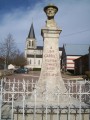
In the village square, the bust of Jean Carriès, sculpted by Charles Gaudry, pays tribute to the famous ceramicist.
The spillways of Lac du Bourdon
1.10 mi
+79 ft
-82 ft
0h 35
Easy
Departure from Saint-Fargeau (Yonne)
A short walk to explore the spillways of Lac du Bourdon, behind the dam commissioned in 1905. There are two spillways: the Rigole du Bourdon for the cold water at the bottom of the lake, and the Ruisseau du Bourdon for the surface water. The latter is laid out in “terraces”, creating waterfalls when the water is released. You’ll be lucky enough to see them if you visit at the right time. Otherwise, it’s still a very pretty spot! Read the safety information in the Practical Information section.
 Murals in Puisaye – Sainte-Anne, Saint-Pierre and Saint-Fiacre
18.23 mi
+640 ft
-633 ft
6 hrs
Moderate
Departure from Saint-Fargeau (Yonne)
La Puisaye: not just blue and green in the landscape, but also ochre in the subsoil. It is from this natural pigment that artists since the 12th century have adorned many of the region’s religious buildings. This walk allows you to discover three of the fifteen or so listed to date.A route along charming country lanes...
Le Moulin Fleury
 Association / Club / Walk leader
 4.30 mi
+315 ft
-292 ft
2h 15
Easy
Departure from Saint-Fargeau (Yonne)
4.30 mi
+315 ft
-292 ft
2h 15
Easy
Departure from Saint-Fargeau (Yonne)
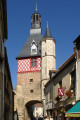
Marked route No. 113.The historic centre of Saint-Fargeau and a nature walk are the main attractions of this outing.From the red-brick castle to the murals of the Sainte-Anne Chapel, via the Loing river, this is a bucolic walk.
Circular route starting from Batilly-en-Puisaye via Maillebois
10.03 mi
+105 ft
-105 ft
2 hrs
Easy
Departure from Batilly-en-Puisaye (Loiret)
A cycle route exploring the landscapes of the Loiret. From Batilly-en-Puisaye to Dammarie-en-Puisaye, you’ll discover the beautiful countryside of Puisaye. On this route, you’ll also come across the Maillebois goat farm, where you can buy their goat’s cheese.
Family Ecolodge - Attrape Rêve
3.42 mi
+30 ft
-13 ft
45 mins
Easy
Departure from Batilly-en-Puisaye (Loiret)
A route to the Attrape Rêve equestrian centre in Dammarie-en-Puisaye
Walk in Saint-Fargeau
1.38 mi
+39 ft
-33 ft
0h 40
Easy
Departure from Saint-Fargeau (Yonne)
A walk to perhaps round off the day with a visit to the castle and/or the museum. As you wander through the streets, you’ll see medieval houses, wash houses, the old market hall, and you’ll often cross the Ruisseau du Bourdon.
Les Méandres de la Vrille
4.35 mi
+308 ft
-282 ft
2h 15
Easy
Departure from Saint-Amand-en-Puisaye (Nièvre)
Waymarked walk N° 38
In the land of the potters, there is first and foremost the clay that serves as the raw material for the craftsmen, then the water that gushes out of the clay-silica or clay-limestone soils, depending on the geology of the subsoil in this area. But there's also the beauty of nature, with its landscapes, paths framed and even marked by these hedges and their sometimes mysterious, sometimes mischievous tadpoles. They are the source of some of the legends that live in the area.
Fortified House
5.54 mi
+223 ft
-210 ft
2h 45
Easy
Departure from Saint-Amand-en-Puisaye (Nièvre)
Marked walk No. 39From the16th-century castle at the very start of the route to the ruins of Maison Fort Castle, the route takes you past the ponds—the largest of which is the Étang de la Forge—and the Chemin du Tacot.
The Chemin Carriès
5.15 mi
+167 ft
-144 ft
2h 30
Easy
Departure from Saint-Amand-en-Puisaye (Nièvre)
Marked trail No. 40
Taking this path is to step into the life and work of Jean-Joseph Carriès. This trail begins with the history of pottery and ends with a sunken path lined with works by ceramicists and the potters’ quarters in the village of Saint-Amand-en-Puisaye.
Camerolle
5.62 mi
+108 ft
-108 ft
2h 40
Easy
Departure from Saint-Privé (Yonne) (Yonne)
Starting from the heart of the village, dominated by the spire of Saint-Privat Church, set off to explore the sunken paths and then the farmland dotted with flint, before returning – still amidst this man-made landscape – along the Rigole de Saint-Privé.
The Friends of Harpignies Trail
 2.39 mi
+105 ft
-98 ft
1h 10
Easy
Departure from Saint-Privé (Yonne) (Yonne)
2.39 mi
+105 ft
-98 ft
1h 10
Easy
Departure from Saint-Privé (Yonne) (Yonne)
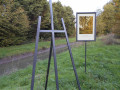
A route focused on painting with Le Michel-Ange des Arbres. Around twenty representations of Henri Harpignies' paintings line this walk among the trees, sunken paths and viewpoints of Puisaye.Saint-Privé is listed as one of the "Cités de caractères de Bourgogne - Franche-Comté" (villages of character in Burgundy-Franche-Comté).
From dyke to dyke in Champoulet
 9.65 mi
+33 ft
-33 ft
4h 30
Moderate
Departure from Breteau (Loiret)
9.65 mi
+33 ft
-33 ft
4h 30
Moderate
Departure from Breteau (Loiret)
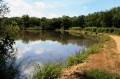
The route goes from pond to pond around the village of Champoulet. There is wildlife to discover.
The Breteau ditches
5.44 mi
+33 ft
-36 ft
2h 30
Easy
Departure from Breteau (Loiret)
A signposted, family-friendly, shaded walk along the Breteau ditches that feed the Briare Canal. This easy route also takes you to the Étang de la Grande Rue lake and its dam. Suitable for pushchairs and bicycles, you can enjoy the cool shade of the undergrowth in summer and a dry path in wet weather.
More walks in Lavau (Yonne)
Select a point of interest below: