


Refine your search for walks in La Lauch
La Lauch walks


 The Seebach waterfalls and Lac du Ballon
 Visorando Member
 7.45 mi
 +1,785 ft
 -1,781 ft
 5h 00
5h 00
 Moderate
 Departure from Lautenbachzell (Haut-Rhin)
This walk, mainly through woodland, follows the River Lauch before climbing through the Belchenseebach Gorge, past a succession of magnificent waterfalls, to reach the romantic Lac du Ballon.The path is sometimes steep and some sections are slippery, but they are safe and the view is well worth the effort. A relaxing return journey with the option of stopping for a bite to eat at a farmhouse inn.
Markstein-Lac de la Lauch-Col d'Oberlauchen-Col d'Hahnenbrunnen-Trehkopf
 7.37 mi
+1,683 ft
-1,683 ft
4h 50
Moderate
Departure from Fellering (Haut-Rhin)
7.37 mi
+1,683 ft
-1,683 ft
4h 50
Moderate
Departure from Fellering (Haut-Rhin)
The first half of the route, up to (5), is wooded, which is pleasant in hot weather. The second part, however, follows theGR®5in open country. There are no major difficulties, except perhaps the slightly steep climb to the Col d'Oberlauchen.
There are beautiful views during this hike, particularly at the Col d'Oberlauchen, then all along theGR®5and at the summit of the Trehkopft.
Lac de la Lauch - Refuge Edelweiss
 5.78 mi
+942 ft
-925 ft
3h 30
5.78 mi
+942 ft
-925 ft
3h 30
 Easy
Departure from Linthal (Haut-Rhin)
Easy
Departure from Linthal (Haut-Rhin)
This is a varied route, as it winds through the forest and the Vosges hills, offering magnificent views of the valleys and surrounding ridges at every turn. The Lac de la Lauch, whose dam dates back to 1894, is as beautiful as ever in its green setting.
Ascent to the Grand Ballon from the Monument Brun
 8.81 mi
+2,979 ft
-2,986 ft
6h 40
8.81 mi
+2,979 ft
-2,986 ft
6h 40
 Difficult
Departure from Lautenbachzell (Haut-Rhin)
Difficult
Departure from Lautenbachzell (Haut-Rhin)
A beautiful hike in the Vosges, alternating between forest and stubble fields. Stunning views from the Grand Ballon.
At the bottom of Florival
 5.32 mi
+1,184 ft
-1,198 ft
3h 30
Moderate
Departure from Linthal (Haut-Rhin)
5.32 mi
+1,184 ft
-1,198 ft
3h 30
Moderate
Departure from Linthal (Haut-Rhin)
With its lake, forests, scree slopes, waterfalls, peat bogs and rushing streams, the Florival valley floor, around the River Lauch, is home to many wonders.A short hike which nevertheless requires a good level of fitness to tackle a few steep slopes and tricky sections.
A short walk to the Croix de la Mission above Guebwiller
 1.68 mi
+371 ft
-371 ft
1h 05
Easy
Departure from Guebwiller (Haut-Rhin)
1.68 mi
+371 ft
-371 ft
1h 05
Easy
Departure from Guebwiller (Haut-Rhin)
A short walk from Guebwiller will take you through the Alsatian vineyards to the Croix de la Mission, where you will have a beautiful view of Guebwiller, the Grand Ballon and, above all, the Alsace plain.
The quarries of Buhl, the Appenthal alignments and the Childbirth Seat
 3.05 mi
+627 ft
-617 ft
1h 55
Easy
Departure from Buhl (Haut-Rhin) (Haut-Rhin)
3.05 mi
+627 ft
-617 ft
1h 55
Easy
Departure from Buhl (Haut-Rhin) (Haut-Rhin)
An easy walk (except for a slightly steep initial climb) that passes through the beautiful and wild pink sandstone quarries of Buhl.
The pretty quarry trail continues to the famous Menhirs de l'Appenthal and its cyclopean wall.
The walk ends along the vineyards, offering a beautiful view of Hugstein Castle and passing by the strange birthing chair, which is said to have been used in ancient times for childbirth.
Colmar through the ages
 3.51 mi
+20 ft
-20 ft
1h 40
Easy
Departure from Colmar (Haut-Rhin)
3.51 mi
+20 ft
-20 ft
1h 40
Easy
Departure from Colmar (Haut-Rhin)
The route is marked with small green triangles on the ground (available at the Tourist Office)
The Lauch and the Lauchen
 8.56 mi
+2,277 ft
-2,247 ft
5h 55
Moderate
Departure from Linthal (Haut-Rhin)
8.56 mi
+2,277 ft
-2,247 ft
5h 55
Moderate
Departure from Linthal (Haut-Rhin)
Lakes and waterfalls, stubble fields and forests, peat bogs and scree slopes, springs, high-altitude beech forests... the Hautes Vosges sometimes offer a remarkable variety of landscapes within just a few kilometres, provided you are willing to climb a few slopes.
Le Petit Ballon from Linthal
8.68 mi
+2,641 ft
-2,628 ft
6h 20
Difficult
Departure from Linthal (Haut-Rhin)
The Petit Ballon is a must-see summit in Alsace. Rising to an altitude of 1,272 metres, it offers a splendid view of the Vosges mountains. There are various ways to reach it. This circular hike takes you to the Petit Ballon from the village of Linthal. The climb starts in the forest, then becomes more open from halfway up to the final viewpoint at the summit. For those who would like to do the hike in the opposite direction, it is more difficult.
The Platzerwaesel Pass from Markstein
 9.43 mi
+1,073 ft
-1,050 ft
5h 15
Moderate
Departure from Fellering (Haut-Rhin)
9.43 mi
+1,073 ft
-1,050 ft
5h 15
Moderate
Departure from Fellering (Haut-Rhin)
Route des Crêtes: discovery route of the Vosges mountain peaks starting from Markstein and heading north.
The circular route through the four communal forests from Guebwiller
15.66 mi
+3,107 ft
-3,100 ft
10 hrs
 Very difficult
Departure from Guebwiller (Haut-Rhin)
Very difficult
Departure from Guebwiller (Haut-Rhin)
A long hike taking you through four communal forests: those of Lautenbach, Guebwiller, Bergholtzzel and Orschwihr. It features four climbs with an elevation gain of around 150 to 250 metres, the gradient of which varies depending on the section. There are numerous points of interest, including the town of Guebwiller, the viewpoint in the Bergholtzzell Communal Forest, and the Oelberg Calvary. The walk offers the chance to discover the remains of several castles as well as the Hochfelsen rock formation. Furthermore, it takes you around a small peak rising to an altitude of 688 metres: the Engelstein.
Around the Klintzkopf
 8.95 mi
+1,978 ft
-1,952 ft
5h 50
Moderate
Departure from Linthal (Haut-Rhin)
8.95 mi
+1,978 ft
-1,952 ft
5h 50
Moderate
Departure from Linthal (Haut-Rhin)
Lake, high-altitude forest and stubble fields: a concentration of the beauty of the Vosges with the added bonus of a magnificent panorama.
Refreshments available at a farmhouse inn along the route.
Particularly pleasant in autumn when the beech trees turn yellow and mushrooms abound in the undergrowth.
Chaumes and forests of Lauchen
 10.29 mi
+1,995 ft
-1,985 ft
6h 30
Moderate
Departure from Linthal (Haut-Rhin)
10.29 mi
+1,995 ft
-1,985 ft
6h 30
Moderate
Departure from Linthal (Haut-Rhin)
Near the source of the Lauch, on the secondary ridge between Breitfirst and Petit Ballon, Lauchen is an area of stubble fields with remarkable views and forests, including the most beautiful and highest altitude beech forests in the Vosges mountains. It is also a peaceful area, within the Guebwiller integral biological reserves, dominated by the Klintzkopf, home to the emblematic animal of the Vosges, the capercaillie or wood grouse.
The Devil’s Cauldron in Lautenbach
 Tourist office3.85 mi
+686 ft
-696 ft
2h 20
Easy
Departure from Haut-Rhin
Tourist office3.85 mi
+686 ft
-696 ft
2h 20
Easy
Departure from Haut-Rhin
This walk, suitable for most people, presents no particular difficulties. It will allow you to discover the heritage of the village of Lautenbach and enjoy a beautiful view of the Florival Valley and the Vosges ridges.
Sengern, Grand Ballon, Markstein, Petit Ballon and Sengern in 2 or 3 days
 25.15 mi
+5,623 ft
-5,646 ft
3 days
Difficult
Departure from Lautenbachzell (Haut-Rhin)
25.15 mi
+5,623 ft
-5,646 ft
3 days
Difficult
Departure from Lautenbachzell (Haut-Rhin)
A very varied route to reach the highest point of the Vosges and walk along the ridges, enjoying numerous panoramic views of the surrounding valleys. The Petit Ballon massif also offers a very beautiful setting.
Col de Dreibannstein via the quarries at Buhl, Guebwiller and Bergholtz
 8.71 mi
+1,509 ft
-1,493 ft
5h 20
Moderate
Departure from Buhl (Haut-Rhin) (Haut-Rhin)
8.71 mi
+1,509 ft
-1,493 ft
5h 20
Moderate
Departure from Buhl (Haut-Rhin) (Haut-Rhin)
This route offers a comprehensive tour of the three beautiful sandstone quarries above Guebwiller, which were in operation until the early 20th century.
Starting north of Buhl, the route crosses and explores the major sandstone quarries of this massif, those of Buhl, as well as Guebwiller and Bergholtz. This route will take you beneath and above the quarries, passing through the Col du Dreibannstein, which features a Club Vosgien shelter and tables.
After skirting the quarry walls, the route offers views of Guebwiller, its Grand Ballon and the Florival valley. The quarries and the very pleasant trails are a delight for the region’s rock climbers. But they also appeal to hikers, with views of the valley, the Vosges, the plain, the sandstone cliffs, and more...
Lauch Walk in Rouffach
 Association / Club / Walk leader5.73 mi
+16 ft
-16 ft
2h 40
Easy
Departure from Rouffach (Haut-Rhin)
Association / Club / Walk leader5.73 mi
+16 ft
-16 ft
2h 40
Easy
Departure from Rouffach (Haut-Rhin)
Let yourself be carried along the Lauch to discover the rich natural and historical heritage of this remarkable site. Amidst fields, wooded areas and wetlands, a mosaic of natural environments and landscapes will accompany you throughout your walk, where man and nature share a history stretching back several centuries.
Linthal – Grand Ballon – Petit Ballon in 2 days
25.09 mi
+4,964 ft
-4,938 ft
2 days
Difficult
Departure from Linthal (Haut-Rhin)
This multi-day hike allows you to explore, over the course of two days, some of the most interesting routes in the Guebwiller region and the Markstein and Grand Ballon massifs. This hike is long and relatively challenging (over 41 km and a cumulative elevation gain of nearly 1,500 m). It is therefore suitable for regular walkers in good physical condition. Along the route, you’ll discover various farm inns, Lake Ballon, the Grand Ballon, the Markstein resort, the Petit Ballon and the ridges, and the village of Linthal.
From the Croix des Missions to Hugstein via the quarries
 7.02 mi
+958 ft
-945 ft
4h 05
Moderate
Departure from Guebwiller (Haut-Rhin)
7.02 mi
+958 ft
-945 ft
4h 05
Moderate
Departure from Guebwiller (Haut-Rhin)
This walk offers beautiful views of Guebwiller and the Florival, and allows you to explore the old quarries of Buhl as well as the ruins of Hugstein.
It can be combined with a visit to Guebwiller: industrial wastelands and villas, Saint-Léger Church, the Dominican Convent, the former Notre-Dame Collegiate Church, the Deck Museum, etc.
Gaston Brun Monument, Grand Ballon d’Alsace and Lac du Ballon
 9.44 mi
+2,995 ft
-2,995 ft
6h 55
Difficult
Departure from Lautenbachzell (Haut-Rhin)
9.44 mi
+2,995 ft
-2,995 ft
6h 55
Difficult
Departure from Lautenbachzell (Haut-Rhin)
Why not set off to explore the Grand Ballon d’Alsace on a lovely circular walk? We suggest a loop with a gentle, shaded ascent that’s pleasant on hot days. Only the sections before the Grand Ballon are exposed to the sun; the rest of the way, there’ll always be a tree to shelter you from the heat.
Ascent to the Grand Ballon from Sengern (Guebwiller) via the lake
 5.78 mi
+2,910 ft
-39 ft
5h 10
Difficult
Departure from Lautenbachzell (Haut-Rhin)
5.78 mi
+2,910 ft
-39 ft
5h 10
Difficult
Departure from Lautenbachzell (Haut-Rhin)
A challenging climb to the Grand Ballon from Sengern (past Guebwiller). The route passes by the beautiful Lac du Ballon and the Gustiberg farmhouse inn, both of which offer very pleasant places to stop for a break.
Rouffach – Turckheim
14.19 mi
+1,375 ft
-1,250 ft
7h 45
Difficult
Departure from Rouffach (Haut-Rhin)
Wine-growing is an integral part of the Alsatian landscape. There is also a route named after it. This route is the third stage of the ‘Traversée des Vignes’ and links Rouffach to Turckheim. There are numerous vantage points, indeed they are almost everywhere outside the villages. The villages themselves are very traditional, with pretty half-timbered houses, and possess an undeniable charm. The region’s heritage is equally well represented.
 Above Guebwiller, between the forest and the vineyards
 10.45 mi
+1,211 ft
-1,234 ft
2 hrs
Moderate
Departure from Buhl (Haut-Rhin) (Haut-Rhin)
10.45 mi
+1,211 ft
-1,234 ft
2 hrs
Moderate
Departure from Buhl (Haut-Rhin) (Haut-Rhin)
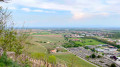
Starting from Buhl, this route takes you up to the Col de Bannstein via the village of Schweighouse, before entering the Schimberg Forest, which you’ll cross until you reach the vineyards near Bergholtz. You’ll then head back up the valley through the vineyards to the east of Guebwiller.
Lautenbach-Zell, Hohrupf and Buhl
8.59 mi
+1,703 ft
-1,706 ft
5h 25
Moderate
Departure from Lautenbachzell (Haut-Rhin)
This relatively long walk presents no particular difficulties. You will pass through the villages of Lautenbach-Zell and Buhl, alternating between woodland and meadows.
Through the fields between Merxheim and Gundolsheim
 2.89 mi
+36 ft
-33 ft
1h 20
Easy
Departure from Haut-Rhin
2.89 mi
+36 ft
-33 ft
1h 20
Easy
Departure from Haut-Rhin
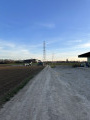
This circular walk starting from Merxheim is a leisurely stroll through the fields, with a short stretch through the village of Gundolsheim, on flat ground.
On the ridges: Grand Ballon – Markstein – Petit Ballon
13.44 mi
+2,110 ft
-3,022 ft
8h 00
Difficult
Departure from Murbach (Haut-Rhin)
An easy route, gently undulating across the highest peaks of the Vosges, through stubble fields and forests. Magnificent views over the surrounding valleys.
Linthal – Grand Ballon – Markstein
12.20 mi
+3,553 ft
-1,319 ft
8h 40
Difficult
Departure from Linthal (Haut-Rhin)
A very physically demanding first day with a wide variety of landscapes.
Starting from Linthal, the most mountainous village in the Guebwiller region, the first day of this multi-day hike will take you to the Auberge du Steinlebach, via the Grand Ballon – the highest peak in the Vosges mountains, rising to an altitude of 1,424 metres – and the Markstein resort. The ascent is quite challenging and requires a good level of fitness. Along the way, you’ll pass the Gustiberg farmhouse inn, Lake Ballon and the Haag farmhouse inn…
Petit Ballon - Sengern
 5.91 mi
+604 ft
-2,608 ft
3h 15
Moderate
Departure from Luttenbach-près-Munster (Haut-Rhin)
5.91 mi
+604 ft
-2,608 ft
3h 15
Moderate
Departure from Luttenbach-près-Munster (Haut-Rhin)
The route begins in alpine pastureland, then passes through very shady forests.
Route d'Issenheim découverte
2.66 mi
+46 ft
-46 ft
1h 15
Easy
Departure from Issenheim (Haut-Rhin)
Issenheim is a small town with a population of 3,000. It was formerly known for the Gast spinning mill. This mill was one of the largest in the region and processed wool into yarn. It is also the starting point for this walk. The first part runs along the banks of the Lauch, passing Villa Spetz and Saint-André Church. The return journey is via Rue de Guebwiller, passing in front of the chapel of the former Antonine convent of Saint-Joseph.
Markstein – Petit Ballon – Linthal
12.88 mi
+1,407 ft
-3,619 ft
7h 10
Difficult
Departure from Oderen (Haut-Rhin)
Take the time to admire the landscapes and views that make this second day’s walk so special. The route follows the ridges for the most part, leading to the Petit Ballon via the Klintzkopf. Once again, you’ll be able to fully enjoy the panoramic views over the plains and valleys on either side of the mountain. This route, which passes through forests and stubble fields, will allow you to discover the richness of the local flora.
 Around Colmar and across the Alsace plain
42.05 mi
+177 ft
-177 ft
4 hrs
Easy
Departure from Turckheim (Haut-Rhin)
An ideal walk to start the season, taking you around Colmar and across the Alsace plain to the Rhine. It mainly follows cycle paths or routes, rural roads or quiet roads, with the exception of a few sections where you need to pay attention to traffic.