Refine your search for walks in L'Hermitière
L'Hermitière walks


 The Priory of Sainte-Gauburge, starting from L’Hermitière
 Association / Club / Walk leader
 14.55 mi
 +935 ft
 -935 ft
 7h 30
7h 30
 Moderate
 Departure from L'Hermitière (Orne)
Following the sunken lanes of the Perche and the rolling hills, the route passes through the village of Gemages, the Angenardière Manor and the Priory of Sainte-Gauburge with its Ecomuseum. The return journey to L’Hermitière takes you through the Bois des Baronnières, which overlooks Le Theil.
Village of Gemages at the start of the Chêne Vert
 4.87 mi
+453 ft
-440 ft
2h 40
4.87 mi
+453 ft
-440 ft
2h 40
 Easy
Departure from Le Theil (Orne) (Orne)
Easy
Departure from Le Theil (Orne) (Orne)
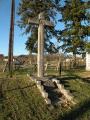
A hike through woods, sunken paths and hills that will introduce you to the Même valley, a panoramic view of Saint-Germain-de-la-Coudre and the church of Gemages. Along the way, you will admire the charming village of L'Hermitière, its castle and its church perched proudly on a hill.
The Coudre Valley, starting from Saint-Germain-de-la-Coudre
 10.24 mi
+673 ft
-650 ft
5h 20
Moderate
Departure from Saint-Germain-de-la-Coudre (Orne)
10.24 mi
+673 ft
-650 ft
5h 20
Moderate
Departure from Saint-Germain-de-la-Coudre (Orne)
A lovely walk through the Percheron countryside and the Perche Regional Park. Numerous watercourses flow through this area: the Coudre, the Même, the Coutillonnière and the Jaunet, all of which flow into the Huisnes. The undulating route follows beautiful sunken lanes lined with pollarded trees.
From Saint-Germain-de-la-Coudre to Nogent-le-Rotrou
 17.44 mi
+1,299 ft
-1,280 ft
10 hrs
17.44 mi
+1,299 ft
-1,280 ft
10 hrs
 Very difficult
Departure from Saint-Germain-de-la-Coudre (Orne)
Very difficult
Departure from Saint-Germain-de-la-Coudre (Orne)
This walk is the eighth and final stage of an eight-day, 220km route, the Tour des Collines du Perche.
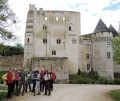
Setting off from Saint-Germain-de-la-Coudre, you will first pass through the Bois de la Bretèche, situated on a plateau on the left bank of the Huisne, which you will cross at Le Theil. The route, offering plenty of panoramic views, will take you to Nogent-le-Rotrou at the foot of Château Saint-Jean. All that remains then is to walk through the historic districts of Le Pâty.
Huisne Valley and the hills of Val-au-Perche
 11.52 mi
+787 ft
-778 ft
6h 00
Moderate
Departure from Le Theil (Orne) (Orne)
11.52 mi
+787 ft
-778 ft
6h 00
Moderate
Departure from Le Theil (Orne) (Orne)
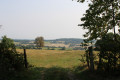
Lush green valleys, steep hillsides, majestic panoramas, sunken lanes and their gnarled pollarded trees are all part of this beautiful countryside walk, which crosses the wide Huisne valley and takes you through the villages of Mâle and La Rouge.
Manor houses and dolmens from the priory of Sainte-Gauburge
 Visorando Member
 8.78 mi
+571 ft
-574 ft
4h 30
Moderate
Departure from Saint-Cyr-la-Rosière (Orne)
8.78 mi
+571 ft
-574 ft
4h 30
Moderate
Departure from Saint-Cyr-la-Rosière (Orne)
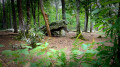
Starting from the 13th-century priory of Sainte-Gauburge, this route leads along sunken paths to the Dolmen de la Pierre Procureuse, the site of several legends, then passes in front of a feudal motte at the Tour du Sablon and several fortified farms, before reaching the Angenardière manor house.
The sunken lanes of Préval
 3.08 mi
+105 ft
-105 ft
1h 30
Easy
Departure from Préval (Sarthe)
3.08 mi
+105 ft
-105 ft
1h 30
Easy
Departure from Préval (Sarthe)
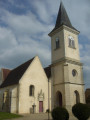
Discover this peaceful village, its countryside and its hedgerows by following its sunken lanes, which offer beautiful panoramic views of the Même valley and the hills of the Perche.
Perche heritage in Saint-Cyr-le-Rosière
 7.40 mi
+413 ft
-417 ft
3h 45
Moderate
Departure from Saint-Cyr-la-Rosière (Orne)
7.40 mi
+413 ft
-417 ft
3h 45
Moderate
Departure from Saint-Cyr-la-Rosière (Orne)
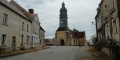
A countryside trail exploring the built heritage of the Perche region and its gems, notably the hamlet of Saint-Gauburge and its priory, the Manoir de l'Angenardière, the Manoir des Chaponnières, and the hamlet of Clémencé. Discover exceptional buildings constructed from cut stone and finished with lime plaster coloured with local sand.
The Avezé and Souvigné plateau, starting from L’Orgerie
3.62 mi
+30 ft
-30 ft
1h 40
Easy
Departure from Souvigné-sur-Même (Sarthe)
A pleasant walk through the woods and countryside of Avezé along sunken paths.
In the heart of the Perche countryside from Avezé
 Tourism professional
 8.17 mi
+367 ft
-367 ft
4h 05
Moderate
Departure from Avezé (Sarthe) (Sarthe)
8.17 mi
+367 ft
-367 ft
4h 05
Moderate
Departure from Avezé (Sarthe) (Sarthe)
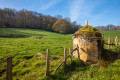
The village of Avezé developed in the Middle Ages to the north-east of the church, which was rebuilt inthe 16th century, at the same time as the priory that adjoined it, of which only extensive farm buildings remain. The main street is dominated by a large two-storey house known as the “Maison du prieur” (Prior’s House), dating from the 15th or 16th century, notable for its rear stair tower and its elegant façade that juts out over the current street.
The woods of Beauvais
 7.14 mi
+548 ft
-538 ft
3h 45
Moderate
Departure from Avezé (Sarthe) (Sarthe)
7.14 mi
+548 ft
-538 ft
3h 45
Moderate
Departure from Avezé (Sarthe) (Sarthe)
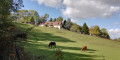
A lovely walk along sunken paths, through woodland and across the gentle hills of the Perche. Panoramic views of the Huisne and Maroisse valleys.
Panoramic views over the Prairies d'Avezé
 6.80 mi
+377 ft
-384 ft
3h 25
Moderate
Departure from Avezé (Sarthe) (Sarthe)
6.80 mi
+377 ft
-384 ft
3h 25
Moderate
Departure from Avezé (Sarthe) (Sarthe)
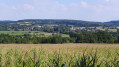
This route, which alternates between sunken lanes, forest paths and flat sections, will take you to the hill overlooking the Huisne Valley to the west. Along the way, several panoramic views allow you to admire the meadows of Avezé, a veritable hay barn that has provided for generations of farmers.
The Abadie factory, the Saules tile works and the Jambette Valley
 17.33 mi
+1,158 ft
-1,161 ft
9h 00
17.33 mi
+1,158 ft
-1,161 ft
9h 00
 Difficult
Departure from Avezé (Sarthe) (Sarthe)
Difficult
Departure from Avezé (Sarthe) (Sarthe)
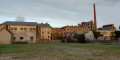
This walk takes you through the Avezé forest to the outskirts of Saint-Germain-de-la-Coudre, passing by the Saules tile works. Winding through the hills, the route passes through Le Theil, a once-thriving industrial town and home to the former Abadie factories, now listed as heritage sites. Then, following the sunken paths, you’ll explore the Jambette Valley before returning to Avezé via the Beauvais woods and the panoramic views over the Huisne Valley.
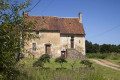
La Tuilerie des Saules via the hills of Souvigné-sur-Même
 8.10 mi
+659 ft
-653 ft
4h 20
Moderate
Departure from Souvigné-sur-Même (Sarthe)
8.10 mi
+659 ft
-653 ft
4h 20
Moderate
Departure from Souvigné-sur-Même (Sarthe)
This walk starts in the village of Souvigné-sur-Même and follows sunken paths lined with pollarded trees, allowing you to explore the bocage, the grazing meadows, the woods and the surrounding countryside. The rolling hills offer views from their summits of the villages of Préval and Avezé and the Huisne and Même valleys.
From Mâle to the outskirts of Ceton
 8.80 mi
+764 ft
-758 ft
4h 45
Moderate
Departure from Orne
8.80 mi
+764 ft
-758 ft
4h 45
Moderate
Departure from Orne
Through sunken lanes, hedgerows and woods, discover the landscapes of the Perche region as far as Ceton, the Jambette Valley and the Huisne Valley.
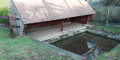
The heights of Dehault
 3.06 mi
+157 ft
-148 ft
1h 35
Easy
Departure from Dehault (Sarthe)
3.06 mi
+157 ft
-148 ft
1h 35
Easy
Departure from Dehault (Sarthe)
Over hill and dale, following the sunken paths and the Montretaux stream, discover the charming village of Dehault and its landscapes.
The village of Dehault and its hillsides
 5.33 mi
+210 ft
-223 ft
2h 40
Easy
Departure from Dehault (Sarthe)
5.33 mi
+210 ft
-223 ft
2h 40
Easy
Departure from Dehault (Sarthe)
A lovely walk around the village of Dehault, through which the Montreteau flows. A hilly route with some beautiful sunken lanes.
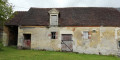
The hills of Ceton
 10.90 mi
+781 ft
-771 ft
5h 40
Moderate
Departure from Ceton (Orne)
10.90 mi
+781 ft
-771 ft
5h 40
Moderate
Departure from Ceton (Orne)
Taking beautiful sunken paths, over hill and dale, you will discover magnificent panoramic views of the Cétonais countryside and be amazed by its diversity: woods, meadows, hedgerows and cultivated fields.
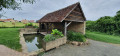
Around Saint-Symphorien in Cherré-Au
 4.06 mi
+315 ft
-315 ft
2h 10
Easy
Departure from Cherreau (Sarthe)
4.06 mi
+315 ft
-315 ft
2h 10
Easy
Departure from Cherreau (Sarthe)
Cherré-Au is a new commune formed in 2019 by merging the communes of Cherré and Cherreau, located east of La Ferté-Bernard. The village of Cherreau has always been closely linked to the neighbouring town of La Ferté-Bernard. Indeed, in the Middle Ages, the lords of La Ferté took over the Abbey of La Pelice at the end ofthe 12th century. Then, in the14th century, the Domaine de la Plaisse was incorporated into that of La Ferté. More recently, as the town of La Ferté-Bernard expanded inthe 19th century, it encroached upon Cherreau, annexing the hamlets of Gué-Faux and La Fosse Fondue in 1889, which bordered the road to Paris.
Around Cherreau
 3.81 mi
+272 ft
-272 ft
2h 00
Easy
Departure from Cherreau (Sarthe)
3.81 mi
+272 ft
-272 ft
2h 00
Easy
Departure from Cherreau (Sarthe)
This walk offers beautiful views of La Ferté-Bernard and Cherreau.
The spur at Bellême
 4.50 mi
+344 ft
-338 ft
2h 20
Easy
Departure from Bellême (Orne)
4.50 mi
+344 ft
-338 ft
2h 20
Easy
Departure from Bellême (Orne)
Discover Bellême, a Petite Cité de Caractère® (Small Town of Character), on this tour that highlights its rich heritage. Bellême charms visitors with its unique architecture, where the harmony between limestone and ochre and pink sand plaster, typical of Perche-style buildings, gives this town its incomparable charm.