


Refine your search for walks in Gron
Gron walks
 Circular route to the east of Bengy-sur-Craon
 Visorando Member
 5.49 mi
 +131 ft
 -138 ft
 2h 40
2h 40
 Easy
Easy
 Departure from Bengy-sur-Craon (Cher)
A short, easy walk through wooded countryside and arable fields in the Champagne-Berrichonne region.
Bengy-sur-Craon is situated between Bourges and Nevers on the D976.
As for the ‘binges’
 5.97 mi
+318 ft
-318 ft
3h 00
Easy
Departure from Aubinges (Cher)
5.97 mi
+318 ft
-318 ft
3h 00
Easy
Departure from Aubinges (Cher)
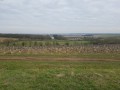
A walk starting from Aubinges towards the vineyards of Saint-Céols (the smallest commune in the Cher department) and Morogues. Part of these paths is used at night by the famous Bourges–Sancerre walk.
This route, situated at the foot of the Sancerre foothills, offers breathtaking views of the Berry countryside.
Walk around Morogues
 4.99 mi
+410 ft
-407 ft
2h 40
Easy
Departure from Morogues (Cher)
4.99 mi
+410 ft
-407 ft
2h 40
Easy
Departure from Morogues (Cher)
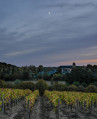
The suggested ride around Morogues will allow you to discover the different landscapes of this area: passing through vineyards, with views of the Berry countryside or the Sancerre region.
It is a hilly route without any major difficulties that can be covered by mountain bike.
Around Morogues
 8.15 mi
+712 ft
-735 ft
4h 20
8.15 mi
+712 ft
-735 ft
4h 20
 Moderate
Departure from Morogues (Cher)
Moderate
Departure from Morogues (Cher)
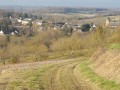
In the foothills of the Sancerre region, overlooking the Berry countryside, come and discover some of the Morogues vineyards that produce the renowned AOC wines of Ménetou-Salon.
This is also the starting point for the famous Morogues-Sancerre hike, which many people do at night and don't get to enjoy the scenery.
On the way back, depending on the weather, you may be able to see Bourges Cathedral and the Berry countryside.
Around Moulins-sur-Yèvre
 4.38 mi
+59 ft
-59 ft
2h 05
Easy
Departure from Moulins-sur-Yèvre (Cher)
4.38 mi
+59 ft
-59 ft
2h 05
Easy
Departure from Moulins-sur-Yèvre (Cher)
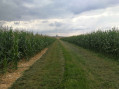
This route takes you past the saffron well, the saffron farm (visits by appointment) and then along a shaded section of the Tripande before climbing through the fields overlooking Moulins-sur-Yèvre. You may encounter deer here.
Walk around Parassy and Les Aix-d’Angillon
 9.70 mi
+262 ft
-262 ft
4h 40
Moderate
Departure from Soulangis (Cher)
9.70 mi
+262 ft
-262 ft
4h 40
Moderate
Departure from Soulangis (Cher)
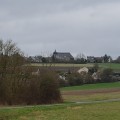
The suggested route, at the foot of the Sancerre foothills, is not particularly difficult. This circular route, which crosses the fields, will take you to the edge of the vineyards on the slopes of Parassy. You may also have the chance to spot some roe deer.
This route can also be tackled by mountain bike.
Around Soulangis
 8.58 mi
+213 ft
-217 ft
4h 10
Moderate
Departure from Soulangis (Cher)
8.58 mi
+213 ft
-217 ft
4h 10
Moderate
Departure from Soulangis (Cher)
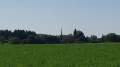
Located north-east of Bourges and on the edge of the Menetou-Salon vineyards, this walk takes you through the countryside around Soulangis.
Route around Parassy
 6.49 mi
+505 ft
-525 ft
3h 25
Moderate
Departure from Parassy (Cher)
6.49 mi
+505 ft
-525 ft
3h 25
Moderate
Departure from Parassy (Cher)
On the border between Sancerre and Champagne Berrichonne, this route starts in Parassy and allows you to discover part of the vineyards of the famous Ménetou AOC. This route, which follows part ofthe GR®31, also offers a short climb to the Bois de Michavant, where you can admire Champagne Berrichonne dominated by Bourges Cathedral.
Loop at the foot of Sancerre
 8.06 mi
+1,132 ft
-1,161 ft
4h 40
Moderate
Departure from Sancerre (Cher)
8.06 mi
+1,132 ft
-1,161 ft
4h 40
Moderate
Departure from Sancerre (Cher)
Hike through the vineyards, with beautiful views of the Loire.
From the village to the Menetou-Salon pond
 3.87 mi
+322 ft
-344 ft
2h 05
Easy
Departure from Menetou-Salon (Cher)
3.87 mi
+322 ft
-344 ft
2h 05
Easy
Departure from Menetou-Salon (Cher)
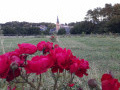
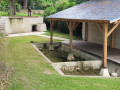
Things to see: wash houses, fishpond, deer park, Étang de Farge, view of the castle and its vineyard, scenic spots, local heritage.
Follow the signs marked with a yellow bunch of grapes.
Amidst the orchards and vineyards of Menetou-Salon
 8.24 mi
+600 ft
-610 ft
4h 20
Moderate
Departure from Menetou-Salon (Cher)
8.24 mi
+600 ft
-610 ft
4h 20
Moderate
Departure from Menetou-Salon (Cher)
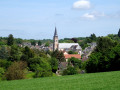
During this walk, you can explore the Farges pond and the viewpoint, from the top of which you can admire the Church of Saint Pierre in Menetou-Salon. And, of course, our vineyards.
Follow the signposting marked with a bunch of blue grapes.
A circular loop at the foot of Sancerre, starting from Amigny
 Association / Club / Walk leader
 2.59 mi
+276 ft
-276 ft
1h 25
Easy
Departure from Sancerre (Cher)
2.59 mi
+276 ft
-276 ft
1h 25
Easy
Departure from Sancerre (Cher)
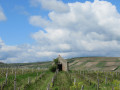
Walk organised by the Parents’ Association of Sancerre’s state schools, starting from Amigny. A short, easy walk through the Sancerre vineyards.
Amidst vineyards and woodland south of Sancerre
 8.38 mi
+1,004 ft
-1,001 ft
4h 45
Moderate
Departure from Sancerre (Cher)
8.38 mi
+1,004 ft
-1,001 ft
4h 45
Moderate
Departure from Sancerre (Cher)
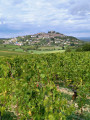
A walk starting from Sancerre, the great wine town. Set off to explore part of the renowned vineyard (flint-rich terroir) whilst passing through the small woods to the south of the village. The route offers a variety of views, particularly of Sancerre.
From vine to wine in Pouilly
 Tourist office
 7.90 mi
+682 ft
-686 ft
4h 15
Moderate
Departure from Pouilly-sur-Loire (Nièvre)
7.90 mi
+682 ft
-686 ft
4h 15
Moderate
Departure from Pouilly-sur-Loire (Nièvre)
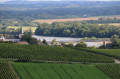
A signposted route to discover everything there is to know about the Pouilly wine appellations.
Around Le Gravier
 4.99 mi
+89 ft
-89 ft
2h 20
Easy
Departure from La Guerche-sur-l'Aubois (Cher)
4.99 mi
+89 ft
-89 ft
2h 20
Easy
Departure from La Guerche-sur-l'Aubois (Cher)
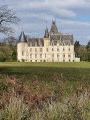
A walk along minor roads and a path beside the Canal du Berry, with views of the Château du Gravier.
Plenty of parking spaces in the church square.
This listed 12th-century monument is open at certain times depending on the season.
Le Gravier was a separate commune before being absorbed into La Guerche-sur-l’Aubois.
Between the vineyards and the Loire in Tracy
 4.54 mi
+262 ft
-272 ft
2h 20
Moderate
Departure from Tracy-sur-Loire (Nièvre)
4.54 mi
+262 ft
-272 ft
2h 20
Moderate
Departure from Tracy-sur-Loire (Nièvre)
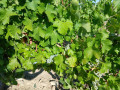
A walk that immerses you in the heart of the wine-growing landscapes of the Pouilly Fumé and Pouilly sur Loire AOCs. Bring your binoculars to observe the birds along the banks of the Loire.
The Loire Valley and the three viaducts
 8.17 mi
+292 ft
-289 ft
4h 00
Moderate
Departure from Saint-Satur (Cher)
8.17 mi
+292 ft
-289 ft
4h 00
Moderate
Departure from Saint-Satur (Cher)
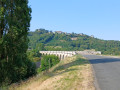
A short walk along the Loire and through the valley, then along the hillside through the vineyards of Sancerre, following the old railway line connecting Cosne-sur-Loire to Bourges.
Beautiful views of the river, the towns of Saint-Satur and Ménétréol, the town of Sancerre, the vineyards and the side canal.
Best done in spring or autumn.
Through the Sancerre vineyards between Verdigny and Sury-en-Vaux.
 7.08 mi
+761 ft
-741 ft
3h 55
Moderate
Departure from Verdigny (Cher)
7.08 mi
+761 ft
-741 ft
3h 55
Moderate
Departure from Verdigny (Cher)
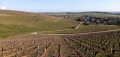
A hike that takes place mainly among vineyards and offers beautiful panoramic views of Sancerre and its surrounding countryside. Numerous wayside crosses, two wash houses and the village of Sury-en-Vaux, with its beautiful old houses and church, add a touch of heritage to the route.
Hike designed by the Grand Sancerrois Tourist Office.
In the heart of the Sancerre vineyards - Chavignol and its surroundings
 6.95 mi
+764 ft
-764 ft
3h 50
Moderate
Departure from Verdigny (Cher)
6.95 mi
+764 ft
-764 ft
3h 50
Moderate
Departure from Verdigny (Cher)
During this hike, you will almost always have a view of the entire vineyard and Sancerre. Depending on the season, you will see the pruning of the vines or the grape harvest. You will pass by the highest "peaks" in the region.
Between the Sancerre vineyards and the Loire by bike
6.45 mi
+522 ft
-515 ft
3h 25
Moderate
Departure from Saint-Satur (Cher)
This walk takes you on a journey through the Sancerre vineyards and along the Loire. Starting from Saint-Satur, you’ll walk through the vineyards at the foot of Sancerre before reaching the Loire by bike by crossing the Canal Latéral.
This walk is easier than the one called “In the heart of the Sancerre vineyards – Chavignol and its surroundings”. The elevation changes are less significant. The final four kilometres are on flat ground.
Soumard Fountain in Saint-Andelain
5.13 mi
+240 ft
-240 ft
2h 35
Easy
Departure from Saint-Andelain (Nièvre)
Set off to discover the traditional heritage of the wine-growing hamlets on the Saint-Andelain hill. Take the opportunity to visit the winegrowers of the Pouilly Fumé appellation and don't miss climbing to the top of the old water tower, now converted into a viewpoint, to see how far you've come and admire the view of the vineyards and the Loire.
Between Vorly and Plaimpied via the Canal de Berry
 10.03 mi
+135 ft
-135 ft
4h 45
Moderate
Departure from Vorly (Cher)
10.03 mi
+135 ft
-135 ft
4h 45
Moderate
Departure from Vorly (Cher)
A route through the Berry region of Champagne, with a lovely detour into the Auron Valley, whilst following the Canal de Berry. A chance to enjoy the local flora and fauna as well as the charm of two locks. Near Plaimpied, the Marais gardens dot the route. A visit to the Abbey Church of Saint-Martin, overlooking the canal valley, is well worth a detour.
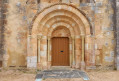
Whether at the start or the finish, in Vorly, a stop in front of the listed gateway to the 12th-century Church of Saint-Saturnin is a must.