


Refine your search for walks in Frambouhans
Frambouhans walks


 Circular walk via the Waroly Caves, starting from Frambouhans
 Visorando Member

 12.19 mi
 +2,077 ft
 -2,073 ft
 7h 25
 Moderate
 Departure from Frambouhans (Doubs)
A lovely walk that will take you to the Waroly Caves, via Mancenans Lizerne. The return route takes you through the Grand Verger and its viewpoint over the Swiss Alps and their iconic peaks, notably the Jungfrau and the Eiger.
Le Puits du Glaçon
 6.55 mi
+384 ft
-404 ft
3h 20
Moderate
Departure from Les Fontenelles (Doubs)
Start with a view of the Alps on a clear day, then the Belherbe plateau and the Lomont wind turbines. Visit Frambouhans Church to see a polychrome wooden statue of Saint Sebastian and a 16th-century Pietà. Cool off at the Grotte du Glaçon and finish with a visit to the strange circular Gallo-Roman drinking trough, the lavogne, which is unique in Franche-Comté.
La Combe du Château
 8.80 mi
+1,795 ft
-1,781 ft
5h 35
Moderate
Departure from Saint-Julien-lès-Russey (Doubs)
The Dessoubre valley, where many water mills once sang, has now regained its wild freshness. Starting from Saint-Julien-lès-Russey, you will descend towards the Ribeau and Château valleys and their jagged rocks along beautiful, cool, shaded paths to discover a rich and generous natural environment.
Along the Dessoubre
 8.70 mi
+1,467 ft
-1,467 ft
5h 15
Moderate
Departure from Mont-de-Vougney (Doubs)
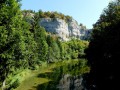
From the charming old church of Mont-de-Vougney, head down towards the Dessoubre, not forgetting to pay your respects to the old Saint-Claude in his stone niche. Once an industrial hub, today it has regained a wild and authentic freshness. As you follow the river, you will discover its cliffs, waterfalls and the Combe Foulot cirque. Then climb back up to the plateau through sunny pastures overlooking the valley.
The Crugnot bog at Bonnétage
 9.51 mi
+574 ft
-581 ft
4h 50
Moderate
Departure from Bonnétage (Doubs)
Discover a peat bog, beautiful coniferous forests, a cave and a lavogne.
Lovely views of the Haut-Doubs with its Montbéliard cattle and beautiful Comtois dogs.
Mont Miroir
 4.93 mi
+853 ft
-863 ft
3h 00
 Easy
Departure from Maîche (Doubs)
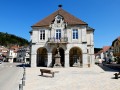
From Montalembert Castle, built by the Guyot de Malseigne family from 1574 onwards, you will climb to various viewpoints: the Notre-Dame des Anges Chapel at the top of the beautiful Saint-Simon hill; then the Roche de Ruan via paths lined with majestic fir trees, forming a guard of honour; the pastures of Mont Miroir and its concert of cowbells with its view of Lomont and the Saint-Hyppolite valley; and finally, the Mont Joie viewpoint overlooking the city and Saint-Pierre Church.
Route de découverte de Maîche
4.21 mi
+272 ft
-285 ft
2h 10
Easy
Departure from Maîche (Doubs)
This short circular route allows you to visit the small town of Maîche, located in the Pays Horloger (Watchmaking Country). This short walk allows you to see much of the town's heritage, such as the Church of Saint-Pierre, the Château du Désert and its park, and the Chapelle des Anges. The route also passes in front of the châteaux of Montalembert and Mérode, which are private properties. Finally, the hike ends with a botanical trail that winds its way through the Côteau Saint-Michel.
Rocher du Bourbet, Waroly caves and waterfalls from Maîche
10.97 mi
+1,555 ft
-1,529 ft
6h 25
Moderate
Departure from Maîche (Doubs)
Starting from Maîche, pass through Les Bréseux to see, in particular, its Comtois-style church with magnificent modern stained glass windows, then on to Rochet du Bourbet, a viewpoint over the Dessoubre valley and picnic area. Return via the QuatreGrottes de Waroly, the Waroly waterfalls and the hamlet of La Lizerne. Several interesting viewpoints: Rochet du Bourbet, on the way down to the Château de l'Ermitage, then on the way back up to the hamlet of La Lizerne, among others.
Mont-Miroir, Roche de Ruan, Faux Verger, starting from Maîche
11.86 mi
+1,834 ft
-1,821 ft
7h 05
 Difficult
Departure from Maîche (Doubs)
From the centre of Maîche, head up via the Étang de la Goule to Mont Miroir and its ski lift, then continue to the Roche de Ruan viewpoint. Descend towards the town, then climb back up the hill to the Saint-Michel Chapel overlooking Maîche. Then head downhill, passing through the Château du Désert park, before following the Faux Verger circular route, and returning via La Lizerne and the Château de Mérode. This pleasant circular route offers numerous viewpoints, including the one at Faux Verger, which provides a truly 360° view of the surrounding landscape, from the Vosges to the Swiss Jura, and even as far as the Bernese Alps, weather permitting.
Dessoubre Valley in Orgeans
 3.30 mi
+509 ft
-512 ft
2h 00
Easy
Departure from Orgeans-Blanchefontaine (Doubs)
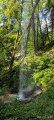
A short hike suitable for families. After a period of rain, there are beautiful small waterfalls, but some sections of the stream must be forded.
Beautiful view of the Hermitage as well.
In hot and humid weather, watch out for ticks.
The Belvédère du Bourbet and the Waroly Waterfall
 7.18 mi
+1,388 ft
-1,401 ft
4h 30
Moderate
Departure from Mancenans-Lizerne (Doubs)
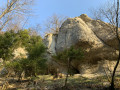
A picnic area with tables overlooks the Dessoubre valley at an altitude of nearly 750 metres. Old farms dating back to the 1960s cling to the mountainside. A wild valley where, perhaps, our Comtois Gauls performed their druidic rituals in sacred clearings. A natural rock known as the Devil's Castle overlooks the Waroly waterfall. Finally, caves carved out over centuries.
The Bernese Alps and the Étang du Moulin
 6.07 mi
+581 ft
-597 ft
3h 20
Easy
Departure from Bonnétage (Doubs)
From Bonnétage church, you will quickly climb up to the viewpoint on the plateau and, in the distance, the snow-capped peaks of the Bernese Alps. You will cross pastures lined with murgers, charming dry stone walls, and fir forests typical of the Haut-Doubs, walk along deep sinkholes, descend into the hollow of the peat bog and finally, from a rocky ridge, overlook the vast Etang du Moulin lake.
The Death Ladders
 7.11 mi
+1,739 ft
-1,739 ft
4h 45
Moderate
Departure from Charquemont (Doubs)
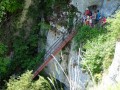
There are no danger points on these ladders. This site, steeped in history, bears witness to the fear once inspired by these legendary places, the scene of many fatal accidents during the "bricotte" (smuggling) era, when the ladders were nothing more than tree trunks crossed by pieces of wood. Today, these comfortable family staircases, which you can climb safely, will allow you to discover the Doubs Gorges from a variety of viewpoints.
The Death Ladders from La Cendrée
 Association / Club / Walk leader
 5.20 mi
+1,772 ft
-1,795 ft
3h 55
Moderate
Departure from Charquemont (Doubs)
Beautiful views, a lovely setting and an unusual part of the hike, crossing the death ladders.
Le Grand Bois
 8.22 mi
+636 ft
-633 ft
4h 20
Easy
Departure from Le Russey (Doubs)
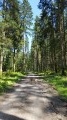
A short hike through the Grand Bois forest in the commune of Le Russey. Here you will see one of the largest fir trees and farms with the typical tuyé (or tué), a kind of large chimney for smoking meat.
Le Creux de Hauteroche
 4.39 mi
+515 ft
-518 ft
2h 30
Easy
Departure from Charmoille (Doubs)
After a magnificent view of the Dessoubre valley, you will discover the surprising Creux de Hauteroche gorge carved into the rocky cliffs to reach the viewpoint over Rosureux. Return through the fir forests and the surprising rock shelter of Sous la Goutte.
The Gorges du Doubs
 5.17 mi
+1,352 ft
-1,371 ft
3h 35
Moderate
Departure from Fournet-Blancheroche (Doubs)
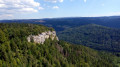
Nestled between steep, seemingly impassable cliffs, the Franco-Swiss Doubs Valley features steep paths, the ‘Couleuses’, which allow you to explore the wild, verdant gorges of this torrent as it surges between the enormous moss-covered rocks that have tumbled from the cliffs over the millennia. Return via picturesque cliff-top paths, passing three viewpoints overlooking the valley.
The Dessoubre Valley: the Priory of Vaucluse, the Baron and the Cul de Vau
 8.57 mi
+1,053 ft
-1,053 ft
4h 50
Moderate
Departure from Vaucluse (Doubs) (Doubs)
Starting from the charming little village of Vaucluse, Val Clos, this hike offers superb views of the Dessoubre valley, starting with the Baron's viewpoint, then the Cul de Vau valley and finally Vaucluse and its former priory, not to mention the various balconies overlooking the valley that you will pass along the way.
The Crampoulotte, the Old Females and the Ladders of Death
 5.91 mi
+1,683 ft
-1,683 ft
4h 10
Moderate
Departure from Charquemont (Doubs)
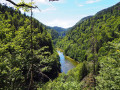
The ladders will probably be closed until autumn. Along picturesque, steep paths, winding through a jumble of mossy rocks, La Crampoulotte and its old ladies offer wild views of the Doubs valley. After a stop at the old charcoal kiln, you will walk along the peaceful banks of the river, a haven for ducks and fishermen. Then, facing the Échelles de la Mort (Ladders of Death), which turn out to be comfortable family stairs, you will make a sporty return via the evocative Couleuse aux Loups.
Le Creux de Hauteroche and the Saint-Claude Chapel
 9.79 mi
+1,047 ft
-1,043 ft
5h 25
Moderate
Departure from Charmoille (Doubs)
Three highlights of this hike: the superb view from Le Chaufaud over the valley and mountains surrounding the Dessoubre; the Belvédère viewpoint over Rosureux nestled at the bottom of the valley and the surprising Creux de Hauteroche gorge; the return via the sunny meadows with a panoramic view of the neighbouring mountains, ending at the ancient 18th-century wooden cross at the Chapelle Saint-Claude chapel.
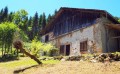
The Vieilles Femelles viewpoint
 5.11 mi
+1,243 ft
-1,230 ft
3h 25
Moderate
Departure from Charquemont (Doubs)
The ladders are likely to remain closed until autumn. From the ‘Ladders of Death’ to the ‘Old Ladies’, here are two places that evoke many poetic images. The ladders will prove to be comfortable, family-friendly staircases. As for these old ladies, they’ll offer you a wild view over the Franco-Swiss Doubs valley. Return via the peaceful riverbanks, a haven for ducks and anglers.
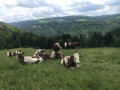
Banks of the Doubs, two magnificent viewpoints and the Grotte des Moines
 10.88 mi
+2,697 ft
-2,697 ft
7h 20
Difficult
Departure from Charquemont (Doubs)
Set off to explore the banks of the Doubs, an old mill, the ruins of the Chapelle des Essarts Cuenot and two superb viewpoints: the Vieilles Femelles and the Échelles de la Mort. To finish, a lovely climb up to the Bois de la Biche to discover the Grotte des Moines and its ‘hidden’ box where you can leave a little note to say you’ve been there! Return via a magnificent path running alongside the banks of the Doubs.
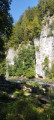
Circular Loop of the Échelles de la Mort via Le Refrain and the three belvédères.
 8.67 mi
+1,857 ft
-1,857 ft
5h 35
Moderate
Departure from Charquemont (Doubs)
Superb hike in the Doubs Gorges offering magnificent panoramic views of the gorges and the surrounding Swiss Jura peaks. To get there, you will need to pass through the famous Échelles de la Mort, which are impressive but relatively easy to climb. Once you reach the ridge, you will go from the Cendrée viewpoint to the Vieilles Femelles viewpoint via the Crampoulotte viewpoint, before descending to the banks of the river via the magnificent Charbonnière du Haut site. The return journey is along a bucolic path with a pretty waterfall at the Ulysse bridge.
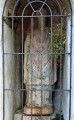
La Corne au Loup
 9.52 mi
+1,677 ft
-1,660 ft
5h 50
Moderate
Departure from Valoreille (Doubs)
From Valoreille, a superb balcony overlooking the Dessoubre valley, you will descend towards the river through peaceful pastures with unobstructed views of the neighbouring mountains. Then, from the typical village of Vauclusotte and its covered wash house fountain, you will climb through beautiful forests to the Montaigu viewpoint, the Lomont wind turbines, the Montbéliard region and the Ballon d'Alsace, before finally cooling off at the Saint-Ligier fountain, dating from 1721 and topped by its bishop.
The Combe de Biaufond
 6.45 mi
+1,719 ft
-1,706 ft
4h 30
Moderate
Departure from Fournet-Blancheroche (Doubs)
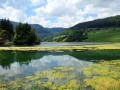
Are you only going to do one of these hikes? Then choose to explore this valley, a pure marvel! To start with, the Gorges du Doubs, which are full of sunny green beauty here. Then there are the light-filled forests towards Roche Guillaume and the mountain pastures, which overlook the valley. And the highlight: the Gorges de la Ronde, wild, lush and tropical in appearance, framed by high rocks, a world of stones, moss and ferns.
The wild Biaufond valley with ladders, steps and footbridges
 11.21 mi
+3,261 ft
-3,248 ft
8h 00
Difficult
Departure from Fournet-Blancheroche (Doubs)
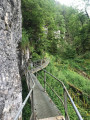
Set off to explore the Combe de Biaufond (in Switzerland) with its series of metal ladders, wooden staircases, fixed footbridges and bridges. Magical! Not recommended for those prone to vertigo. A mountain trail, therefore, difficult in places.
Then the Cerneux-Godat viewpoint and the Moulin de la Mort on the banks of the Doubs.
From a natural perspective, Biaufond’s main feature is its lake, which makes it a key wintering spot for the region’s waterbirds. But for everyone else, it is above all a magnificent destination for a walk and a meal by the water’s edge, at the crossroads of borders steeped in history.
Val de Consolation
 9.67 mi
+2,018 ft
-2,021 ft
6h 10
Moderate
Departure from Montbéliardot (Doubs)
In the heart of the Watchmaking Region, a walk around the source of the Dessoubre and the Notre-Dame de Consolation monastery
The Yésotte Cave, the Bénéton Cross, the Pierre qui vire
 3.87 mi
+840 ft
-853 ft
2h 30
Moderate
Departure from Fleurey (Doubs)
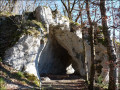
A ridge walk in the combe, with several geological features to discover and a wide view over the town of Saint-Hippolyte and the Doubs valley.
Les Roches du Château
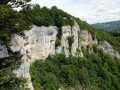 9.65 mi
+1,762 ft
-1,768 ft
6h 00
Moderate
Departure from Saint-Hippolyte (Doubs) (Doubs)
From the heart of Saint-Hyppolyte, nestled in the Revirot valley (where the Doubs and Dessoubre rivers meet), along its narrow streets lined with medieval houses, you will climb boldly towards the Chamesol plateau, a balcony overlooking the valley, to reach the viewpoint on the rocks and the vast cave where our ancestors built a castle that was unfortunately destroyed. Through beautiful forests and secret clearings, you will return via Soulce and its salt well, the Ursulines farm at the foot of the rocks and the tufa cave.
Route de découverte de Saint-Hippolyte
1.28 mi
+66 ft
-72 ft
0h 40
Easy
Departure from Saint-Hippolyte (Doubs) (Doubs)
Saint-Hippolyte is located at the confluence of the Doubs and Dessoubre rivers in Franche-Comté. It is a small, picturesque tourist village at the gateway to the Pays Horloger (Watchmaking Country). The setting is enchanting: surrounded by the Jura mountains, the Dessoubre to the west and the Doubs to the north. The narrow streets are picturesque and the buildings are examples of the architecture of the Pays Horloger. It is of course possible to combine this short route with another discovery in the region.
The Réaumont ridge, the peat bog and the Étang des Belles Seignes
 8.75 mi
+758 ft
-781 ft
4h 40
Moderate
Departure from Le Bizot (Doubs)
From the picturesque village of Bizot, with its farms, courthouse and 16th-century church, the route takes you up a superb steep ridge path to the ruins of Réaumont Castle. You return via the peat bogs, skirting piles of stones gathered from fields and the Étang des Belles Seignes lake.
The Barbèche Gorges
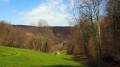 8.21 mi
+1,083 ft
-1,053 ft
4h 45
Moderate
Departure from Rosières-sur-Barbèche (Doubs)
From Rosières, the gateway between the Pays de Montbéliard and the Pays Horloger, you will descend towards the steep-sided Barbèche valley to reach the former Champ du Moulin inn, which has been converted into a pottery workshop. Then, climbing back up towards Péseux, you will enjoy wide open spaces as you discover the Lomont valley and its villages, then Montchevriez with its 180° panorama.