


Refine your search for walks in Église Sainte-Geneviève (Feucherolles)
Église Sainte-Geneviève (Feucherolles) walks


 From Parc de la Bruneterie to Forêt de Marly circular route
 Visorando Member
 14.75 mi
 +860 ft
 -850 ft
 7h 30
7h 30
 Difficult
 Departure from Orgeval (Yvelines) (Yvelines)
This circular route follows theGR®1 trailfrom Parc de la Bruneterie in Orgeval to the Forest of Marly on the way there. On the way back, the route crosses the Joyenval Golf Course and the commune of Chambourcy.
From Saint-Nom-la-Bretèche to Verneuil-sur-Seine via the GR®1
18.86 mi
+899 ft
-1,224 ft
7 hrs
 Very difficult
Departure from L'Étang-la-Ville (Yvelines)
Very difficult
Departure from L'Étang-la-Ville (Yvelines)
The second stage ofthe GR®1, this walk takes you through the Forêt de Marly and various charming villages such as Feucherolles and Orgeval. The first part is through the forest, whilst the second alternates between meadows, built-up areas and woodland. This stage is notable for the variety of landscapes you’ll encounter.
From Villiers-Saint-Frédéric to Feucherolles
9.95 mi
+791 ft
-545 ft
5h 15
 Moderate
Departure from Villiers-Saint-Fréderic (Yvelines)
Moderate
Departure from Villiers-Saint-Fréderic (Yvelines)
This stage is the last of the old GR®1 route. The departure point is at Villiers-Saint-Frédéric, at the RER station. The entire route is rural. It passes through several villages, including Saint-Germain-la-Grange, Thiverval-Grignon and Davron. There are two notable churches: those of Davron and Thiverval-Grignon, not to mention Feucherolles. This is an undemanding section that allows you to finish the GR®1 at a leisurely pace.
Sainte-Gemme and the western part of the Marly Forest
5.62 mi
+121 ft
-115 ft
2h 40
 Easy
Departure from Feucherolles (Yvelines)
Easy
Departure from Feucherolles (Yvelines)
A walk featuring a beautiful woodland route through the western part of the Marly Forest and a stroll through the village of Feucherolles, offering a chance to see the Sainte-Gemme Chapel along the way. The Marly State Forest is a natural area of ecological, faunal and floristic interest (ZNIEFF) that is home to over 80 species of birds, as well as red deer, roe deer, badgers, foxes and wild boar. Sainte-Gemme is a legendary Christian saint, often associated with the Saintonge region. She is depicted as a young virgin martyr. Converted to Christianity by Saint Denis of Paris, she is said to have refused an arranged marriage to a pagan nobleman, which is believed to have triggered her persecution. According to tradition, she was beheaded for her faith. Her story, although popular locally, belongs more to hagiographic tradition than to proven history.
GR®1: Tour of Île-de-France
 363.31 mi
+17,464 ft
-17,103 ft
21 days
Very difficult
Departure from Paris
363.31 mi
+17,464 ft
-17,103 ft
21 days
Very difficult
Departure from Paris
Over 500 km long and with more than 4,000 m of elevation gain, this hike is accessible to everyone if broken down into several stages. Beautiful, rural and fairly close to Paris, it is suitable for anyone who wants to try their hand at hiking. There are many points of interest along this route. History and heritage enthusiasts, as well as nature lovers, will find something to enjoy.
Walks near Église Sainte-Geneviève (Feucherolles)
From Saint-Nom to Poissy through the forests of Marly and Tailles d'Herbelay
 8.56 mi
+315 ft
-659 ft
4h 15
Moderate
Departure from L'Étang-la-Ville (Yvelines)
8.56 mi
+315 ft
-659 ft
4h 15
Moderate
Departure from L'Étang-la-Ville (Yvelines)
A hike from station to station that crosses the Marly National Forest and then the Tailles d'Herbelay Departmental Forest. It then offers a visit to the charming town centre of Chambourcy and a short walk in the Saint-Germain-en-Laye National Forest. The route ends in Poissy, where you can admire the Collegiate Church of Notre-Dame and the remains of the Old Bridge over the Seine.
In the forest of Saint-Nom-la-Bretèche in Vaucresson
 8.17 mi
+745 ft
-692 ft
4h 25
Moderate
Departure from L'Étang-la-Ville (Yvelines)
8.17 mi
+745 ft
-692 ft
4h 25
Moderate
Departure from L'Étang-la-Ville (Yvelines)
A walk from station to station that crosses the Marly State Forest, then Marly Park and finally the Louveciennes Forest. The route ends in Vaucresson, in an urban setting.
From Saint-Nom to Saint-Germain via the forests of Marly and Saint-Germain
 7.73 mi
+289 ft
-440 ft
3h 50
Moderate
Departure from L'Étang-la-Ville (Yvelines)
7.73 mi
+289 ft
-440 ft
3h 50
Moderate
Departure from L'Étang-la-Ville (Yvelines)
A walk from station to station that crosses the northern part of the Marly State Forest and then the southern part of the Saint-Germain-en-Laye State Forest. In between, the route runs alongside the gardens of a residential area before briefly passing through a business park. The walk ends at the foot of the Château de Saint-Germain-en-Laye, which houses a prehistory museum.
Beynes - Maule, with return by train
 6.70 mi
+302 ft
-371 ft
3h 20
Moderate
Departure from Beynes (Yvelines) (Yvelines)
6.70 mi
+302 ft
-371 ft
3h 20
Moderate
Departure from Beynes (Yvelines) (Yvelines)
A walk on the plateaus above the Mauldre valley. A rolling landscape as far as the eye can see accompanies you throughout the hike.
From Beynes to Verneuil-sur-Seine via the Étang d'Abbecourt
 13.38 mi
+942 ft
-1,033 ft
7h 00
Difficult
Departure from Beynes (Yvelines) (Yvelines)
13.38 mi
+942 ft
-1,033 ft
7h 00
Difficult
Departure from Beynes (Yvelines) (Yvelines)
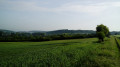
From the Mauldre Valley to the Seine Valley, a hike from station to station that alternates between fields and woodland. The Étang d’Abbecourt offers a perfect spot for a break, and the Church of Saint-Étienne in Vernouillet adds a touch of heritage.
From Étang-la-Ville to Saint-Nom-la-Bretèche via the Étoile Verte
 6.97 mi
+561 ft
-515 ft
3h 40
Moderate
Departure from L'Étang-la-Ville (Yvelines)
6.97 mi
+561 ft
-515 ft
3h 40
Moderate
Departure from L'Étang-la-Ville (Yvelines)
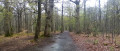
A walk from station to station that begins with narrow streets and paths in L'Étang-la-Ville and Mareil-Marly, through their gardens and apple orchards. The rest of the route takes place entirely in the Marly Forest, alternating between compacted tracks, sometimes damp dirt tracks and little-known paths deep in the undergrowth. Along the way, you’ll find beautiful woodland scenery, several remarkable trees and an old 18th-century cross.
From L'Étang-la-Ville to Saint-Nom-la-Bretèche via the Étoile de Montaigu
 8.10 mi
+600 ft
-551 ft
4h 15
Moderate
Departure from L'Étang-la-Ville (Yvelines)
8.10 mi
+600 ft
-551 ft
4h 15
Moderate
Departure from L'Étang-la-Ville (Yvelines)
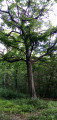
A walk from station to station, mainly through woodland. The route alternates between wide, signposted paths and less-used trails where a good sense of direction is useful. Along the way, there are lovely woodland scenes, several remarkable trees and an old 18th-century cross.
A story of water around Marly and Île de la Loge
 7.47 mi
+623 ft
-679 ft
4h 00
Moderate
Departure from L'Étang-la-Ville (Yvelines)
7.47 mi
+623 ft
-679 ft
4h 00
Moderate
Departure from L'Étang-la-Ville (Yvelines)
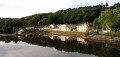
The Marly Pumping Station was built at the end of the 17th century to pump water from the Seine and supply the ponds at the Château de Marly and those at the Château de Versailles. This walk, largely through urban areas, passes through a small section of the Marly Forest and then the park of the same name, where the ponds still remain. After a steep descent to the Marly Pumping Station, the route crosses the picturesque Île de la Loge before climbing back up to the heights of Marly-le-Roi.
From Mareil-sur-Mauldre to Épône along the Mauldre and through the countryside
 8.01 mi
+505 ft
-561 ft
4h 05
Moderate
Departure from Mareil-sur-Mauldre (Yvelines)
8.01 mi
+505 ft
-561 ft
4h 05
Moderate
Departure from Mareil-sur-Mauldre (Yvelines)
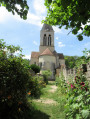
On this walk from station to station, you’ll follow the Mauldre river through the countryside, passing through several villages to discover some heritage sights.
From Mareil-sur-Mauldre station to Poissy station, via Orgeval
 11.36 mi
+587 ft
-666 ft
5h 45
Moderate
Departure from Mareil-sur-Mauldre (Yvelines)
11.36 mi
+587 ft
-666 ft
5h 45
Moderate
Departure from Mareil-sur-Mauldre (Yvelines)
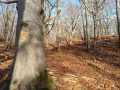
A fairly easy walk from station to station, the first part of which is through woodland where you can admire superb specimens of various species of deciduous trees, particularly beeches and oaks, which are certainly over a hundred years old. You also pass close to the Alluets-le-Roi telecommunications centre and its many antennas of all types.The second part, which is more varied, includes a visit to the ruins of Abbecourt Abbey and the centres of the villages of Orgeval and Villennes-sur-Seine with their churches. The walk ends with a pleasant stroll along the banks of the Seine.